Discover how heat pump water heaters deliver 2-3x the efficiency of traditional electric models while qualifying for federal tax credits—plus troubleshooting help when your water heater stops working.
Share:
Summary:
Your water heater just quit. Cold shower. Delayed morning routine. Dishes piling up. You’re either dealing with that scenario right now, or you’re researching how to avoid it—and wondering if there’s a smarter, more efficient way to heat water in your home.
Heat pump water heaters offer a completely different approach to water heating. Instead of burning fuel or using resistance coils to generate heat, they move existing heat from the air around them into your water tank. The result? Energy bills that drop by 60% or more, federal tax credits up to $2,000, and a system that can last 10-15 years with proper care. This guide walks you through how they work, what they cost, what they save, and when your current water heater might be telling you it’s time for an upgrade.
A heat pump water heater doesn’t create heat from scratch. It captures heat that already exists in the air around it and concentrates that heat to warm your water. Think of it like a refrigerator working in reverse—instead of pulling heat out of a box and dumping it into your kitchen, a heat pump pulls heat from your basement or utility room and transfers it into your water tank at a much higher temperature.
This process uses electricity, but only to move heat, not generate it. That’s why heat pump water heaters can be two to three times more energy efficient than conventional electric resistance water heaters. When you’re heating water with traditional electric elements, you’re converting electricity directly into heat. When you’re using a heat pump, you’re using a small amount of electricity to move a much larger amount of heat energy. The difference shows up immediately in your utility bills.
Numbers matter when you’re making a decision about water heating. An ENERGY STAR certified heat pump water heater can save a family of four approximately $550 per year on electric bills compared to a standard electric water heater. Over the typical 10-15 year lifespan of the unit, that adds up to more than $5,600 in total savings.
The efficiency comes from the Uniform Energy Factor, or UEF. Traditional electric tank water heaters have a UEF around 0.93. Heat pump water heaters? They clock in between 3.0 and 4.0. That means for every dollar you spend on electricity, you’re getting three to four dollars worth of hot water. It’s not magic—it’s thermodynamics.
But efficiency numbers only matter if the system works in your home. Heat pump water heaters need to be installed in locations that stay between 40 and 90 degrees Fahrenheit year-round. They also need about 700 to 1,000 cubic feet of air space around them—roughly the size of a 10-foot by 10-foot utility room with a 7-foot ceiling. If your current water heater sits in a tight closet, a heat pump model might not be the right fit. If it’s in a basement or garage with decent airflow, you’re in good shape.
One side benefit that surprises people: heat pump water heaters cool and dehumidify the space around them as they work. In Monmouth County’s humid summers, that can actually improve comfort in your basement or utility room while the system heats your water. During colder months, hybrid models automatically switch to backup electric heating elements when temperatures drop too low for the heat pump to operate efficiently. You get consistent hot water year-round without worrying about performance in winter.
The upfront cost runs higher than a standard electric water heater. But when you factor in the 30% federal tax credit—up to $2,000 on the total cost including installation—plus energy savings that start the day you turn it on, the payback period typically falls between three and six years. After that, you’re just saving money every month compared to what you would have spent with a traditional electric model.
Installation isn’t quite as simple as swapping out your old tank, but it’s not a major construction project either. Most heat pump water heaters are integrated units that include the heat pump, storage tank, and backup electric heating elements all in one package. You can also retrofit a heat pump to work with an existing conventional storage water heater, though the integrated units tend to be more reliable.
The electrical requirements matter. Most heat pump water heaters need a dedicated 240-volt circuit to operate properly. If you’re replacing an existing electric water heater, that circuit probably already exists. If you’re switching from gas to electric, you’ll need an electrician to install the proper wiring. Some newer 120-volt models are now available that can plug into a standard outlet, which makes installation simpler and avoids expensive electrical panel upgrades.
Space and airflow make or break performance. The unit pulls heat from the surrounding air, so it needs room to breathe. Installing a heat pump water heater in a space with excess heat—like a furnace room—actually increases efficiency because there’s more thermal energy available to capture. Installing it in a cold, confined space will force the system to rely more heavily on its backup electric heating elements, which cuts into your efficiency gains.
Professional installation ensures everything works as designed. We verify proper ventilation, check that electrical connections meet code requirements, confirm the unit is level and secure, and test all safety features before leaving. In Monmouth County, where salt air and coastal humidity accelerate corrosion on plumbing components, proper installation with quality materials matters even more. Shortcuts during installation lead to premature failures and service calls that could have been avoided.
The installation timeline usually runs one to two days depending on whether electrical work is needed. We walk you through the control settings, explain the different operating modes, and show you where to find the air filter that needs periodic cleaning. Heat pump water heaters require slightly more maintenance than traditional tanks, but we’re talking about cleaning an air filter every few months and flushing the tank annually—not complicated procedures.
Tankless water heaters deliver endless hot water when they work. When they don’t, you’re left with cold water and confusion about what went wrong. The most common issue is actually the simplest: power supply problems. For electric tankless units, check your circuit breaker to make sure it hasn’t tripped. For gas units, verify that the gas supply valve is fully open and the pilot light is lit.
Mineral buildup ranks as the second most common culprit. Hard water deposits accumulate inside the heat exchanger over time, reducing efficiency and eventually causing complete failure. Monmouth County’s water supply contains naturally occurring minerals that make this problem particularly common for local homeowners. Regular descaling—typically once per year—removes these deposits before they cause damage. If your tankless water heater hasn’t been maintained and you’re getting weak or inconsistent hot water, mineral buildup is likely the reason.
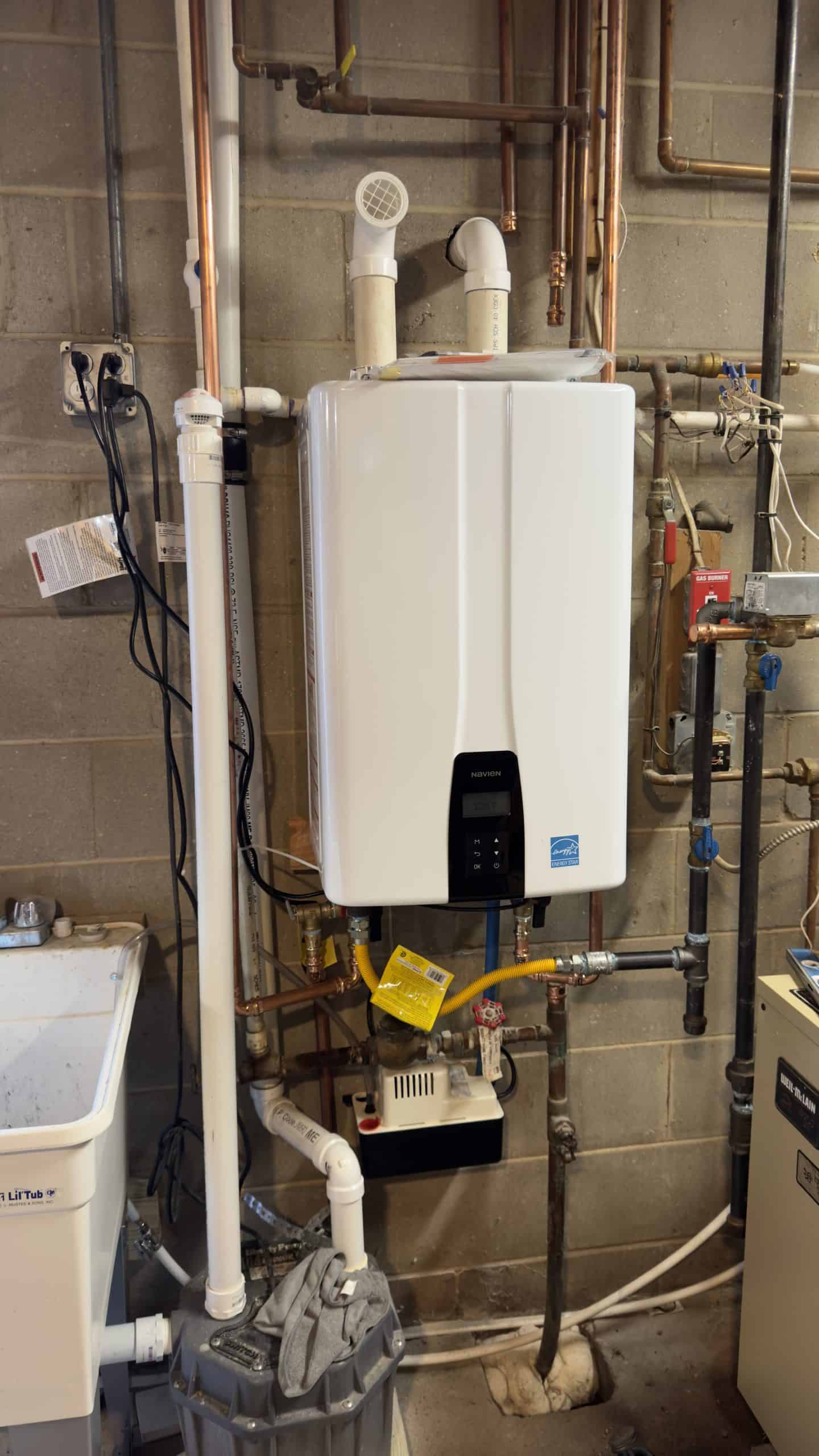
If your tankless water heater starts strong then shuts off, or if the water temperature fluctuates between hot and cold, you’re probably dealing with a system overload. Tankless units have a maximum flow rate. When you run the dishwasher, washing machine, and two showers simultaneously, you might exceed that capacity. The unit either can’t keep up with demand, delivering lukewarm water, or it shuts down as a safety measure.
The solution isn’t always buying a bigger unit. Sometimes it’s about managing usage—not running multiple hot water appliances at the same time. For households that consistently need more capacity, installing a second tankless unit or upgrading to a larger model makes sense. But if this is only an issue during peak morning hours when everyone’s getting ready at once, simply staggering showers by 10 minutes solves the problem without spending thousands on new equipment.
Minimum flow rate issues cause similar symptoms. Tankless water heaters need a certain amount of water flowing through them every minute to activate and produce hot water. If you’re barely opening a faucet—maybe just washing your hands or filling a coffee pot—the flow might fall below the minimum threshold. The unit won’t turn on because it’s designed not to waste energy heating tiny amounts of water. Increasing the flow usually fixes this immediately.
Ignition failures prevent the burner from lighting in the first place. You’ll hear clicking sounds but see no flame. This typically points to gas supply issues, closed valves, or a faulty ignition pack. Start by checking that your gas valve is fully open. If you’ve recently had work done on your gas lines, or if other gas appliances in your home aren’t working properly, the problem might be with your gas supply rather than the water heater itself. For electric tankless units, ignition problems usually trace back to faulty wiring or a failed heating element that needs professional replacement.
Ventilation blockages can also shut down a tankless water heater. These units require proper venting to operate safely. If the venting system gets blocked by debris, nests, or improper installation, the unit will overheat or shut down to prevent carbon monoxide buildup. Never ignore ventilation issues. If you suspect a blockage or smell anything unusual near your tankless water heater, turn it off and call a professional immediately.
Some tankless water heater problems are DIY-friendly. Resetting a tripped breaker? You can handle that. Cleaning an inlet filter? Follow the manufacturer’s instructions and you’re good. Adjusting temperature settings? Simple. But there’s a clear line between basic troubleshooting and repairs that require professional expertise.
Gas line work is never a DIY project. If you suspect a gas leak, smell that distinctive rotten egg odor, or need to replace gas valves or connections, call a licensed professional. The risks—fire, explosion, carbon monoxide poisoning—are too serious to mess around with. Same goes for significant electrical work. Replacing a heating element or dealing with faulty wiring requires shutting off power, working with high-voltage connections, and ensuring everything meets code when you’re done. Unless you have electrical training, this isn’t the time to watch a YouTube video and hope for the best.
Persistent error codes that don’t clear after basic troubleshooting also signal it’s time to call for help. Modern tankless water heaters have diagnostic systems that display error codes when something goes wrong. Your owner’s manual explains what each code means and what steps to take. If you’ve followed those steps and the error keeps coming back, there’s an underlying issue that needs professional diagnosis. Ignoring recurring error codes doesn’t make them go away—it just gives small problems time to become expensive failures.
In Monmouth County, where coastal conditions accelerate wear on water heating equipment, professional maintenance catches problems early. Annual service visits include descaling the heat exchanger, inspecting electrical connections, checking gas pressure and combustion, testing safety features, and verifying proper venting. That preventive approach extends the life of your tankless water heater and prevents the middle-of-winter failures that always seem to happen at the worst possible time.
Gas water heaters fail for different reasons than electric models, and understanding those differences helps you troubleshoot effectively. The pilot light is usually the first thing to check. This small flame ignites the main burner when your water needs heating. If it goes out, you get no hot water. Relighting the pilot light often solves the problem immediately—just follow the instructions on the front of your water heater or in your owner’s manual.
But if the pilot light won’t stay lit, you’re dealing with a deeper issue. A faulty thermocouple is the most common cause. This small copper sensor sits in the pilot flame and tells the gas valve whether the pilot is burning. When the thermocouple wears out or gets dirty, it stops sending the right signal to the gas valve, which shuts off gas flow as a safety measure. Cleaning the thermocouple sometimes helps temporarily, but if the pilot keeps going out, replacement is the real solution.
Article details:
Share:
Continue learning: