Get the real numbers on tankless water heater installation cost in 2026—unit prices, labor rates, permits, and infrastructure upgrades for Monmouth County, NJ.
Share:
Summary:
You’re standing in your basement looking at that old water heater, and you know it’s time. Maybe you’ve run out of hot water one too many times. Maybe you’re tired of that bulky tank eating up floor space. Or maybe you just want to stop paying to heat 50 gallons of water around the clock.
The question isn’t whether a tankless water heater makes sense. It’s what the real tankless water heater installation cost will be for your home.
Not just the sticker price you see online. The actual number—including the unit, installation, permits, upgrades, and all the stuff nobody mentions until you’re already committed. Because here’s the reality: what you pay depends entirely on your home’s current setup. Some Monmouth County homeowners spend $2,500. Others hit $5,600. The difference comes down to what your house needs to support a tankless system safely and effectively.
The total tankless water heater installation cost in 2026 typically ranges from $1,400 to $5,600 for Monmouth County homes, with most installations landing between $2,500 and $3,500. That’s a significant spread, and understanding why helps you budget accurately.
Unlike swapping one tank for another, tankless installation often requires infrastructure changes. The unit itself accounts for about 40-45% of your total cost. The rest covers professional labor, permits, materials, and potentially upgrades to gas lines, electrical panels, or venting systems. Your home’s age, current setup, and the type of unit you choose all factor into the final price.
Here’s what you need to know about each cost component and what it means for your specific situation.
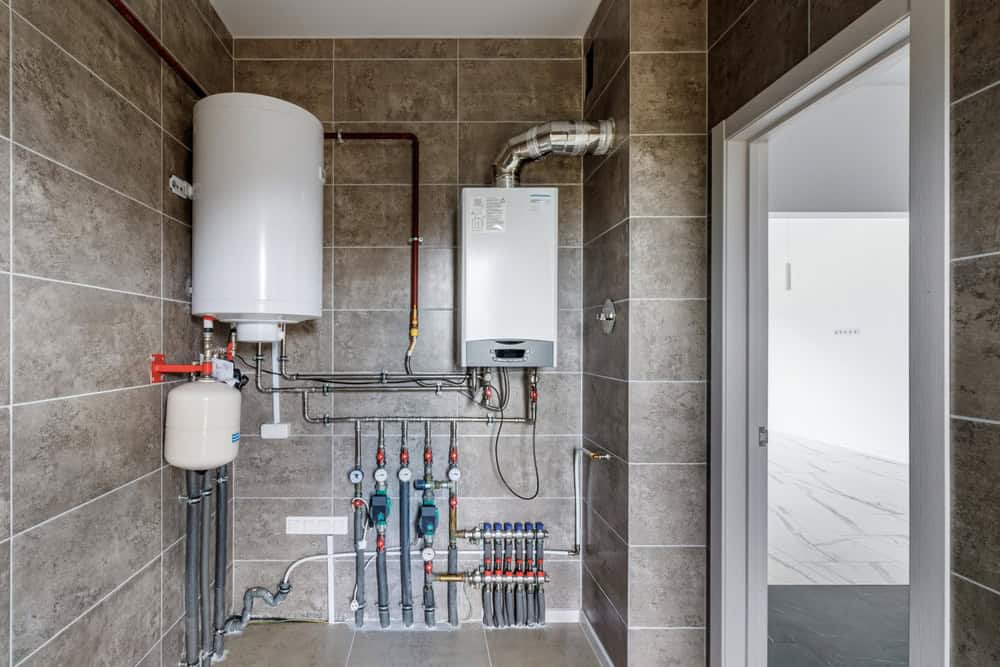
The tankless water heater unit itself runs $600 to $2,600, depending on whether you choose electric or gas, what capacity you need, and which brand you select.
Electric tankless units cost $600 to $1,000 for the equipment alone. They’re cheaper upfront and simpler to install since they don’t need gas lines or complex venting. The trade-off? Electric models typically require dedicated 40 to 60 amp circuits. If your electrical panel is already at capacity—common in older Monmouth County homes—you’re adding a panel upgrade that costs $850 to $1,700.
Gas tankless water heaters run $1,000 to $2,600 for the unit. They deliver higher flow rates, making them better choices for larger households or homes with multiple bathrooms. But most gas tankless units need a 3/4-inch gas line to supply adequate fuel. If your home has the 1/2-inch line that was standard decades ago, you’ll pay $200 to $800 for the upgrade.
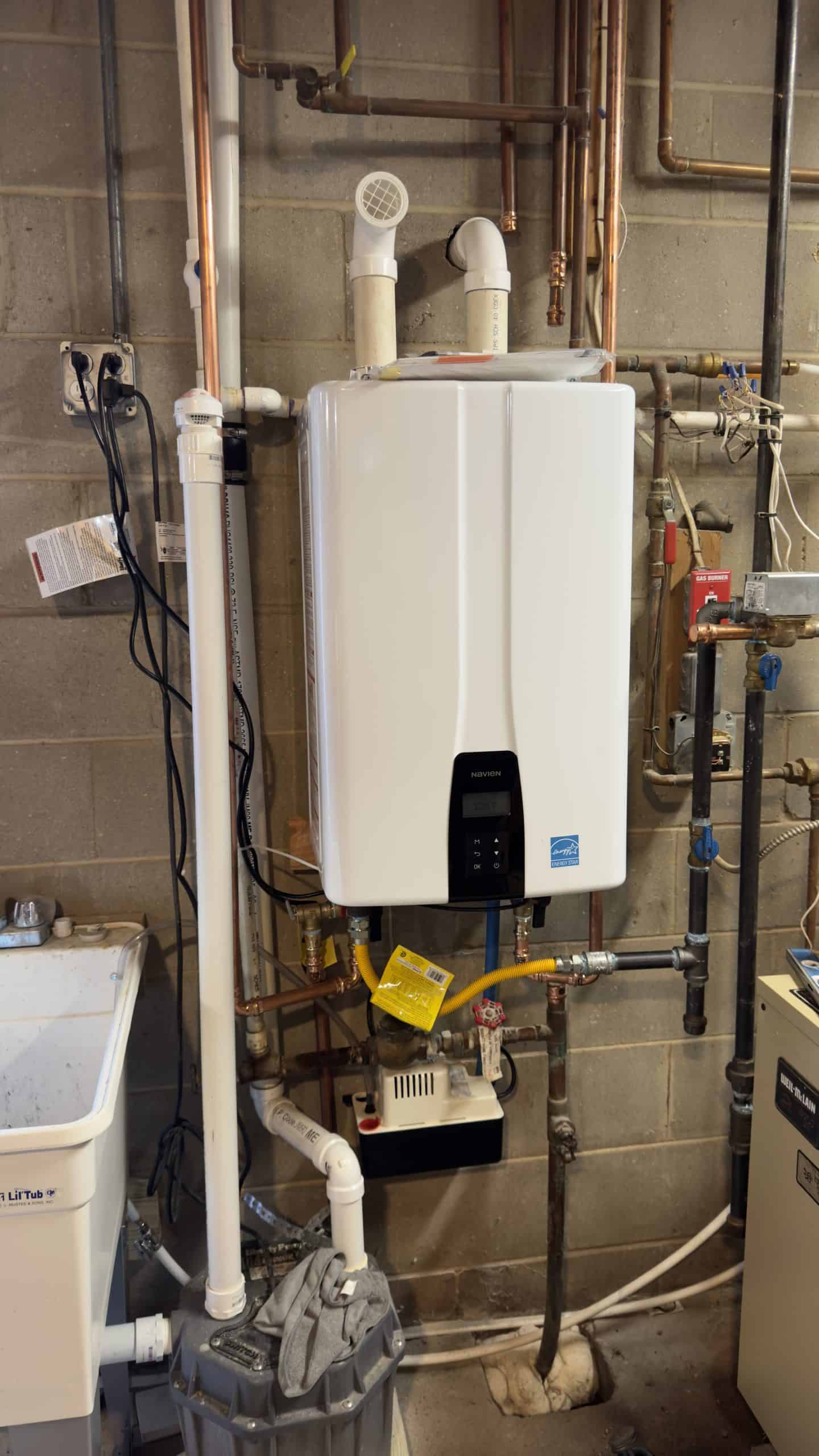
Brand choice affects both price and performance. Rinnai has manufactured tankless systems for over 80 years and is known for reliability and high flow rates. Navien pioneered condensing technology with efficiency ratings up to 0.96 UEF and built-in recirculation that eliminates the cold water sandwich effect. Rheem offers proven American engineering with strong warranty coverage. Noritz focuses on durability, with some models carrying 25-year heat exchanger warranties.
Your specific needs determine the right choice. Large family running multiple showers simultaneously? You need the flow rate Rinnai delivers. Want maximum efficiency and instant hot water throughout your home? Navien’s technology makes sense. Looking for solid performance at a reasonable price point? Rheem or Noritz fit the bill. We can match the right unit to your household’s hot water demands and your budget.
The unit represents the foundation of your investment. Professional installation ensures that foundation supports reliable performance for the next 20 years.
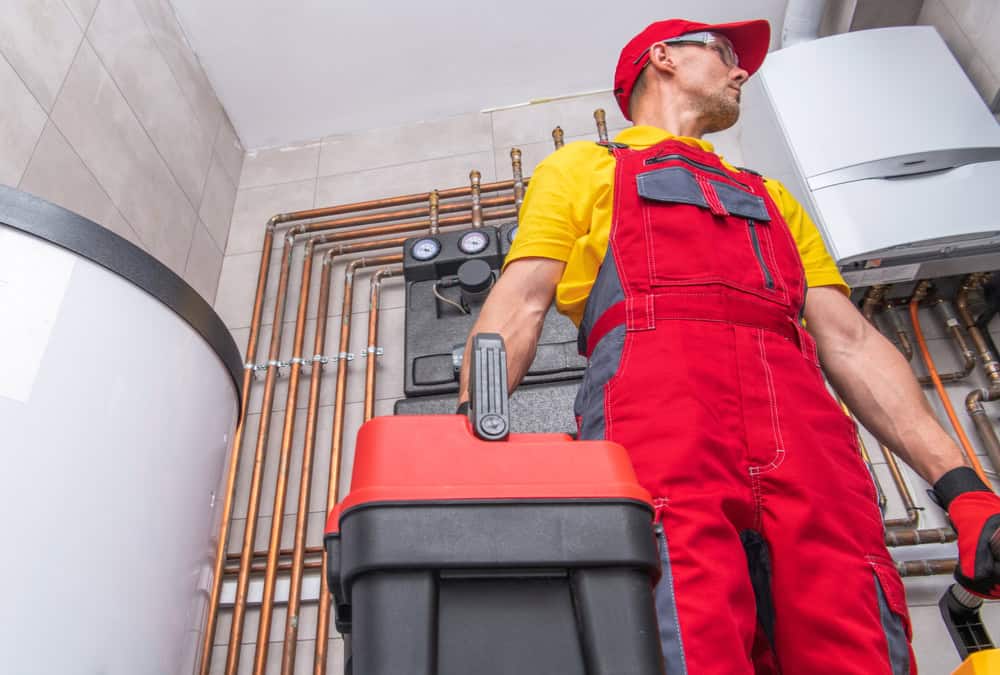
Labor for tankless hot water heater installation typically costs $600 to $2,500, reflecting the skill and time required to do the job correctly. This isn’t a straightforward appliance swap. It’s precision work that requires plumbing expertise, gas line knowledge, electrical understanding, and familiarity with New Jersey building codes.
Most tankless installations take 3 to 10 hours. A straightforward replacement where infrastructure is already in place might take 3 to 4 hours. Converting from a traditional tank to tankless can take 6 to 10 hours because we need to remove the old unit, potentially reroute pipes, install wall mounting brackets, upgrade gas or electrical service, and set up proper venting for gas models.
Licensed plumbers in Monmouth County charge $45 to $200 per hour, with rates reflecting their experience, licensing requirements, and the job’s complexity. You’re paying for expertise that prevents problems, not just time on site.
That labor investment covers removing and disposing of your old water heater, mounting the new tankless unit on the wall to free up floor space, connecting water supply lines, hooking up gas or electrical service, installing the venting system for gas units, testing the complete system, and ensuring everything meets New Jersey’s Uniform Construction Code.
Some installations require additional work beyond the basics. Switching from electric to gas or vice versa adds complexity. Relocating the water heater to a different spot means running new pipes. Adding water pressure adjustments or whole-house water softeners to protect your investment increases labor time.
The difference between a $600 labor bill and a $2,500 one usually comes down to your home’s current setup and how much needs to change. That’s why detailed upfront assessments matter. We evaluate your specific situation, identify what’s required, and provide a written estimate covering everything. No discovering “issues” halfway through. No surprise charges when the work is done.
Professional installation protects your investment in ways DIY never can. It keeps your manufacturer’s warranty valid, ensures code compliance, prevents safety hazards with gas lines, and gives you a system that works correctly from day one. When you’re spending thousands on a tankless water heater, professional installation isn’t an expense—it’s essential protection.
Beyond the unit and labor, several other expenses can affect your total tankless hot water heater installation cost. These aren’t surprise fees or contractor markups. They’re legitimate requirements that depend on your home’s current infrastructure and local regulations.
Understanding these potential costs upfront prevents budget shock and helps you plan realistically for the complete project. Here’s what you might encounter.
New Jersey requires permits for water heater installation, and that requirement protects both your safety and your property value. Permits ensure your installation meets state standards, passes inspection, and gets properly documented.
Permit fees in New Jersey range from $50 to $300, depending on which Monmouth County municipality you live in. Each township has its own construction office with specific fee structures. Some charge flat rates for water heater permits. Others calculate fees based on project value or the number of plumbing fixtures involved.
Skipping the permit creates serious problems. New Jersey municipalities can fine you hundreds of dollars per day for unpermitted work. Your homeowner’s insurance might deny claims related to unpermitted installations. Future home sales can hit snags when buyers discover unpermitted work. And if something goes wrong with an unpermitted installation, you’re fully liable.
We handle permit applications as part of our service. We know exactly what your local construction office requires, which forms need filing, and how to schedule mandatory inspections. This administrative work factors into your labor cost, saving you from navigating New Jersey’s permitting system yourself.
After installation, a municipal inspector verifies everything meets the New Jersey Uniform Construction Code. They check gas line sizing and connections, venting installation and materials, electrical work and grounding, water connections and pressure, and proper unit mounting. Once you pass inspection, you receive documentation that protects your investment and stays with your home’s records.
Permit costs represent a small percentage of your total project expense, but the protection they provide is substantial. Budget for them upfront and let us manage the process.
This is where the cost of on demand water heater installation varies most from home to home. Your existing infrastructure determines whether you need upgrades, and those upgrades ensure safe, effective operation.
Gas line upgrades rank among the most common additional expenses. Tankless water heaters use three to four times more BTUs than traditional tank heaters during operation. They don’t consume more gas overall—they heat water only when you need it. But they require a larger initial fuel supply to heat water instantly. Most tankless units need a 3/4-inch gas line. Many Monmouth County homes built before 2000 have 1/2-inch lines that worked fine for tank heaters but can’t supply enough gas for tankless operation. Upgrading your gas line costs $200 to $800, depending on the distance from your meter to the water heater location.
Electrical upgrades can significantly impact your budget, particularly for electric tankless units. These systems draw substantial power, requiring dedicated 40 to 60 amp circuits. If your electrical panel lacks capacity or available breaker spaces, you’ll need a panel upgrade costing $850 to $1,700. Even gas tankless units need electrical connections for electronic controls and ignition, though power requirements are minimal compared to electric models.
Venting for gas tankless units requires specific materials. These systems need Category III stainless steel venting, which resists corrosion and seals gas-tight to prevent carbon monoxide leaks. You can’t reuse your old tank heater’s venting. The system can be power-vented (using indoor air for combustion and venting exhaust outside) or direct-vented (pulling air from outside through one chamber and exhausting through another). New venting installation typically costs $100 to $600, depending on complexity and whether you’re venting through a wall or roof.
Water treatment systems are optional but worth considering. Hard water is common in parts of Monmouth County, and mineral buildup in tankless heat exchangers reduces efficiency and can shorten system lifespan. A whole-house water softener costs $1,000 to $2,500 installed, but it protects your tankless investment and reduces annual maintenance needs.
Old unit removal and disposal usually runs $100 to $500, though we include this in our installation quote. Confirm whether removal is included in your estimate.
The smartest approach? Get a thorough assessment before committing. We evaluate your gas line size, electrical capacity, venting options, and water quality, then provide a complete estimate including any necessary upgrades. This upfront transparency eliminates surprises and lets you make informed decisions.
Tankless water heater installation cost in 2026 ranges from $1,400 to $5,600, with most Monmouth County homeowners investing $2,500 to $3,500 for complete installation. That total includes the unit, professional labor, permits, and necessary upgrades to gas lines, electrical systems, or venting.
The upfront cost exceeds traditional tank replacement, but you’re investing in more than hot water. You get 20+ years of reliable service versus 8-12 years from tank heaters. Your family enjoys endless hot water without running out mid-shower. You save 24-34% on water heating energy costs—$100 to $180 annually for typical households. And you reclaim valuable floor space in your basement or utility room.
Successful tankless installation requires working with licensed, experienced professionals who provide transparent pricing upfront and handle every detail from permits to final inspection. When you know exactly what you’re paying for and why, the decision becomes straightforward.
At AME Plumbing Heating and Cooling, we serve Monmouth County with upfront pricing, licensed professionals, and 0% financing options that make tankless water heater installation accessible. Ready to stop running out of hot water and start saving on energy bills? Reach out to learn what a tankless system would cost for your specific home.
Article details:
Share:
Continue learning: