Tankless water heaters deliver endless hot water on demand while cutting energy costs. Learn how different types work and which system fits your home's needs.
Share:
Summary:
You turn on the shower. You wait. The water’s still cold. Someone else just finished washing dishes, and now you’re stuck waiting for the tank to catch up. Sound familiar?
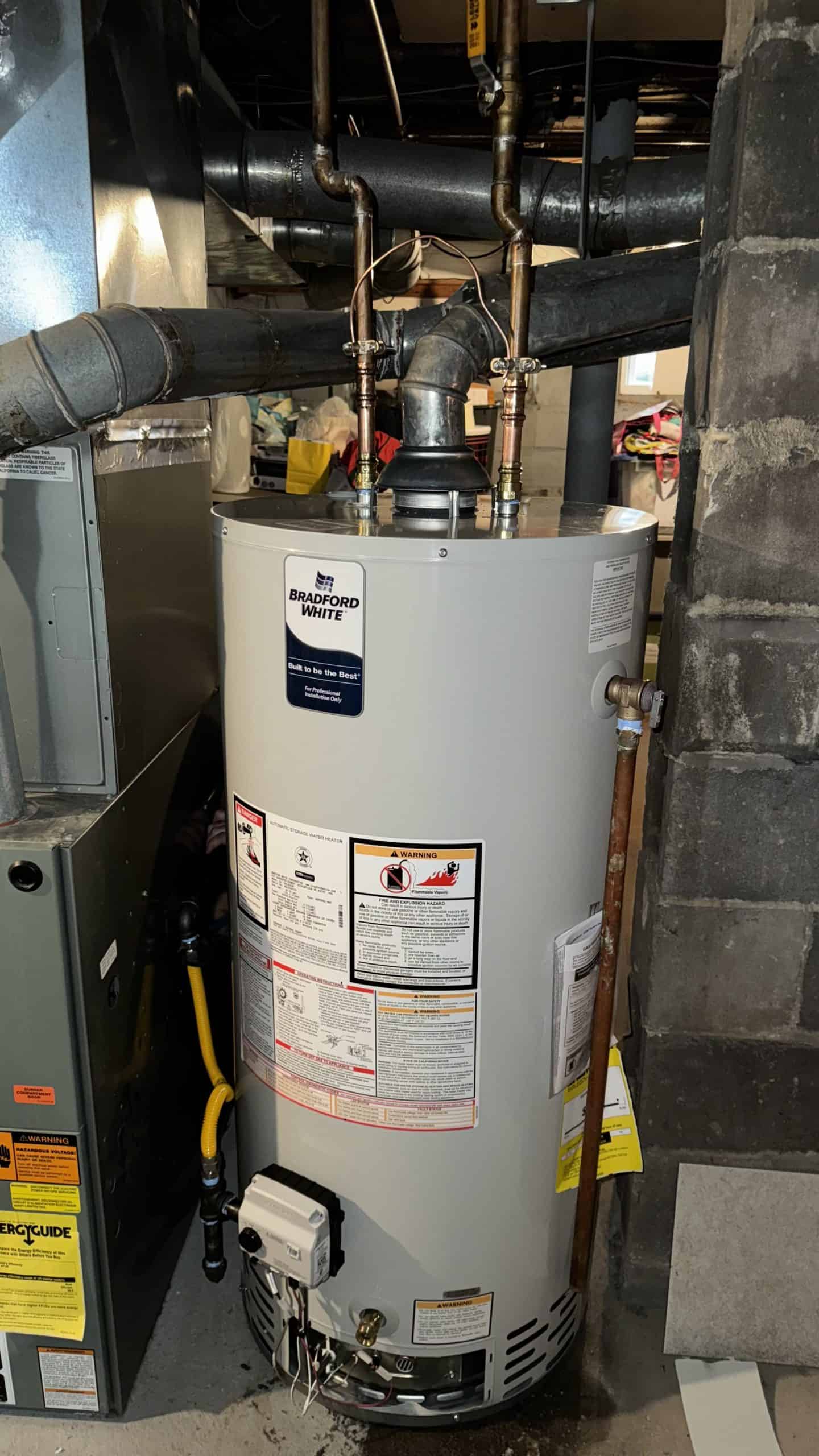
Traditional tank water heaters work fine until they don’t. And when they run out, you’re left standing there wondering why you’re still dealing with technology that wastes energy keeping 50 gallons hot even when you’re asleep.
Tankless water heaters flip that whole system on its head. Instead of storing and constantly reheating water, they heat it the second you need it. No waiting for a refill. No running out mid-shower. Just hot water, whenever you want it, for as long as you need it.
Here’s what you actually need to know about how they work, which type makes sense for your home, and whether the switch is worth it.
Tankless water heaters don’t store anything. When you turn on a hot water tap, cold water flows into the unit and passes through a heat exchanger. A gas burner or electric heating element fires up instantly, heating the water to your set temperature as it moves through. The water comes out hot on the other side.
That’s it. No tank. No waiting. No keeping 40 gallons hot just in case you might need it later.
The system only runs when you’re actually using hot water. Turn off the tap, and the unit shuts down. That’s where the energy savings come from—you’re not paying to maintain temperature around the clock like you do with a tank.
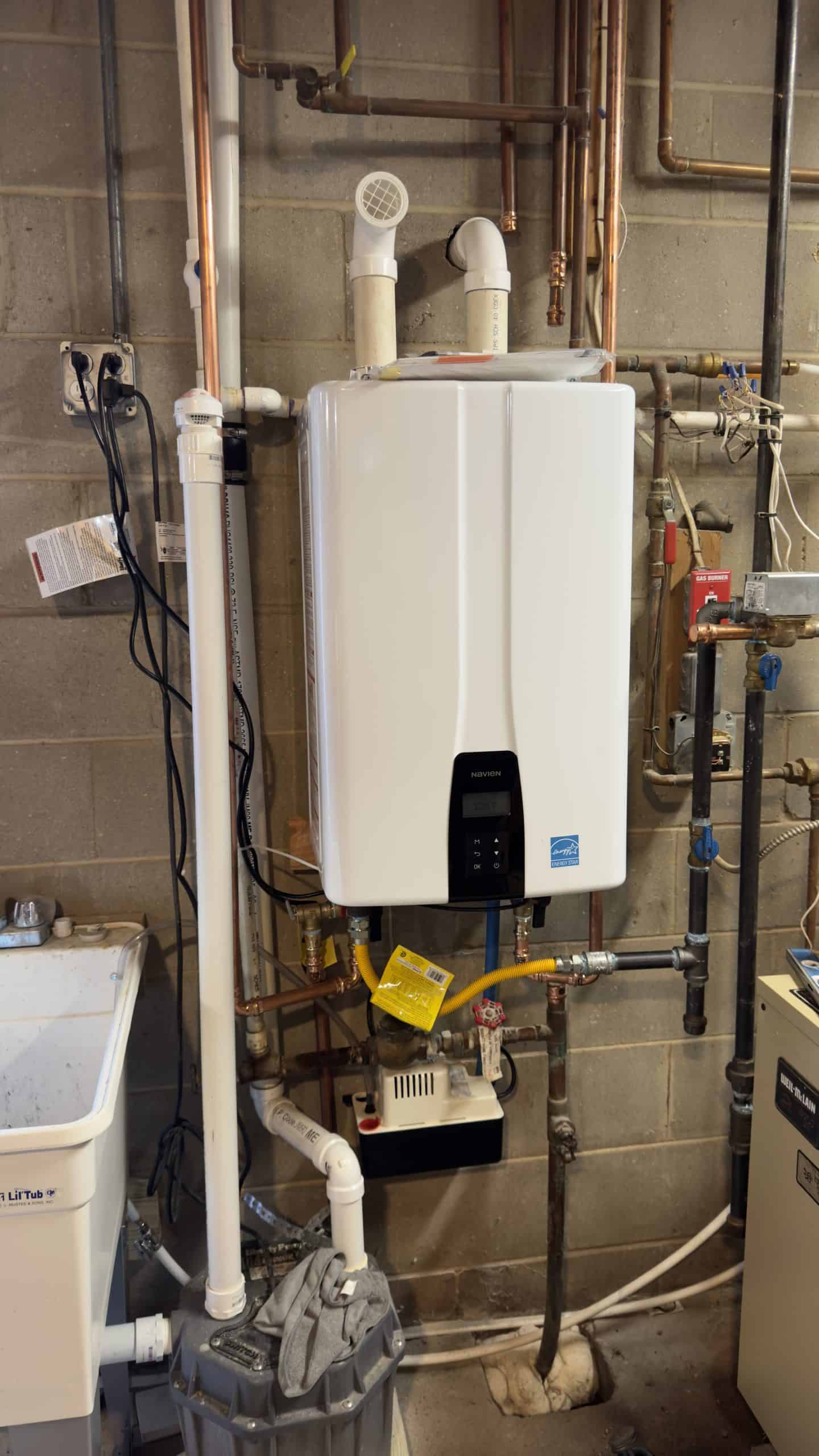
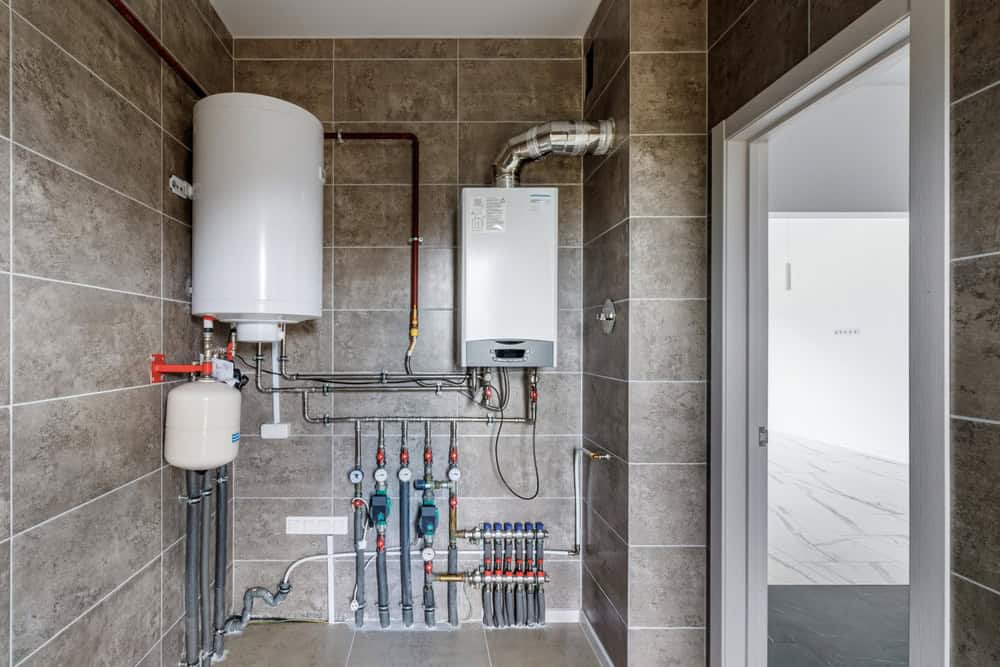
The heart of any tankless system is the heat exchanger. In gas models, it’s usually made from copper or stainless steel to handle high heat and resist corrosion. Electric models use resistance coils that heat water as it flows past.
A flow sensor detects when you’ve opened a tap and signals the system to fire up. Most units won’t activate until water flow hits around 0.4 gallons per minute, which prevents the system from cycling on and off for tiny drips. Once flow is detected, the burner or heating elements kick in within seconds.
Temperature controls let you set your desired output, usually anywhere from 100°F to 140°F. The system continuously monitors incoming water temperature and adjusts heating power to hit your target. If your groundwater comes in at 52°F in winter (pretty typical for New Jersey), the unit works harder than it would in summer when inlet temps might be 65°F or higher.
Safety features are built in. High-limit switches prevent overheating. Pressure relief valves handle any unexpected pressure buildup. Gas models include flame sensors and automatic shutoffs if combustion isn’t happening correctly.
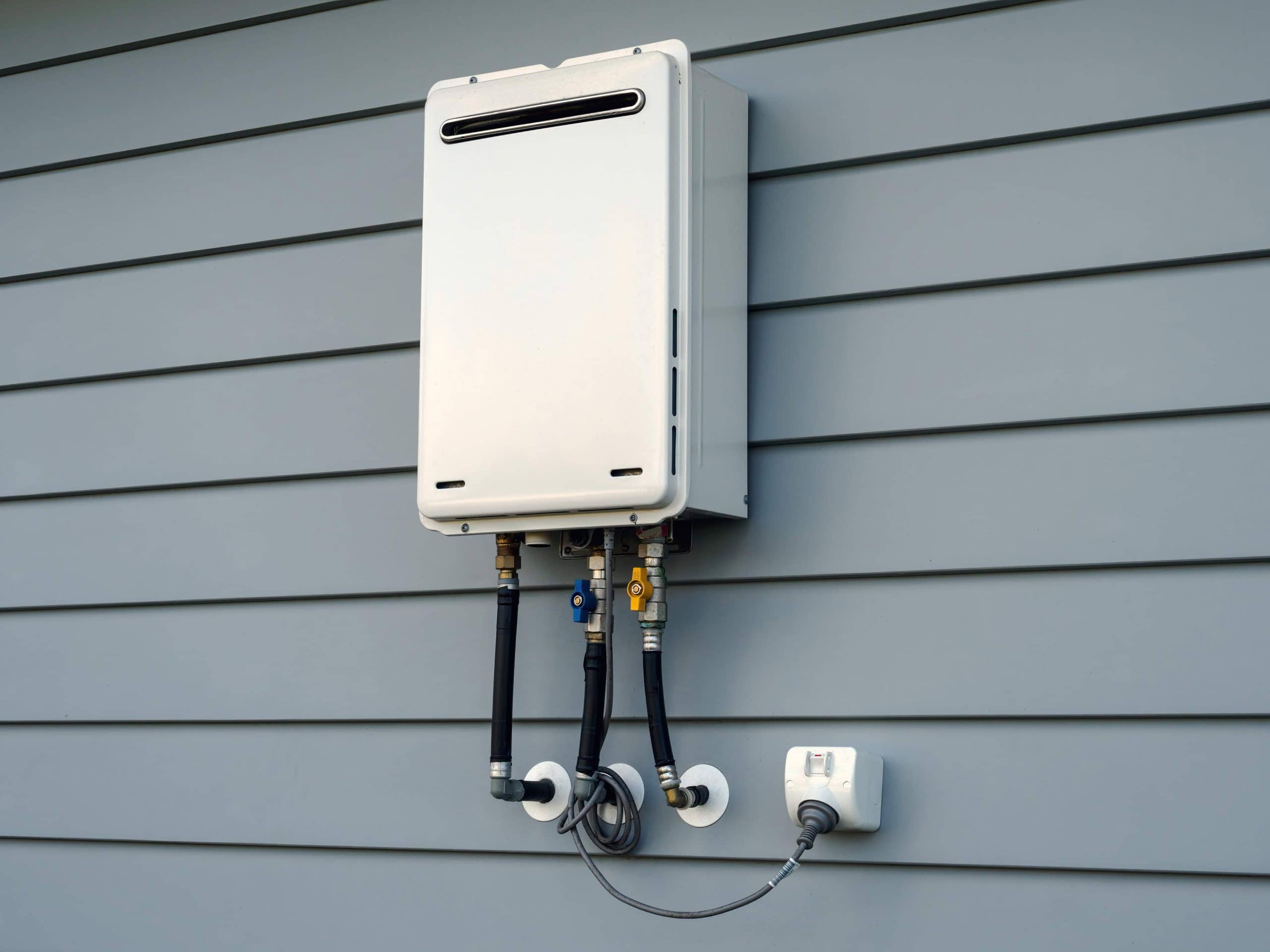
The whole package is compact. Most whole-house units are about the size of a small suitcase and mount on the wall. You’re not giving up floor space to a bulky tank anymore.
What matters most is that all these components work together to deliver a constant supply of hot water without the inefficiency of storage. You’re heating water on demand, not on standby.
The big question everyone asks: does it really never run out?
Technically, yes. A tankless system can run indefinitely. But there’s a catch—it’s not about capacity, it’s about flow rate. Your unit can only heat so many gallons per minute. If you’re trying to pull more hot water than the system can heat in real time, you’ll get lukewarm water instead of hot.
Flow rate is measured in gallons per minute, or GPM. A typical shower uses about 2.5 GPM. A bathroom sink might use 0.5 to 1 GPM. Your dishwasher pulls around 1.5 GPM. If you’ve got two showers running at the same time, you’re looking at 5 GPM of demand.
Gas tankless units generally handle higher flow rates—anywhere from 5 to 11 GPM for whole-house models. That’s enough for most households to run multiple fixtures simultaneously without issue. Electric models typically max out around 2 to 5 GPM, which works fine for smaller homes or point-of-use applications but might struggle if everyone’s showering at once.
Temperature rise also matters. That’s the difference between your incoming cold water temperature and your desired hot water temperature. In Monmouth County, groundwater averages around 52°F. If you want 110°F water for a shower, that’s a 58-degree temperature rise. The bigger the rise, the harder your unit works, and the lower your effective flow rate.
This is why proper sizing is critical. A unit that’s too small won’t keep up with your household’s peak demand. You’ll end up with inconsistent temperatures or reduced flow. A unit that’s too large costs more upfront and doesn’t provide any real benefit.
Most families with 2-3 bathrooms do well with a unit rated for 6-8 GPM in our climate. Larger homes or households with high simultaneous usage might need 9-11 GPM or even multiple units. The only way to know for sure is to calculate your actual peak usage and match it to the right equipment.
Not all tankless systems are built for the same job. You’ve got whole-house units designed to supply every fixture in your home, point-of-use models that serve a single sink or shower, and everything in between.
The right choice depends on your space, your usage patterns, and what you’re trying to solve. Running out of hot water in a four-bathroom house is a different problem than waiting 45 seconds for hot water to reach a remote bathroom sink.
Here’s how the main types break down and where each one actually makes sense.
Mini tankless units are compact, low-flow systems designed for point-of-use applications. Think bathroom sinks, wet bars, workshop sinks—anywhere you need hot water fast but don’t need a lot of it.
These units typically deliver between 0.3 and 1.0 GPM. That’s enough to handle a single faucet comfortably, but not much more. Most are electric and can run on standard 120-volt or 240-volt circuits depending on the model. Installation is straightforward—mount it under the sink or in a nearby cabinet, connect to your water line and electrical supply, and you’re done.
The big advantage is eliminating wait time. If you’ve got a bathroom that’s far from your main water heater, you might wait a minute or more for hot water to travel through the pipes. A mini unit installed right at the sink delivers hot water in seconds. You’re also not wasting water down the drain while you wait.
Energy savings add up too. Instead of maintaining a hot water line running across your entire house, you’re only heating water at the exact moment and location you need it. For sinks where you’re just washing hands or rinsing a few dishes, that’s often a smarter approach than pulling from a central system.
These units work well as supplements to existing water heaters. Maybe your main system handles showers and laundry, but you add a mini unit to that distant powder room or garage sink. You’re not replacing your whole setup—you’re just solving a specific problem.
Cost is reasonable. Basic mini tankless units run a few hundred dollars. Installation is simple enough that it doesn’t require major plumbing work or expensive modifications. For what you get—instant hot water exactly where you want it—it’s often worth it.
Indoor installations give you flexibility but come with specific requirements you need to understand before you commit.
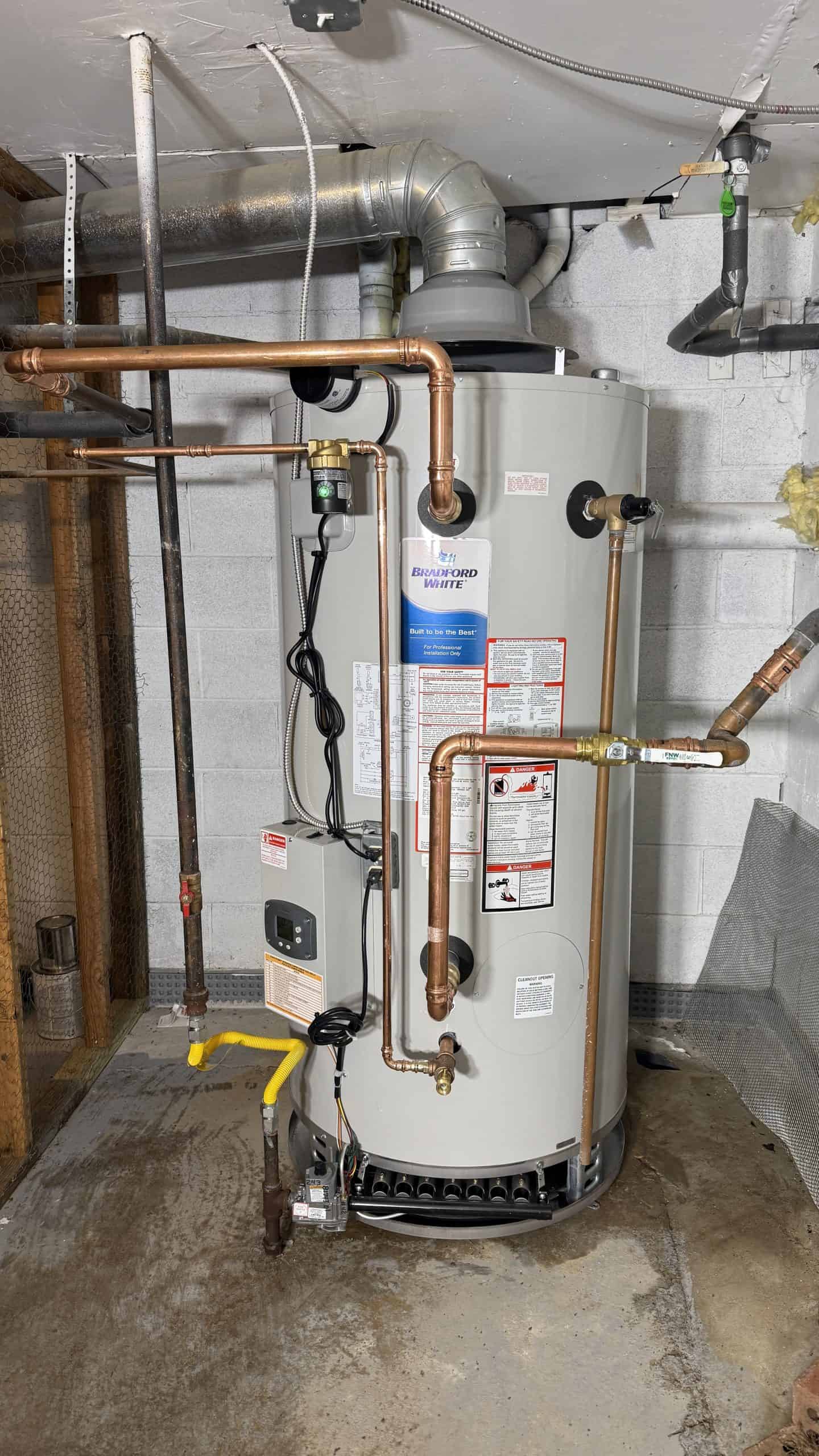
Gas-fired indoor units require proper venting. Combustion creates exhaust gases that have to go somewhere safe—usually through a dedicated vent pipe to the exterior. Most modern tankless systems use sealed combustion, meaning they pull air from outside for burning and vent exhaust back outside. This is safer and more efficient than relying on indoor air.
Venting typically uses stainless steel pipe rated for the temperatures and pressures these units produce. Condensing models, which extract more heat from exhaust gases, can use PVC or polypropylene venting because their exhaust runs cooler. Either way, venting has to follow manufacturer specs and local building codes. Improper venting isn’t just inefficient—it’s dangerous.
Clearance matters. You need space around the unit for airflow, service access, and safety. Most manufacturers specify minimum clearances from walls, ceilings, and combustible materials. Cramming a unit into a tight closet without proper clearance can create overheating issues or code violations.
Gas line capacity is another consideration. Tankless units require more gas flow than traditional tank heaters because they’re heating water rapidly on demand. Many older homes have half-inch gas lines that won’t supply enough volume. Upgrading to three-quarter-inch lines is common during installation. We always verify line size and pressure before finalizing equipment selection.
Electric indoor units skip the venting hassle but bring their own challenges. Whole-house electric tankless systems pull serious amperage—often 100 to 150 amps or more. That means dedicated circuits, heavy-gauge wiring, and in many cases, an electrical panel upgrade. If your home currently has 100-amp service, you might need to bump up to 200 amps to support a whole-house electric tankless system.
Location choice affects performance. Installing close to your main hot water usage areas—bathrooms, kitchen, laundry—reduces the distance water has to travel. Shorter pipe runs mean faster hot water delivery and less heat loss along the way.
Indoor installations also give you year-round protection from weather. Units aren’t exposed to freezing temperatures, rain, or corrosive coastal air. That can extend equipment life and reduce maintenance needs compared to outdoor installations.
The tradeoff is that you’re dedicating indoor space to the equipment. Even though tankless units are compact compared to tanks, you still need wall space, access for service, and compliance with all the clearance and venting requirements. For many homes, that’s worth it to keep everything protected and centrally located.
Tankless water technology works. You get endless hot water, lower energy bills, and a longer-lasting system that takes up less space. But none of that matters if you choose the wrong type or size for your home.
The difference between a system that works flawlessly and one that leaves you frustrated comes down to proper sizing, understanding your household’s actual usage, and working with someone who knows how to match equipment to real-world conditions.
If you’re in Monmouth County and considering the switch, we can walk you through the options, calculate your flow rate needs, and handle the installation from permits to final testing. No guessing. No surprises. Just straight answers and quality work backed by over 20 years of experience serving local homeowners.
Article details:
Share:
Continue learning: