Water heater emergency? We deliver 24/7 water heater services across Monmouth County, NJ—from leak repairs to full replacements, with transparent pricing and licensed expertise you can trust.
Share:
Summary:
Cold showers wake you up fast. Water pooling around your water heater at 6 AM wakes you up faster.
When your water heater quits, you’re not just inconvenienced. Every part of your daily routine stops. Showers, dishes, laundry, cooking. All of it depends on hot water you suddenly don’t have.
You need answers. What’s wrong? Can it be fixed? How much will this cost? Most importantly—who can you trust to handle it without emptying your wallet or making things worse?
Professional water heater services cover more than emergency repairs. They include the maintenance and expertise that keep your system running when you need it most. Let’s start with what comprehensive service actually means.
Professional water heater services cover more than showing up when something breaks. You’re looking at a full range of solutions designed to keep hot water flowing reliably in your Monmouth County, NJ home.
Emergency Water Heater repairs handle urgent situations. Leaks, no hot water, strange noises, safety concerns. These need immediate attention because they escalate quickly—water damage, complete system failure, safety hazards with gas units.
Routine maintenance keeps systems running efficiently. Annual flushing removes sediment that settles at the tank bottom. Anode rod inspections catch corrosion before it eats through your tank. Thermostat checks ensure proper temperature without wasting energy. These simple tasks extend equipment life by years.
Leak diagnosis separates minor fixes from major replacements. Not all leaks mean your tank is finished. Sometimes it’s a valve needing tightening or replacement. Sometimes it’s a loose connection. A professional knows the difference between a $150 repair and a $3,000 replacement—and that knowledge protects your budget. System optimization rounds out comprehensive water heater services. Proper sizing for your household, correct temperature settings, efficient operation. That’s what keeps energy bills reasonable and equipment running longer.
Water pooling around your water heater’s base is never good. But where it’s coming from determines whether you need a repair or a replacement.
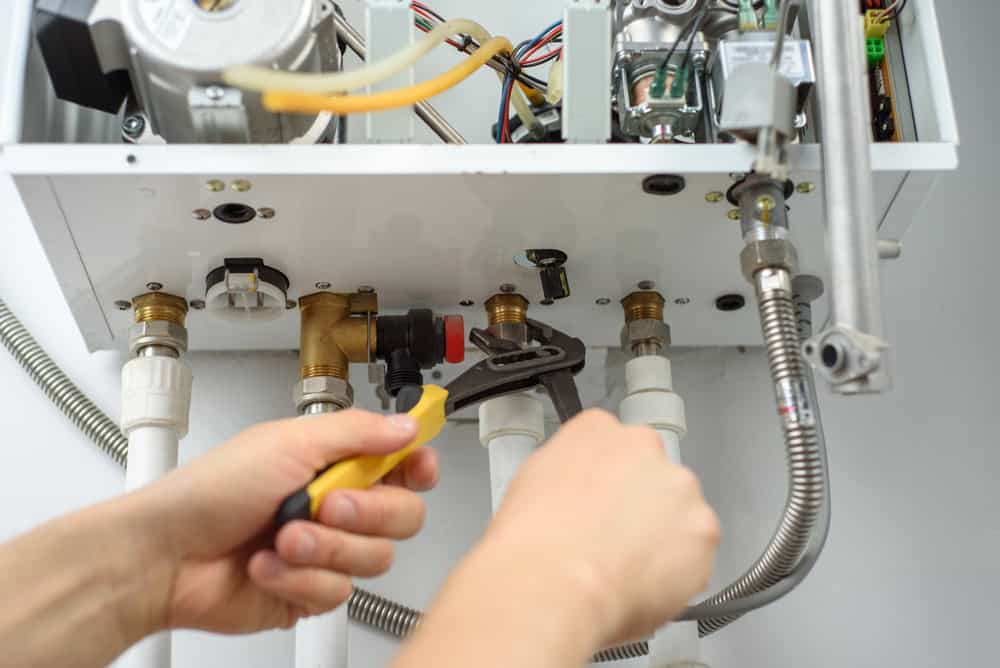
Check the drain valve first. Located near the tank bottom, it’s used for maintenance and flushing. If slightly open or the internal washer has failed, water drips out. This is fixable—a plumber can tighten it or replace the valve. You’re looking at a straightforward repair, not a new water heater.
The temperature and pressure relief valve is another common source. This safety valve releases water when pressure or temperature gets too high inside the tank. If malfunctioning or your heater operates under extreme pressure, water escapes and runs down to the bottom. Again, repairable.
Here’s the hard truth about tank leaks. If water seeps directly from the tank itself—from seams or the bottom of the metal jacket—that’s internal tank failure. In Monmouth County, NJ, the most common cause is sediment buildup from minerals in the water. The area’s iron-rich water accelerates this process.
Sediment hardens at the tank bottom over time. Repeated heating creates hot spots that weaken the metal. The tank corrodes from the inside out. The anode rod sacrifices itself to protect the tank, but eventually depletes. Once gone, corrosive elements attack the steel tank directly.
When the tank itself leaks, replacement is your only option. No patching or sealing fixes internal corrosion. We can quickly identify whether you’re dealing with a valve issue or tank failure. That diagnosis determines whether you’re spending a few hundred dollars or a few thousand.
Don’t ignore even small leaks. What starts as a drip becomes a flood. Water damage to floors, walls, and belongings adds up fast. If your water heater sits in a finished basement or near valuable items, delay gets expensive. Fast.
A leaking hot water heater demands immediate attention. But not all leaks are created equal, and understanding what you’re seeing helps you make smarter decisions.
Top leaks usually point to connection issues. The cold water inlet or hot water outlet pipes may have loose fittings. These connections corrode over time or work themselves loose from thermal expansion and contraction. Relatively easy for a plumber to tighten or replace.
The temperature and pressure relief valve sits at the top or side of most water heaters. If leaking, it’s either doing its job by releasing excess pressure, or it’s faulty and needs water heater replacement. Annual testing prevents surprise failures—lift the lever briefly, water should discharge and stop when released. Continued dripping means replacement time.
Condensation sometimes mimics a leak, especially in humid areas like Monmouth County, NJ. When cold water enters a warm tank, moisture forms on the outside. Usually harmless and temporary. Excessive condensation might indicate poor insulation or an overworked system.
What makes leaks urgent? Water and electricity don’t mix. Electric water heater with water reaching electrical components creates a safety hazard. Shut off power at the breaker immediately.
Gas water heaters with leaks near gas connections are serious. Smell gas—that distinctive rotten egg odor—shut off the gas supply, leave your home, call the gas company. Don’t attempt repairs yourself. Ever.
Leak location reveals severity. Top leaks are often fixable. Bottom leaks, especially from the tank itself, usually mean replacement. Side leaks depend on source—sometimes a replaceable part, sometimes the tank.
Time matters with leaks. Slow drip today becomes steady stream tomorrow. Water damage compounds quickly in coastal New Jersey. Drywall soaks up moisture. Wood floors warp. Mold starts growing in as little as 24-48 hours in humid conditions.
Professional water heater services include leak detection and diagnosis. Our technicians identify the source, assess severity, and give you clear options. That beats guessing or hoping the problem resolves itself.
Your water heater won’t last forever. Knowing what to expect helps you plan ahead instead of scrambling during an emergency.
Tank water heaters typically last 8-12 years with basic maintenance. Skip maintenance, see 6-8 years. Keep up with it, push 12-15 years. Tankless water heaters last longer—15-20 years or more. They heat water on demand rather than storing it, meaning less wear and tear. Not maintenance-free though. Annual descaling is essential, especially with hard water.
Water quality affects lifespan significantly. Monmouth County’s mineral-rich water accelerates sediment buildup and corrosion. Hard water means your tank works harder and ages faster. Installation quality matters—proper venting and connections extend life compared to rushed or incorrect installation. Usage patterns play a role too. Two people put less demand on a water heater than a family of six.

Maintenance isn’t complicated. It just needs to happen consistently. Here’s a realistic schedule for keeping your water heater running efficiently in Monmouth County, NJ.
Annual flushing is essential. Sediment settles at your tank bottom—calcium, magnesium, iron from the water. It hardens into a layer that insulates the heating element from water. Your heater works harder, uses more energy, wears out faster. Flushing removes this sediment. For most Monmouth County homeowners, once yearly is sufficient. Particularly hard water? Twice a year makes sense.
Anode rod inspection every 3-5 years protects your investment. This magnesium or aluminum rod corrodes instead of your tank. It attracts corrosive elements in the water, sacrificing itself to keep your tank intact. Once mostly depleted, those elements attack the tank. Replacing the anode rod costs $150-$300 and adds years to your water heater’s life.
Thermostat checks ensure proper temperature. Most manufacturers recommend 120°F—hot enough for daily use, prevents scalding, reduces energy waste. Settings above 140°F increase burn risk and accelerate mineral buildup. Below 120°F allows bacteria growth.
Pressure relief valve testing happens annually. This valve is critical safety. If pressure or temperature inside the tank gets too high, the valve releases water to prevent tank explosion. Real risk. Test by lifting the lever briefly—water should discharge and stop when released. Nothing happens or it keeps leaking? Replacement necessary.
Visual inspections every few months catch problems early. Look for moisture around the base, rust on tank or pipes, corrosion on connections. Listen for unusual sounds—popping, rumbling, hissing indicates sediment buildup or other issues.
Professional inspections every 1-2 years provide expert assessment. Our technicians spot problems you might miss, test components properly, give honest evaluation of remaining lifespan. Especially valuable as your unit approaches 8-10 years old.
Waking up to no hot water frustrates everyone. Before calling for emergency service, a few quick checks might save time and money.
Electric water heaters: Check your circuit breaker first. Water heaters draw significant power—breakers can trip. Head to your electrical panel, find the breaker labeled for your water heater. Tripped? Flip it back on. Wait a couple hours, test your hot water. Breaker trips again? You’ve got an electrical issue needing professional attention.
The high-temperature cutoff switch is another common culprit. This safety feature shuts off power if water gets too hot. Find it on the water heater itself, usually behind an access panel. Reset button there—press it, you should hear a click. Restores power? You’re back in business. Cutoff keeps tripping? Thermostat might be faulty.
Gas water heaters: Check the pilot light. Out? Follow manufacturer instructions to relight it. Usually involves turning the gas valve to “pilot,” holding down the pilot button, using the igniter. Pilot light won’t stay lit? Might have a faulty thermocouple—the sensor detecting whether the pilot burns. Common repair.
Gas supply issues cause no hot water too. Make sure the gas valve feeding your water heater is fully open. Recent gas work or outage in your area? Supply might be interrupted.
Thermostat problems affect both gas and electric heaters. Set too low or failed? Water won’t heat properly. Electric heaters typically have two thermostats—top and bottom. Upper thermostat fails? Lukewarm water. Lower one fails? Hot water runs out quickly.
Heating element failure is specific to electric water heaters. Most units have two elements. One fails? Reduced hot water availability. Both fail? No hot water at all. Elements can be tested and replaced, but if your water heater is over 10 years old, replacement might make more financial sense.
Sediment buildup doesn’t usually cause complete hot water loss. But it can reduce efficiency until water feels lukewarm. Haven’t flushed your tank in years and you’re in Monmouth County with hard water? Sediment might be your problem.
Age factors in. Water heater approaching or past expected lifespan with no hot water? Multiple components might be failing. Repair costs can approach or exceed new, more efficient unit cost.
Professional diagnosis matters when you can’t identify the problem yourself. We test components, check gas or electrical supply, give clear explanation of what’s wrong and what it costs to fix. Better than guessing or replacing parts that aren’t broken.
Water heater problems don’t wait for convenient times. They happen at 2 AM, on weekends, right when you need hot water most.
The difference between minor inconvenience and major disaster often comes down to response speed and who you call. Professional water heater services give you access to licensed technicians who diagnose problems accurately, provide transparent pricing, complete repairs or replacements correctly the first time.
Regular maintenance extends your water heater’s lifespan and prevents many emergencies. Annual flushing, anode rod replacement, professional inspections cost far less than premature replacement or water damage from leaks.
When you need water heater services in Monmouth County, NJ or Ocean County, we provide 24/7 emergency response, upfront pricing with no hidden fees, and expertise from years of local experience. Licensed, insured, and committed to quality workmanship, we understand unique challenges of serving homes in this area—hard water issues, aging infrastructure, coastal humidity affecting equipment. Contact us when your water heater needs attention.
Article details:
Share:
Continue learning: