
Summary:
Cold water when you’re expecting hot is more than inconvenient—it throws off your entire day. No morning shower. Dishes piling up. Laundry on hold. When your electric water heater stops doing its job, you need answers fast.
The good news is that most electric water heater problems have identifiable causes. Some you can troubleshoot yourself. Others need a professional eye. Either way, understanding what’s happening inside that tank puts you back in control. Let’s start with the most common reason your water heater might not be heating.
Electric Water Heater Not Heating: Common Causes and Solutions
When an electric water heater stops producing hot water, it’s almost always related to power, heating elements, or temperature controls. These systems are straightforward, which means the problem usually falls into one of a few categories.
The most common issue is a tripped circuit breaker. Electric water heaters run on 240-volt circuits, and when the system draws too much power or experiences an electrical surge, the breaker trips to protect your home. Check your electrical panel first—if the breaker for your water heater is in the off position or sitting in the middle, flip it all the way off and then back on.
If power isn’t the problem, you’re likely dealing with a failed heating element, faulty thermostat, or tripped safety switch. Each of these components plays a critical role in heating your water, and when one fails, your hot water supply suffers.
Electric Water Heater Not Heating: Failed Heating Elements
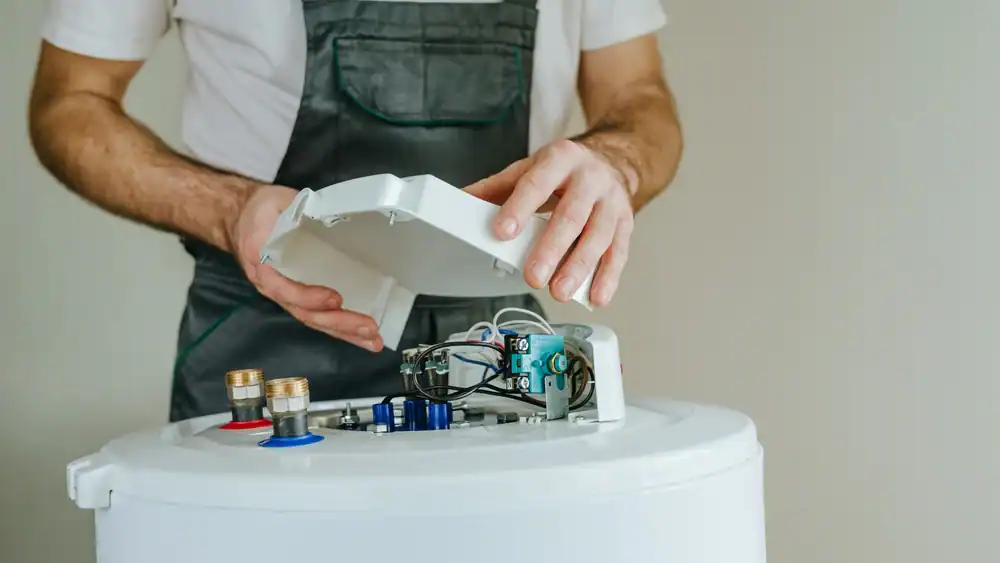
Your electric water heater relies on two heating elements—one at the top of the tank and one at the bottom. These elements work in sequence to heat water efficiently. When the upper element heats the top third of the tank, power switches to the lower element to heat the rest.
When a heating element fails, you might still get some hot water, but not enough. If the upper element burns out, you’ll have very little hot water because the system can’t properly heat the top portion of the tank. If the lower element fails, you’ll get hot water initially, but it runs out quickly because only the top portion stays heated.
Heating elements fail for a few reasons. Sediment buildup is the biggest culprit—minerals from your water settle at the bottom of the tank and coat the elements, forcing them to work harder until they burn out. Normal wear and tear also plays a role, especially in water heaters over 10 years old. Sometimes elements fail prematurely due to “dry fire,” which happens when power is turned on before the tank is completely full of water.
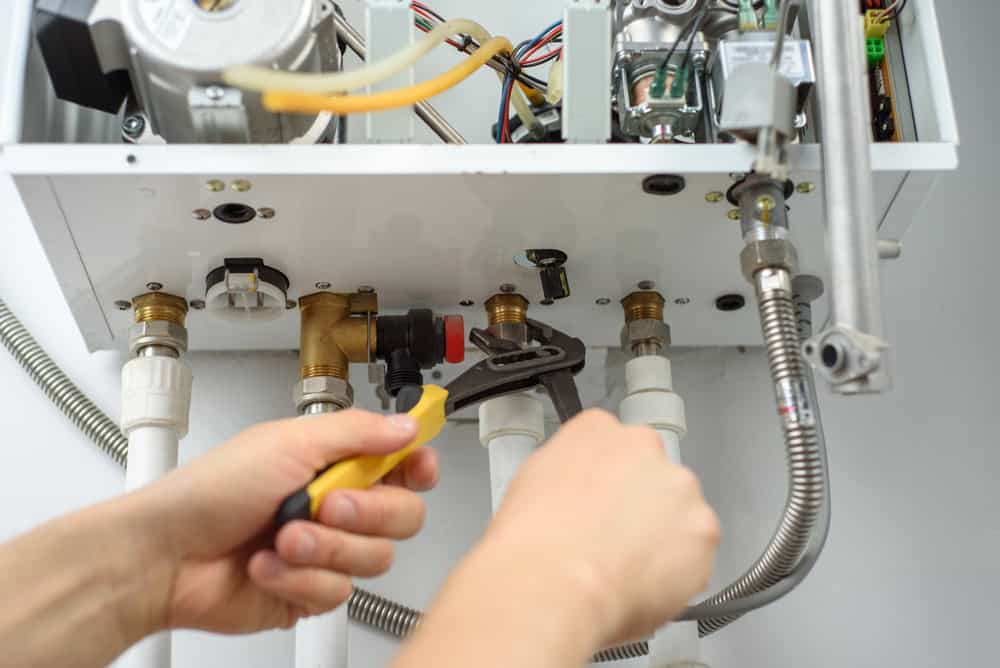
Testing a heating element requires turning off power to the unit, removing the access panel, and using a multimeter to check for continuity. If you’re not comfortable working with electrical components, this is where a professional comes in. Replacing a heating element isn’t overly complex for a licensed plumber, and it’s often more cost-effective than replacing the entire unit—especially if your water heater is relatively new.
Thermostat Issues Causing Temperature Problems
Electric water heaters have two thermostats—an upper and a lower—that control the heating elements and maintain your desired water temperature. When a thermostat malfunctions, you’ll notice inconsistent temperatures, water that’s not hot enough, or no hot water at all.
The upper thermostat is the boss. It controls both heating elements and determines when to switch power between them. If it fails, your entire system can stop heating properly. The lower thermostat only controls the bottom element, so if it goes bad, you’ll still get some hot water, just not as much as you need.
Before assuming your thermostat is broken, check the settings. The recommended temperature is 120°F—hot enough for daily use while preventing scalding and reducing energy costs. If your thermostat is set too low, simply adjusting it might solve your problem. Turn off power to the water heater, remove the access panel, and locate the thermostat dial. Adjust it to 120°F, replace the panel, turn the power back on, and wait a few hours to see if the water temperature improves.
If adjusting the temperature doesn’t help, the thermostat itself might be faulty. A licensed plumber can test the thermostat for continuity using a multimeter and replace it if necessary. Thermostats are relatively inexpensive parts, but the diagnosis requires knowledge of electrical systems and water heater mechanics. Getting it wrong can lead to bigger problems, so professional service makes sense here.
Water Heater Not Working: Complete Troubleshooting Guide
When your water heater stops working, a systematic approach helps you identify the problem quickly. Start with the simplest checks and work your way to more complex diagnostics.
First, verify you actually have a problem with the water heater and not your plumbing. Run hot water at multiple faucets throughout your home. If some taps have hot water and others don’t, you might be dealing with a plumbing issue rather than a water heater failure. Also check that the cold water supply valve to your water heater is fully open—it can sometimes get bumped to a partially closed position.
Next, check your electrical panel for a tripped breaker. This is the most common cause of electric water heater failure and the easiest to fix. If the breaker trips repeatedly after you reset it, don’t keep trying—that indicates a more serious electrical problem that needs professional attention.
Checking the High-Temperature Limit Switch
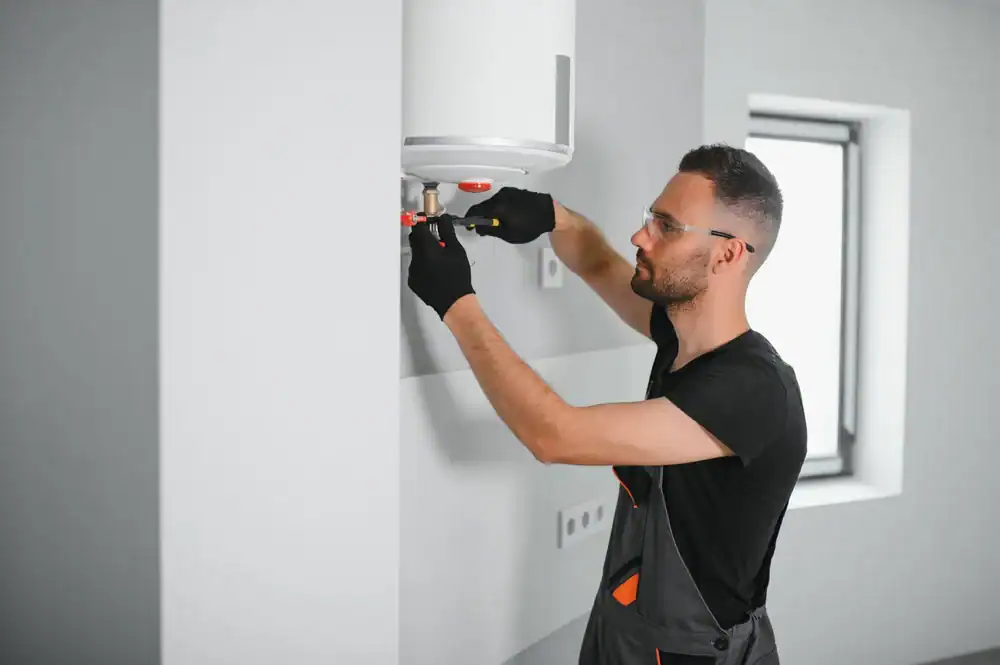
Your electric water heater has a critical safety feature called the high-temperature limit switch, also known as the reset button. This switch is typically located on the upper thermostat behind an access panel. When water temperature exceeds 180°F, the switch automatically cuts power to prevent overheating, scalding, and potential tank damage.
Finding and resetting this switch is straightforward, but it requires caution. First, turn off power to the water heater at your circuit breaker. Remove the upper access panel on the front of your water heater—you might need a screwdriver. You’ll see insulation covering the thermostat and heating element. Carefully pull back the insulation to expose the components.
Look for a small red or black button on the upper thermostat. This is your reset button. Press it firmly until you hear or feel it click. If it clicks, that means the high-temperature limit switch had tripped. Replace the insulation and access panel, then turn the power back on at the breaker. Wait 30 to 60 minutes and check if your water is heating.
If the reset button keeps tripping after you reset it, you have a bigger problem. Repeated tripping usually means a faulty heating element, defective thermostat, or sediment buildup causing the water to overheat. These issues require professional diagnosis and repair. Don’t keep resetting the button—the limit switch is protecting you from a potentially dangerous situation.
Hot Water Heater Maintenance: Preventing Future Problems
Sediment buildup is one of the most overlooked causes of water heater problems. Minerals in your water supply—primarily calcium and magnesium—settle at the bottom of your tank over time. This sediment layer creates multiple problems that directly affect your water heater’s ability to heat water.
First, sediment acts like insulation between the heating element and the water. The element has to work harder and run longer to heat the water, which reduces efficiency and increases your energy bills. Eventually, the constant strain causes the heating element to burn out prematurely. You might hear popping, rumbling, or banging sounds as the element tries to heat through the sediment layer—that’s the sound of your water heater struggling.
Sediment also reduces the amount of usable space in your tank. A 50-gallon water heater with several inches of sediment at the bottom might only hold 40 gallons of water. That means you run out of hot water faster, even though nothing is technically broken.
Flushing your water heater annually removes sediment before it becomes a problem. The process involves attaching a garden hose to the drain valve at the bottom of the tank and draining several gallons of water until it runs clear. If you’ve never flushed your water heater and it’s several years old, you might need to drain it completely to remove all the buildup. Regular maintenance like this extends your water heater’s lifespan significantly. Water heaters that are flushed annually can last 12 years or more, while neglected units might fail after 8 years.
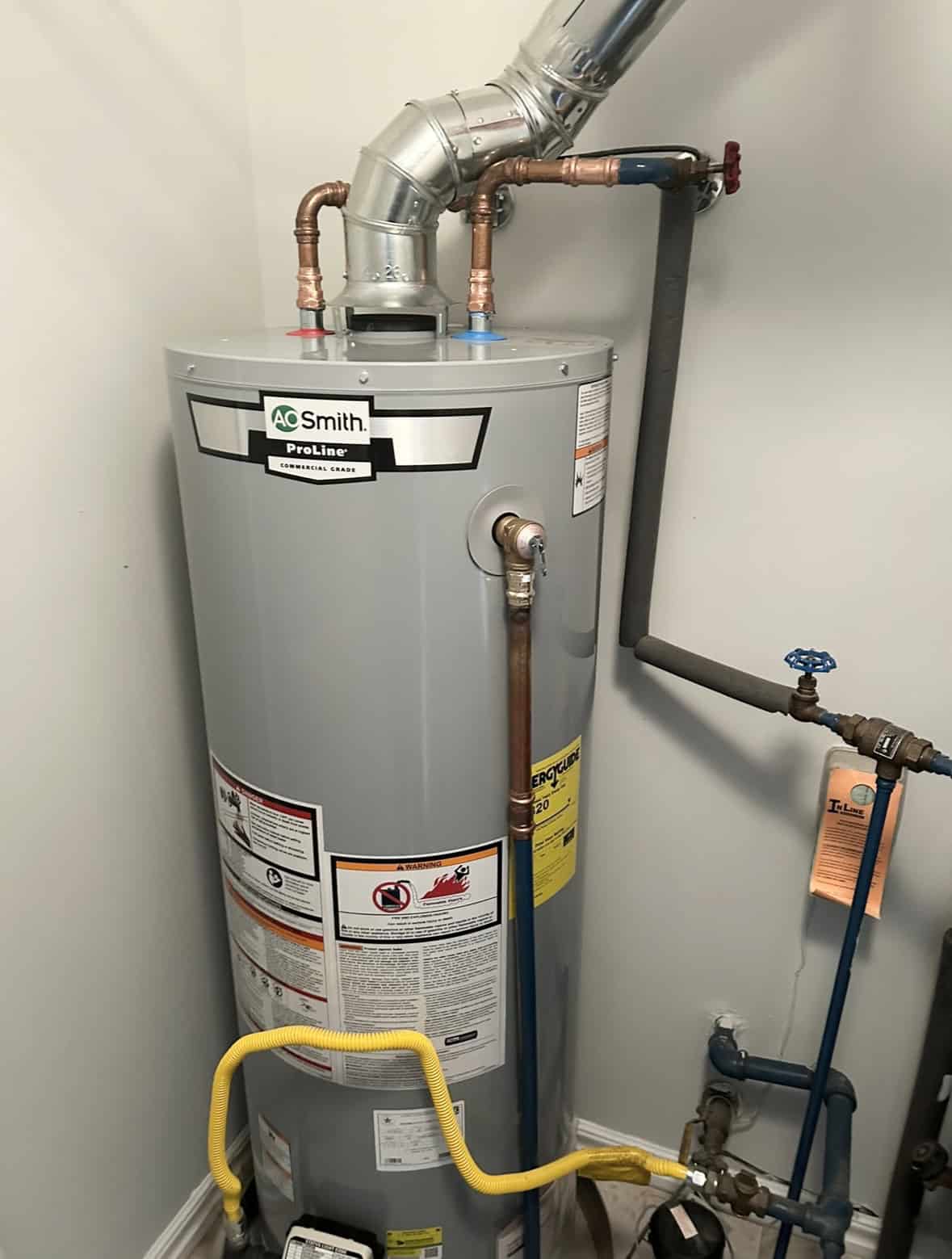
Beyond flushing, check your anode rod every 2-3 years. This sacrificial metal rod attracts corrosive minerals to protect your tank from rust. When it’s heavily corroded, replace it. Test your temperature and pressure relief valve annually by lifting the lever to ensure water discharges properly. These simple maintenance tasks prevent most water heater problems before they start.
When to Call a Professional for Water Heater Repair in Monmouth County, NJ
Some water heater problems are DIY-friendly. Resetting a tripped breaker or adjusting your thermostat temperature are simple enough for most homeowners. But when you’re dealing with electrical components, failed heating elements, or persistent problems that don’t respond to basic troubleshooting, professional service is the smart choice.
Licensed plumbers have the tools, training, and experience to diagnose water heater problems accurately. We can test heating elements and thermostats, identify electrical issues, and determine whether water heater repair or replacement makes more financial sense. We also ensure all work meets New Jersey plumbing and electrical codes, which protects your home and your family.
If your electric water heater isn’t heating and you’ve tried the basic troubleshooting steps, or if you’re simply not comfortable working with electrical systems, we’re available 24/7 for emergency water heater service in Monmouth County, NJ. Our licensed technicians provide upfront pricing, honest diagnostics, and quality repairs that get your hot water flowing again.