Servicing Areas Throughout New Jersey

Condensing Tankless Water Heater: Is It Worth It?

Wondering if a condensing tankless water heater justifies the higher price? Discover how dual heat exchangers, flexible venting, and 90%+ efficiency translate to real savings for your home.

Share:

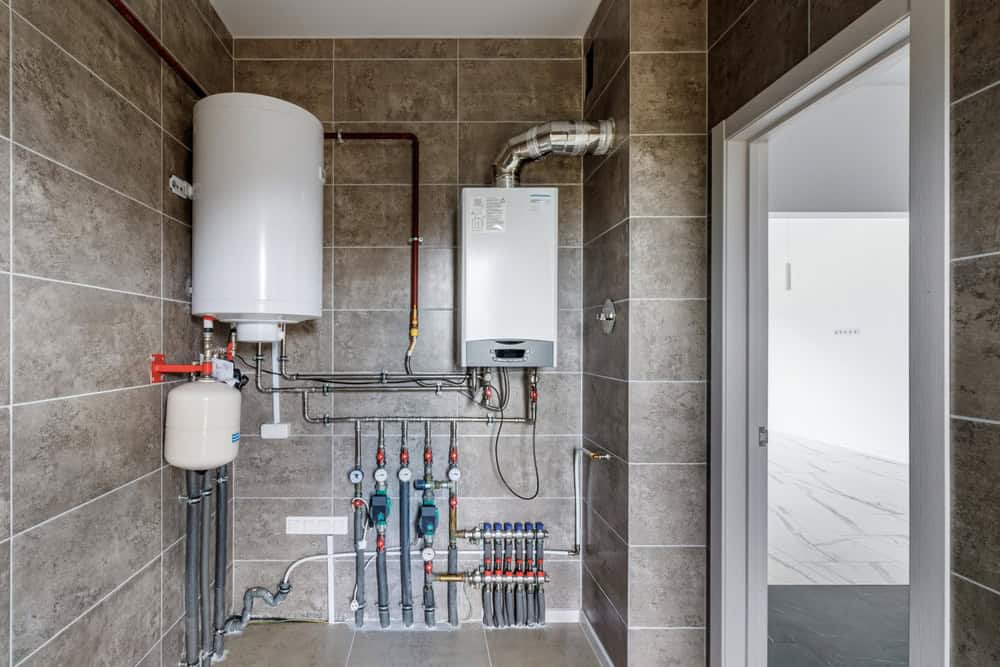
A utility room with a water heater, pipes, and a boiler attached to a tiled wall. The room has a tiled floor and an open doorway leading to a bright adjacent space.

Summary:

Condensing tankless water heaters capture exhaust heat through a second heat exchanger, achieving efficiency ratings up to 98% while reducing energy costs by $200-400 annually and providing endless hot water on demand. This guide explains how the technology actually works, compares condensing vs. non-condensing models, and helps you determine if the investment makes sense for your Monmouth County home based on household size, coastal conditions, and long-term value.
Table of contents

Your water heater sits quietly in the basement until the day it doesn’t. Maybe you’re replacing a failing unit, or you’re tired of running out of hot water mid-shower while someone else starts the dishwasher. Either way, you’ve heard about condensing tankless water heaters and their impressive efficiency numbers, but you’re wondering if they’re actually worth the extra money—or just expensive hype.

The short answer: it depends on your situation, but the math usually works in your favor if you’re staying put for 5+ years. These units cost more upfront but deliver real savings through lower energy bills, longer lifespan, and reduced maintenance headaches. This guide cuts through the marketing noise to show you exactly how condensing technology works, what it costs in Monmouth County, and when it makes financial sense for homes dealing with coastal conditions.

How Condensing Tankless Water Heater Technology Works

A condensing tankless water heater uses two heat exchangers instead of one, and that second exchanger is where the efficiency magic happens. When you turn on a hot water tap, cold water flows through the unit and the gas burner ignites. The primary heat exchanger heats the water to your desired temperature, just like a standard tankless model.

Here’s where it gets different. Instead of venting hot exhaust gases straight outside at 300°F or higher, a condensing unit routes them through a second heat exchanger. This secondary exchanger captures that waste heat and uses it to preheat the incoming cold water before it even reaches the primary exchanger. You’re essentially getting two heating stages for the price of one fuel burn.

As those exhaust gases cool down to around 100°F, water vapor condenses out—that’s where the name comes from, and it’s also why these units need a condensate drain line. The cooled exhaust means you can use inexpensive PVC venting instead of the costly stainless steel required for non-condensing models. That detail alone can save you $500 to $1,000 on installation costs, which helps offset the higher unit price.
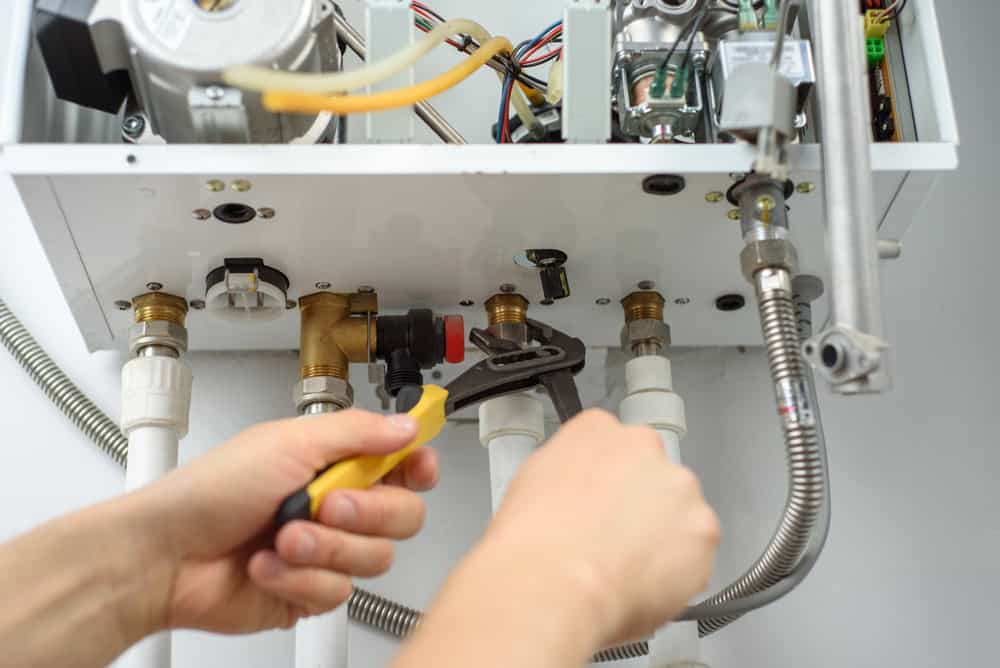
A person using a wrench to tighten a pipe connection on the underside of a boiler or water heater, with various tubes and wires visible.

Efficiency Ratings That Actually Mean Something

Efficiency gets measured by Uniform Energy Factor, or UEF. A condensing tankless water heater typically achieves 0.90 to 0.98 UEF, meaning it converts 90-98% of the fuel you pay for into hot water. Non-condensing models top out around 0.80 to 0.85 UEF. Traditional tank heaters? They’re lucky to hit 0.65.

That 10-15% efficiency difference compared to non-condensing tankless translates to real money. For a typical family of four in Monmouth County, you’re looking at $200 to $400 in annual energy savings compared to a non-condensing tankless unit, and even more compared to a traditional tank heater that’s constantly reheating stored water.

The efficiency advantage comes from capturing heat that would otherwise blow out your vent pipe and disappear into the New Jersey sky. Think of it like this: you’re already paying to generate that heat through combustion. A condensing unit just makes sure you actually use it before it leaves your house. The dual heat exchanger design means less fuel burned to deliver the same amount of hot water to your shower, dishwasher, and washing machine.

For homes in coastal areas like Monmouth County where equipment works harder due to incoming water temperatures and environmental factors like salt air and humidity, that efficiency boost matters even more. Your unit cycles less frequently, components experience less stress, and you see lower utility bills month after month. Over a 15-year lifespan, those savings add up to thousands of dollars, often exceeding the premium you paid upfront for the condensing technology.

The environmental benefit runs parallel to the financial one. Burning less fuel means fewer emissions. If you care about your carbon footprint, a condensing tankless water heater delivers measurable impact without requiring you to sacrifice comfort or convenience. You’re using 10-15% less natural gas or propane for the same hot water output.

What Installation Actually Requires (And Costs)

Installing a condensing tankless water heater involves more than just swapping out your old unit. You need a condensate drain line to handle the water vapor that forms during operation. This drain needs to connect to a floor drain, utility sink, or condensate pump, and the slightly acidic condensate requires neutralization before entering your drainage system to protect your pipes.

Most installations include a small neutralizer cartridge filled with calcium carbonate media. It’s simple technology, not expensive, and it protects your plumbing from potential corrosion. You’ll replace the neutralizer media during annual maintenance, usually costing $20 to $50—a small price for protecting thousands of dollars worth of plumbing.

The venting situation works in your favor. Because exhaust temperatures stay below 100°F, you can use PVC pipe instead of stainless steel. PVC costs less, installs easier, and offers more routing flexibility. If your installation needs a long vent run or multiple bends to reach an exterior wall, that flexibility becomes valuable. You can route PVC venting horizontally through a wall or vertically through a roof, depending on what works best for your home’s layout.

Gas line sizing matters for gas-powered units. A condensing tankless water heater needs adequate gas supply to fire at full capacity. Many homes already have the right size line from previous water heater installations, but some older homes need upgrades. We measure your existing gas line diameter and pressure to confirm compatibility before starting work. Gas line upgrades typically add $300 to $800 to your project cost.

Electric models face different requirements. A whole house tankless water heater running on electricity demands serious amperage—often 150 to 200 amps of dedicated service. This often means upgrading your electrical panel, which can cost $2,000 to $4,000. That’s why electric tankless makes more sense for point-of-use applications serving single fixtures rather than whole-house installations. Gas dominates the whole-house market for good reason: higher flow rates without massive electrical infrastructure investments.

Permits and code compliance aren’t optional in New Jersey. Monmouth County municipalities require permits for water heater installations, typically costing $50 to $500 depending on your location. We handle permitting and ensure your system meets local codes for venting, gas connections, electrical work, and safety devices. Trying to skip this step creates liability issues and problems when you eventually sell your home—inspectors will flag unpermitted work.

Best Electric Tankless Water Heater: When It Makes Sense

Electric tankless water heaters appeal to homeowners without gas service or those installing point-of-use units for specific fixtures. They’re simpler than gas models in some ways—no combustion, no venting, no gas lines to worry about. But they come with significant limitations for whole-house applications that you need to understand before buying.

The core challenge is power demand. Heating water electrically requires massive instantaneous wattage. A whole house electric tankless water heater might need 18kW to 36kW, translating to 75 to 150 amps at 240 volts. Most homes don’t have that much spare capacity in their electrical panel, and adding it means expensive panel upgrades.

Flow rates tell the real story. The best electric tankless water heater models for whole-house use max out around 6 to 7.5 gallons per minute in warmer climates. In Monmouth County where incoming water temperatures drop to 45-50°F during winter, that same unit might only deliver 4 to 5 GPM. Compare that to gas condensing models that easily hit 9 to 11 GPM, and you see why gas dominates whole-house installations.
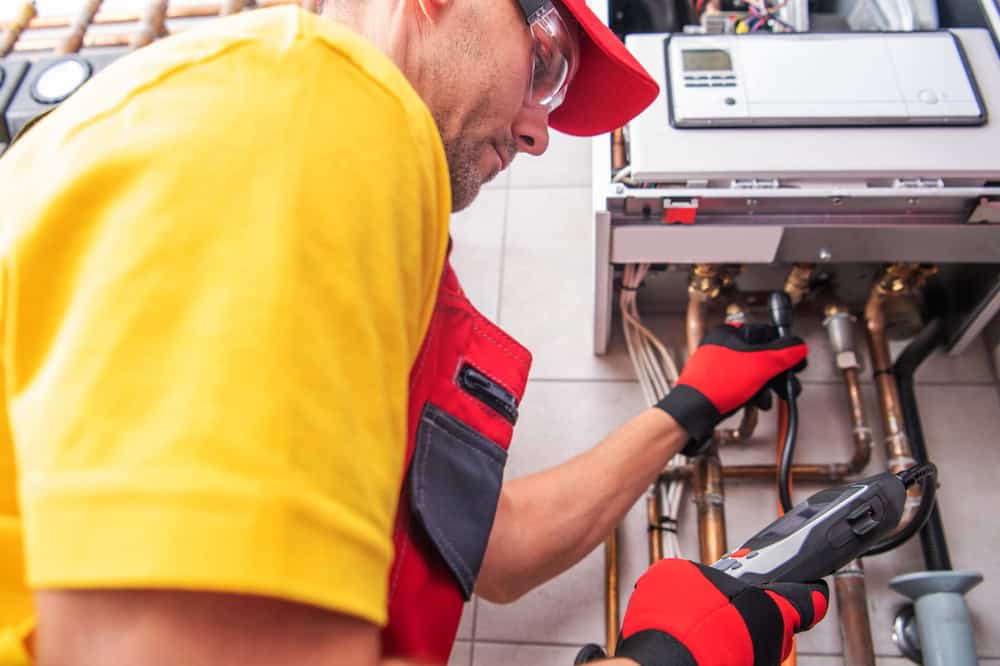
A technician wearing a red cap, yellow shirt, and red gloves is inspecting a complex network of pipes connected to a boiler or heating system. They are using a handheld device, possibly for diagnostics or maintenance.

When Electric Models Make Perfect Sense

Electric tankless water heaters work brilliantly for point-of-use applications. Installing a small electric unit under a bathroom sink that’s far from your main water heater eliminates the wait for hot water and prevents the waste of letting cold water run down the drain. These point-of-use models typically need 3kW to 7kW, which most homes can handle without electrical upgrades.

Brands like Stiebel Eltron, EcoSmart, and Rheem offer reliable electric models with 99% efficiency ratings. Since they don’t vent combustion gases, efficiency calculations work differently than gas units, but the practical result is the same: nearly all the electricity you pay for converts to hot water. There’s no standby loss like tank heaters, and no combustion efficiency loss like gas models.

For small homes, apartments, or condos with one bathroom and modest hot water demands, a properly sized electric tankless water heater can work for whole-house service. You need realistic expectations about simultaneous usage. Running a shower and dishwasher at the same time might push the limits, especially in winter when incoming water temperatures drop and the unit needs to work harder to achieve the desired temperature rise.

Installation costs run lower for electric models since you’re not dealing with gas lines or combustion venting. The trade-off comes in operating costs. Electricity typically costs more per BTU than natural gas in most of New Jersey, meaning your monthly energy bills might run higher despite the unit’s technical efficiency. You’re trading lower installation costs for higher operating costs.

The best electric tankless water heater for your situation depends on whether you’re supplementing an existing system, serving a single fixture, or trying to heat your whole house. For point-of-use applications like a remote bathroom or a basement workshop sink, electric makes perfect sense. For whole-house service, gas condensing models usually deliver better value unless you have no gas service available and you’re willing to invest in electrical infrastructure upgrades.

Temperature consistency can be an issue with electric models during high-demand periods. If your unit can’t keep up with flow rate, you’ll experience temperature drops—the water gets cooler as you increase flow. Gas units with higher capacity handle demand spikes better, maintaining steady output even when multiple fixtures run simultaneously. That’s the difference between a comfortable shower and a lukewarm disappointment.

Sizing Electric Units for Your Actual Needs

Sizing a tankless water heater correctly matters more than brand or features. You need to calculate your peak demand—the maximum hot water flow rate you’ll use at one time. Add up the flow rates for fixtures that might run simultaneously. A shower uses about 2.5 GPM, a dishwasher needs 1 to 2 GPM, and a washing machine pulls 2 to 3 GPM.

If you might run a shower and dishwasher at the same time, you need at least 4.5 GPM capacity. But that’s not the whole story. You also need to account for temperature rise, which is the difference between your incoming cold water temperature and your desired hot water temperature.

In Monmouth County, incoming water temperatures vary seasonally. Winter groundwater might come in at 45°F to 50°F, while summer water arrives at 65°F to 70°F. If you want 120°F hot water, you need a 70°F to 75°F temperature rise in winter but only 50°F to 55°F in summer. Electric units struggle more with larger temperature rises, which is why they work better in warmer climates or for lower-demand applications.

The math gets simple once you have your numbers. Find a unit rated for your required GPM at your needed temperature rise. Manufacturers publish performance charts showing GPM output at various temperature rises. Don’t assume a unit’s maximum rated GPM applies to your situation—check the chart for your specific temperature rise requirement. That 8 GPM unit might only deliver 5 GPM at a 70°F rise.

Electrical service limitations often force compromises. You might find a unit that delivers the GPM you need, but it requires 150 amps and your panel only has 100 amps available. At that point, you’re choosing between a panel upgrade, a smaller electric unit that won’t quite meet peak demand, or switching to a gas condensing model if you have gas service.

For homes serious about electric tankless for whole-house service, two smaller units can sometimes work better than one large unit. You might install one unit for the master bathroom and another for the kitchen and second bathroom. This distributed approach splits the electrical load and can provide better performance than trying to serve everything from a single location. It costs more upfront but avoids some of the electrical infrastructure challenges while providing redundancy if one unit needs service.

Tankless Water Heater with Recirculating Pump: Instant Hot Water

One common frustration with tankless water heaters is wait time. Even though the unit heats water instantly once flow starts, you still wait for hot water to travel through pipes from the heater to your faucet. If your shower is 50 feet of pipe away from your tankless unit, you’re letting cold water run down the drain for 30 to 60 seconds every time you turn it on.

A tankless water heater with recirculating pump solves this problem by keeping hot water circulating through your plumbing system, so it’s already at your fixtures when you turn them on. You get instant hot water without waste. For busy mornings when you’re rushing to get ready for work, that convenience matters.

Two approaches exist: dedicated return lines or crossover valve systems. Dedicated return lines work best in new construction where you can install a separate pipe running from your farthest fixture back to the water heater. The pump circulates water through this loop, maintaining hot water throughout your plumbing. It’s the most efficient approach but requires planning during construction or major renovations.
Summary:

Condensing tankless water heaters capture exhaust heat through a second heat exchanger, achieving efficiency ratings up to 98% while reducing energy costs by $200-400 annually and providing endless hot water on demand. This guide explains how the technology actually works, compares condensing vs. non-condensing models, and helps you determine if the investment makes sense for your Monmouth County home based on household size, coastal conditions, and long-term value.
Table of contents

Your water heater sits quietly in the basement until the day it doesn’t. Maybe you’re replacing a failing unit, or you’re tired of running out of hot water mid-shower while someone else starts the dishwasher. Either way, you’ve heard about condensing tankless water heaters and their impressive efficiency numbers, but you’re wondering if they’re actually worth the extra money—or just expensive hype.

The short answer: it depends on your situation, but the math usually works in your favor if you’re staying put for 5+ years. These units cost more upfront but deliver real savings through lower energy bills, longer lifespan, and reduced maintenance headaches. This guide cuts through the marketing noise to show you exactly how condensing technology works, what it costs in Monmouth County, and when it makes financial sense for homes dealing with coastal conditions.

How Condensing Tankless Water Heater Technology Works

A condensing tankless water heater uses two heat exchangers instead of one, and that second exchanger is where the efficiency magic happens. When you turn on a hot water tap, cold water flows through the unit and the gas burner ignites. The primary heat exchanger heats the water to your desired temperature, just like a standard tankless model.

Here’s where it gets different. Instead of venting hot exhaust gases straight outside at 300°F or higher, a condensing unit routes them through a second heat exchanger. This secondary exchanger captures that waste heat and uses it to preheat the incoming cold water before it even reaches the primary exchanger. You’re essentially getting two heating stages for the price of one fuel burn.

As those exhaust gases cool down to around 100°F, water vapor condenses out—that’s where the name comes from, and it’s also why these units need a condensate drain line. The cooled exhaust means you can use inexpensive PVC venting instead of the costly stainless steel required for non-condensing models. That detail alone can save you $500 to $1,000 on installation costs, which helps offset the higher unit price.

A person using a wrench to tighten a pipe connection on the underside of a boiler or water heater, with various tubes and wires visible.

Efficiency Ratings That Actually Mean Something

Efficiency gets measured by Uniform Energy Factor, or UEF. A condensing tankless water heater typically achieves 0.90 to 0.98 UEF, meaning it converts 90-98% of the fuel you pay for into hot water. Non-condensing models top out around 0.80 to 0.85 UEF. Traditional tank heaters? They’re lucky to hit 0.65.

That 10-15% efficiency difference compared to non-condensing tankless translates to real money. For a typical family of four in Monmouth County, you’re looking at $200 to $400 in annual energy savings compared to a non-condensing tankless unit, and even more compared to a traditional tank heater that’s constantly reheating stored water.

The efficiency advantage comes from capturing heat that would otherwise blow out your vent pipe and disappear into the New Jersey sky. Think of it like this: you’re already paying to generate that heat through combustion. A condensing unit just makes sure you actually use it before it leaves your house. The dual heat exchanger design means less fuel burned to deliver the same amount of hot water to your shower, dishwasher, and washing machine.

For homes in coastal areas like Monmouth County where equipment works harder due to incoming water temperatures and environmental factors like salt air and humidity, that efficiency boost matters even more. Your unit cycles less frequently, components experience less stress, and you see lower utility bills month after month. Over a 15-year lifespan, those savings add up to thousands of dollars, often exceeding the premium you paid upfront for the condensing technology.

The environmental benefit runs parallel to the financial one. Burning less fuel means fewer emissions. If you care about your carbon footprint, a condensing tankless water heater delivers measurable impact without requiring you to sacrifice comfort or convenience. You’re using 10-15% less natural gas or propane for the same hot water output.

What Installation Actually Requires (And Costs)

Installing a condensing tankless water heater involves more than just swapping out your old unit. You need a condensate drain line to handle the water vapor that forms during operation. This drain needs to connect to a floor drain, utility sink, or condensate pump, and the slightly acidic condensate requires neutralization before entering your drainage system to protect your pipes.

Most installations include a small neutralizer cartridge filled with calcium carbonate media. It’s simple technology, not expensive, and it protects your plumbing from potential corrosion. You’ll replace the neutralizer media during annual maintenance, usually costing $20 to $50—a small price for protecting thousands of dollars worth of plumbing.

The venting situation works in your favor. Because exhaust temperatures stay below 100°F, you can use PVC pipe instead of stainless steel. PVC costs less, installs easier, and offers more routing flexibility. If your installation needs a long vent run or multiple bends to reach an exterior wall, that flexibility becomes valuable. You can route PVC venting horizontally through a wall or vertically through a roof, depending on what works best for your home’s layout.

Gas line sizing matters for gas-powered units. A condensing tankless water heater needs adequate gas supply to fire at full capacity. Many homes already have the right size line from previous water heater installations, but some older homes need upgrades. We measure your existing gas line diameter and pressure to confirm compatibility before starting work. Gas line upgrades typically add $300 to $800 to your project cost.

Electric models face different requirements. A whole house tankless water heater running on electricity demands serious amperage—often 150 to 200 amps of dedicated service. This often means upgrading your electrical panel, which can cost $2,000 to $4,000. That’s why electric tankless makes more sense for point-of-use applications serving single fixtures rather than whole-house installations. Gas dominates the whole-house market for good reason: higher flow rates without massive electrical infrastructure investments.

Permits and code compliance aren’t optional in New Jersey. Monmouth County municipalities require permits for water heater installations, typically costing $50 to $500 depending on your location. We handle permitting and ensure your system meets local codes for venting, gas connections, electrical work, and safety devices. Trying to skip this step creates liability issues and problems when you eventually sell your home—inspectors will flag unpermitted work.

Best Electric Tankless Water Heater: When It Makes Sense

Electric tankless water heaters appeal to homeowners without gas service or those installing point-of-use units for specific fixtures. They’re simpler than gas models in some ways—no combustion, no venting, no gas lines to worry about. But they come with significant limitations for whole-house applications that you need to understand before buying.

The core challenge is power demand. Heating water electrically requires massive instantaneous wattage. A whole house electric tankless water heater might need 18kW to 36kW, translating to 75 to 150 amps at 240 volts. Most homes don’t have that much spare capacity in their electrical panel, and adding it means expensive panel upgrades.

Flow rates tell the real story. The best electric tankless water heater models for whole-house use max out around 6 to 7.5 gallons per minute in warmer climates. In Monmouth County where incoming water temperatures drop to 45-50°F during winter, that same unit might only deliver 4 to 5 GPM. Compare that to gas condensing models that easily hit 9 to 11 GPM, and you see why gas dominates whole-house installations.

A technician wearing a red cap, yellow shirt, and red gloves is inspecting a complex network of pipes connected to a boiler or heating system. They are using a handheld device, possibly for diagnostics or maintenance.

When Electric Models Make Perfect Sense

Electric tankless water heaters work brilliantly for point-of-use applications. Installing a small electric unit under a bathroom sink that’s far from your main water heater eliminates the wait for hot water and prevents the waste of letting cold water run down the drain. These point-of-use models typically need 3kW to 7kW, which most homes can handle without electrical upgrades.

Brands like Stiebel Eltron, EcoSmart, and Rheem offer reliable electric models with 99% efficiency ratings. Since they don’t vent combustion gases, efficiency calculations work differently than gas units, but the practical result is the same: nearly all the electricity you pay for converts to hot water. There’s no standby loss like tank heaters, and no combustion efficiency loss like gas models.

For small homes, apartments, or condos with one bathroom and modest hot water demands, a properly sized electric tankless water heater can work for whole-house service. You need realistic expectations about simultaneous usage. Running a shower and dishwasher at the same time might push the limits, especially in winter when incoming water temperatures drop and the unit needs to work harder to achieve the desired temperature rise.

Installation costs run lower for electric models since you’re not dealing with gas lines or combustion venting. The trade-off comes in operating costs. Electricity typically costs more per BTU than natural gas in most of New Jersey, meaning your monthly energy bills might run higher despite the unit’s technical efficiency. You’re trading lower installation costs for higher operating costs.

The best electric tankless water heater for your situation depends on whether you’re supplementing an existing system, serving a single fixture, or trying to heat your whole house. For point-of-use applications like a remote bathroom or a basement workshop sink, electric makes perfect sense. For whole-house service, gas condensing models usually deliver better value unless you have no gas service available and you’re willing to invest in electrical infrastructure upgrades.

Temperature consistency can be an issue with electric models during high-demand periods. If your unit can’t keep up with flow rate, you’ll experience temperature drops—the water gets cooler as you increase flow. Gas units with higher capacity handle demand spikes better, maintaining steady output even when multiple fixtures run simultaneously. That’s the difference between a comfortable shower and a lukewarm disappointment.

Sizing Electric Units for Your Actual Needs

Sizing a tankless water heater correctly matters more than brand or features. You need to calculate your peak demand—the maximum hot water flow rate you’ll use at one time. Add up the flow rates for fixtures that might run simultaneously. A shower uses about 2.5 GPM, a dishwasher needs 1 to 2 GPM, and a washing machine pulls 2 to 3 GPM.

If you might run a shower and dishwasher at the same time, you need at least 4.5 GPM capacity. But that’s not the whole story. You also need to account for temperature rise, which is the difference between your incoming cold water temperature and your desired hot water temperature.

In Monmouth County, incoming water temperatures vary seasonally. Winter groundwater might come in at 45°F to 50°F, while summer water arrives at 65°F to 70°F. If you want 120°F hot water, you need a 70°F to 75°F temperature rise in winter but only 50°F to 55°F in summer. Electric units struggle more with larger temperature rises, which is why they work better in warmer climates or for lower-demand applications.

The math gets simple once you have your numbers. Find a unit rated for your required GPM at your needed temperature rise. Manufacturers publish performance charts showing GPM output at various temperature rises. Don’t assume a unit’s maximum rated GPM applies to your situation—check the chart for your specific temperature rise requirement. That 8 GPM unit might only deliver 5 GPM at a 70°F rise.

Electrical service limitations often force compromises. You might find a unit that delivers the GPM you need, but it requires 150 amps and your panel only has 100 amps available. At that point, you’re choosing between a panel upgrade, a smaller electric unit that won’t quite meet peak demand, or switching to a gas condensing model if you have gas service.

For homes serious about electric tankless for whole-house service, two smaller units can sometimes work better than one large unit. You might install one unit for the master bathroom and another for the kitchen and second bathroom. This distributed approach splits the electrical load and can provide better performance than trying to serve everything from a single location. It costs more upfront but avoids some of the electrical infrastructure challenges while providing redundancy if one unit needs service.

Tankless Water Heater with Recirculating Pump: Instant Hot Water

One common frustration with tankless water heaters is wait time. Even though the unit heats water instantly once flow starts, you still wait for hot water to travel through pipes from the heater to your faucet. If your shower is 50 feet of pipe away from your tankless unit, you’re letting cold water run down the drain for 30 to 60 seconds every time you turn it on.

A tankless water heater with recirculating pump solves this problem by keeping hot water circulating through your plumbing system, so it’s already at your fixtures when you turn them on. You get instant hot water without waste. For busy mornings when you’re rushing to get ready for work, that convenience matters.

Two approaches exist: dedicated return lines or crossover valve systems. Dedicated return lines work best in new construction where you can install a separate pipe running from your farthest fixture back to the water heater. The pump circulates water through this loop, maintaining hot water throughout your plumbing. It’s the most efficient approach but requires planning during construction or major renovations.
Article details:

Share: