
Summary:
What Does Water Heater Replacement Cost in Monmouth and Ocean County, NJ?
Water heater replacement costs in 2026 typically range from $1,200 to $4,500, but that spread doesn’t tell you what you’ll actually pay. Your final cost depends on the type of unit you choose, your home’s existing setup, and whether you’re doing a straightforward swap or converting to a different system.
Traditional tank water heaters cost $600 to $2,500 installed for most Monmouth and Ocean County homes. Tankless systems run $1,400 to $5,600. Heat pump water heaters land between $1,500 and $3,000. Labor accounts for 30 to 50 percent of your total, and that percentage climbs when your installation needs electrical upgrades, gas line work, or plumbing modifications.
The hidden costs matter as much as the unit price. Permits in NJ municipalities run $50 to $500. Code compliance upgrades add $75 to $500 or more if your existing setup doesn’t meet current standards. Removing and disposing of your old water heater typically costs $75 to $500 unless it’s included in your quote. Coastal homes in Monmouth and Ocean County sometimes need extra work addressing salt air corrosion on connections and pipes before the new unit can be installed safely.

How your home setup affects water heater installation costs
Installation complexity drives your final cost more than most people realize. Swapping a 40-gallon gas tank for another 40-gallon gas tank in the same spot is straightforward. We disconnect the old unit, connect the new one to existing lines, and you’re done in two to six hours. This stays on the lower end of the cost range.
Complexity jumps when you’re changing water heater types. Converting from tank to tankless requires relocating pipes, upgrading gas lines or electrical service, and installing proper venting. This work takes a full day or more and adds $600 to $2,500 in labor alone. Electric tankless units need serious electrical capacity. If your panel can’t handle a 150-amp dedicated circuit, you’re looking at a panel upgrade costing $850 to $1,700.
Switching fuel sources creates even more work. Going from electric to gas means running a gas line to your water heater location, which costs $350 to $2,000 depending on distance and how accessible your basement or utility room is. Converting from gas to electric requires new dedicated circuits and wiring, typically $250 to $1,000. These aren’t just line items. They’re real modifications to your home’s infrastructure that take time and expertise.
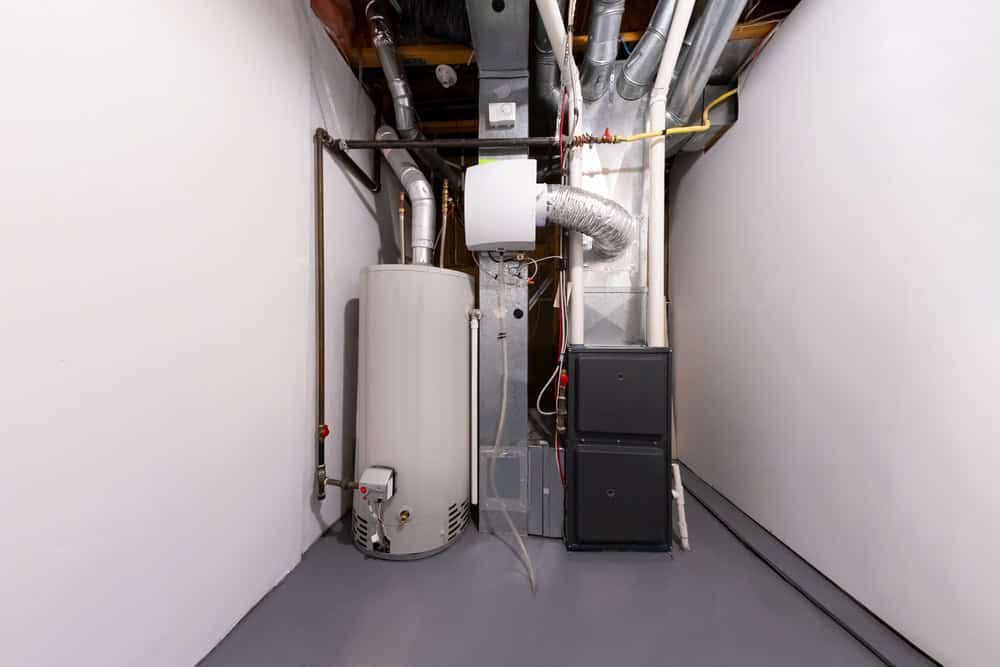
Location affects installation difficulty. A water heater in an open basement with easy access is simple. One tucked in a tight closet, up narrow stairs, or in a finished space where walls need opening creates additional labor. Homes near the coast in Monmouth and Ocean County face extra challenges from salt air corrosion on existing connections, sometimes requiring more prep work before the new unit can go in.
Your home’s age plays a role too. Older homes might have outdated plumbing that needs upgrading to current code before a new water heater can be installed. This isn’t upselling. It’s often required by your local building department. Newer homes typically have infrastructure already set up for modern water heaters, making replacement more straightforward.
What should be included in your water heater replacement quote
Not all water heater replacement quotes cover the same work, and that’s where final costs surprise people. A complete quote breaks down the unit cost, labor, materials, permits, disposal fees, and any modifications to your existing setup. When a quote seems unusually low, ask what’s not included.
The water heater itself is your biggest cost. Tank models range from budget options around $400 to premium units over $2,000. Tankless water heaters start around $1,000 and climb to $4,000 or more for high-capacity models. Heat pump water heaters typically cost $1,200 to $2,500 for the unit alone. Brand matters. Well-known manufacturers with strong warranties cost more upfront but often deliver better reliability and easier parts availability.
Materials and supplies add up. You need connectors, pipes, valves, expansion tanks, and possibly new venting components. These materials typically add $100 to $500 to your project. Expansion tanks alone cost $100 to $400 installed, and they’re mandatory in many NJ jurisdictions to control water pressure and prevent system damage.
Labor costs vary by complexity. Plumbers generally charge $45 to $150 per hour in the Monmouth and Ocean County area. A basic tank replacement might take three hours. A complex retrofit could take eight hours or more. Get clarity on whether your quote uses a flat labor rate or hourly estimate, and what happens if the job runs longer than expected.
Permit fees depend on your municipality. We handle permits, but the cost passes to you. Skipping permits isn’t worth the risk. Unpermitted work causes problems when you sell, can void insurance coverage if something goes wrong, and leaves you with no recourse if installation isn’t done correctly.
Disposal of your old water heater typically runs $75 to $500 depending on whether you’ve prepped it or we handle everything. Most professional installations include removal and disposal, but confirm this upfront. You don’t want to discover your old unit is now sitting in your driveway and it’s your problem.
Code compliance upgrades catch people off guard. If your existing setup doesn’t meet current plumbing, electrical, or venting codes, bringing everything up to standard adds $75 to $500 or more. Inspectors won’t sign off on your new water heater if the surrounding infrastructure violates code. In coastal New Jersey, salt air corrosion sometimes means replacing corroded pipes and fittings before the new unit can be safely connected.
Tank vs tankless vs heat pump water heaters: which type fits your needs
Choosing between water heater types isn’t about picking the “best” option. It’s about matching the right technology to your household’s hot water needs, your budget, and your energy goals. Each type has clear advantages and real limitations that matter differently depending on your situation.
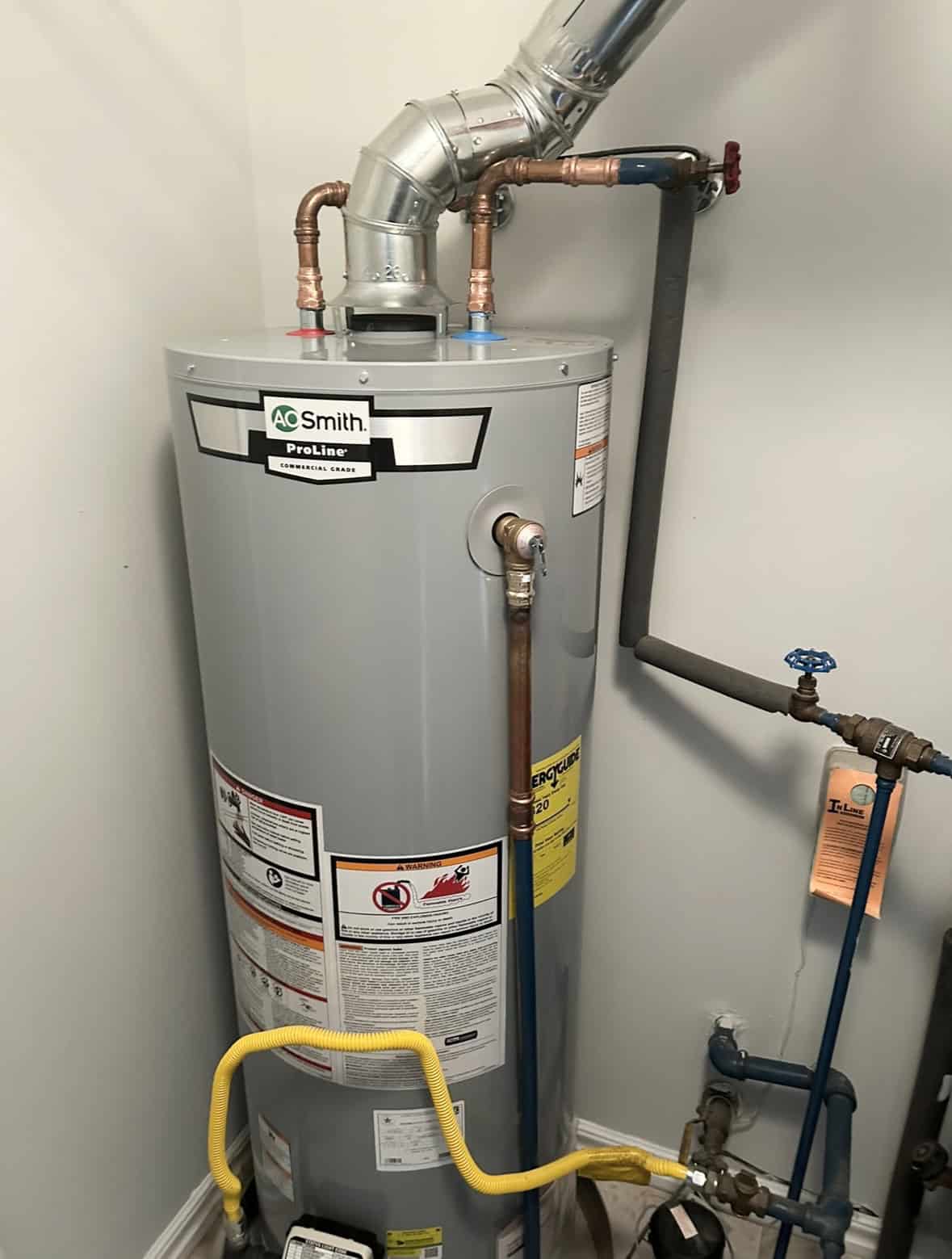
Traditional tank water heaters store 30 to 80 gallons of pre-heated water ready when you need it. They’re the most common type because they’re reliable, affordable upfront, and straightforward to install. Tank heaters work well for households with predictable usage patterns and homes where floor space for a tank isn’t an issue.
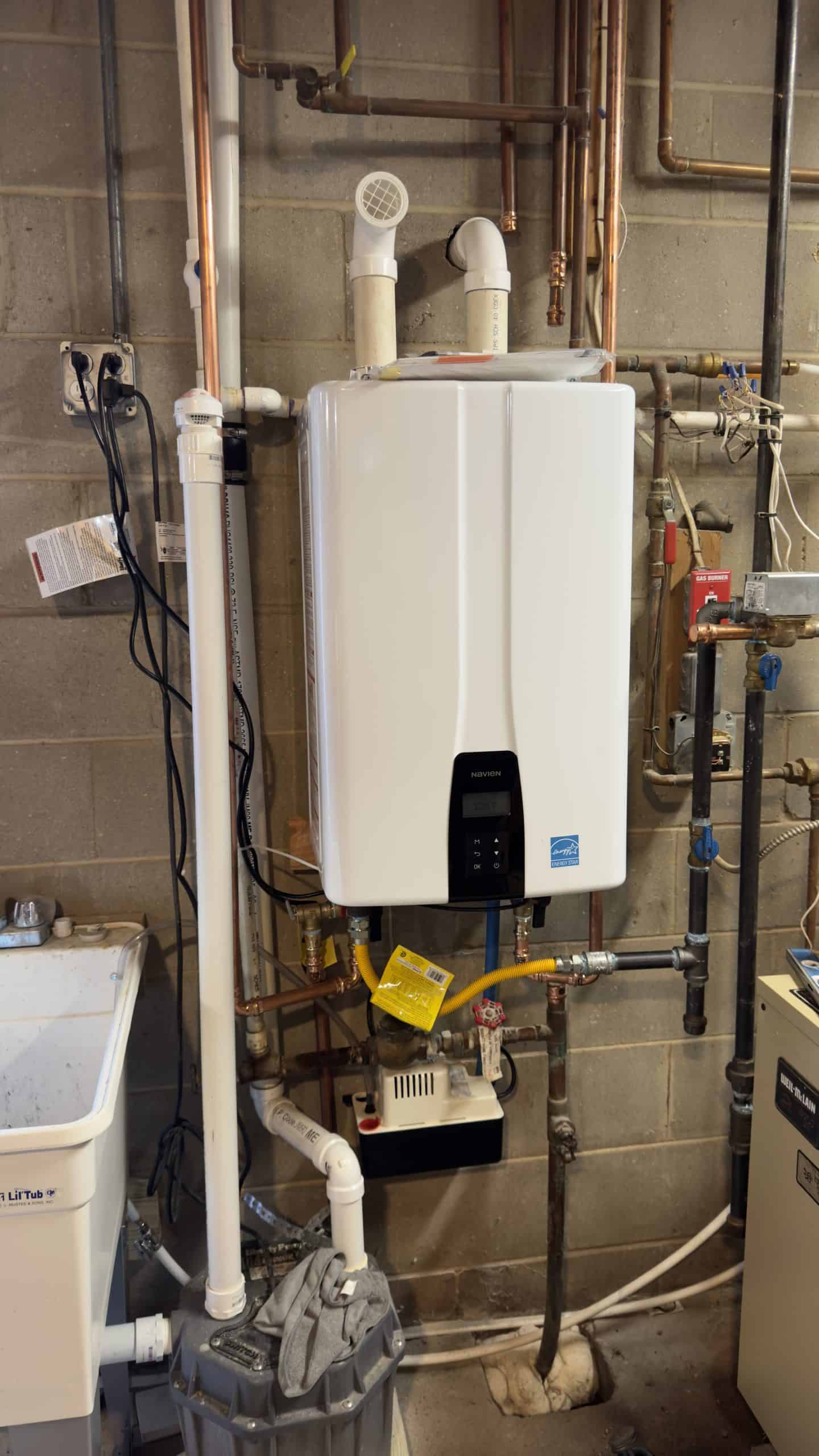
Tankless water heaters heat water on demand as it flows through the unit. They don’t store hot water, which means you never run out as long as you stay within the unit’s flow rate capacity. Tankless systems save space, last 15 to 20 years, and use 24 to 34 percent less energy in homes using 41 gallons or less of hot water daily.
Heat pump water heaters pull heat from surrounding air and transfer it into the water tank, using up to three times less electricity than conventional electric water heaters. They’re the most energy-efficient option available, qualifying for a 30 percent federal tax credit up to $2,000 plus NJ utility rebates. Heat pumps work best in homes with adequate space in a temperature-controlled area like a basement or garage.

When traditional tank water heaters still make the most sense
Tank water heaters aren’t going anywhere despite newer technologies getting attention. For many Monmouth and Ocean County households, a quality tank model delivers exactly what’s needed without the complexity or cost of alternatives. Understanding when a tank makes sense helps you avoid overspending on features you won’t benefit from.
Cost is the clearest advantage. Tank water heaters cost $600 to $2,500 installed compared to $1,400 to $5,600 for tankless systems. If you’re replacing a failed unit and budget is tight, a tank gets you back to hot water quickly. The lower upfront cost also makes sense if you’re selling your home soon and won’t be there long enough to recoup the higher investment of a more efficient system.
Installation simplicity matters when you’re replacing an existing tank. We disconnect the old unit, connect the new one to the same gas or electric lines, attach it to the same water pipes, and you’re operational. No electrical panel upgrades. No gas line modifications. No complex venting changes. Less time without hot water and fewer things that can go wrong.
Reliability comes from simplicity. Tank water heaters have fewer components that can fail compared to tankless or heat pump systems. When something does go wrong, parts are widely available and most plumbers can diagnose and fix issues quickly. This matters in coastal areas where salt air can affect more complex systems.
Performance consistency is another benefit. Tank water heaters deliver hot water at steady temperature and pressure as long as there’s water in the tank. You’re not dealing with flow rate limitations. Multiple people can shower simultaneously without issues as long as your tank is sized appropriately for your household.
Tank water heaters work in any climate and any location in your home. They don’t need specific ambient temperatures like heat pumps do. They don’t require specific clearances for air circulation. They function fine in closets, basements, garages, or utility rooms.
The downsides are worth knowing. Tank water heaters continuously heat and reheat stored water whether you’re using it or not, creating standby heat loss that accounts for 10 to 15 percent of water heating costs. They last 8 to 12 years before needing replacement. And they take up floor space that could be used for other purposes.
Understanding when tankless and heat pump upgrades actually pay off
Tankless and heat pump water heaters cost more upfront, but that higher investment can pay off through energy savings, longer equipment life, and available rebates. The key is understanding whether your household will actually benefit from these advantages or if you’re paying for efficiency you won’t use.
Tankless water heaters eliminate standby heat loss by only heating water when you turn on a tap. For homes using 41 gallons or less of hot water daily, tankless systems can be 24 to 34 percent more efficient than conventional tank heaters. Even high-usage homes see 8 to 14 percent efficiency gains. Over the 15 to 20-year lifespan of a tankless unit, these savings add up.
The endless hot water capability matters for larger households. You’re not limited by tank capacity. As long as you stay within the unit’s flow rate, hot water keeps coming. This is real if you’ve ever been the last person to shower with an undersized tank.
Space savings make tankless attractive when square footage matters. These units mount on walls and are roughly the size of a small suitcase. You’re not dedicating floor space to a 60-gallon tank. This freed-up space can be used for storage or other purposes.
Heat pump water heaters deliver even greater efficiency by moving heat rather than generating it. They can be two to three times more energy efficient than conventional electric water heaters. A family of four can save $550 or more per year on energy bills by switching from a standard electric tank to an Energy Star certified heat pump water heater. Over the unit’s 10 to 15-year lifespan, that’s $5,500 or more in savings.
Federal tax credits make heat pump water heaters more affordable than their sticker price suggests. The current federal tax credit covers 30 percent of equipment and installation costs, up to $2,000. On a $3,000 installed system, that’s $900 back when you file your taxes. Many NJ utilities offer additional rebates of $500 to $900 through programs like NJ Clean Energy, bringing your net cost down significantly.
Environmental impact matters to many homeowners. Heat pump water heaters use less electricity, which means lower carbon emissions. If you’re working toward reducing your household’s environmental footprint, a heat pump water heater makes a measurable difference.
The limitations matter before you commit. Tankless water heaters have high upfront costs and complex installations, especially if you’re converting from a tank system. They can struggle to provide hot water to multiple fixtures simultaneously unless you install a high-capacity model. They take a few seconds to deliver hot water since they’re heating on demand.
Heat pump water heaters need adequate space with good airflow, typically 1,000 cubic feet of surrounding air. They work best in areas that stay between 40 and 90 degrees year-round. They make some noise, similar to a portable fan at about 45 decibels. They produce condensation that needs draining. And they’re taller than standard tank water heaters, which can create clearance issues.
Both tankless and heat pump systems cost more to repair when something goes wrong. Parts aren’t as universally available. You need a technician familiar with the specific technology. This isn’t a dealbreaker, but it’s worth considering.
The payback period varies based on your energy costs, hot water usage, and available rebates. Tankless water heaters typically take 5 to 10 years to pay back their higher cost through energy savings. Heat pump water heaters usually pay back in 2 to 6 years, especially when you factor in tax credits and rebates. If you’re staying in your home beyond the payback period, the upgrade makes financial sense.
Making your water heater replacement decision work for your home
Water heater replacement comes down to matching the right equipment to your household’s needs, your budget, and your timeline. If you’re dealing with a failing unit, you want reliable hot water restored quickly without overpaying for features you won’t use. If you’re planning ahead, you have time to explore efficiency upgrades, research available rebates, and make a decision that lowers your energy costs for years.
The 2026 costs range widely based on system type and installation complexity. Traditional tank water heaters offer the lowest upfront cost and straightforward replacement. Tankless systems provide space savings and efficiency for households that benefit from endless hot water. Heat pump water heaters deliver the greatest energy savings and qualify for substantial federal and state incentives that significantly reduce net costs.
Monmouth and Ocean County locations bring specific considerations. Coastal conditions accelerate corrosion and mineral buildup, which means your water heater faces more stress than units inland. Working with professionals who understand these local challenges ensures your installation accounts for salt air exposure, humidity effects, and water quality issues that impact equipment longevity.
At AME Plumbing Heating and Cooling, we serve Monmouth and Ocean County homeowners with the technical expertise and local knowledge to help you make the right choice for your home and budget. Whether you’re dealing with an emergency replacement or planning an upgrade, we bring both the experience and the straightforward communication you need when making these decisions.