Discover what's causing your water heater failure—from power issues and beeping error codes to complete system shutdowns—and learn when DIY troubleshooting ends and professional help begins.
Share:

Summary:
Your morning starts with a cold shower. The dishwasher won’t clean properly. Laundry piles up because you can’t wash in cold water alone. When your water heater stops working, your entire routine grinds to a halt.
You’re not just dealing with an inconvenience—you’re facing a problem that affects everything from basic hygiene to household chores. The good news? Most water heater failures follow predictable patterns, and understanding what’s happening helps you decide whether you can troubleshoot it yourself or need professional help right away. Let’s start with the most common scenario: a water heater that’s completely stopped producing hot water.
When no hot water flows anywhere in your house, start with the basics before assuming the worst. Check multiple faucets throughout your home—kitchen, bathrooms, laundry. If only one fixture lacks hot water, you’re dealing with a plumbing issue, not a water heater problem.
Next, consider your household’s recent water usage. Four people taking back-to-back showers can drain even a 50-gallon tank. Standard recovery time runs 30-60 minutes. If you’ve been running the dishwasher, washing machine, and showers simultaneously, you might have simply exhausted your hot water supply.
If it’s been hours without hot water recovery, or if your tankless system isn’t heating at all, you’re looking at an actual equipment failure. The diagnosis path splits here depending on whether you have a tank or tankless system, and whether it runs on electricity or gas.
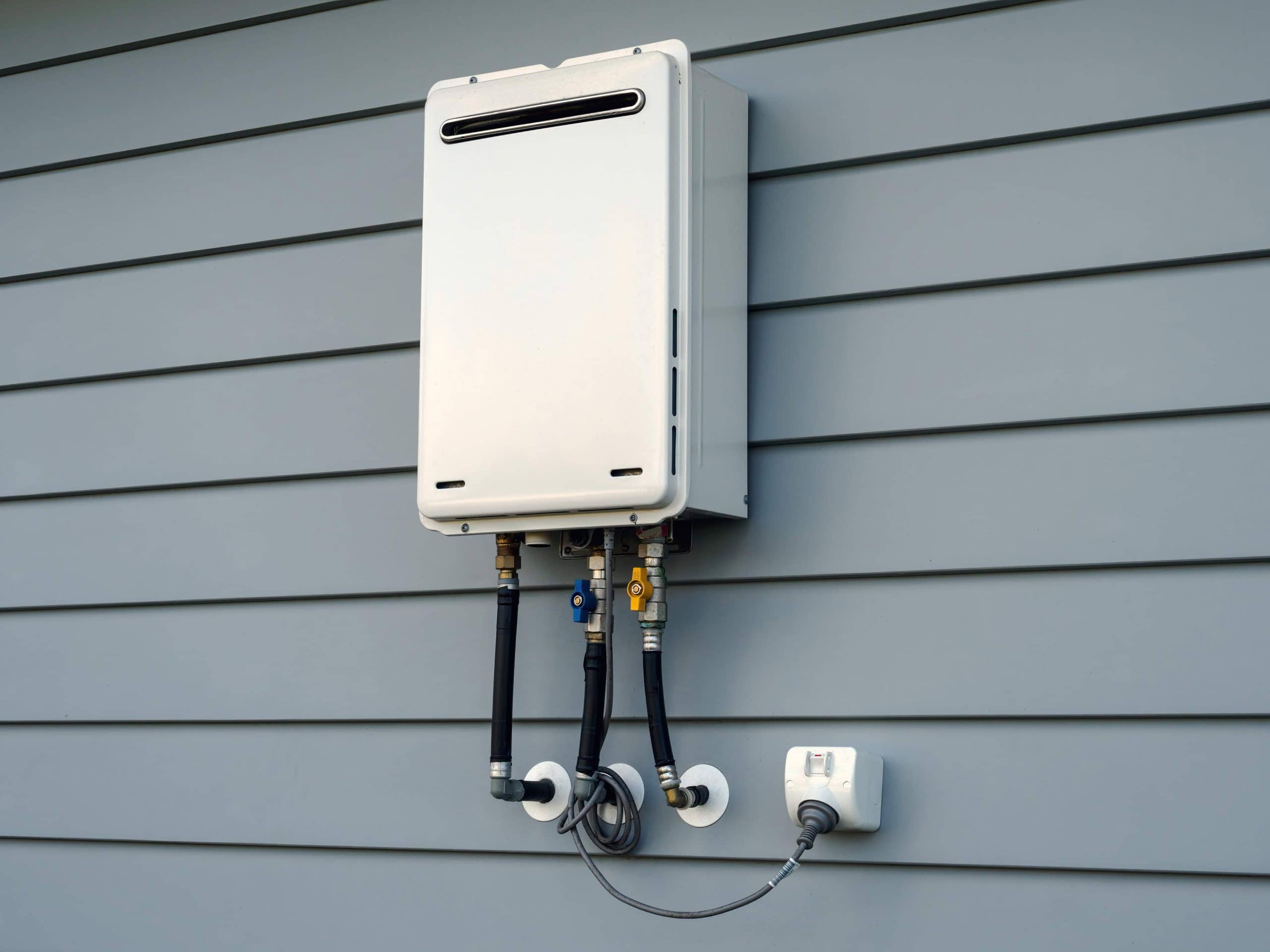
Electric water heaters need power. Gas water heaters need both gas and electricity. Start by checking your electrical panel for a tripped circuit breaker—this is the most common cause of electric water heater failure and takes seconds to verify.
Look for the breaker labeled “water heater” or “hot water.” If it’s in the middle position or feels loose, it has tripped. Flip it completely off, wait ten seconds, then flip it back on. If it trips again immediately, you have an electrical problem that requires professional diagnosis. Don’t keep resetting a breaker that repeatedly trips—this indicates a short circuit, failed heating element, or other electrical fault.
For gas water heaters, check the pilot light first. Locate the viewing window or remove the access panel near the bottom of your tank. A healthy pilot flame burns steady and blue. If it’s out, you can attempt to relight it following the instructions on your water heater’s label. Turn the gas control knob to “OFF” and wait five minutes for any gas to dissipate. Then turn it to “PILOT,” press and hold while pressing the igniter button, and keep holding for a full minute after the pilot lights. This heats the thermocouple enough to keep the gas valve open.
If your pilot won’t stay lit after multiple attempts, you’re likely dealing with a failed thermocouple, gas valve issue, or ventilation problem. These require professional repair. Never smell gas near your water heater—if you do, turn off the gas supply at the valve, leave your home, and call your gas company immediately.
Tankless water heaters add another layer of complexity. They need electricity even when gas-powered, because electronic controls manage ignition and temperature. Check for error codes on the display panel. Most units show specific codes that tell you exactly what failed—ignition problems, flame sensor issues, or ventilation blockages. Your owner’s manual translates these codes, but common ones include ignition failure (codes 11 or 12 on many models) and flame loss during operation.
When your tankless water heater has no power—no lights, no display, no response—you’re dealing with an electrical supply problem. Start at the circuit breaker. Tankless units draw significant power, so they typically have dedicated breakers. Find the breaker for your water heater and check its position.
A tripped breaker might sit in the middle position rather than fully “off.” Reset it by moving it completely to “off” first, then back to “on.” If the display comes back and the unit operates normally, you’re done. If the breaker trips again within minutes or hours, the unit is drawing too much current due to a failed component—usually a heating element in electric models or a control board in gas models.
Check the power connection at the unit itself. Some tankless heaters have a power switch or disconnect near the unit. Make sure it’s in the “on” position. Look for any visible damage to wiring, scorch marks, or burning smells. These indicate serious electrical problems that require immediate professional attention.
Use a non-contact voltage tester if you have one—these inexpensive tools detect electrical current without touching wires. With the breaker on, test the wires at the unit’s connection point. No voltage reading means the problem lies in your home’s wiring between the breaker and the unit. Voltage present at the unit but no power to the heater indicates an internal failure.
For gas tankless units, remember they still need electricity for ignition, controls, and safety features. A complete power loss prevents the unit from operating even if gas supply is perfect. This is why checking electrical supply comes before checking gas issues.
If you’ve verified power reaches the unit but it still won’t operate, the problem is internal. Modern tankless water heaters have sophisticated electronics—circuit boards, sensors, and safety switches that can fail. These components aren’t DIY-friendly. Attempting repairs without proper knowledge can void warranties and create safety hazards.
One often-overlooked issue: some tankless units have internal fuses or reset buttons similar to tank water heaters. Check your owner’s manual for a high-limit reset button or fuse location. If your unit overheated due to scale buildup or restricted water flow, it may have shut down as a safety measure. Pressing the reset button might restore operation, but if it trips again, you need professional service to address the underlying cause.
Tankless water heater cleaning isn’t optional maintenance—it’s essential to preventing the exact failures we’ve been discussing. Hard water minerals accumulate inside the heat exchanger, creating scale that acts as insulation between the heating element and water. Your unit works harder, takes longer to heat water, and eventually fails completely.
In Monmouth County, where hard water contains elevated calcium and magnesium, this happens faster than in soft-water regions. Coastal humidity and salt air compound the problem. Most manufacturers require annual flushing to maintain warranty coverage, and some recommend descaling every six months in hard water areas.
The process involves circulating a descaling solution (usually white vinegar or commercial descaler) through the unit for 45 minutes to an hour. This dissolves mineral deposits before they harden into a concrete-like mass that requires professional removal or forces complete unit replacement.
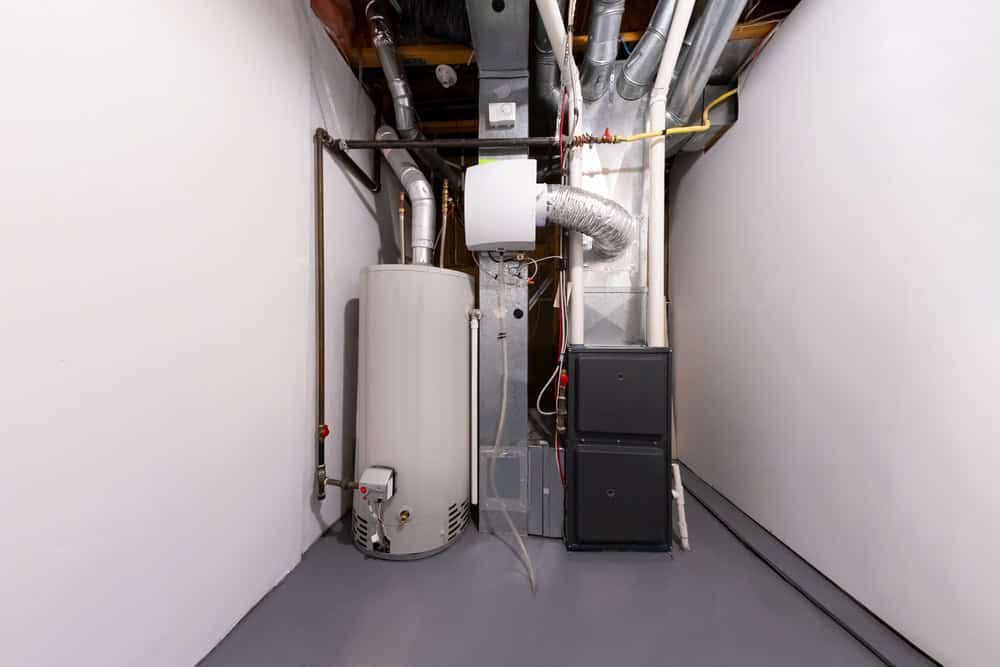
Professional tankless water heater cleaning follows a systematic process that removes years of mineral buildup without damaging internal components. Our technicians start by shutting off power and water supply, then connect hoses to the unit’s service valves—one for cold water inlet, one for hot water outlet.
A submersible pump circulates descaling solution from a bucket through the heater and back into the bucket in a continuous loop. Four gallons of undiluted white vinegar is the most common solution, though commercial descalers work for heavy buildup. The pump runs for 45 minutes, sometimes longer if we see darkened vinegar indicating significant mineral dissolution.
After the initial flush, fresh vinegar circulates for another 45 minutes. If the second batch comes out clear, the cleaning is complete. If it’s still dark, a third cycle may be necessary. Once descaling finishes, clean water flushes through the system to remove any remaining vinegar, and we inspect filters, check connections, and test operation.
This process costs $150-$300 depending on your location and the service provider, but it extends your tankless water heater’s lifespan by years. Units that receive annual cleaning can last 20+ years. Those that don’t often fail within 8-10 years due to scale-related damage.
The alternative—DIY flushing—is possible if you’re comfortable working with your water heater. You’ll need a submersible pump (about $50), two washing machine hoses, a bucket, and four gallons of white vinegar. Follow your manufacturer’s instructions precisely, as the process varies slightly between brands. The key is patience—rushing the descaling process or using chemical cleaners not approved by your manufacturer can damage the heat exchanger and void your warranty.
That persistent beeping from your water heater isn’t random—it’s a diagnostic tool telling you exactly what’s wrong. Modern tankless water heaters, and increasingly tank models with electronic controls, use beeping combined with error codes to communicate specific failures.
Check your unit’s display panel. Most show a two-digit code or a symbol that corresponds to a specific problem. Common codes include ignition failure (the burner won’t light), flame failure (it lights but won’t stay lit), overheating, low water flow, or sensor malfunctions. Your owner’s manual translates these codes, but here’s what the most frequent ones mean.
Ignition failure codes (often 11 or 12) indicate the unit can’t start the heating process. This happens when gas supply is interrupted, the gas valve is closed, water valves are closed, or the ignition pack has failed. Check that all valves are fully open—gas valve handle should be parallel to the pipe, not perpendicular. If valves are open and the code persists, you’re looking at a failed ignition component or gas supply problem requiring professional repair.
Flame failure means the burner lit initially but couldn’t maintain the flame. This points to ventilation blockages, insufficient gas flow, or a dirty flame sensor. Check your intake and exhaust vents for bird nests, debris, or snow blockage. Clear any obstructions you can safely reach. If vents are clear, the flame sensor may need cleaning—a job best left to professionals since accessing it requires disassembling part of the unit.
Overheating codes trigger when water temperature exceeds safe limits or when the unit detects restricted water flow causing components to overheat. This often accompanies beeping and automatic shutdown. It’s a safety feature preventing damage or scalding. Causes include scale buildup in the heat exchanger, a clogged inlet filter, or a failed flow sensor. Attempting to reset without addressing the cause leads to repeated shutdowns.
Low water flow or pressure codes appear when the unit can’t detect sufficient water movement to safely operate. Tankless heaters need minimum flow rates—typically 0.5 gallons per minute—to activate. Check your inlet filter for debris. Most tankless units have a small screen filter where water enters the unit. Turn off water supply, remove the filter, rinse it clean, and reinstall. This simple fix resolves many flow-related errors.
Some beeping indicates maintenance reminders rather than failures. Units programmed for annual service intervals beep periodically to prompt descaling or filter replacement. These aren’t emergencies, but ignoring them leads to the failures we’ve discussed. Consult your manual to determine if the beeping is a reminder or an error code requiring immediate attention.
If your water heater beeps without displaying a code, or if you can’t find your manual, search online for your exact model number plus “error codes” or “beeping troubleshooting.” Manufacturers publish this information, and HVAC forums often have detailed explanations from technicians who’ve seen every possible failure mode.
You’ve checked the breaker, verified gas supply, looked for error codes, and maybe even attempted to relight a pilot light. At some point, troubleshooting ends and professional diagnosis begins. Knowing that line keeps you safe and prevents turning a repairable problem into a replacement-level failure.
Call immediately if you smell gas, see water pooling around your unit, notice scorch marks or burning smells, or if your breaker repeatedly trips. These indicate safety hazards—gas leaks, electrical faults, or tank corrosion—that require immediate professional attention. Water heater failures can cause flooding, fire, or carbon monoxide poisoning when handled incorrectly.
For less urgent situations, call when error codes persist after basic troubleshooting, when you have no hot water for more than a few hours, when water temperature fluctuates wildly, or when you hear unusual noises like rumbling, popping, or hissing. These symptoms indicate internal problems—failed heating elements, sediment buildup, thermostat failures, or heat exchanger damage—that require diagnostic tools and expertise beyond typical homeowner capabilities.
At AME Plumbing Heating and Cooling, we provide 24/7 emergency service throughout Monmouth County and Ocean County for exactly these situations. Whether you’re dealing with a complete water heater failure at 2 AM or need tankless water heater cleaning to prevent future breakdowns, our experienced technicians diagnose the problem accurately and provide upfront pricing before starting work. No hidden fees, no surprises—just reliable service when you need your hot water restored.
Article details:
Share:
Continue learning: