Not every clog needs a plumber, but some definitely do. Here's how to tell the difference and avoid wasting time or damaging your pipes with the wrong approach.
Share:
Summary:
You’re standing over a sink that’s draining slower than usual. Maybe you’ve already tried a plunger. Maybe you’re eyeing that bottle of chemical drain cleaner under the cabinet. Or maybe you’re wondering if this is finally the moment to call someone.
Here’s the thing—not every clog needs a plumber, but trying the wrong DIY method can turn a simple problem into an expensive one. This guide walks you through what actually works for minor clogs, what doesn’t, and the clear signs that it’s time to put down the baking soda and pick up the phone. You’ll know exactly where the line is between a quick home fix and a problem that needs professional attention.
Most minor clogs happen close to the drain opening. Hair, soap scum, and small food particles build up gradually until water starts backing up. For these surface-level issues, simple DIY methods can work without risking your pipes.
A plunger creates pressure that can dislodge clogs near the drain. It’s effective for toilets and sinks when the blockage is fresh and hasn’t hardened yet. The key is using the right type—cup plungers for sinks and showers, flange plungers for toilets.
Hot water mixed with dish soap can break down grease clogs in kitchen sinks. The heat softens the grease while the soap helps it slide through the pipes. This works best as preventive maintenance rather than a cure for severe blockages.
You’ve probably seen this method all over the internet. Pour baking soda down the drain, follow with vinegar, wait for the fizzing reaction, then flush with hot water. It’s popular because it feels scientific and avoids harsh chemicals.
The reality is more limited. The fizzing reaction happens at the surface, right where you pour it. It can help with minor buildup and odors in the first few inches of your drain. If you’ve got a fresh clog from soap scum or light grease, it might provide enough agitation to clear things out.
But here’s what it can’t do—it won’t dissolve a dense mat of hair six inches down your bathroom drain. It won’t break through a grease plug that’s been hardening for months. The reaction doesn’t generate enough force to push through compacted debris or reach deep into your plumbing system.
Think of it as maintenance, not medicine. Monthly treatments with baking soda and vinegar can help keep drains fresh and reduce buildup before it becomes a problem. When you’re already dealing with standing water or a completely blocked drain, you need something stronger.
One important note—never use baking soda and vinegar after pouring chemical drain cleaner down your pipes. Mixing substances can create dangerous reactions and increase safety risks. If you’ve already tried a chemical cleaner, the next step should be mechanical clearing or calling a professional.
A manual drain snake is a long, flexible cable you feed into your drain to physically break up or pull out clogs. You can buy basic versions at hardware stores for $10 to $80. They’re more effective than chemical solutions because they actually make contact with the blockage.
For bathroom sink drains clogged with hair or shower drains with soap scum buildup, a manual snake can reach clogs that plungers can’t. You feed the cable down until you feel resistance, then rotate it to break through or hook onto the debris. When you pull it back out, you’ll often bring the clog with it.
The limitations come down to reach and power. A basic manual snake might extend 15 to 25 feet, but it can’t navigate tight turns or reach deep into your main line. It also requires physical effort to push through tougher clogs, and if you’re not careful, you can scratch pipe interiors or get the cable stuck.
Professional-grade snakes are motorized, extend much further, and come with different attachments designed for specific types of clogs and pipe materials. They maintain consistent torque and allow us to match the cable diameter and cutting head to your specific situation. A 3/8-inch cable works for kitchen sinks, while main sewer lines require 5/8-inch or 3/4-inch cables with heavier cutting attachments.
If you’re dealing with a clog in a single fixture that’s relatively close to the drain opening, a manual snake might solve it. If you’ve tried and the clog won’t budge, or if you’re seeing slow drainage in multiple fixtures, the problem is beyond what manual tools can handle.
Walk down any hardware store aisle and you’ll see bottles promising to dissolve clogs in minutes. The appeal is obvious—pour, wait, flush, done. No tools, no mess, no plumber. But those bottles come with risks that most people don’t consider until it’s too late.
Chemical drain cleaners work through heat and corrosion. Products containing sodium hydroxide or sulfuric acid create aggressive reactions designed to dissolve organic material like hair and grease. That same reaction damages your pipes, especially with repeated use.
The heat generated can warp plastic pipes and crack porcelain fixtures. The chemicals corrode metal pipes from the inside, eating away at galvanized steel, degrading threads on pipe connections, and destroying the protective coating on cast iron that prevents rust. Each use weakens your plumbing a little more, often without obvious warning signs until you’re dealing with leaks behind walls or under floors.
A bottle of chemical drain cleaner costs $5 to $30. Professional drain cleaning runs $100 to $275 for most clogs. On the surface, DIY seems like the budget-friendly choice. But that math changes when you factor in what chemical cleaners actually do.
Most chemical products don’t remove clogs completely. They burn a small hole through the blockage, just enough for water to drain again. The debris remains in your pipes, attracting more buildup. Within days or weeks, you’re dealing with the same slow drain. So you buy another bottle. And another.
Meanwhile, those repeated chemical applications are corroding your pipes. By the time you notice reduced water pressure, strange smells, or small leaks, the damage is already done. Repairing corroded pipes costs hundreds to thousands of dollars depending on location and extent. Replacing sections of damaged plumbing can run even higher.
Then there’s the safety factor. Chemical drain cleaners release toxic fumes that irritate eyes, nose, throat, and lungs. Direct contact causes chemical burns on skin. If you have children or pets in the house, accidental exposure becomes a real concern. Even we face risks when snaking a drain that still contains trapped caustic liquid—the chemicals can splash back during cable rotation.
The environmental impact matters too. When these harsh chemicals wash through your system, they don’t just disappear. They can leach through small cracks in drain lines into the ground, harming soil organisms and tree roots. The plastic bottles add to landfill waste. Some municipalities have restrictions on chemical drain cleaner disposal because of groundwater contamination concerns.
For Monmouth County homeowners with older plumbing systems, the risks multiply. Many homes in the area have pipes that are 40 to 100 years old. These aging systems are already under stress from decades of use. Adding corrosive chemicals accelerates deterioration and can trigger failures that require extensive repairs.
Chemical drain cleaners are sold as universal clog solutions, but they’re only marginally effective for a narrow range of problems. Understanding their limitations helps you avoid wasting money on products that were never going to work.
They can’t handle tree root intrusion in your sewer line. Roots grow into pipes seeking water and nutrients, creating dense blockages that chemicals simply can’t dissolve. They can’t clear foreign objects that kids flush down toilets or items accidentally dropped down drains. They won’t break through heavy grease accumulation that’s hardened into a solid plug over months or years.
When multiple drains in your home are affected simultaneously, the problem is in your main line or sewer connection. Chemical cleaners poured into individual fixtures won’t reach that far, and even if they could, the volume of debris is beyond what they can handle. You’re looking at a situation that requires professional equipment from the start.
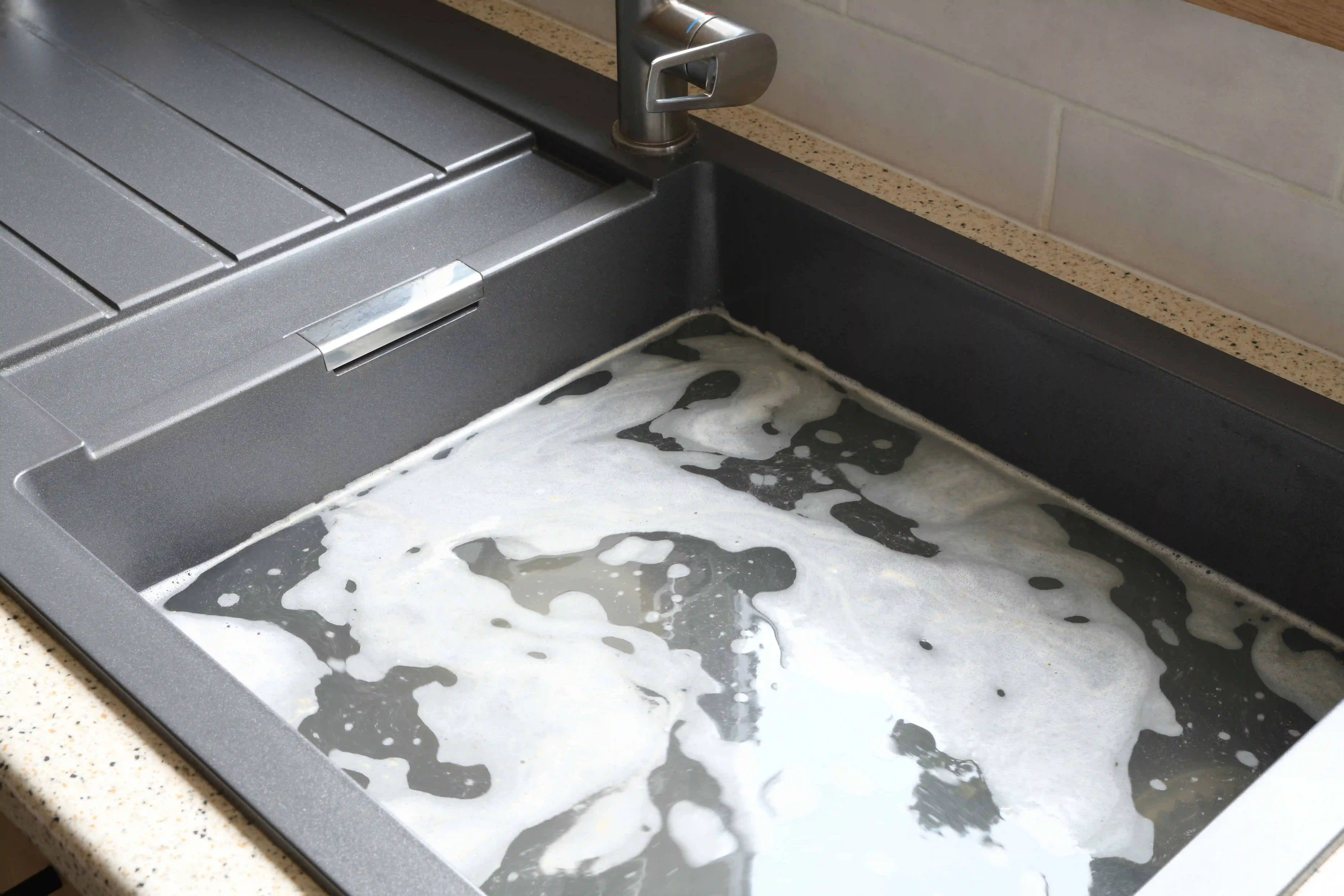
The composition and location of a clog determine whether any liquid solution has a chance of working. If you’re dealing with standing water that won’t drain at all, chemicals can’t flow past the blockage to reach it. They’ll just sit on top, creating a pool of caustic liquid that poses safety hazards without solving the problem.
Professional drain cleaning addresses what chemicals can’t. Video camera inspections show exactly what’s causing the blockage and where it’s located. Hydro-jetting uses high-pressure water to scour pipes clean from the inside, removing years of buildup without chemical damage. Mechanical snaking physically removes obstructions rather than trying to dissolve them.
There’s a clear line between clogs you can handle and problems that need professional attention. Knowing where that line sits saves you time, money, and the frustration of repeated failed attempts.
If you’ve got a single drain that just started draining slowly, and a plunger or manual cleaning resolves it quickly and it stays clear, you’re fine handling it yourself. That’s a normal minor drain issue that homeowners manage regularly. But several warning signs tell you it’s time to stop trying DIY methods and make the call.
The clog keeps coming back. You clear it, water drains normally for a few days or weeks, then the problem returns. This pattern means the blockage isn’t being fully removed, or there’s a deeper issue causing debris to accumulate in that spot. DIY methods are just providing temporary relief while the underlying problem gets worse.
Article details:
Share:
Continue learning: