
Servicing Areas Throughout New Jersey

Why Your Old Pipes Are Costing You Money: The Case for Full Water Line Replacement in Older NJ Homes

Your old pipes aren't just aging—they're actively costing you money through higher water bills, repeated repairs, and potential property damage.

Share:

Two rusted, broken metal pipes lie on the ground near a pile of dirt in NJ, surrounded by dry grass and soil. The corrosion and large holes highlight the need for a skilled Plumbing Contractor Monmouth & Ocean County residents can trust.

Summary:

If you own an older home in Monmouth or Ocean County, your pipes are likely costing you more than you realize. Corroded water lines waste thousands of gallons monthly, drive up utility bills, and require constant repairs that never quite solve the problem. This guide explains when repair stops making sense, what full water line replacement actually involves, and how to get it done without destroying your property. You’ll learn the real costs, the warning signs you shouldn’t ignore, and why waiting often makes things worse.
Table of contents
Your water bill jumped again this month. The pressure in your shower barely gets the shampoo out. And that plumber you called last year? You’re thinking about calling them again because the same issues keep coming back. If your home was built before 1980, there’s a good chance your pipes are the problem—not just a problem, but the problem. Galvanized steel, lead, and even older copper lines don’t last forever, and when they start failing, they don’t do it quietly. They leak underground where you can’t see them. They corrode from the inside out. They waste water, waste money, and create problems that get more expensive the longer you wait. Here’s what you need to know about when replacement makes more sense than another repair, and how to get it done right.

How Old Pipes Actually Cost You Money

Most homeowners don’t realize how much their aging water lines are costing them until they see the numbers. A hidden underground leak can waste 6,000 to 10,000 gallons of water per month. That’s not a typo. The EPA estimates that 10% of homes have leaks wasting 90 gallons or more every single day.

Here’s what that looks like on your water bill. A typical monthly bill in New Jersey runs around $40 to $60. A dime-sized leak in your main water line can push that to $100 or more. Add in the cost of repeated service calls, temporary fixes that don’t last, and the property damage from moisture seeping into your foundation, and you’re looking at thousands of dollars over just a few years.

The worst part is that corroded pipes don’t get better. Galvanized steel pipes, common in homes built before the 1970s, corrode from the inside out. You might not see rust on the outside, but the inside diameter is shrinking as mineral deposits and corrosion build up. That’s why your water pressure keeps dropping no matter how many times someone tries to “fix” it.
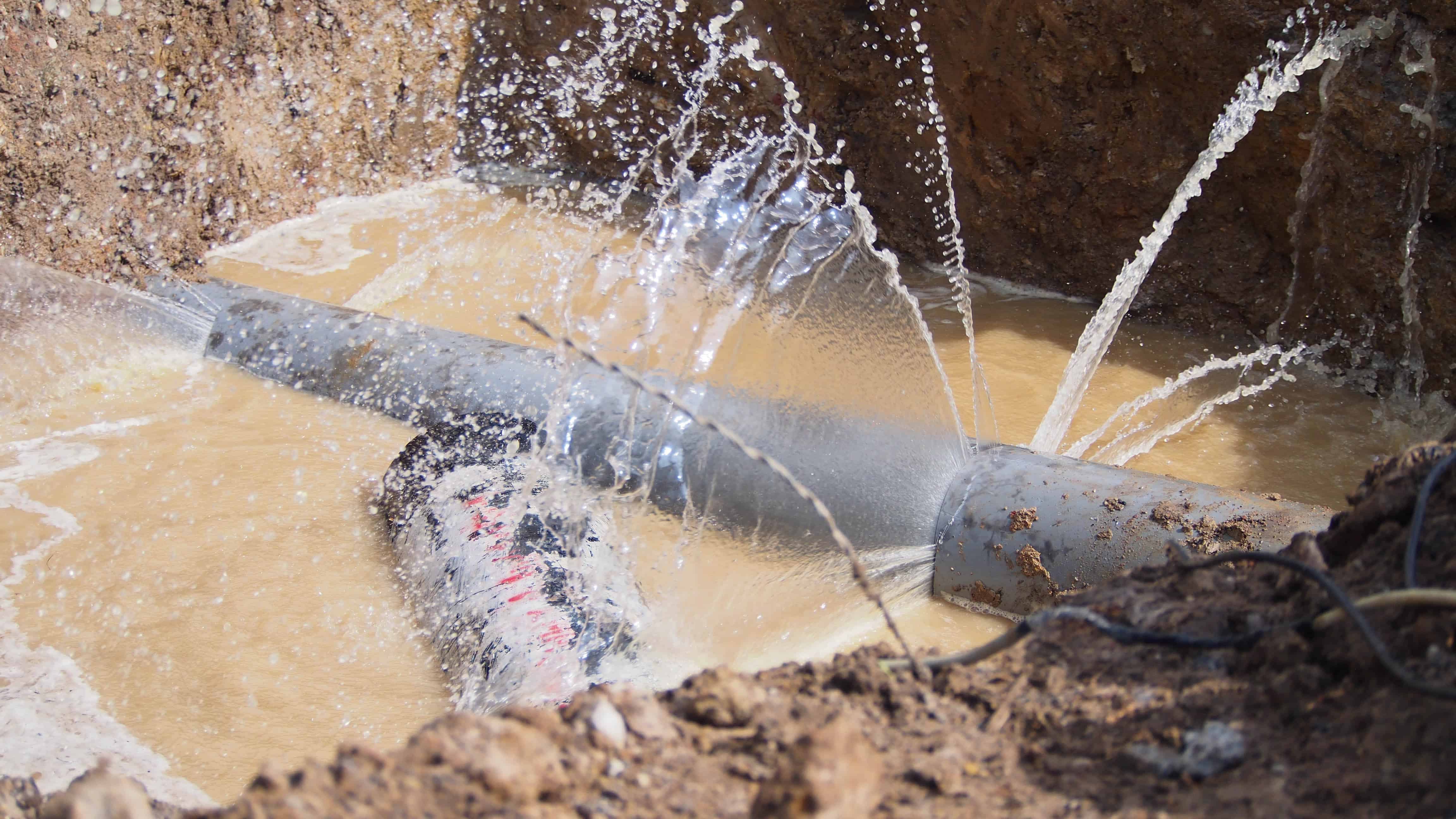
A large water pipe bursts underground, sending water gushing up into the air. Surrounding earth and mud reveal a scene typical of a water main repair site, hinting at ongoing construction efforts.

What Happens When Galvanized and Lead Pipes Fail

Galvanized pipes were the standard for decades. They were supposed to last 40 to 50 years. If your home was built in the 1960s or earlier, you’re well past that expiration date. These pipes don’t fail all at once—they deteriorate gradually, giving you just enough warning to ignore it until something breaks.

The corrosion starts on the inside. Water flowing through galvanized pipes reacts with the zinc coating, and once that wears away, the steel underneath begins to rust. The rust doesn’t just sit there. It flakes off into your water, turning it brown or orange. It also builds up inside the pipe, narrowing the passage and reducing water pressure throughout your house.

Lead pipes are a different problem entirely. If your home was built before 1986, there’s a chance you have lead pipes or at least lead solder in the joints. New Jersey passed a law in 2021 requiring all lead service lines to be replaced by 2031, and there’s a reason for that urgency. Lead leaches into your drinking water, and there’s no safe level of exposure. It’s especially dangerous for children and pregnant women, affecting brain development and causing long-term health issues.

Copper pipes, which replaced galvanized steel in many homes, last longer—often 50 years or more. But they’re not immune to problems. Acidic water, high mineral content, and even improper installation can cause copper pipes to develop pinhole leaks. These leaks are small, but they’re persistent, and they often show up in multiple spots once the pipe starts failing. If you’ve had one copper pipe leak repaired and then another one pops up a few months later, that’s a sign the whole system is reaching the end of its useful life.

The freeze-thaw cycles in New Jersey don’t help. Every winter, the ground freezes and thaws multiple times, putting stress on underground pipes. Older pipes that are already weakened by corrosion are more likely to crack or burst under that pressure. Coastal areas in Monmouth and Ocean Counties face an additional challenge—salt in the air accelerates corrosion, especially in metal pipes.

When pipes fail underground, the damage isn’t always obvious right away. You might notice a soggy patch in your yard that doesn’t dry out, even when it hasn’t rained. You might see a spike in your water bill that you can’t explain. Or you might not notice anything at all until the leak gets so bad that it starts affecting your home’s foundation. Water seeping into the soil around your foundation can erode the ground, cause settling, and create cracks in your basement walls. That kind of damage doesn’t fix itself, and it’s a lot more expensive to repair than the water line that caused it.

Why Copper Pipe Corrosion and Water Pressure Issues Go Hand in Hand

Low water pressure is one of the most frustrating problems homeowners deal with, and it’s almost always a sign of something bigger. If your water pressure has been dropping gradually over the years, the problem isn’t your faucets or your showerhead—it’s your pipes.

Copper pipes corrode differently than galvanized steel, but the result is the same: reduced flow and eventual failure. Copper corrosion happens when the water chemistry is off—too acidic, too much oxygen, or high levels of certain minerals. The corrosion creates pinhole leaks, which are exactly what they sound like: tiny holes that leak water slowly but steadily. One pinhole leak might not seem like a big deal, but copper pipes tend to develop multiple leaks once the corrosion process starts.

The other issue with copper is something called erosion corrosion, which happens when water flows through the pipes at high velocity. This is more common in homes with high water pressure or in sections of pipe where the water has to make a sharp turn. The fast-moving water wears away the protective oxide layer inside the pipe, exposing the copper underneath and accelerating the corrosion process.

Water pressure issues can also come from scale buildup. Hard water, which is common in many parts of New Jersey, contains high levels of calcium and magnesium. Over time, these minerals deposit on the inside of the pipes, narrowing the diameter and restricting flow. You might have perfectly intact pipes, but if they’re half-clogged with mineral deposits, your water pressure is going to suffer.

Here’s the thing: you can clean out scale buildup, and you can patch a pinhole leak, but if your pipes are old enough to have these problems, they’re old enough to need replacement. Patching one leak doesn’t stop the next one from forming. Cleaning out scale doesn’t prevent it from building up again. At some point, you’re throwing good money after bad, paying for repairs that only buy you a few more months before the next problem shows up.

The EPA estimates that fixing household leaks can save homeowners about 10% on their water bills. But that’s assuming you can find and fix all the leaks. Underground leaks in your main water line are harder to detect and harder to repair. A camera inspection can show you where the problems are, but if the camera reveals multiple leaks or widespread corrosion, replacement is the only real solution.

In older homes, water pressure issues often get worse in the morning or during peak usage times. That’s because the pipes can’t handle the demand anymore. When multiple fixtures are running at once—someone’s in the shower, the dishwasher is on, the washing machine is filling—the corroded, narrowed pipes can’t deliver enough water to all of them. You end up with a trickle in the shower and a dishwasher that takes twice as long to fill.

Replacing the water line solves all of these problems at once. Modern materials like PEX and copper installed correctly don’t corrode the way old galvanized pipes do. They handle higher water pressure without eroding. And they’re sized appropriately for modern water usage, so you get consistent pressure throughout the house even when multiple fixtures are running.

When Water Line Replacement Makes More Sense Than Repair

There’s a point where repairing your water line stops being cost-effective. If you’re calling a plumber every six months for the same issues, or if your water bill keeps climbing despite fixing “the problem,” you’ve probably crossed that line.

Here’s a simple way to think about it. If your water line is more than 50 years old, it’s reached the end of its expected lifespan. Galvanized pipes start failing after 40 to 50 years. Copper pipes can last 50 to 70 years under ideal conditions, but ideal conditions are rare. Lead pipes should have been replaced decades ago, and if you still have them, replacement isn’t optional—it’s a health and safety issue.

The decision gets clearer when you look at the pattern of repairs. One isolated leak might be worth fixing. But if you’ve had multiple leaks, if the water quality has changed, if your pressure is dropping, or if your water bill is higher than it used to be, those are all signs that the entire system is failing. Replacing one section of pipe doesn’t fix the rest of the line that’s corroding at the same rate.

A construction site displays a long metal pipe, integral to trenchless water line repair, partially buried in a concrete surface. Extending toward machinery in the background, it sits amidst displaced dirt at its entry point into the ground.

Signs Your Main Water Line Needs Full Replacement

The first sign most people notice is low water pressure. It starts gradually—your shower isn’t quite as strong as it used to be, or it takes longer to fill the bathtub. Over time, it gets worse. If the pressure is low throughout the house, not just at one fixture, the problem is in your main water line, not your individual pipes or fixtures.

Discolored water is another red flag. If your water comes out brown, rust-colored, or has visible sediment in it, that’s corrosion. It means the inside of your pipes is breaking down and flaking off into your water supply. This is especially common with galvanized pipes, but it can happen with copper too. Discolored water isn’t just unpleasant—it’s a sign that contaminants are getting into your drinking water.

Unexplained increases in your water bill are often the first clue that you have a leak. A sudden spike of 30% or more usually means there’s a significant leak somewhere. Underground leaks are the most common culprit because they’re hard to detect. You might not see any water in your yard, but if the leak is deep enough or if the soil is porous, the water just seeps away without leaving obvious evidence.

Soggy spots in your yard, especially if they don’t dry out even when it hasn’t rained, are a clear sign of an underground water line leak. You might also notice that your grass is greener in one area than the rest of the yard, or that there’s a depression or sinkhole forming. That’s water saturating the soil and washing it away.

Strange noises are easy to overlook, but they matter. If you hear running water when no fixtures are on, or if you hear a hissing or bubbling sound coming from your walls or floors, that’s water escaping from a leak. Some homeowners notice a rumbling sound in their pipes at night when the house is quiet—that’s often the first sign of a main water line leak, before the pressure drops or the yard floods.

Frequent clogs or slow drains throughout the house can also point to a water line problem, especially if your sewer line is fine. Corrosion and mineral buildup inside the pipes restrict flow, which affects drainage as well as water pressure.

If you’re seeing any combination of these signs, it’s time to have your water line inspected. A camera inspection can show you exactly what’s happening inside the pipes—how much corrosion there is, where the leaks are, and whether the damage is localized or widespread. If the camera shows multiple problem areas or significant deterioration, replacement is the right call.

Trenchless Water Line Install vs. Traditional Excavation

The biggest concern most homeowners have about water line replacement is the mess. The image that comes to mind is a backhoe tearing up the front yard, a trench running from the street to the house, and weeks of mud and chaos. That’s the traditional method, and it’s still used in some situations. But trenchless technology has changed the game.

Trenchless water line replacement requires only two small access points—one at each end of the pipe. Instead of digging up your entire yard, a specialized machine breaks apart the old pipe underground while simultaneously pulling a new pipe into place. The process is called pipe bursting, and it’s faster, cleaner, and less disruptive than traditional excavation. Most trenchless jobs are completed in a single day, compared to two or three days for traditional excavation.

The other trenchless option is pipe lining, which involves inserting a resin-coated liner into the existing pipe and curing it in place. This creates a new pipe inside the old one, sealing leaks and preventing future corrosion. Pipe lining works well for pipes that are structurally sound but leaking or corroded on the inside. It’s not suitable for pipes that have collapsed or are severely misaligned, but for many older homes, it’s a viable option.

The downside of traditional excavation isn’t just the mess—it’s the cost of restoration. After the trench is dug and the new pipe is installed, someone has to fill in the trench, re-grade the yard, and replant the grass. If the water line runs under your driveway or sidewalk, you’re looking at concrete removal and replacement, which adds significantly to the cost and timeline. Even with careful restoration, it takes time for grass to grow back and for the yard to look normal again.

Trenchless methods avoid most of that. There’s minimal digging, so there’s minimal restoration needed. Your landscaping stays intact. Your driveway doesn’t get torn up. And you can get back to normal life the same day the work is done. For homeowners in areas like Marlboro, Brick, and Old Bridge, where properties are well-established and landscaping is mature, trenchless is often the preferred option.

That said, trenchless isn’t always possible. If your existing pipe has completely collapsed, the trenchless tools can’t navigate through it. The same goes for pipes with severe misalignments or sharp bends. A camera inspection will tell you whether trenchless is feasible for your situation. If it is, it’s hard to beat the convenience and the reduced impact on your property.

Cost-wise, trenchless and traditional methods are often comparable when you factor in everything. Trenchless might have a slightly higher upfront cost because of the specialized equipment, but you save on restoration. Traditional excavation might seem cheaper at first, but once you add in the cost of filling the trench, repairing your driveway, and re-landscaping, the total cost evens out or even tips in favor of trenchless.

In Monmouth County and Ocean County, a full water line replacement typically runs between $2,000 and $5,000, depending on the length of the line, the method used, and site conditions. That’s a significant expense, but it’s also a once-in-a-lifetime job if it’s done right. Modern materials like copper and PEX last 50 to 100 years with proper installation. You’re not going to need to do this again.

Financing options can make the cost more manageable. We offer $500 off water line replacements, and we have financing available to spread out the payments. That makes it easier to get the work done now instead of waiting until the problem gets worse—and more expensive.

Getting Your Water Line Replaced the Right Way

Old pipes don’t fix themselves. They get worse, slowly but steadily, until something breaks or the cost of dealing with the symptoms outweighs the cost of solving the problem. If your home was built before 1980, if your water pressure has been dropping, if your bills are climbing, or if you’ve had multiple leaks repaired, it’s time to have your water line inspected.

A camera inspection shows you exactly what you’re dealing with. It takes the guesswork out of the decision and gives you a clear picture of whether repair or replacement makes sense. If replacement is the right call, trenchless methods can get it done without tearing up your property, and modern materials will last for decades.

The longer you wait, the more it costs—in wasted water, in repeated repairs, and in potential damage to your home’s foundation. Getting it done now means you stop throwing money at a problem that isn’t going away. For homeowners in Monmouth County and Ocean County dealing with aging plumbing, we handle everything from inspection to installation, with transparent pricing and options that work for your property.

Summary:

If you own an older home in Monmouth or Ocean County, your pipes are likely costing you more than you realize. Corroded water lines waste thousands of gallons monthly, drive up utility bills, and require constant repairs that never quite solve the problem. This guide explains when repair stops making sense, what full water line replacement actually involves, and how to get it done without destroying your property. You’ll learn the real costs, the warning signs you shouldn’t ignore, and why waiting often makes things worse.
Table of contents
Your water bill jumped again this month. The pressure in your shower barely gets the shampoo out. And that plumber you called last year? You’re thinking about calling them again because the same issues keep coming back. If your home was built before 1980, there’s a good chance your pipes are the problem—not just a problem, but the problem. Galvanized steel, lead, and even older copper lines don’t last forever, and when they start failing, they don’t do it quietly. They leak underground where you can’t see them. They corrode from the inside out. They waste water, waste money, and create problems that get more expensive the longer you wait. Here’s what you need to know about when replacement makes more sense than another repair, and how to get it done right.

How Old Pipes Actually Cost You Money

Most homeowners don’t realize how much their aging water lines are costing them until they see the numbers. A hidden underground leak can waste 6,000 to 10,000 gallons of water per month. That’s not a typo. The EPA estimates that 10% of homes have leaks wasting 90 gallons or more every single day.

Here’s what that looks like on your water bill. A typical monthly bill in New Jersey runs around $40 to $60. A dime-sized leak in your main water line can push that to $100 or more. Add in the cost of repeated service calls, temporary fixes that don’t last, and the property damage from moisture seeping into your foundation, and you’re looking at thousands of dollars over just a few years.

The worst part is that corroded pipes don’t get better. Galvanized steel pipes, common in homes built before the 1970s, corrode from the inside out. You might not see rust on the outside, but the inside diameter is shrinking as mineral deposits and corrosion build up. That’s why your water pressure keeps dropping no matter how many times someone tries to “fix” it.

A large water pipe bursts underground, sending water gushing up into the air. Surrounding earth and mud reveal a scene typical of a water main repair site, hinting at ongoing construction efforts.

What Happens When Galvanized and Lead Pipes Fail

Galvanized pipes were the standard for decades. They were supposed to last 40 to 50 years. If your home was built in the 1960s or earlier, you’re well past that expiration date. These pipes don’t fail all at once—they deteriorate gradually, giving you just enough warning to ignore it until something breaks.

The corrosion starts on the inside. Water flowing through galvanized pipes reacts with the zinc coating, and once that wears away, the steel underneath begins to rust. The rust doesn’t just sit there. It flakes off into your water, turning it brown or orange. It also builds up inside the pipe, narrowing the passage and reducing water pressure throughout your house.

Lead pipes are a different problem entirely. If your home was built before 1986, there’s a chance you have lead pipes or at least lead solder in the joints. New Jersey passed a law in 2021 requiring all lead service lines to be replaced by 2031, and there’s a reason for that urgency. Lead leaches into your drinking water, and there’s no safe level of exposure. It’s especially dangerous for children and pregnant women, affecting brain development and causing long-term health issues.

Copper pipes, which replaced galvanized steel in many homes, last longer—often 50 years or more. But they’re not immune to problems. Acidic water, high mineral content, and even improper installation can cause copper pipes to develop pinhole leaks. These leaks are small, but they’re persistent, and they often show up in multiple spots once the pipe starts failing. If you’ve had one copper pipe leak repaired and then another one pops up a few months later, that’s a sign the whole system is reaching the end of its useful life.

The freeze-thaw cycles in New Jersey don’t help. Every winter, the ground freezes and thaws multiple times, putting stress on underground pipes. Older pipes that are already weakened by corrosion are more likely to crack or burst under that pressure. Coastal areas in Monmouth and Ocean Counties face an additional challenge—salt in the air accelerates corrosion, especially in metal pipes.

When pipes fail underground, the damage isn’t always obvious right away. You might notice a soggy patch in your yard that doesn’t dry out, even when it hasn’t rained. You might see a spike in your water bill that you can’t explain. Or you might not notice anything at all until the leak gets so bad that it starts affecting your home’s foundation. Water seeping into the soil around your foundation can erode the ground, cause settling, and create cracks in your basement walls. That kind of damage doesn’t fix itself, and it’s a lot more expensive to repair than the water line that caused it.

Why Copper Pipe Corrosion and Water Pressure Issues Go Hand in Hand

Low water pressure is one of the most frustrating problems homeowners deal with, and it’s almost always a sign of something bigger. If your water pressure has been dropping gradually over the years, the problem isn’t your faucets or your showerhead—it’s your pipes.

Copper pipes corrode differently than galvanized steel, but the result is the same: reduced flow and eventual failure. Copper corrosion happens when the water chemistry is off—too acidic, too much oxygen, or high levels of certain minerals. The corrosion creates pinhole leaks, which are exactly what they sound like: tiny holes that leak water slowly but steadily. One pinhole leak might not seem like a big deal, but copper pipes tend to develop multiple leaks once the corrosion process starts.

The other issue with copper is something called erosion corrosion, which happens when water flows through the pipes at high velocity. This is more common in homes with high water pressure or in sections of pipe where the water has to make a sharp turn. The fast-moving water wears away the protective oxide layer inside the pipe, exposing the copper underneath and accelerating the corrosion process.

Water pressure issues can also come from scale buildup. Hard water, which is common in many parts of New Jersey, contains high levels of calcium and magnesium. Over time, these minerals deposit on the inside of the pipes, narrowing the diameter and restricting flow. You might have perfectly intact pipes, but if they’re half-clogged with mineral deposits, your water pressure is going to suffer.

Here’s the thing: you can clean out scale buildup, and you can patch a pinhole leak, but if your pipes are old enough to have these problems, they’re old enough to need replacement. Patching one leak doesn’t stop the next one from forming. Cleaning out scale doesn’t prevent it from building up again. At some point, you’re throwing good money after bad, paying for repairs that only buy you a few more months before the next problem shows up.

The EPA estimates that fixing household leaks can save homeowners about 10% on their water bills. But that’s assuming you can find and fix all the leaks. Underground leaks in your main water line are harder to detect and harder to repair. A camera inspection can show you where the problems are, but if the camera reveals multiple leaks or widespread corrosion, replacement is the only real solution.

In older homes, water pressure issues often get worse in the morning or during peak usage times. That’s because the pipes can’t handle the demand anymore. When multiple fixtures are running at once—someone’s in the shower, the dishwasher is on, the washing machine is filling—the corroded, narrowed pipes can’t deliver enough water to all of them. You end up with a trickle in the shower and a dishwasher that takes twice as long to fill.

Replacing the water line solves all of these problems at once. Modern materials like PEX and copper installed correctly don’t corrode the way old galvanized pipes do. They handle higher water pressure without eroding. And they’re sized appropriately for modern water usage, so you get consistent pressure throughout the house even when multiple fixtures are running.

When Water Line Replacement Makes More Sense Than Repair

There’s a point where repairing your water line stops being cost-effective. If you’re calling a plumber every six months for the same issues, or if your water bill keeps climbing despite fixing “the problem,” you’ve probably crossed that line.

Here’s a simple way to think about it. If your water line is more than 50 years old, it’s reached the end of its expected lifespan. Galvanized pipes start failing after 40 to 50 years. Copper pipes can last 50 to 70 years under ideal conditions, but ideal conditions are rare. Lead pipes should have been replaced decades ago, and if you still have them, replacement isn’t optional—it’s a health and safety issue.

The decision gets clearer when you look at the pattern of repairs. One isolated leak might be worth fixing. But if you’ve had multiple leaks, if the water quality has changed, if your pressure is dropping, or if your water bill is higher than it used to be, those are all signs that the entire system is failing. Replacing one section of pipe doesn’t fix the rest of the line that’s corroding at the same rate.

A construction site displays a long metal pipe, integral to trenchless water line repair, partially buried in a concrete surface. Extending toward machinery in the background, it sits amidst displaced dirt at its entry point into the ground.

Signs Your Main Water Line Needs Full Replacement

The first sign most people notice is low water pressure. It starts gradually—your shower isn’t quite as strong as it used to be, or it takes longer to fill the bathtub. Over time, it gets worse. If the pressure is low throughout the house, not just at one fixture, the problem is in your main water line, not your individual pipes or fixtures.

Discolored water is another red flag. If your water comes out brown, rust-colored, or has visible sediment in it, that’s corrosion. It means the inside of your pipes is breaking down and flaking off into your water supply. This is especially common with galvanized pipes, but it can happen with copper too. Discolored water isn’t just unpleasant—it’s a sign that contaminants are getting into your drinking water.

Unexplained increases in your water bill are often the first clue that you have a leak. A sudden spike of 30% or more usually means there’s a significant leak somewhere. Underground leaks are the most common culprit because they’re hard to detect. You might not see any water in your yard, but if the leak is deep enough or if the soil is porous, the water just seeps away without leaving obvious evidence.

Soggy spots in your yard, especially if they don’t dry out even when it hasn’t rained, are a clear sign of an underground water line leak. You might also notice that your grass is greener in one area than the rest of the yard, or that there’s a depression or sinkhole forming. That’s water saturating the soil and washing it away.

Strange noises are easy to overlook, but they matter. If you hear running water when no fixtures are on, or if you hear a hissing or bubbling sound coming from your walls or floors, that’s water escaping from a leak. Some homeowners notice a rumbling sound in their pipes at night when the house is quiet—that’s often the first sign of a main water line leak, before the pressure drops or the yard floods.

Frequent clogs or slow drains throughout the house can also point to a water line problem, especially if your sewer line is fine. Corrosion and mineral buildup inside the pipes restrict flow, which affects drainage as well as water pressure.

If you’re seeing any combination of these signs, it’s time to have your water line inspected. A camera inspection can show you exactly what’s happening inside the pipes—how much corrosion there is, where the leaks are, and whether the damage is localized or widespread. If the camera shows multiple problem areas or significant deterioration, replacement is the right call.

Trenchless Water Line Install vs. Traditional Excavation

The biggest concern most homeowners have about water line replacement is the mess. The image that comes to mind is a backhoe tearing up the front yard, a trench running from the street to the house, and weeks of mud and chaos. That’s the traditional method, and it’s still used in some situations. But trenchless technology has changed the game.

Trenchless water line replacement requires only two small access points—one at each end of the pipe. Instead of digging up your entire yard, a specialized machine breaks apart the old pipe underground while simultaneously pulling a new pipe into place. The process is called pipe bursting, and it’s faster, cleaner, and less disruptive than traditional excavation. Most trenchless jobs are completed in a single day, compared to two or three days for traditional excavation.

The other trenchless option is pipe lining, which involves inserting a resin-coated liner into the existing pipe and curing it in place. This creates a new pipe inside the old one, sealing leaks and preventing future corrosion. Pipe lining works well for pipes that are structurally sound but leaking or corroded on the inside. It’s not suitable for pipes that have collapsed or are severely misaligned, but for many older homes, it’s a viable option.

The downside of traditional excavation isn’t just the mess—it’s the cost of restoration. After the trench is dug and the new pipe is installed, someone has to fill in the trench, re-grade the yard, and replant the grass. If the water line runs under your driveway or sidewalk, you’re looking at concrete removal and replacement, which adds significantly to the cost and timeline. Even with careful restoration, it takes time for grass to grow back and for the yard to look normal again.

Trenchless methods avoid most of that. There’s minimal digging, so there’s minimal restoration needed. Your landscaping stays intact. Your driveway doesn’t get torn up. And you can get back to normal life the same day the work is done. For homeowners in areas like Marlboro, Brick, and Old Bridge, where properties are well-established and landscaping is mature, trenchless is often the preferred option.

That said, trenchless isn’t always possible. If your existing pipe has completely collapsed, the trenchless tools can’t navigate through it. The same goes for pipes with severe misalignments or sharp bends. A camera inspection will tell you whether trenchless is feasible for your situation. If it is, it’s hard to beat the convenience and the reduced impact on your property.

Cost-wise, trenchless and traditional methods are often comparable when you factor in everything. Trenchless might have a slightly higher upfront cost because of the specialized equipment, but you save on restoration. Traditional excavation might seem cheaper at first, but once you add in the cost of filling the trench, repairing your driveway, and re-landscaping, the total cost evens out or even tips in favor of trenchless.

In Monmouth County and Ocean County, a full water line replacement typically runs between $2,000 and $5,000, depending on the length of the line, the method used, and site conditions. That’s a significant expense, but it’s also a once-in-a-lifetime job if it’s done right. Modern materials like copper and PEX last 50 to 100 years with proper installation. You’re not going to need to do this again.

Financing options can make the cost more manageable. We offer $500 off water line replacements, and we have financing available to spread out the payments. That makes it easier to get the work done now instead of waiting until the problem gets worse—and more expensive.

Getting Your Water Line Replaced the Right Way

Old pipes don’t fix themselves. They get worse, slowly but steadily, until something breaks or the cost of dealing with the symptoms outweighs the cost of solving the problem. If your home was built before 1980, if your water pressure has been dropping, if your bills are climbing, or if you’ve had multiple leaks repaired, it’s time to have your water line inspected.

A camera inspection shows you exactly what you’re dealing with. It takes the guesswork out of the decision and gives you a clear picture of whether repair or replacement makes sense. If replacement is the right call, trenchless methods can get it done without tearing up your property, and modern materials will last for decades.

The longer you wait, the more it costs—in wasted water, in repeated repairs, and in potential damage to your home’s foundation. Getting it done now means you stop throwing money at a problem that isn’t going away. For homeowners in Monmouth County and Ocean County dealing with aging plumbing, we handle everything from inspection to installation, with transparent pricing and options that work for your property.
Article details:

Share: