Servicing Areas Throughout New Jersey

Water Heater Repair: Common Problems and Fixes

Your water heater quit working, and you're stuck with cold showers. Here's what's likely wrong and what you can actually do about it.

Share:

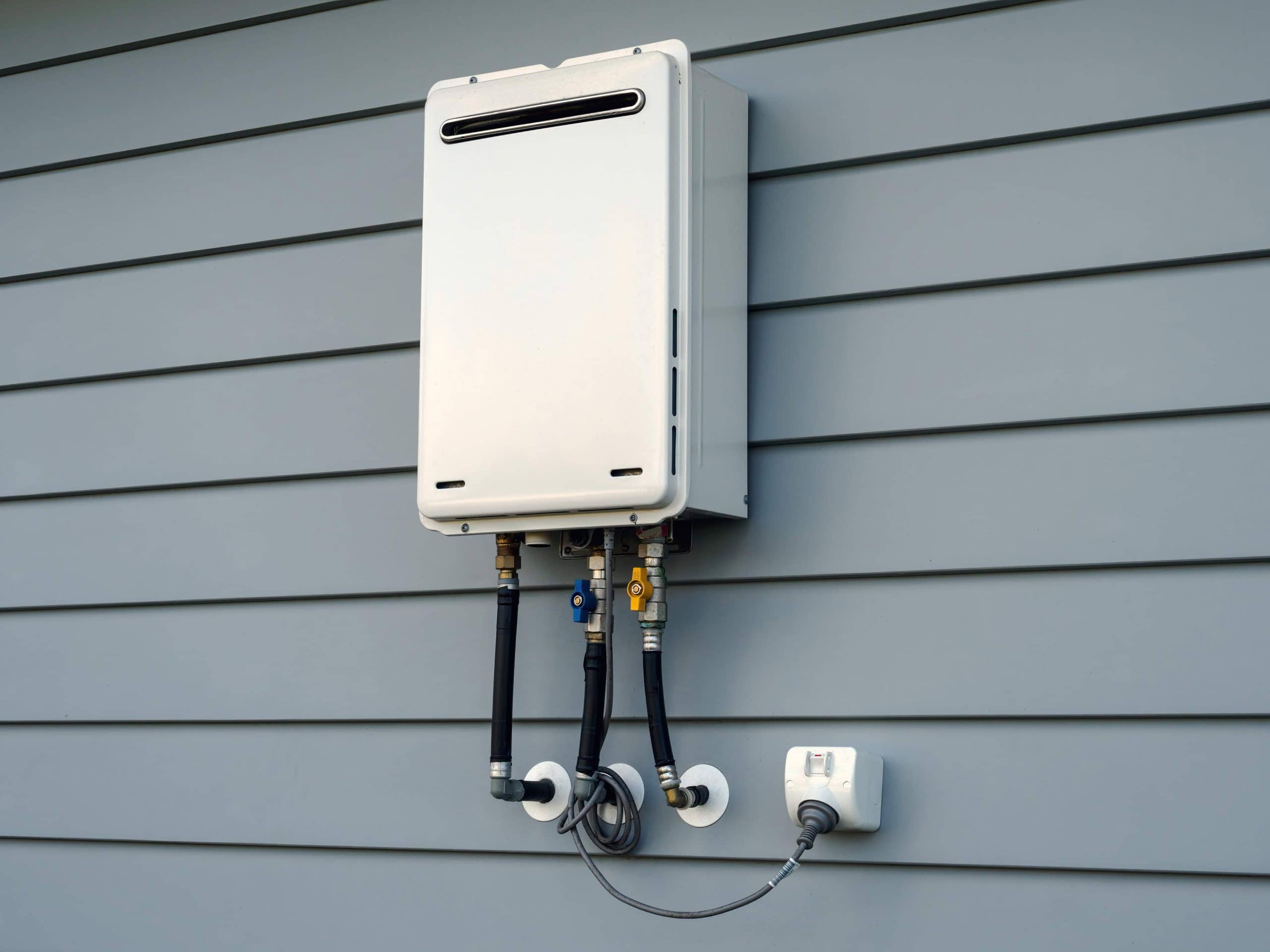
Outdoor tankless water heater mounted on a house exterior with multiple insulated pipes connected below it.

Summary:

Water heater problems never happen at convenient times. Whether you’re dealing with no hot water, strange noises, or a leaking tank, understanding what’s going wrong helps you make better decisions about repairs versus replacement. This guide walks through the most common water heater issues Monmouth County homeowners face, explains when DIY troubleshooting ends and professional help begins, and breaks down the repair-or-replace decision so you’re not guessing with your budget. You’ll learn what causes sudden hot water loss, how to spot problems before they become emergencies, and what factors matter most when your unit finally gives out.
Table of contents

Your water heater just stopped working. Maybe you noticed lukewarm showers yesterday, or maybe you woke up to ice-cold water this morning. Either way, your day just got complicated. Hot water isn’t optional when you’ve got dishes piling up, laundry waiting, and a family that needs to get ready for work and school. The good news is that most water heater problems fall into predictable categories, and many have straightforward solutions. What matters now is figuring out what’s actually wrong, whether you can fix it yourself, and when it makes sense to call someone who does this for a living. Let’s start with why water heaters fail in the first place.

Why Your Water Heater Stopped Working

Water heaters fail for a handful of common reasons, and the symptoms usually tell you where to start looking. If you have no hot water at all, the problem is almost always with your power source or heating mechanism. Electric water heaters lose function when circuit breakers trip, heating elements burn out, or thermostats fail. Gas water heaters stop heating when pilot lights go out, gas valves malfunction, or burners clog with debris.

Temperature problems without complete failure point to different issues. Water that’s warm but not hot enough typically means your thermostat is set too low, sediment has built up around heating elements, or your tank is undersized for your household’s demand. If your water starts hot then quickly turns cold, you’re likely dealing with a failing heating element or a tank that’s too small for your usage patterns.

Leaks are a different animal entirely. Water pooling around your heater could be condensation, a loose connection, a faulty valve, or tank corrosion. The location of the leak matters. Top leaks often come from loose inlet or outlet connections. Bottom leaks usually signal sediment buildup, drain valve problems, or actual tank failure. In coastal areas like Monmouth County, NJ, saltwater air accelerates corrosion on tanks and connections, which means leaks show up faster than they would inland.
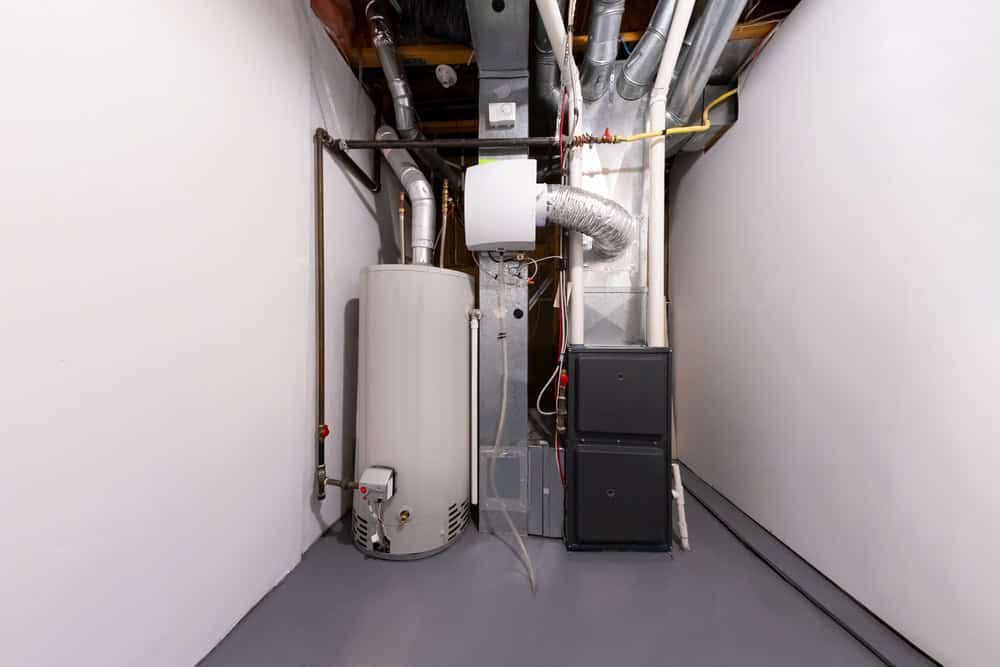
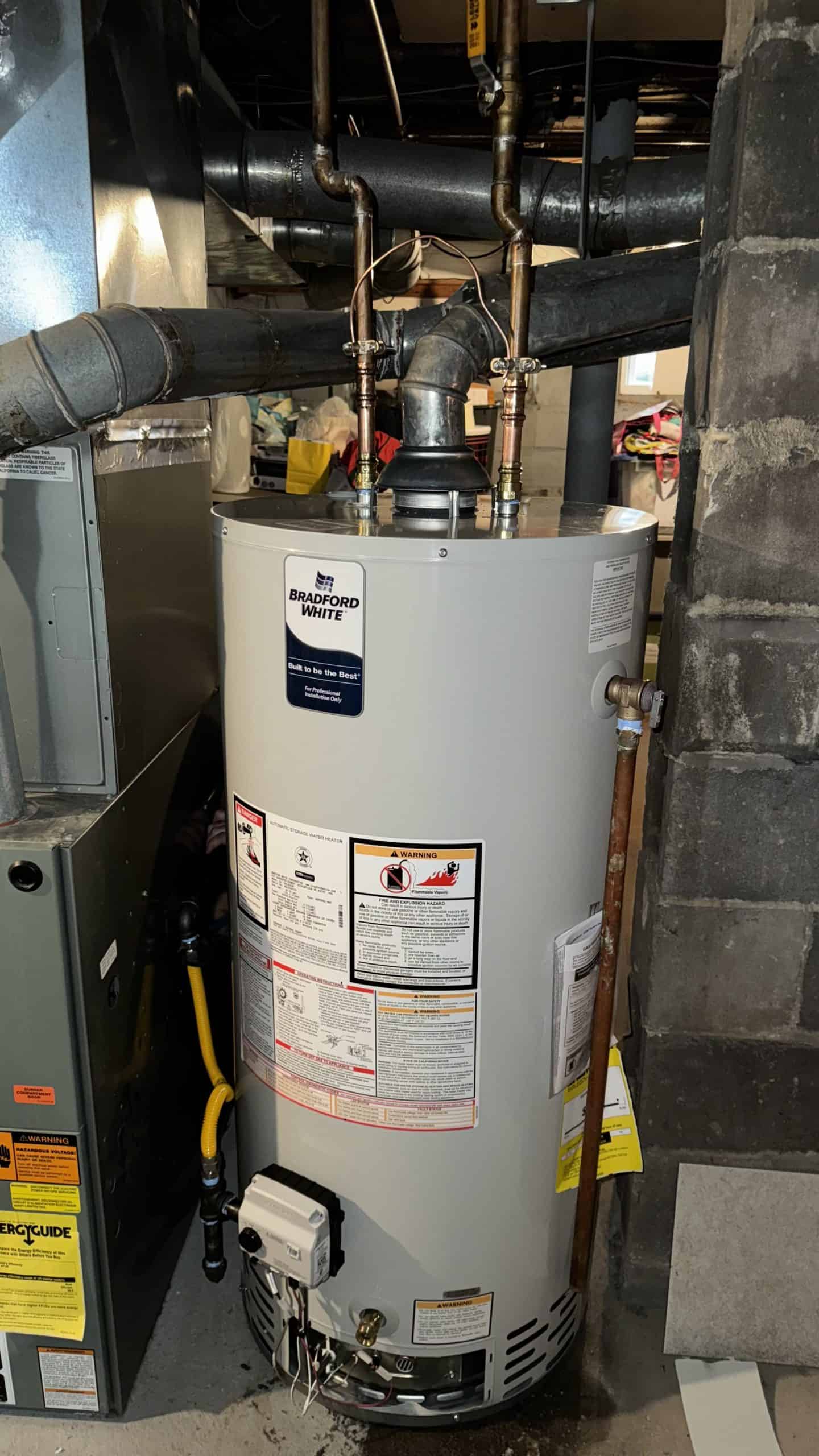
A water heater and furnace with connected ductwork and pipes are expertly installed by a plumber in Monmouth & Ocean County, NJ, in a clean, white-walled basement with a gray floor and exposed ceiling beams.

No Hot Water in House Electric Water Heater

When you have cold water but no hot water from an electric water heater, start with the simplest explanation. Check your electrical panel first. A tripped circuit breaker is the most common cause of sudden hot water loss in electric systems. If the breaker for your water heater has flipped to the off position, reset it by switching it fully off, then back on. If it trips again immediately, you’ve got a short circuit or grounded element that needs professional attention.

If the breaker looks fine, the next step is checking the high-temperature cutoff switch on the unit itself. This safety feature shuts down your water heater if internal temperatures get too high. You’ll find it behind the upper access panel on your tank, usually marked with a red reset button. Turn off power to the water heater at your electrical panel before removing the access panel. Press the reset button firmly until you hear it click. If it was tripped, this should restore function once you turn the power back on.

When neither the breaker nor the reset button solves the problem, you’re likely dealing with failed heating elements or a bad thermostat. Electric water heaters have two heating elements, one at the top and one at the bottom. The upper element heats water first, then the lower element maintains temperature. If the upper element fails, you get no hot water at all. If the lower element fails, you get a small amount of hot water that runs out quickly. Testing elements requires a multimeter and some electrical knowledge. If you’re not comfortable working with electricity, this is where you call a professional.

New electric water heaters that produce no hot water usually have one of two problems. Either the unit wasn’t filled with water before power was turned on, which causes dry firing and burns out the upper element, or there’s an electrical connection problem. A new electric water heater no hot water situation after installation almost always means the installer skipped a step or made a wiring error. Don’t attempt to fix this yourself since warranty coverage often requires professional installation and service.

Power outages create their own set of issues. If you have no hot water after a power outage, check whether your circuit breaker tripped when power was restored. Electrical surges during power restoration can flip breakers or trigger high-temperature cutoff switches. Most electric water heaters will resume normal operation once you reset the breaker and cutoff switch, but the water needs time to reheat. A 40-50 gallon tank takes about an hour to fully heat after being cold.

Gas Hot Water Heater Not Working

Gas water heaters have different failure points than electric models, starting with the pilot light. If you have a gas hot water heater not working, check whether the pilot light is lit. Older gas water heaters use a standing pilot light that burns continuously. If this flame goes out, your burner won’t ignite and you won’t get hot water. You’ll find the pilot light behind an access panel at the bottom of your tank. If you see no flame, you’ll need to relight it following the instructions on your water heater’s label.

Before attempting to relight a pilot, turn the gas control valve to the off position and wait at least five minutes for any accumulated gas to dissipate. Never try to light a pilot if you smell gas. If the pilot won’t stay lit after several attempts, the thermocouple has likely failed. The thermocouple is a safety device that shuts off gas flow if the pilot goes out. A faulty thermocouple will let you light the pilot, but the flame dies as soon as you release the button. Replacing a thermocouple is straightforward for someone with basic mechanical skills, but if you’re uncomfortable working with gas appliances, call a professional.

Newer gas water heaters use electronic ignition instead of standing pilots. These systems are more efficient but have their own quirks. If your water heater is lit but no hot water is coming through, the burner might not be firing even though the pilot or igniter is working. This usually points to a gas supply issue, a clogged burner, or a failed gas valve. Check that your gas valve is fully open. If you have other gas appliances in your home, verify they’re working normally. If everything else works fine, the problem is isolated to your water heater.

Gas hot water not working can also stem from venting problems. Gas water heaters need proper ventilation to exhaust combustion gases. If the vent pipe is blocked by debris, bird nests, or corrosion, your water heater’s safety features will prevent the burner from operating. You might notice the pilot staying lit but the main burner never igniting. Vent blockages are dangerous because they can lead to carbon monoxide buildup, so don’t ignore this symptom. If you suspect a vent issue, shut off the gas and call a professional immediately.

Some situations create confusing symptoms. If your hot water heater is running but no hot water is coming out, you might have a broken dip tube. The dip tube is a plastic pipe inside your tank that directs incoming cold water to the bottom where it gets heated. When this tube breaks, cold water mixes with hot water at the top of the tank, giving you lukewarm water instead of hot. This problem affects both gas and electric heaters, and fixing it requires draining the tank and replacing the tube.

Water Heater Leaking From Bottom

Finding water pooling around the bottom of your water heater triggers immediate panic, but not all leaks mean your tank is done for. Start by identifying exactly where the water is coming from. Wipe the area dry, then watch for new moisture to appear. This tells you whether you’re dealing with condensation, a valve problem, or actual tank failure.

Condensation happens when cold water enters a hot tank, causing the exterior to sweat. This is most common during high-demand periods or in humid environments like basements. If you see moisture on the outside of the tank but can’t find an actual drip point, condensation is likely the culprit. Increasing your thermostat slightly or improving ventilation around the tank usually solves this.

The drain valve at the bottom of your tank is a common leak source. This valve is used for maintenance flushing and can develop leaks from loose connections or worn washers. Try tightening the valve slightly. If that doesn’t stop the leak, you may need to replace the valve. This is a relatively simple repair, but you’ll need to drain the tank first.
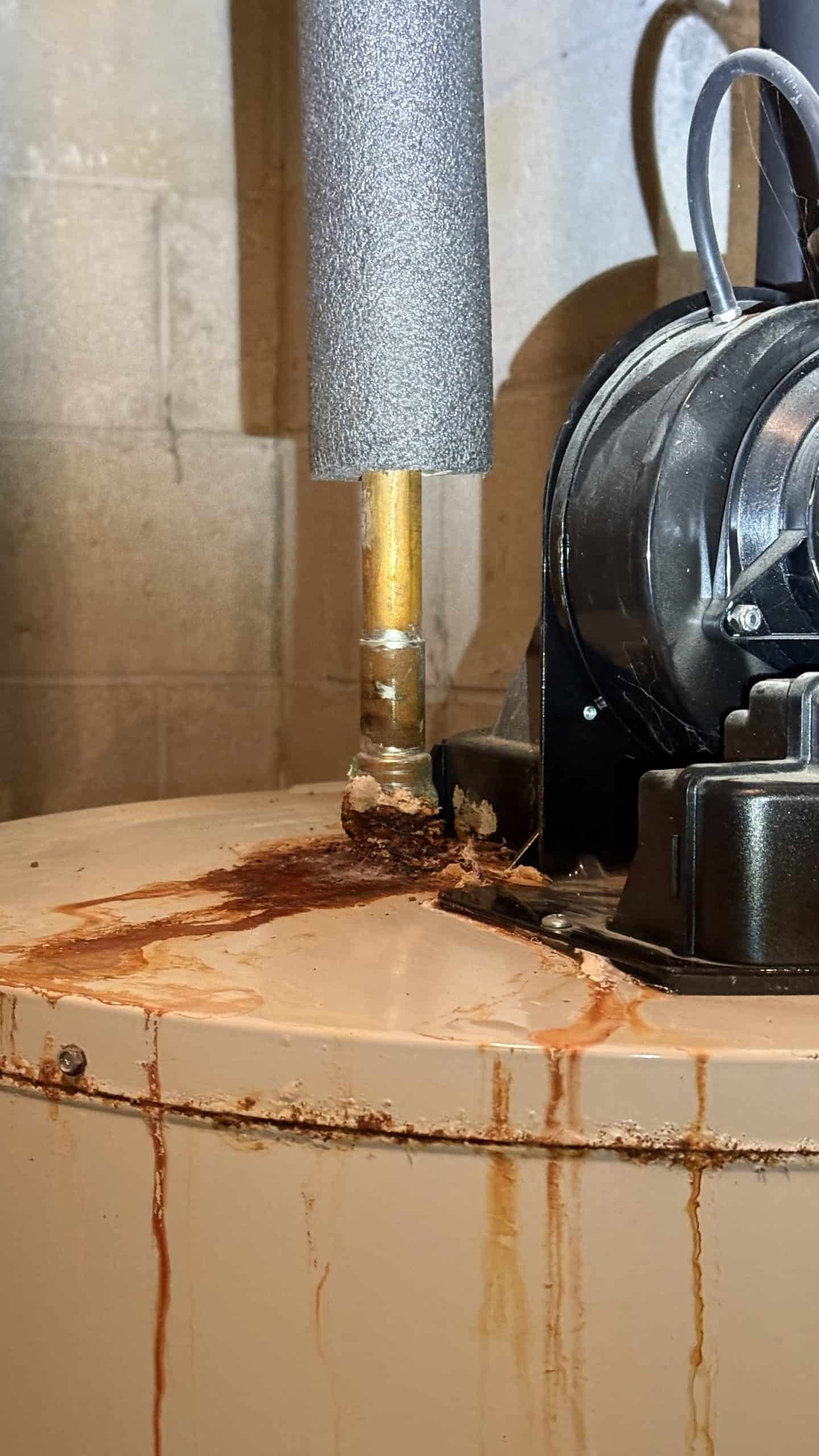
A rusted water heater showing clear signs of leakage. Rust stains and water drips are visible on the surface, along with a pipe insulated with grey foam. The background consists of a grey concrete wall.

Hot Water Heater Leaking

When your hot water heater leaking is coming from the top, you’re usually looking at connection issues rather than tank failure. The cold water inlet and hot water outlet pipes connect at the top of your tank. These connections can loosen over time from thermal expansion and contraction. Check both connections with a wrench. Often, a quarter turn is enough to stop the leak.

The temperature and pressure relief valve, also located near the top of most tanks, is another frequent leak source. This safety valve releases water if temperature or pressure inside the tank gets too high. If it’s dripping, the valve might be faulty, or your tank pressure might actually be too high. Testing the valve is simple. Lift the lever and let it snap back. Water should flow briefly then stop completely. If water continues to drip after testing, the valve needs replacement.

Leaks from the tank body itself are the worst-case scenario. If water is seeping from the tank rather than from connections or valves, your tank has corroded through. This happens when the protective glass lining inside the tank wears away and the steel underneath begins to rust. Once a tank starts leaking from the body, replacement is your only option. No repair will fix a corroded tank, and the leak will only get worse.

The anode rod plays a crucial role in preventing tank corrosion. This sacrificial metal rod inside your tank attracts corrosive elements in the water, protecting the tank itself. When the anode rod depletes completely, corrosion attacks the tank. Most anode rods last 3-5 years, but coastal areas with saltwater air see faster depletion. If your water heater is over five years old and you’ve never replaced the anode rod, that should be your next maintenance task. Replacing the rod can add years to your tank’s life.

In Monmouth County and Ocean County, coastal conditions create unique challenges. Saltwater air accelerates external corrosion on tanks, connections, and heating elements. Humid coastal environments also promote internal rust and mineral buildup. If you live near the coast and your water heater is leaking, corrosion is likely happening faster than it would inland. Regular maintenance becomes even more critical in these conditions.

Water Heater Lifespan

Knowing your water heater life expectancy helps you make smarter decisions about repairs versus replacement. Traditional tank water heaters typically last 8-12 years. Gas models usually fall on the shorter end of that range because they have more complex components and exposure to combustion byproducts. Electric models often reach 10-15 years since they have fewer moving parts and no combustion stress.

Age isn’t just a number when it comes to water heaters. Once your unit passes the 7-8 year mark, the math on repairs starts changing. A $400 repair on a 5-year-old water heater makes sense. The same $400 repair on a 10-year-old unit doesn’t, because you’re likely facing more failures soon. As a general rule, if your water heater is over seven years old and the repair cost exceeds half the price of replacement, replacement is the smarter financial move.

Tankless water heaters offer significantly longer lifespans, typically 15-20 years with proper maintenance. Some high-quality tankless units can last up to 25 years. This longevity comes from not storing water continuously, which eliminates the constant pressure and corrosion issues that plague tank models. However, tankless systems require annual descaling in areas with hard water, and skipping this maintenance can shorten their lifespan dramatically.

Several factors affect how long your water heater actually lasts. Water quality is huge. Hard water with high mineral content causes faster sediment buildup, which reduces efficiency and damages heating elements. Coastal locations see accelerated external corrosion from saltwater air. Usage patterns matter too. A water heater serving a family of six works much harder than one serving two people, which means faster wear and earlier failure.

Maintenance extends water heater lifespan more than any other factor. Flushing your tank annually removes sediment that would otherwise insulate heating elements and promote corrosion. Checking and replacing the anode rod every 3-5 years protects the tank from internal corrosion. Setting your thermostat to 120°F instead of higher temperatures reduces stress on components and prevents scalding. These simple maintenance tasks can add 3-5 years to your water heater’s functional life.

You can find your water heater’s age by checking the serial number on the manufacturer’s label. Most manufacturers encode the manufacturing date in the serial number. The format varies by brand, but typically the first two digits or letters indicate the month and year of manufacture. If your water heater is approaching or past the 10-year mark, start planning for replacement even if it’s still working. Waiting until complete failure means you’ll be making decisions under pressure, probably without hot water, and possibly dealing with water damage.

Tankless Hot Water Heater Installation

Tankless water heaters solve many of the problems traditional tanks create. Instead of storing and continuously heating 40-50 gallons of water, tankless units heat water on demand as it flows through the system. This means you never run out of hot water, you’re not wasting energy keeping a tank hot 24/7, and you free up significant floor space in your utility area.

The tankless hot water heater cost in 2026 typically ranges from $1,200 to $3,800 installed, depending on whether you choose electric or gas, and how complex your installation is. Electric tankless systems are cheaper upfront, usually $1,200-$2,500 including installation. They’re easier to install because they don’t require venting or gas line work. However, electric tankless heaters need substantial electrical capacity. Most require dedicated 40-60 amp circuits, which might mean upgrading your electrical panel.

Gas tankless water heaters cost more to install, typically $2,000-$3,800, but they deliver higher flow rates and work better for larger households. The higher cost comes from venting requirements and potential gas line upgrades. Many tankless units need a 3/4-inch gas line, while older homes often have 1/2-inch lines. Upgrading your gas line adds $200-$800 to the project depending on the distance from your meter.

Summary:

Water heater problems never happen at convenient times. Whether you’re dealing with no hot water, strange noises, or a leaking tank, understanding what’s going wrong helps you make better decisions about repairs versus replacement. This guide walks through the most common water heater issues Monmouth County homeowners face, explains when DIY troubleshooting ends and professional help begins, and breaks down the repair-or-replace decision so you’re not guessing with your budget. You’ll learn what causes sudden hot water loss, how to spot problems before they become emergencies, and what factors matter most when your unit finally gives out.
Table of contents

Your water heater just stopped working. Maybe you noticed lukewarm showers yesterday, or maybe you woke up to ice-cold water this morning. Either way, your day just got complicated. Hot water isn’t optional when you’ve got dishes piling up, laundry waiting, and a family that needs to get ready for work and school. The good news is that most water heater problems fall into predictable categories, and many have straightforward solutions. What matters now is figuring out what’s actually wrong, whether you can fix it yourself, and when it makes sense to call someone who does this for a living. Let’s start with why water heaters fail in the first place.

Why Your Water Heater Stopped Working

Water heaters fail for a handful of common reasons, and the symptoms usually tell you where to start looking. If you have no hot water at all, the problem is almost always with your power source or heating mechanism. Electric water heaters lose function when circuit breakers trip, heating elements burn out, or thermostats fail. Gas water heaters stop heating when pilot lights go out, gas valves malfunction, or burners clog with debris.

Temperature problems without complete failure point to different issues. Water that’s warm but not hot enough typically means your thermostat is set too low, sediment has built up around heating elements, or your tank is undersized for your household’s demand. If your water starts hot then quickly turns cold, you’re likely dealing with a failing heating element or a tank that’s too small for your usage patterns.

Leaks are a different animal entirely. Water pooling around your heater could be condensation, a loose connection, a faulty valve, or tank corrosion. The location of the leak matters. Top leaks often come from loose inlet or outlet connections. Bottom leaks usually signal sediment buildup, drain valve problems, or actual tank failure. In coastal areas like Monmouth County, NJ, saltwater air accelerates corrosion on tanks and connections, which means leaks show up faster than they would inland.

A water heater and furnace with connected ductwork and pipes are expertly installed by a plumber in Monmouth & Ocean County, NJ, in a clean, white-walled basement with a gray floor and exposed ceiling beams.

No Hot Water in House Electric Water Heater

When you have cold water but no hot water from an electric water heater, start with the simplest explanation. Check your electrical panel first. A tripped circuit breaker is the most common cause of sudden hot water loss in electric systems. If the breaker for your water heater has flipped to the off position, reset it by switching it fully off, then back on. If it trips again immediately, you’ve got a short circuit or grounded element that needs professional attention.

If the breaker looks fine, the next step is checking the high-temperature cutoff switch on the unit itself. This safety feature shuts down your water heater if internal temperatures get too high. You’ll find it behind the upper access panel on your tank, usually marked with a red reset button. Turn off power to the water heater at your electrical panel before removing the access panel. Press the reset button firmly until you hear it click. If it was tripped, this should restore function once you turn the power back on.

When neither the breaker nor the reset button solves the problem, you’re likely dealing with failed heating elements or a bad thermostat. Electric water heaters have two heating elements, one at the top and one at the bottom. The upper element heats water first, then the lower element maintains temperature. If the upper element fails, you get no hot water at all. If the lower element fails, you get a small amount of hot water that runs out quickly. Testing elements requires a multimeter and some electrical knowledge. If you’re not comfortable working with electricity, this is where you call a professional.

New electric water heaters that produce no hot water usually have one of two problems. Either the unit wasn’t filled with water before power was turned on, which causes dry firing and burns out the upper element, or there’s an electrical connection problem. A new electric water heater no hot water situation after installation almost always means the installer skipped a step or made a wiring error. Don’t attempt to fix this yourself since warranty coverage often requires professional installation and service.

Power outages create their own set of issues. If you have no hot water after a power outage, check whether your circuit breaker tripped when power was restored. Electrical surges during power restoration can flip breakers or trigger high-temperature cutoff switches. Most electric water heaters will resume normal operation once you reset the breaker and cutoff switch, but the water needs time to reheat. A 40-50 gallon tank takes about an hour to fully heat after being cold.

Gas Hot Water Heater Not Working

Gas water heaters have different failure points than electric models, starting with the pilot light. If you have a gas hot water heater not working, check whether the pilot light is lit. Older gas water heaters use a standing pilot light that burns continuously. If this flame goes out, your burner won’t ignite and you won’t get hot water. You’ll find the pilot light behind an access panel at the bottom of your tank. If you see no flame, you’ll need to relight it following the instructions on your water heater’s label.

Before attempting to relight a pilot, turn the gas control valve to the off position and wait at least five minutes for any accumulated gas to dissipate. Never try to light a pilot if you smell gas. If the pilot won’t stay lit after several attempts, the thermocouple has likely failed. The thermocouple is a safety device that shuts off gas flow if the pilot goes out. A faulty thermocouple will let you light the pilot, but the flame dies as soon as you release the button. Replacing a thermocouple is straightforward for someone with basic mechanical skills, but if you’re uncomfortable working with gas appliances, call a professional.

Newer gas water heaters use electronic ignition instead of standing pilots. These systems are more efficient but have their own quirks. If your water heater is lit but no hot water is coming through, the burner might not be firing even though the pilot or igniter is working. This usually points to a gas supply issue, a clogged burner, or a failed gas valve. Check that your gas valve is fully open. If you have other gas appliances in your home, verify they’re working normally. If everything else works fine, the problem is isolated to your water heater.

Gas hot water not working can also stem from venting problems. Gas water heaters need proper ventilation to exhaust combustion gases. If the vent pipe is blocked by debris, bird nests, or corrosion, your water heater’s safety features will prevent the burner from operating. You might notice the pilot staying lit but the main burner never igniting. Vent blockages are dangerous because they can lead to carbon monoxide buildup, so don’t ignore this symptom. If you suspect a vent issue, shut off the gas and call a professional immediately.

Some situations create confusing symptoms. If your hot water heater is running but no hot water is coming out, you might have a broken dip tube. The dip tube is a plastic pipe inside your tank that directs incoming cold water to the bottom where it gets heated. When this tube breaks, cold water mixes with hot water at the top of the tank, giving you lukewarm water instead of hot. This problem affects both gas and electric heaters, and fixing it requires draining the tank and replacing the tube.

Water Heater Leaking From Bottom

Finding water pooling around the bottom of your water heater triggers immediate panic, but not all leaks mean your tank is done for. Start by identifying exactly where the water is coming from. Wipe the area dry, then watch for new moisture to appear. This tells you whether you’re dealing with condensation, a valve problem, or actual tank failure.

Condensation happens when cold water enters a hot tank, causing the exterior to sweat. This is most common during high-demand periods or in humid environments like basements. If you see moisture on the outside of the tank but can’t find an actual drip point, condensation is likely the culprit. Increasing your thermostat slightly or improving ventilation around the tank usually solves this.

The drain valve at the bottom of your tank is a common leak source. This valve is used for maintenance flushing and can develop leaks from loose connections or worn washers. Try tightening the valve slightly. If that doesn’t stop the leak, you may need to replace the valve. This is a relatively simple repair, but you’ll need to drain the tank first.

A rusted water heater showing clear signs of leakage. Rust stains and water drips are visible on the surface, along with a pipe insulated with grey foam. The background consists of a grey concrete wall.

Hot Water Heater Leaking

When your hot water heater leaking is coming from the top, you’re usually looking at connection issues rather than tank failure. The cold water inlet and hot water outlet pipes connect at the top of your tank. These connections can loosen over time from thermal expansion and contraction. Check both connections with a wrench. Often, a quarter turn is enough to stop the leak.

The temperature and pressure relief valve, also located near the top of most tanks, is another frequent leak source. This safety valve releases water if temperature or pressure inside the tank gets too high. If it’s dripping, the valve might be faulty, or your tank pressure might actually be too high. Testing the valve is simple. Lift the lever and let it snap back. Water should flow briefly then stop completely. If water continues to drip after testing, the valve needs replacement.

Leaks from the tank body itself are the worst-case scenario. If water is seeping from the tank rather than from connections or valves, your tank has corroded through. This happens when the protective glass lining inside the tank wears away and the steel underneath begins to rust. Once a tank starts leaking from the body, replacement is your only option. No repair will fix a corroded tank, and the leak will only get worse.

The anode rod plays a crucial role in preventing tank corrosion. This sacrificial metal rod inside your tank attracts corrosive elements in the water, protecting the tank itself. When the anode rod depletes completely, corrosion attacks the tank. Most anode rods last 3-5 years, but coastal areas with saltwater air see faster depletion. If your water heater is over five years old and you’ve never replaced the anode rod, that should be your next maintenance task. Replacing the rod can add years to your tank’s life.

In Monmouth County and Ocean County, coastal conditions create unique challenges. Saltwater air accelerates external corrosion on tanks, connections, and heating elements. Humid coastal environments also promote internal rust and mineral buildup. If you live near the coast and your water heater is leaking, corrosion is likely happening faster than it would inland. Regular maintenance becomes even more critical in these conditions.

Water Heater Lifespan

Knowing your water heater life expectancy helps you make smarter decisions about repairs versus replacement. Traditional tank water heaters typically last 8-12 years. Gas models usually fall on the shorter end of that range because they have more complex components and exposure to combustion byproducts. Electric models often reach 10-15 years since they have fewer moving parts and no combustion stress.

Age isn’t just a number when it comes to water heaters. Once your unit passes the 7-8 year mark, the math on repairs starts changing. A $400 repair on a 5-year-old water heater makes sense. The same $400 repair on a 10-year-old unit doesn’t, because you’re likely facing more failures soon. As a general rule, if your water heater is over seven years old and the repair cost exceeds half the price of replacement, replacement is the smarter financial move.

Tankless water heaters offer significantly longer lifespans, typically 15-20 years with proper maintenance. Some high-quality tankless units can last up to 25 years. This longevity comes from not storing water continuously, which eliminates the constant pressure and corrosion issues that plague tank models. However, tankless systems require annual descaling in areas with hard water, and skipping this maintenance can shorten their lifespan dramatically.

Several factors affect how long your water heater actually lasts. Water quality is huge. Hard water with high mineral content causes faster sediment buildup, which reduces efficiency and damages heating elements. Coastal locations see accelerated external corrosion from saltwater air. Usage patterns matter too. A water heater serving a family of six works much harder than one serving two people, which means faster wear and earlier failure.

Maintenance extends water heater lifespan more than any other factor. Flushing your tank annually removes sediment that would otherwise insulate heating elements and promote corrosion. Checking and replacing the anode rod every 3-5 years protects the tank from internal corrosion. Setting your thermostat to 120°F instead of higher temperatures reduces stress on components and prevents scalding. These simple maintenance tasks can add 3-5 years to your water heater’s functional life.

You can find your water heater’s age by checking the serial number on the manufacturer’s label. Most manufacturers encode the manufacturing date in the serial number. The format varies by brand, but typically the first two digits or letters indicate the month and year of manufacture. If your water heater is approaching or past the 10-year mark, start planning for replacement even if it’s still working. Waiting until complete failure means you’ll be making decisions under pressure, probably without hot water, and possibly dealing with water damage.

Tankless Hot Water Heater Installation

Tankless water heaters solve many of the problems traditional tanks create. Instead of storing and continuously heating 40-50 gallons of water, tankless units heat water on demand as it flows through the system. This means you never run out of hot water, you’re not wasting energy keeping a tank hot 24/7, and you free up significant floor space in your utility area.

The tankless hot water heater cost in 2026 typically ranges from $1,200 to $3,800 installed, depending on whether you choose electric or gas, and how complex your installation is. Electric tankless systems are cheaper upfront, usually $1,200-$2,500 including installation. They’re easier to install because they don’t require venting or gas line work. However, electric tankless heaters need substantial electrical capacity. Most require dedicated 40-60 amp circuits, which might mean upgrading your electrical panel.

Gas tankless water heaters cost more to install, typically $2,000-$3,800, but they deliver higher flow rates and work better for larger households. The higher cost comes from venting requirements and potential gas line upgrades. Many tankless units need a 3/4-inch gas line, while older homes often have 1/2-inch lines. Upgrading your gas line adds $200-$800 to the project depending on the distance from your meter.
Article details:

Share: