Trenchless sewer line replacement fixes damaged pipes without destroying your property. Learn how camera inspections, pipe lining, and modern methods save time and money.
Share:

Summary:
If you’re dealing with a sewer line problem, the last thing you want is a backhoe tearing through your driveway or destroying the landscaping you’ve spent years building. The good news? You might not need any of that.
Trenchless sewer line replacement lets you fix or replace underground pipes with minimal digging, faster timelines, and results that last decades. Whether you’re facing recurring backups, tree root damage, or an aging clay pipe that’s reached the end of its life, understanding your options helps you make the right call without the stress or guesswork.
Here’s what you need to know about how trenchless technology works and when it makes sense for your Monmouth County, NJ property.
Trenchless sewer line replacement is exactly what it sounds like—repairing or replacing your sewer line without digging a massive trench across your property. Instead of excavating the entire length of pipe from your house to the street, we create one or two small access points and use specialized equipment to fix the problem from the inside.
This approach works for a wide range of issues: cracks from shifting soil, leaks, tree root intrusion, corrosion, and general wear from age. The process starts with a camera inspection to see exactly what’s happening underground. That footage shows the location and severity of damage, which determines whether you need a repair, a lining, or a full replacement.
Most trenchless projects wrap up in one to two days. Your lawn, driveway, and landscaping stay intact. And the new pipe—whether it’s a resin liner or high-density polyethylene—can last 50 to 100 years.

The process begins with a sewer line inspection using a waterproof HD camera. We feed the camera through your existing pipe, recording video of the interior condition. You’ll see cracks, root intrusion, corrosion, blockages, or collapsed sections in real time. This step eliminates guesswork and gives you proof of what needs to happen.
Once the inspection confirms the damage, there are two primary methods for trenchless sewer line replacement. The first is pipe lining, also called cured-in-place pipe or CIPP lining. A flexible liner coated with epoxy resin gets inserted into the damaged pipe. The liner is inflated, pressed against the old pipe’s interior, and cured with heat or UV light. After a few hours, you have a brand-new, seamless pipe inside the old one—no joints, no weak spots, and highly resistant to future root intrusion or corrosion.
The second method is pipe bursting. This approach works when the existing pipe is too damaged for lining or when you want to upsize the diameter. A bursting head is pulled through the old pipe, fracturing it outward into the surrounding soil while simultaneously pulling a new HDPE pipe into place. You end up with a completely new sewer line without the mess of traditional excavation.
Both methods require only small access points at the beginning and end of the damaged section. That means your driveway, patio, flower beds, and mature trees stay untouched. Cleanup is minimal. And because the work happens faster than traditional digging, you’re back to normal life in a fraction of the time.
The materials used in trenchless sewer replacement outlast older clay tile, cast iron, and Orangeburg pipes by decades. HDPE and epoxy-lined pipes resist the issues that caused your original line to fail in the first place.
Trenchless technology works best when your existing pipe still has some structural integrity. If you’re dealing with cracks, leaks, minor root intrusion, or corrosion, pipe lining can create a durable new surface without replacing the entire line. If the damage is more extensive but the pipe hasn’t completely collapsed, pipe bursting gives you a full replacement without excavation.
There are situations where trenchless methods aren’t the right fit. If your sewer line has completely collapsed, is severely misaligned, or was installed incorrectly from the start, traditional excavation may be necessary. A camera inspection reveals whether trenchless is viable for your specific situation. We’ll show you the footage and explain your options based on what we actually see, not what we want to sell.
Trenchless sewer line replacement makes the most sense when the damaged section runs under hardscaping, landscaping, or structures you don’t want disturbed. If your sewer line runs beneath your driveway, patio, deck, or a row of mature trees, avoiding excavation can save thousands in restoration costs. Even if the pipe is accessible, trenchless methods typically finish faster and with less disruption to your daily routine.
Homes built before the 1980s in Monmouth County, NJ often have clay tile or cast iron sewer lines. These materials deteriorate over time, especially when exposed to tree roots, ground settlement, or shifting soil. If your home is more than 40 years old and you’ve never had the sewer line inspected, a camera inspection can catch problems before they turn into emergencies.
Cost is another factor. While trenchless sewer line replacement may have a higher upfront price per foot than traditional digging, the total project cost is often lower once you account for restoration. Replacing sod, repairing driveways, and rebuilding landscaping can easily add $2,000 to $10,000 to a traditional excavation project. Trenchless avoids those expenses entirely.
Before any repair or replacement happens, you need to know exactly what’s wrong. A sewer line inspection using camera technology takes the guesswork out of the equation. A small, waterproof camera travels through your pipes, transmitting live video to a monitor. You see the same footage we see—cracks, blockages, root masses, corrosion, or sections that have separated or collapsed.
This step is critical because it determines whether you’re dealing with a simple clog, a repairable crack, or a line that needs full replacement. It also pinpoints the exact location of the problem, which saves time and money during the actual repair. You’re not paying someone to dig in the wrong spot or guess at what’s happening underground.
A thorough sewage line inspection also reveals issues you might not know exist. Many homeowners call for service after a backup, only to discover that multiple sections of their sewer line are deteriorating. Catching those problems early prevents more expensive emergencies down the road.
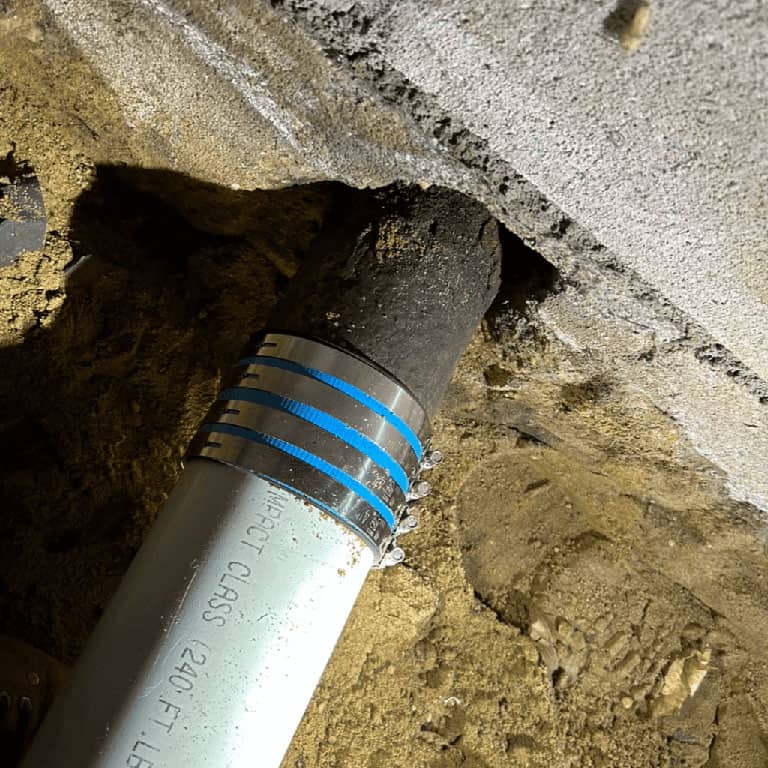
Camera inspections show you the interior condition of your pipes in high definition. You’ll see whether the damage is isolated to one section or spread across the entire line. Common findings include tree roots that have penetrated joints or cracks, grease buildup that’s restricting flow, sections of pipe that have sagged or bellied due to soil settling, and cracks or fractures caused by age or ground movement.
The inspection also identifies the pipe material. Older homes in Monmouth County, NJ may have clay tile, cast iron, or even Orangeburg pipes. Each material has different failure patterns and lifespans. Clay tile pipes, common in homes built before 1980, are prone to root intrusion at the joints. Cast iron corrodes from the inside out. Knowing what you’re working with helps determine the best repair method.
A camera inspection typically costs between $100 and $500 depending on the length and accessibility of your sewer line. That upfront investment can save you from unnecessary work. If we recommend a full replacement but the camera shows only a small crack, you have the evidence to make an informed decision. On the flip side, if the footage shows extensive damage throughout the line, you’ll know that a temporary patch won’t solve the problem.
After the inspection, we’ll walk you through the footage, explain what you’re seeing, and outline your options. You’ll receive a clear recommendation based on the actual condition of your pipes, not a one-size-fits-all sales pitch. If trenchless methods are viable, you’ll get a breakdown of costs, timeline, and what to expect during the process. If traditional excavation is necessary, you’ll understand why.
The inspection also serves as documentation. If you’re buying or selling a home, a sewer line inspection can reveal problems before they become deal-breakers. Many real estate transactions in areas with older infrastructure now include sewer inspections as part of the due diligence process.
Certain warning signs indicate it’s time to schedule a sewer line inspection before a full-blown emergency hits. If you’re experiencing recurring backups every few months despite snaking or hydrojetting, the problem is likely a damaged pipe, not just a clog. Temporary fixes will keep failing until you address the underlying issue.
Multiple slow drains throughout your home—especially in lower-level fixtures like basement toilets or first-floor showers—suggest a blockage or damage in the main sewer line. If plunging or drain cleaners don’t solve the problem, the issue is deeper in the system. Gurgling sounds from toilets or drains when you run water indicate air trapped in the line, usually caused by a partial blockage or break.
Foul sewage odors in your yard, basement, or near drains point to a leak or crack in the sewer line. A properly functioning line should be airtight, so any escaping smell means something’s wrong. Lush, unusually green patches of grass in your yard can signal a sewer leak underground—sewage acts as fertilizer, causing localized overgrowth. Wet spots, indentations, or sinkholes in your lawn suggest the pipe is leaking and saturating the soil.
If you’ve noticed an increase in pests like rats, mice, or cockroaches, especially near drains or your foundation, a broken sewer line may be attracting them. Rodents and insects can squeeze through small cracks in damaged pipes. Foundation cracks, especially if they appear suddenly or worsen over time, can result from a sewer leak washing away soil around your home’s foundation.
Homes over 40 years old with original sewer lines should be inspected even if you’re not experiencing problems. Proactive inspections catch deterioration before it causes backups, leaks, or property damage. If you have large trees near your sewer line, roots may already be infiltrating the pipes. An inspection every few years helps you stay ahead of root-related damage.
Trenchless sewer line replacement offers a faster, less invasive solution for many homeowners facing sewer line problems. It preserves your property, reduces restoration costs, and delivers results that last for decades. But the right approach depends on the specific condition of your pipes, the extent of damage, and what you’re trying to accomplish.
The process starts with a camera inspection. That footage gives you the information you need to make a confident decision, whether it’s a simple repair, a trenchless lining, a full pipe bursting replacement, or traditional excavation. Working with licensed, experienced professionals who show you the evidence and explain your options—without the pressure or upselling—makes all the difference.
If you’re dealing with recurring backups, slow drains, or suspect your sewer line is failing, the next step is getting eyes on the problem. We serve Monmouth County, NJ with camera inspections, trenchless sewer line replacement, and transparent pricing so you know exactly what you’re paying for before work begins.
Article details:
Share:
Continue learning: