Not sure whether a tankless or traditional tank water heater makes sense for your home? This guide breaks down the real differences in cost, performance, and long-term value.
Share:
Summary:
You’re standing in your basement staring at a water heater that’s been making strange noises for weeks. Or maybe your showers have been getting shorter and colder. Either way, you know replacement is coming, and now you’re facing a decision that’ll affect your home for the next 10 to 20 years.
The choice between tankless and traditional tank water heaters isn’t just about picking the newest technology or the cheapest option. It’s about understanding how each system actually works in real homes, what they cost beyond the sticker price, and which one matches how your household uses hot water. This guide breaks down the differences that actually matter when you’re making this decision in Monmouth County, NJ.
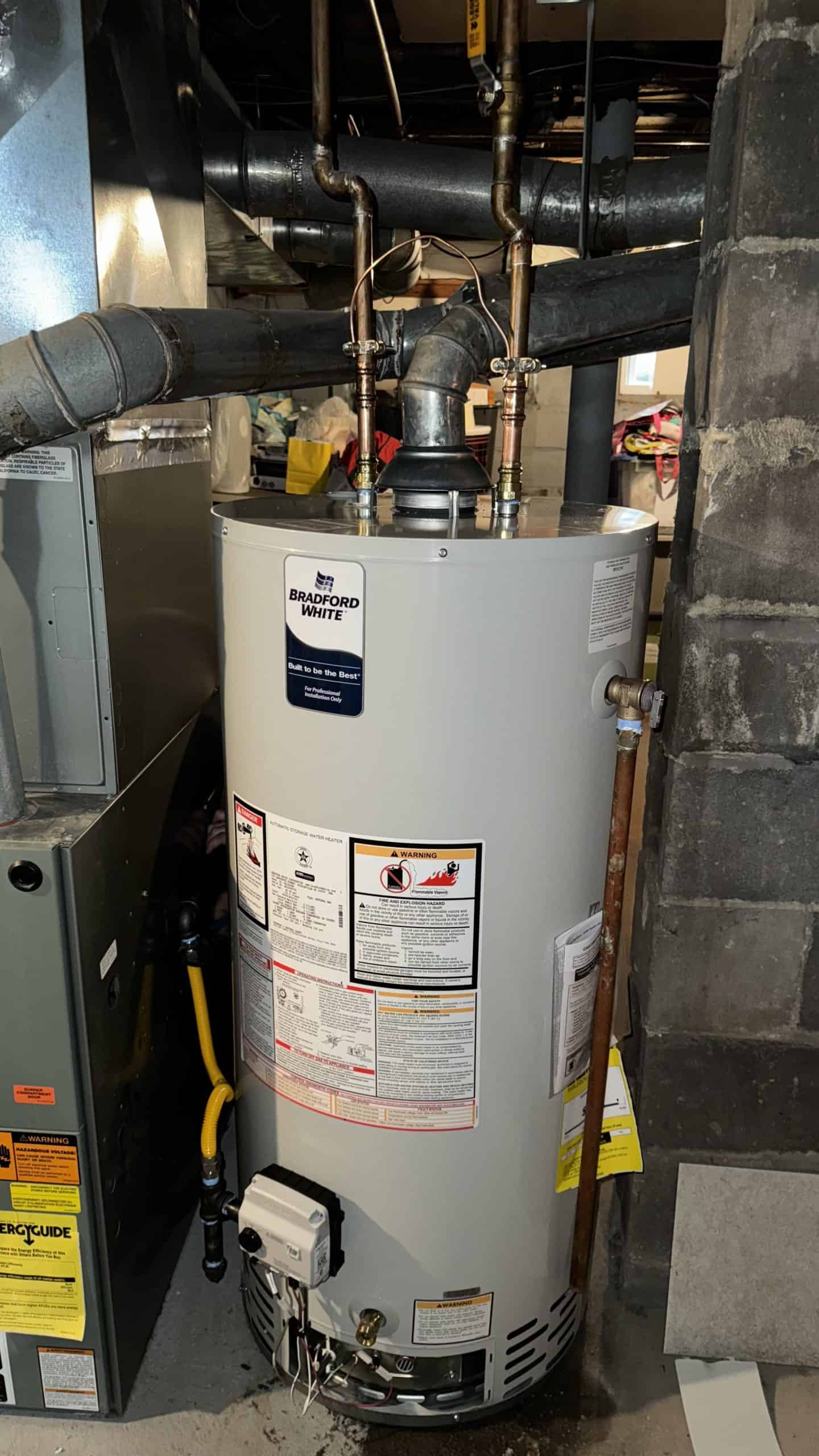
Traditional tank water heaters store 30 to 80 gallons of hot water in an insulated cylinder. A gas burner or electric heating element keeps that water hot around the clock, whether you’re using it or not. When you turn on a faucet, hot water flows from the top of the tank while cold water enters the bottom to be heated.
Tankless water heaters work differently. When you turn on hot water, cold water flows through the unit and passes over a heat exchanger powered by gas or electricity. The water heats instantly as it moves through, delivering a continuous supply without storage. The unit turns off when you close the tap.
That fundamental difference drives everything else—cost, efficiency, performance, and how well each system fits different households.
Traditional tank water heaters cost less upfront. In Monmouth and Ocean County, NJ, you’re looking at $600 to $2,500 installed for most homes. The units themselves run $300 to $2,000 depending on capacity and features, with installation adding another $500 to $1,000 for straightforward replacements.
Tankless systems cost more from the start. Expect $1,400 to $5,600 installed. The units alone range from $1,000 to $4,000, and installation runs $600 to $2,500. That higher installation cost comes from the complexity—tankless units often need upgraded gas lines, electrical panel modifications, or new venting systems that tank replacements don’t require.
If you’re replacing a tank with another tank, installation is usually simple. The new unit goes where the old one sat, using existing connections. Switching from tank to tankless means reworking your setup, which takes more time and materials.
Labor accounts for 30 to 50 percent of your total cost. In Monmouth County, NJ, plumbers typically charge $45 to $150 per hour. A basic tank replacement might take three hours. A complex tankless retrofit could take eight hours or more.
Don’t forget permits. New Jersey requires them for water heater replacement, with costs ranging from $50 to $500 depending on your municipality. Expansion tanks, often mandatory in NJ, add another $100 to $400. Disposal of your old unit runs $75 to $500 unless it’s included in your quote.
The upfront price difference is real. But upfront cost is only part of the picture when you’re living with this decision for 10 to 20 years.
Traditional tank water heaters continuously heat water whether you’re using it or not. That creates standby heat loss—energy wasted keeping 40 to 80 gallons hot around the clock. This accounts for 10 to 15 percent of your water heating costs and makes tank systems less efficient overall.
Tankless water heaters only heat water when you need it, eliminating standby losses. For homes using 41 gallons or less of hot water daily, tankless systems can be 24 to 34 percent more energy efficient than conventional tanks. For homes using around 86 gallons per day, tankless systems still deliver 8 to 14 percent better efficiency.
What does that mean for your utility bills? The average household spends $400 to $600 annually on water heating with a traditional tank. Switching to tankless typically reduces that by $100 to $150 per year for gas systems and $40 to $50 per year for electric systems.
Over a 20-year lifespan, that’s $2,000 to $3,000 in total energy savings for a tankless unit. Factor in that you’d replace a traditional tank twice in that same timeframe, and the math starts shifting.
Gas tankless water heaters generally offer higher flow rates and better efficiency than electric models. But electric tankless units still outperform traditional electric tanks. Your existing fuel source often determines which makes sense—converting from gas to electric or vice versa adds significant cost and complexity.
Energy efficiency matters more in some situations than others. If you’re planning to stay in your home long-term, the energy savings compound. If you’re selling in a few years, you might not recoup the higher upfront investment through lower utility bills alone.
Tankless water heaters deliver specific advantages that matter to certain households. They also come with limitations that make them the wrong choice for others. Understanding both sides helps you decide whether the benefits outweigh the drawbacks for your situation.
The biggest selling point is endless hot water. You won’t run out mid-shower or wait for the tank to reheat between uses. For families with multiple bathrooms or back-to-back morning routines, that’s a real advantage.
Space savings matter if you’re tight on room. Tankless units mount on walls and take up far less space than 40 to 80-gallon tanks. That frees up floor space in basements, utility closets, or garages.
Lifespan is a major advantage. Tankless water heaters typically last 20 years or more with proper maintenance. Traditional tanks last 8 to 12 years, often closer to 8 to 10 years in Monmouth County, NJ, due to hard water. Over 20 years, you’re buying one tankless unit versus replacing a tank twice.
Energy efficiency translates to lower monthly bills. That $100 to $150 annual savings adds up over two decades. Combined with the longer lifespan, the total cost of ownership often favors tankless despite the higher upfront price.
You get hot water faster at the tap. While there’s a brief delay as water travels through the heat exchanger, you’re not waiting for a 50-gallon tank to reheat after someone else’s shower. The supply is continuous as long as you’re within the unit’s flow rate capacity.
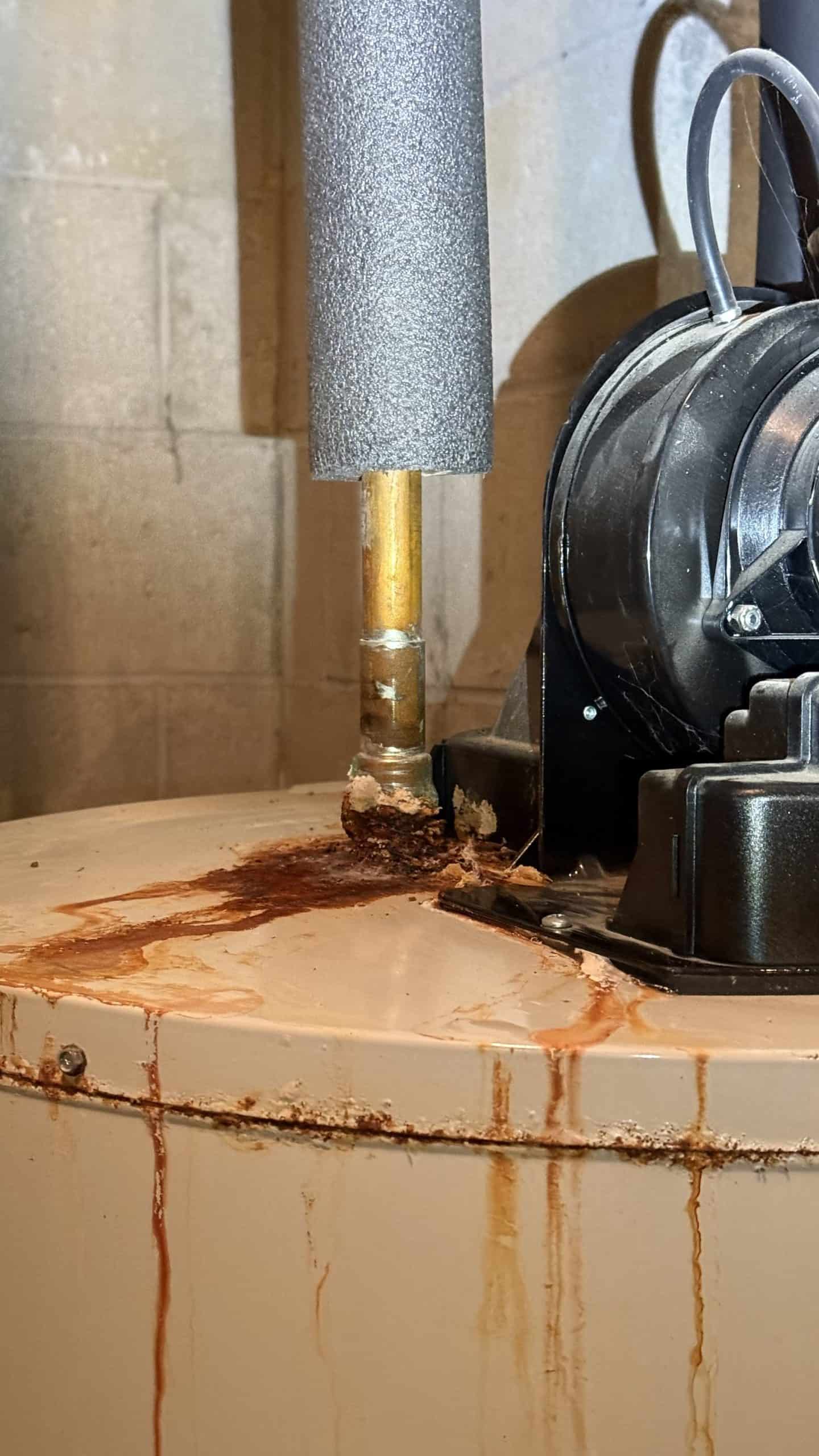
Lower risk of catastrophic failure. Tanks can corrode and leak, potentially flooding your basement. Tankless units don’t store water, so there’s no risk of a 50-gallon leak ruining your floor or belongings.
Some tankless models qualify for rebates and tax credits. Heat pump water heaters offer even better incentives, with federal tax credits up to $2,000 plus NJ Clean Energy rebates of $500 to $900. These incentives can significantly offset the higher upfront cost.
Maintenance is simpler in some ways. You’re not draining sediment from a tank or replacing anode rods every few years. But tankless units do require annual flushing to prevent mineral buildup, especially in hard water areas like Monmouth County, NJ, where calcium and magnesium deposits accelerate wear.
Flow rate limitations can be a problem. Tankless water heaters provide 2 to 5 gallons of hot water per minute. Gas models offer higher flow rates than electric. If you’re running two showers, the dishwasher, and the washing machine simultaneously, a single tankless unit might struggle to keep up.
That means larger households with high simultaneous demand might need multiple tankless units or a high-capacity whole-house model. Installing multiple units increases costs significantly, potentially eliminating the financial advantage over traditional tanks.
The higher upfront cost is real. You’re paying $1,400 to $5,600 installed versus $600 to $2,500 for a tank. If you’re on a tight budget or not planning to stay in your home long-term, that difference matters more than long-term energy savings you might not fully realize.
Installation complexity adds time and expense. Retrofitting a tankless system in a home set up for a tank often requires upgraded gas lines, electrical panel modifications, or new venting systems. That’s not just more expensive—it’s more disruptive and takes longer to complete.
Hard water requires more maintenance. Monmouth County, NJ’s hard water accelerates mineral buildup inside tankless units. Annual flushing isn’t optional here—it’s essential to maintain efficiency and prevent damage. Skipping this maintenance can void warranties and shorten lifespan significantly.
Temperature inconsistency can happen with intermittent use. Some users experience “cold water sandwiches”—brief bursts of cold water between hot water uses when washing dishes or filling pots. This happens because the unit doesn’t activate instantly for very small draws.
Recovery time isn’t an issue with tankless, but initial hot water delivery can take a few seconds longer than pulling from a pre-heated tank. For fixtures far from the unit, you might wait 5 to 10 seconds for hot water to arrive.
The right water heater for your home depends on how you actually use hot water, your budget, and how long you plan to stay. Tankless systems make sense for smaller households that value energy efficiency and have the budget for higher upfront costs. Traditional tanks work better for larger families with high simultaneous demand and tighter budgets.
If your current tank is approaching 10 to 12 years old, now’s the time to evaluate options before you’re dealing with an emergency replacement. Understanding the real differences between systems helps you make a decision you’ll be comfortable with for the next decade or longer.
At AME Plumbing Heating and Cooling, we walk Monmouth and Ocean County, NJ, homeowners through these decisions with transparent pricing and no-pressure guidance. Whether you’re facing an emergency replacement or planning ahead, we help you understand which system fits your household’s needs and budget.
Article details:
Share:
Continue learning: