Servicing Areas Throughout New Jersey

Top 7 Benefits of Switching to a Tankless Water Heater This Year

Thinking about going tankless? Explore the real benefits, costs, and performance differences that matter to New Jersey homeowners facing cold winters and hard water conditions.

Share:

Wall‑mounted tankless water heater connected to multiple pipes and vents in a utility room with exposed plumbing.

Summary:

Tankless water heaters are changing how homeowners in Monmouth & Ocean County, NJ, Ocean County, NJ, and Middlesex County, NJ think about hot water. From endless supply during back-to-back showers to measurable energy savings that lower monthly bills, these on-demand systems solve the frustrations traditional tanks can’t fix. This guide breaks down the seven biggest benefits of switching to a tankless water heater, what installation actually costs in New Jersey, and how these systems handle winter groundwater temperatures and hard water conditions. You’ll learn when upgrading makes financial sense and what to expect from professional tankless water heater installation.
Table of contents
Your morning shower goes cold halfway through. The dishwasher’s running lukewarm water. And your utility bill just hit another record high. If your water heater is more than 10 years old, these problems aren’t going away on their own. Traditional tank systems wear out, lose efficiency, and cost more to operate as they age. Eventually, they fail, usually at the worst possible time. Tankless water heaters work differently. Instead of storing and constantly reheating 40 to 50 gallons, they heat water the instant you need it. That fundamental shift eliminates standby heat loss, frees up floor space, and delivers hot water that doesn’t run out. For homeowners in Monmouth & Ocean County, NJ, Ocean County, NJ, and Middlesex County, NJ dealing with hard water and cold winters, understanding how these systems perform locally matters more than generic benefits. Here’s what actually changes when you switch to tankless.

How Tankless Water Heaters Work Compared to Traditional Tank Systems

A traditional water heater keeps a full tank hot around the clock. It heats the water, stores it, and cycles on repeatedly to maintain temperature even when nobody’s using hot water. That’s standby heat loss, and it’s expensive.

Tankless water heaters heat on demand. Turn on your faucet, and cold water flows through the unit where a gas burner or electric element heats it instantly. No storage. No reheating. No wasted energy keeping water hot while you’re at work or asleep.

That difference shows up on your energy bill every month. It also changes how much space the system requires and how long the equipment lasts before needing replacement.
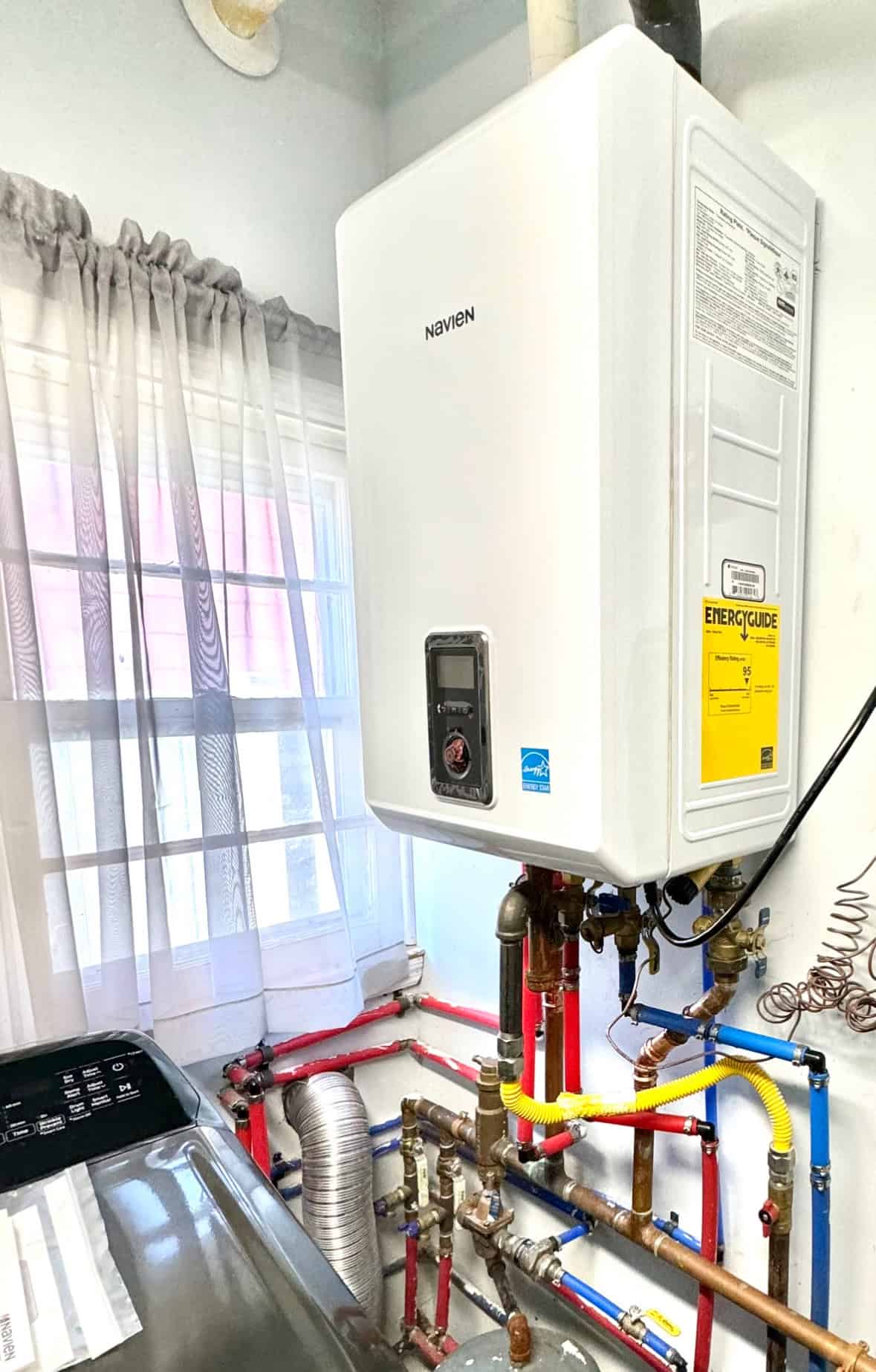
A tankless water heater mounted on a wall next to a window with curtains. Below it are various connected pipes in red, blue, and copper. A yellow energy guide label is attached to the heater. A washing machine is partially visible nearby.

Do Tankless Water Heaters Work in Cold New Jersey Winters

Winter groundwater in Monmouth & Ocean County, NJ, Ocean County, NJ, and Middlesex County, NJ drops to 40 or 50 degrees. Your water heater has to bridge that gap to deliver 120-degree water to your shower. That’s a 70 to 80 degree temperature rise, and it requires serious heating power.

Traditional tanks handle this by keeping a large reserve already heated. Tankless systems heat water as it flows, which means the unit needs adequate BTU capacity to handle cold incoming water in real time. Gas tankless water heaters with higher BTU ratings are built for this challenge and deliver strong flow rates even in January.

Electric tankless models work well for point-of-use applications like a single bathroom sink. But for whole-house hot water in a New Jersey winter, gas units generally perform better.

Sizing matters significantly here. When we install tankless water heaters in New Jersey, we calculate your household’s peak demand and match it to a unit rated for cold-climate performance. Undersized systems struggle. Properly sized systems deliver consistent hot water regardless of outdoor temperature.

Installation requirements also factor in. Gas lines may need upgrading to handle higher flow. Venting must meet local codes. These aren’t obstacles—they’re standard parts of professional installation. Once completed correctly, a quality tankless water heater handles New Jersey winters without issue for 20 years or more.

How Hard Water Affects Tankless Water Heater Performance

Hard water is standard in Monmouth & Ocean County, NJ, Ocean County, NJ, and Middlesex County, NJ. The water contains calcium and magnesium that form scale deposits inside water heaters. Over time, those minerals coat heating elements and reduce efficiency.

Traditional tanks accumulate sediment at the bottom. You hear rumbling or popping as steam bubbles push through that mineral layer. It’s not just noise—it’s your system working harder and wearing out faster.

Tankless systems face the same hard water challenge but in a different location. Scale builds up inside the heat exchanger where water flows and gets heated. When minerals coat those surfaces, heat transfer becomes less efficient. Flow rates drop. Energy consumption increases. Components fail sooner if the buildup goes unchecked.

The solution is straightforward: annual descaling. We flush the unit with descaling solution, removing mineral deposits before they cause performance issues. This maintenance takes about an hour and keeps the system running at peak efficiency.

Some homeowners with particularly hard water install a water softener upstream of the tankless unit. That reduces mineral content before it reaches the water heater, minimizing scale formation and extending equipment life. It’s an additional investment that makes sense if you’re planning to stay in your home long-term.

Regular tankless water heater maintenance isn’t optional in areas with hard water. Skip it, and you’ll see declining performance, error codes, and eventually expensive repairs. Stay on top of it, and these systems deliver reliable service for decades.

Seven Real Benefits of Switching to a Tankless Water Heater

Upgrading to a tankless water heater solves problems traditional tanks can’t address. These aren’t marketing talking points—they’re the reasons homeowners in Monmouth & Ocean County, NJ, Ocean County, NJ, and Middlesex County, NJ make the switch and don’t regret it.

Here are the seven benefits that actually matter when you’re comparing your options.

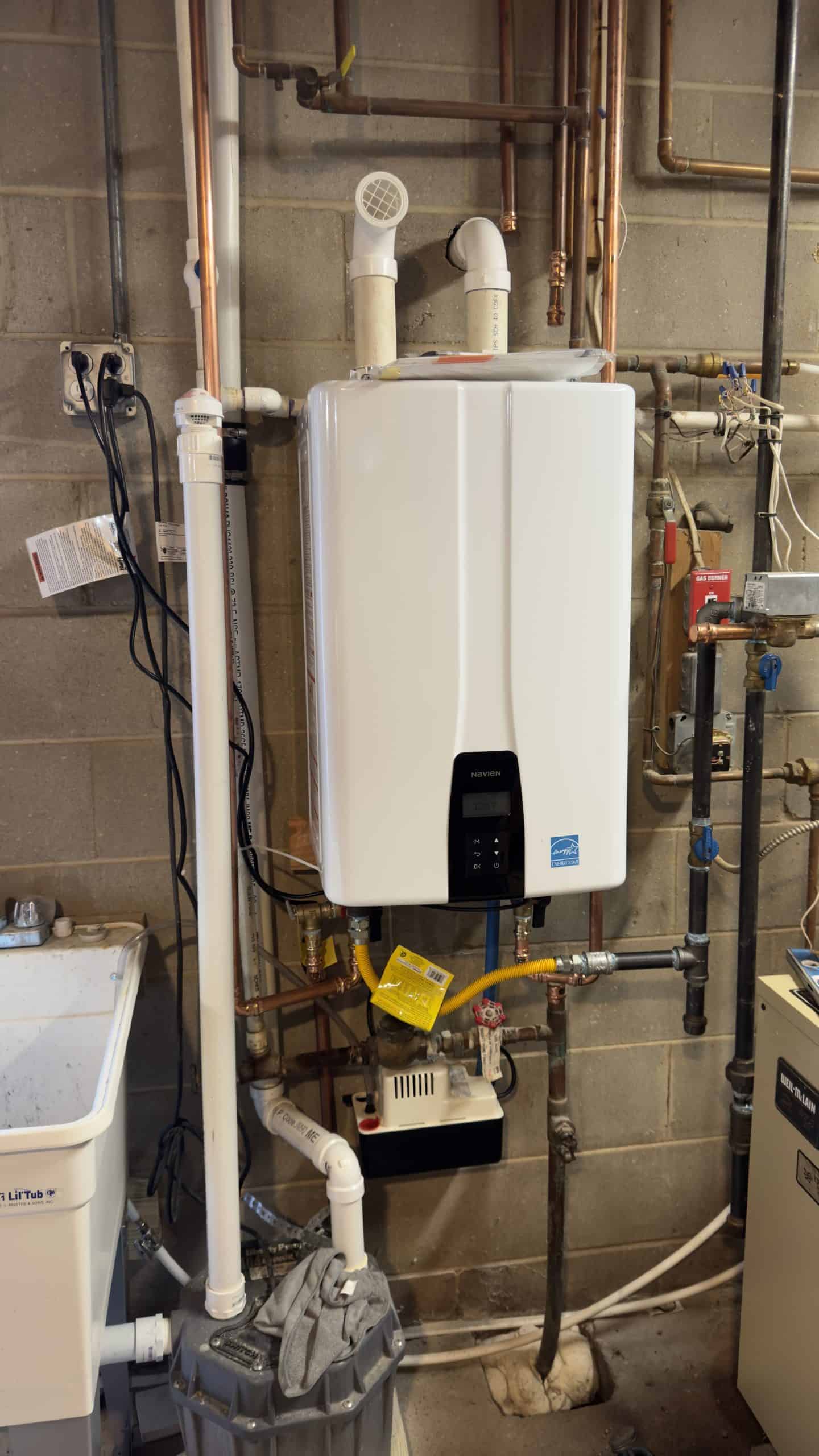
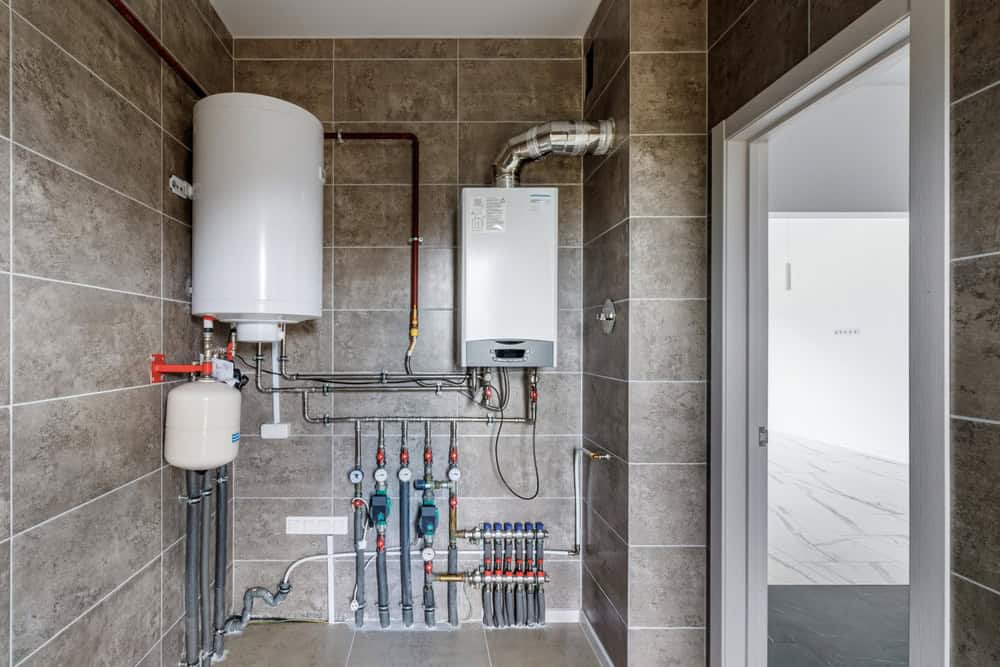
A white tankless water heater, manufactured by Noritz, is mounted on a gray cinder block wall. It's surrounded by a complex network of copper and white PVC pipes, electrical wires, and a floor drain system.

Never Run Out of Hot Water and Cut Energy Waste

Running out of hot water mid-shower is more than inconvenient. It’s a daily reminder that your current system can’t keep up. You time showers. You warn family members to keep it short. When guests visit, someone always ends up with cold water.

Tankless water heaters eliminate that problem completely. They heat water continuously as it flows through the system. There’s no tank to empty. Run two showers, the dishwasher, and the washing machine simultaneously, and the hot water keeps flowing. As long as the system is sized correctly for your household’s peak demand, you won’t run out.

That endless supply solves one problem. Energy efficiency solves another. Traditional tanks maintain 40 to 50 gallons of hot water 24/7, whether you’re using it or not. That’s standby heat loss, and it shows up on every utility bill. You’re paying to heat water while you sleep, while you’re at work, while the house sits empty.

Tankless systems only heat water when you open a hot water tap. The Department of Energy confirms these units can be 24 to 34 percent more efficient for homes using 41 gallons or less daily. Even households with higher usage see efficiency gains of 8 to 14 percent compared to traditional tanks.

For New Jersey homeowners facing electricity rates around 21 cents per kilowatt-hour—about 4 percent higher than the national average—those efficiency improvements translate to real monthly savings. ENERGY STAR-certified tankless models save the average family at least $100 annually on utility bills. Over a 20-year lifespan, that’s $2,000 in savings, and that’s before factoring in rate increases.

The savings aren’t theoretical. They come from eliminating waste. You’re not paying to keep a tank hot when nobody’s home. You’re not reheating the same water repeatedly. You heat water when you need it, use it, and move on. That efficiency makes financial sense and practical sense, especially in a state where energy costs keep climbing.

Longer Equipment Life and Significant Space Savings

Traditional tank water heaters last 10 to 15 years before they need replacement. The tank itself is the failure point. Interior surfaces corrode. Sediment accumulates. Eventually the tank develops leaks. When that happens, you’re replacing the entire system, often on an emergency basis with limited time to compare options or negotiate pricing.

Tankless water heaters are built to last 20 years or longer with proper maintenance. Without a storage tank that can rust or crack, these systems simply last longer. That’s double the lifespan of a traditional tank. Over the time you own your home, that means fewer replacements, less disruption, and lower total cost of ownership.

Space savings are equally significant. A standard 50-gallon tank water heater stands about five feet tall and two feet wide, consuming substantial floor space in your basement, garage, or utility closet. Federal energy regulations require newer tanks to have additional insulation, which makes them even larger than older models.

Tankless units mount on the wall and typically measure 25 to 30 inches tall by 18 to 20 inches wide. That frees up valuable floor space for storage or other uses. You can install them in smaller closets, tighter utility areas, or even outdoors in appropriate locations. For homes in Monmouth & Ocean County, NJ, Ocean County, NJ, and Middlesex County, NJ where basements serve multiple purposes, reclaiming that floor space matters.

Maintenance requirements are simpler too. Traditional tanks need sediment draining, anode rod inspections, and leak monitoring. Tankless systems require annual descaling to remove mineral buildup—a straightforward service that takes about an hour. We flush the unit, inspect components, and verify everything’s operating efficiently.

The combination of longer lifespan, smaller footprint, and simpler maintenance makes tankless water heaters a smarter long-term investment. You’re installing a system that lasts longer, requires less space, and needs fewer interventions over its lifetime. That’s not just convenience—it’s better value over the 20-plus years you’ll own the equipment.

What to Know Before Switching to a Tankless System

Switching to a tankless water heater requires more planning than replacing a traditional tank with another tank. The installation is more complex. The upfront cost is higher. But the long-term benefits—from energy savings to endless hot water—make it worth serious consideration if your current system is aging or costing too much to operate.

Success depends on working with an experienced plumber who understands how tankless systems perform in New Jersey’s climate, how to size units correctly for your household’s needs, and how to meet local code requirements. Proper tankless water heater installation sets you up for decades of reliable service. Poor installation creates ongoing problems.

If you’re in Monmouth & Ocean County, NJ, Ocean County, NJ, or Middlesex County, NJ and your water heater is showing its age, now’s the right time to explore your options. We specialize in tankless water heater installation and can help you determine what makes sense for your home, your budget, and your hot water demands.

Summary:

Tankless water heaters are changing how homeowners in Monmouth & Ocean County, NJ, Ocean County, NJ, and Middlesex County, NJ think about hot water. From endless supply during back-to-back showers to measurable energy savings that lower monthly bills, these on-demand systems solve the frustrations traditional tanks can’t fix. This guide breaks down the seven biggest benefits of switching to a tankless water heater, what installation actually costs in New Jersey, and how these systems handle winter groundwater temperatures and hard water conditions. You’ll learn when upgrading makes financial sense and what to expect from professional tankless water heater installation.
Table of contents
Your morning shower goes cold halfway through. The dishwasher’s running lukewarm water. And your utility bill just hit another record high. If your water heater is more than 10 years old, these problems aren’t going away on their own. Traditional tank systems wear out, lose efficiency, and cost more to operate as they age. Eventually, they fail, usually at the worst possible time. Tankless water heaters work differently. Instead of storing and constantly reheating 40 to 50 gallons, they heat water the instant you need it. That fundamental shift eliminates standby heat loss, frees up floor space, and delivers hot water that doesn’t run out. For homeowners in Monmouth & Ocean County, NJ, Ocean County, NJ, and Middlesex County, NJ dealing with hard water and cold winters, understanding how these systems perform locally matters more than generic benefits. Here’s what actually changes when you switch to tankless.

How Tankless Water Heaters Work Compared to Traditional Tank Systems

A traditional water heater keeps a full tank hot around the clock. It heats the water, stores it, and cycles on repeatedly to maintain temperature even when nobody’s using hot water. That’s standby heat loss, and it’s expensive.

Tankless water heaters heat on demand. Turn on your faucet, and cold water flows through the unit where a gas burner or electric element heats it instantly. No storage. No reheating. No wasted energy keeping water hot while you’re at work or asleep.

That difference shows up on your energy bill every month. It also changes how much space the system requires and how long the equipment lasts before needing replacement.

A tankless water heater mounted on a wall next to a window with curtains. Below it are various connected pipes in red, blue, and copper. A yellow energy guide label is attached to the heater. A washing machine is partially visible nearby.

Do Tankless Water Heaters Work in Cold New Jersey Winters

Winter groundwater in Monmouth & Ocean County, NJ, Ocean County, NJ, and Middlesex County, NJ drops to 40 or 50 degrees. Your water heater has to bridge that gap to deliver 120-degree water to your shower. That’s a 70 to 80 degree temperature rise, and it requires serious heating power.

Traditional tanks handle this by keeping a large reserve already heated. Tankless systems heat water as it flows, which means the unit needs adequate BTU capacity to handle cold incoming water in real time. Gas tankless water heaters with higher BTU ratings are built for this challenge and deliver strong flow rates even in January.

Electric tankless models work well for point-of-use applications like a single bathroom sink. But for whole-house hot water in a New Jersey winter, gas units generally perform better.

Sizing matters significantly here. When we install tankless water heaters in New Jersey, we calculate your household’s peak demand and match it to a unit rated for cold-climate performance. Undersized systems struggle. Properly sized systems deliver consistent hot water regardless of outdoor temperature.

Installation requirements also factor in. Gas lines may need upgrading to handle higher flow. Venting must meet local codes. These aren’t obstacles—they’re standard parts of professional installation. Once completed correctly, a quality tankless water heater handles New Jersey winters without issue for 20 years or more.

How Hard Water Affects Tankless Water Heater Performance

Hard water is standard in Monmouth & Ocean County, NJ, Ocean County, NJ, and Middlesex County, NJ. The water contains calcium and magnesium that form scale deposits inside water heaters. Over time, those minerals coat heating elements and reduce efficiency.

Traditional tanks accumulate sediment at the bottom. You hear rumbling or popping as steam bubbles push through that mineral layer. It’s not just noise—it’s your system working harder and wearing out faster.

Tankless systems face the same hard water challenge but in a different location. Scale builds up inside the heat exchanger where water flows and gets heated. When minerals coat those surfaces, heat transfer becomes less efficient. Flow rates drop. Energy consumption increases. Components fail sooner if the buildup goes unchecked.

The solution is straightforward: annual descaling. We flush the unit with descaling solution, removing mineral deposits before they cause performance issues. This maintenance takes about an hour and keeps the system running at peak efficiency.

Some homeowners with particularly hard water install a water softener upstream of the tankless unit. That reduces mineral content before it reaches the water heater, minimizing scale formation and extending equipment life. It’s an additional investment that makes sense if you’re planning to stay in your home long-term.

Regular tankless water heater maintenance isn’t optional in areas with hard water. Skip it, and you’ll see declining performance, error codes, and eventually expensive repairs. Stay on top of it, and these systems deliver reliable service for decades.

Seven Real Benefits of Switching to a Tankless Water Heater

Upgrading to a tankless water heater solves problems traditional tanks can’t address. These aren’t marketing talking points—they’re the reasons homeowners in Monmouth & Ocean County, NJ, Ocean County, NJ, and Middlesex County, NJ make the switch and don’t regret it.

Here are the seven benefits that actually matter when you’re comparing your options.

A white tankless water heater, manufactured by Noritz, is mounted on a gray cinder block wall. It's surrounded by a complex network of copper and white PVC pipes, electrical wires, and a floor drain system.

Never Run Out of Hot Water and Cut Energy Waste

Running out of hot water mid-shower is more than inconvenient. It’s a daily reminder that your current system can’t keep up. You time showers. You warn family members to keep it short. When guests visit, someone always ends up with cold water.

Tankless water heaters eliminate that problem completely. They heat water continuously as it flows through the system. There’s no tank to empty. Run two showers, the dishwasher, and the washing machine simultaneously, and the hot water keeps flowing. As long as the system is sized correctly for your household’s peak demand, you won’t run out.

That endless supply solves one problem. Energy efficiency solves another. Traditional tanks maintain 40 to 50 gallons of hot water 24/7, whether you’re using it or not. That’s standby heat loss, and it shows up on every utility bill. You’re paying to heat water while you sleep, while you’re at work, while the house sits empty.

Tankless systems only heat water when you open a hot water tap. The Department of Energy confirms these units can be 24 to 34 percent more efficient for homes using 41 gallons or less daily. Even households with higher usage see efficiency gains of 8 to 14 percent compared to traditional tanks.

For New Jersey homeowners facing electricity rates around 21 cents per kilowatt-hour—about 4 percent higher than the national average—those efficiency improvements translate to real monthly savings. ENERGY STAR-certified tankless models save the average family at least $100 annually on utility bills. Over a 20-year lifespan, that’s $2,000 in savings, and that’s before factoring in rate increases.

The savings aren’t theoretical. They come from eliminating waste. You’re not paying to keep a tank hot when nobody’s home. You’re not reheating the same water repeatedly. You heat water when you need it, use it, and move on. That efficiency makes financial sense and practical sense, especially in a state where energy costs keep climbing.

Longer Equipment Life and Significant Space Savings

Traditional tank water heaters last 10 to 15 years before they need replacement. The tank itself is the failure point. Interior surfaces corrode. Sediment accumulates. Eventually the tank develops leaks. When that happens, you’re replacing the entire system, often on an emergency basis with limited time to compare options or negotiate pricing.

Tankless water heaters are built to last 20 years or longer with proper maintenance. Without a storage tank that can rust or crack, these systems simply last longer. That’s double the lifespan of a traditional tank. Over the time you own your home, that means fewer replacements, less disruption, and lower total cost of ownership.

Space savings are equally significant. A standard 50-gallon tank water heater stands about five feet tall and two feet wide, consuming substantial floor space in your basement, garage, or utility closet. Federal energy regulations require newer tanks to have additional insulation, which makes them even larger than older models.

Tankless units mount on the wall and typically measure 25 to 30 inches tall by 18 to 20 inches wide. That frees up valuable floor space for storage or other uses. You can install them in smaller closets, tighter utility areas, or even outdoors in appropriate locations. For homes in Monmouth & Ocean County, NJ, Ocean County, NJ, and Middlesex County, NJ where basements serve multiple purposes, reclaiming that floor space matters.

Maintenance requirements are simpler too. Traditional tanks need sediment draining, anode rod inspections, and leak monitoring. Tankless systems require annual descaling to remove mineral buildup—a straightforward service that takes about an hour. We flush the unit, inspect components, and verify everything’s operating efficiently.

The combination of longer lifespan, smaller footprint, and simpler maintenance makes tankless water heaters a smarter long-term investment. You’re installing a system that lasts longer, requires less space, and needs fewer interventions over its lifetime. That’s not just convenience—it’s better value over the 20-plus years you’ll own the equipment.

What to Know Before Switching to a Tankless System

Switching to a tankless water heater requires more planning than replacing a traditional tank with another tank. The installation is more complex. The upfront cost is higher. But the long-term benefits—from energy savings to endless hot water—make it worth serious consideration if your current system is aging or costing too much to operate.

Success depends on working with an experienced plumber who understands how tankless systems perform in New Jersey’s climate, how to size units correctly for your household’s needs, and how to meet local code requirements. Proper tankless water heater installation sets you up for decades of reliable service. Poor installation creates ongoing problems.

If you’re in Monmouth & Ocean County, NJ, Ocean County, NJ, or Middlesex County, NJ and your water heater is showing its age, now’s the right time to explore your options. We specialize in tankless water heater installation and can help you determine what makes sense for your home, your budget, and your hot water demands.
Article details:

Share: