Servicing Areas Throughout New Jersey

Top 5 Reasons Modern Trenchless Sewer Line Replacement is Better Than Traditional Digging

Modern trenchless technology is changing how New Jersey homeowners handle sewer line replacement—protecting properties while delivering faster, more durable results than traditional excavation.

Share:

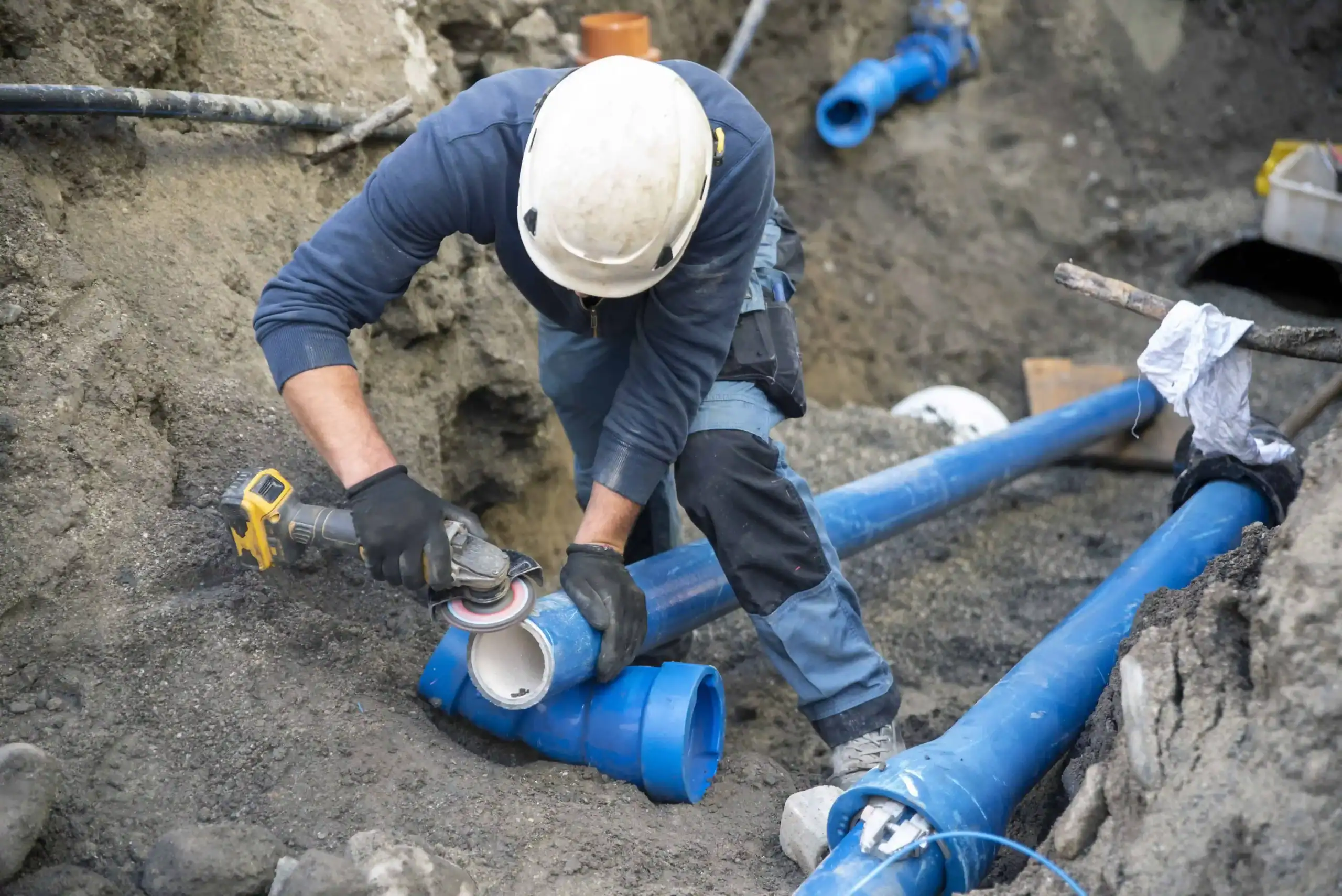
A construction worker wearing a hard hat uses a power tool to cut a blue pipe in a trench, likely part of sewer line services. Several pipes are visible in the ground around him, indicating an extensive infrastructure or plumbing project.

Summary:

When your sewer line fails, the repair method matters as much as the fix itself. Traditional digging tears up yards and driveways, taking weeks to complete. Trenchless sewer line replacement offers a smarter alternative—preserving your property while delivering stronger, longer-lasting results in a fraction of the time. This guide breaks down the real differences between methods, costs, and outcomes for Monmouth and Ocean County homeowners.
Table of contents
You’ve just been told your sewer line needs replacing. The first image that probably hits you is heavy machinery tearing through your driveway, excavators ripping up your landscaping, and weeks of chaos while your property looks like a construction zone. That’s the traditional way, and it’s exactly what most homeowners dread. But here’s what many people don’t realize: there’s a better option that’s been quietly revolutionizing sewer repair across Monmouth and Ocean Counties. Trenchless technology lets professionals replace your entire sewer line without destroying your property in the process. It’s faster, often more affordable when you factor in the real costs, and built to outlast the old methods. If you’re weighing your options or just trying to understand what’s actually possible, this breakdown will walk you through why trenchless has become the go-to choice for homeowners who want their sewer fixed right—without the mess.

What is Trenchless Sewer Line Replacement

Trenchless sewer line replacement is a modern repair method that fixes or replaces damaged underground pipes without digging a trench across your entire property. Instead of excavating the full length of your sewer line, we create just two small access points—usually at the beginning and end of the pipe. From there, we use specialized equipment to either line the existing pipe from the inside or replace it entirely by breaking apart the old pipe while simultaneously pulling new pipe into place.

The technology relies on two main approaches: pipe lining and pipe bursting. Both accomplish the same goal—a fully functional, brand-new sewer line—but they do it without the heavy machinery, massive trenches, and property destruction that come with traditional methods. For homeowners in Monmouth and Ocean Counties dealing with aging clay or cast iron pipes, this means you can get your sewer system fully restored without sacrificing your driveway, landscaping, or weeks of your life.

A worker wearing gloves connects orange PVC pipes in a trench. One pipe has a Y-shaped junction. The soil around the trench appears freshly dug, and the worker is pointing to the pipe joint.

How Pipe Lining Works for Sewer Repair

Pipe lining, also called cured-in-place pipe or CIPP lining, creates a brand-new pipe inside your existing damaged one. The process starts with a thorough camera inspection to assess the condition of your sewer line and confirm that the existing pipe structure can support the liner. Once cleared, we clean the pipe using high-pressure water jetting or specialized equipment to remove any buildup, roots, or debris that could interfere with adhesion.

After cleaning, a flexible liner saturated with epoxy resin is inserted into the existing pipe through one of the small access points. This liner is then inflated using air pressure or water, pressing it firmly against the interior walls of the old pipe. Heat or UV light is applied to cure the epoxy, which hardens into a smooth, seamless, and incredibly durable new pipe. The entire curing process typically takes just a few hours.

Once cured, the liner becomes a structurally independent pipe that’s resistant to corrosion, root intrusion, and the issues that plagued your old system. The smooth interior surface actually improves flow compared to deteriorated pipes with rough, corroded walls. Any branch connections—like where your home’s drains tie into the main line—are robotically reopened to restore full functionality. The result is a pipe-within-a-pipe that can last 50 years or more, all without digging up your yard.

This method works exceptionally well for pipes that still have basic structural integrity but are suffering from cracks, leaks, root damage, or corrosion. It’s particularly popular in established New Jersey neighborhoods where mature landscaping and paved driveways make traditional excavation costly and disruptive. The entire process, from start to finish, can often be completed in a single day.

How Pipe Bursting Replaces Your Sewer Line

Pipe bursting is the go-to trenchless method when your sewer line is too far gone for lining—think collapsed sections, severe misalignment, or pipes that have completely lost their structural integrity. This technique doesn’t try to save the old pipe. Instead, it destroys it while simultaneously installing a brand-new replacement, all without digging a trench along the entire route.

Here’s how it works. We dig two small access pits: one at the starting point near your home’s foundation and one at the connection to the municipal sewer line or septic system. A cone-shaped bursting head, slightly larger than the new pipe, is attached to a heavy-duty cable. This head is pulled through the existing damaged pipe using hydraulic force—sometimes up to 30 tons of pulling pressure.

As the bursting head moves through the old pipe, it fractures and breaks apart the existing material, pushing the fragments outward into the surrounding soil. Attached directly behind the bursting head is your new pipe, typically made of high-density polyethylene, which is pulled into place as the old pipe is destroyed. The new pipe sections are heat-welded together above ground before installation, creating a seamless, jointless system that’s far stronger and more durable than the segmented pipes used in traditional replacements.

Pipe bursting works with virtually all common pipe materials—clay, cast iron, concrete, PVC—and can even upsize your line if needed, going from a 4-inch pipe to a 6-inch pipe to improve flow capacity. The process typically takes one to two days depending on the length of the run and site conditions. Once complete, you have a brand-new sewer line that’s built to last a century, with minimal disruption to your property. The small access pits are backfilled, and in most cases, you’d never know major work was done except for two small patches of disturbed ground.

For Monmouth and Ocean County homeowners dealing with severely damaged or collapsed sewer lines, pipe bursting offers a complete replacement without the weeks of excavation, landscape destruction, and restoration costs that come with traditional dig-and-replace methods.

Traditional Sewer Line Replacement Methods

Traditional sewer line replacement—often called open-cut or dig-and-replace—is exactly what it sounds like. Crews dig a trench along the entire length of your sewer line, from your home’s foundation to the connection point with the municipal system. That means excavating through whatever’s in the way: your lawn, flower beds, driveway, sidewalks, sometimes even portions of the street if your line runs under it.

Heavy machinery like backhoes and excavators are brought in to dig down to the pipe, which can be anywhere from a few feet to ten feet deep depending on your property. Once exposed, the damaged pipe is removed section by section, and new pipe segments are installed, connected with gaskets or joints, and tested. Then comes the backfilling—refilling the trench with soil, compacting it, and finally restoring whatever was torn up in the process. That restoration phase is where costs and timelines balloon, because now you’re paying to replace your driveway, re-landscape your yard, and repair any collateral damage to walkways, sprinkler systems, or other buried utilities.
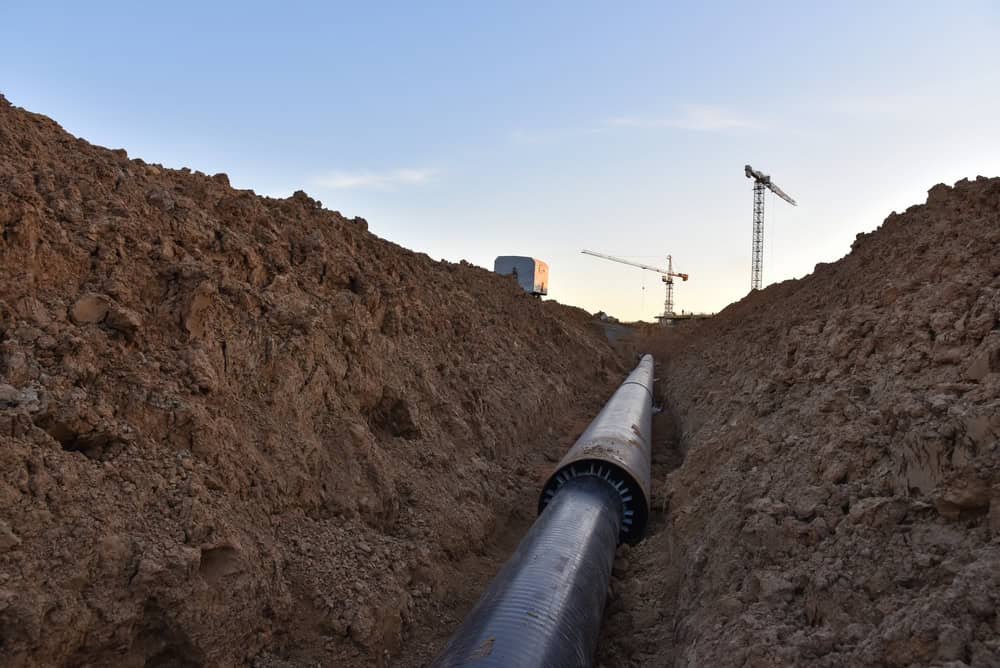
A large pipeline being installed in a trench under a clear blue sky. Construction cranes are visible in the background, indicating ongoing infrastructure work.

Why Traditional Digging Takes So Long

The timeline for traditional sewer line replacement isn’t just about digging and replacing pipe. It’s a multi-phase process that stretches across days or even weeks. First, permits need to be obtained from your local municipality, which can take time depending on where you live in Monmouth or Ocean County. Then utility companies have to come out and mark underground lines—gas, electric, water, cable—to avoid hitting them during excavation.

Once the actual work begins, the digging itself is labor-intensive. Crews have to carefully excavate to avoid damaging other utilities, remove the old pipe, and install new sections. If your sewer line runs under a driveway or patio, that surface has to be broken up and removed before digging can even start. Weather can delay progress—rain turns excavation sites into muddy messes that are unsafe to work in and difficult to backfill properly.

After the new pipe is installed and tested, the trench has to be backfilled in layers and compacted to prevent future settling. Then comes restoration: repaving driveways, re-laying sod or reseeding lawns, rebuilding walkways, and reconnecting irrigation systems. Each of these steps requires different contractors, materials, and scheduling, which adds days to the timeline. It’s not uncommon for a traditional sewer line replacement to take one to two weeks from start to finish, and that’s assuming no complications.

During this time, access to parts of your property may be blocked, heavy equipment is parked in your driveway, and you’re dealing with the noise, dust, and general chaos of an active construction site. For many homeowners, the disruption to daily life is just as frustrating as the cost.

The True Cost of Traditional Sewer Line Replacement

When contractors quote traditional sewer line replacement, the initial number might seem comparable to trenchless options—sometimes even lower. But that upfront price rarely tells the full story. Traditional excavation comes with a long list of additional expenses that don’t show up until later, and they add up fast.

First, there’s the excavation itself. Digging a trench that’s several feet deep and runs the length of your sewer line requires heavy equipment and significant labor hours. If your line runs under a concrete driveway, asphalt parking area, or paved patio, you’re paying to have that surface broken up and hauled away before digging even starts. That’s an added cost right there.

Then there’s the restoration phase, which is where traditional methods get expensive. Once the new pipe is in and the trench is backfilled, you’re left with a strip of torn-up property that needs to be put back together. Repaving a driveway can easily cost several thousand dollars. Re-landscaping—replacing sod, replanting shrubs, rebuilding garden beds—adds more. If the excavation damaged sprinkler systems, underground electrical lines for landscape lighting, or other buried infrastructure, those repairs are on you too.

Don’t forget the hidden costs: temporary loss of access to parts of your property, potential damage to adjacent structures from vibrations or soil shifting, and the time you’ll spend coordinating multiple contractors for different phases of restoration. Some homeowners even need to arrange alternative accommodations if the work blocks access to their home or disrupts essential services for extended periods.

When you add it all up—excavation, pipe replacement, backfilling, repaving, re-landscaping, and incidental repairs—the total cost of traditional sewer line replacement often exceeds trenchless methods by thousands of dollars. And that doesn’t account for the weeks of disruption, stress, and inconvenience that come with having your property turned into a construction zone. For homeowners in Monmouth and Ocean Counties where property values and curb appeal matter, the true cost of traditional digging extends well beyond the initial estimate.

Choosing the Right Sewer Line Replacement Method for Your Home

The decision between trenchless and traditional sewer line replacement isn’t just about cost—it’s about understanding what matters most for your property, timeline, and long-term goals. Trenchless technology offers faster completion, minimal disruption, and often lower total costs when you factor in restoration expenses. It’s ideal for homeowners who want their sewer system fixed without sacrificing their landscaping, driveway, or weeks of their life.

Traditional excavation still has its place, particularly when pipes have completely collapsed or when access limitations make trenchless methods impractical. But for the vast majority of sewer line issues in Monmouth and Ocean Counties—aging clay pipes, root intrusion, cracks, and corrosion—trenchless methods deliver superior results with far less hassle.

The smartest first step is a professional camera inspection. That’s the only way to see exactly what’s happening underground and determine which approach makes sense for your specific situation. If you’re dealing with sewer line problems or want to know the condition of your pipes before issues arise, reach out to us at AME Plumbing Heating and Cooling. Our licensed and insured team serves Monmouth and Ocean Counties with both trenchless and traditional solutions, 24/7 emergency services when you need them, and upfront pricing that includes our current offer of $500 off sewer line replacements. Protecting your home’s plumbing infrastructure doesn’t have to mean destroying your property in the process.

Summary:

When your sewer line fails, the repair method matters as much as the fix itself. Traditional digging tears up yards and driveways, taking weeks to complete. Trenchless sewer line replacement offers a smarter alternative—preserving your property while delivering stronger, longer-lasting results in a fraction of the time. This guide breaks down the real differences between methods, costs, and outcomes for Monmouth and Ocean County homeowners.
Table of contents
You’ve just been told your sewer line needs replacing. The first image that probably hits you is heavy machinery tearing through your driveway, excavators ripping up your landscaping, and weeks of chaos while your property looks like a construction zone. That’s the traditional way, and it’s exactly what most homeowners dread. But here’s what many people don’t realize: there’s a better option that’s been quietly revolutionizing sewer repair across Monmouth and Ocean Counties. Trenchless technology lets professionals replace your entire sewer line without destroying your property in the process. It’s faster, often more affordable when you factor in the real costs, and built to outlast the old methods. If you’re weighing your options or just trying to understand what’s actually possible, this breakdown will walk you through why trenchless has become the go-to choice for homeowners who want their sewer fixed right—without the mess.

What is Trenchless Sewer Line Replacement

Trenchless sewer line replacement is a modern repair method that fixes or replaces damaged underground pipes without digging a trench across your entire property. Instead of excavating the full length of your sewer line, we create just two small access points—usually at the beginning and end of the pipe. From there, we use specialized equipment to either line the existing pipe from the inside or replace it entirely by breaking apart the old pipe while simultaneously pulling new pipe into place.

The technology relies on two main approaches: pipe lining and pipe bursting. Both accomplish the same goal—a fully functional, brand-new sewer line—but they do it without the heavy machinery, massive trenches, and property destruction that come with traditional methods. For homeowners in Monmouth and Ocean Counties dealing with aging clay or cast iron pipes, this means you can get your sewer system fully restored without sacrificing your driveway, landscaping, or weeks of your life.

A worker wearing gloves connects orange PVC pipes in a trench. One pipe has a Y-shaped junction. The soil around the trench appears freshly dug, and the worker is pointing to the pipe joint.

How Pipe Lining Works for Sewer Repair

Pipe lining, also called cured-in-place pipe or CIPP lining, creates a brand-new pipe inside your existing damaged one. The process starts with a thorough camera inspection to assess the condition of your sewer line and confirm that the existing pipe structure can support the liner. Once cleared, we clean the pipe using high-pressure water jetting or specialized equipment to remove any buildup, roots, or debris that could interfere with adhesion.

After cleaning, a flexible liner saturated with epoxy resin is inserted into the existing pipe through one of the small access points. This liner is then inflated using air pressure or water, pressing it firmly against the interior walls of the old pipe. Heat or UV light is applied to cure the epoxy, which hardens into a smooth, seamless, and incredibly durable new pipe. The entire curing process typically takes just a few hours.

Once cured, the liner becomes a structurally independent pipe that’s resistant to corrosion, root intrusion, and the issues that plagued your old system. The smooth interior surface actually improves flow compared to deteriorated pipes with rough, corroded walls. Any branch connections—like where your home’s drains tie into the main line—are robotically reopened to restore full functionality. The result is a pipe-within-a-pipe that can last 50 years or more, all without digging up your yard.

This method works exceptionally well for pipes that still have basic structural integrity but are suffering from cracks, leaks, root damage, or corrosion. It’s particularly popular in established New Jersey neighborhoods where mature landscaping and paved driveways make traditional excavation costly and disruptive. The entire process, from start to finish, can often be completed in a single day.

How Pipe Bursting Replaces Your Sewer Line

Pipe bursting is the go-to trenchless method when your sewer line is too far gone for lining—think collapsed sections, severe misalignment, or pipes that have completely lost their structural integrity. This technique doesn’t try to save the old pipe. Instead, it destroys it while simultaneously installing a brand-new replacement, all without digging a trench along the entire route.

Here’s how it works. We dig two small access pits: one at the starting point near your home’s foundation and one at the connection to the municipal sewer line or septic system. A cone-shaped bursting head, slightly larger than the new pipe, is attached to a heavy-duty cable. This head is pulled through the existing damaged pipe using hydraulic force—sometimes up to 30 tons of pulling pressure.

As the bursting head moves through the old pipe, it fractures and breaks apart the existing material, pushing the fragments outward into the surrounding soil. Attached directly behind the bursting head is your new pipe, typically made of high-density polyethylene, which is pulled into place as the old pipe is destroyed. The new pipe sections are heat-welded together above ground before installation, creating a seamless, jointless system that’s far stronger and more durable than the segmented pipes used in traditional replacements.

Pipe bursting works with virtually all common pipe materials—clay, cast iron, concrete, PVC—and can even upsize your line if needed, going from a 4-inch pipe to a 6-inch pipe to improve flow capacity. The process typically takes one to two days depending on the length of the run and site conditions. Once complete, you have a brand-new sewer line that’s built to last a century, with minimal disruption to your property. The small access pits are backfilled, and in most cases, you’d never know major work was done except for two small patches of disturbed ground.

For Monmouth and Ocean County homeowners dealing with severely damaged or collapsed sewer lines, pipe bursting offers a complete replacement without the weeks of excavation, landscape destruction, and restoration costs that come with traditional dig-and-replace methods.

Traditional Sewer Line Replacement Methods

Traditional sewer line replacement—often called open-cut or dig-and-replace—is exactly what it sounds like. Crews dig a trench along the entire length of your sewer line, from your home’s foundation to the connection point with the municipal system. That means excavating through whatever’s in the way: your lawn, flower beds, driveway, sidewalks, sometimes even portions of the street if your line runs under it.

Heavy machinery like backhoes and excavators are brought in to dig down to the pipe, which can be anywhere from a few feet to ten feet deep depending on your property. Once exposed, the damaged pipe is removed section by section, and new pipe segments are installed, connected with gaskets or joints, and tested. Then comes the backfilling—refilling the trench with soil, compacting it, and finally restoring whatever was torn up in the process. That restoration phase is where costs and timelines balloon, because now you’re paying to replace your driveway, re-landscape your yard, and repair any collateral damage to walkways, sprinkler systems, or other buried utilities.

A large pipeline being installed in a trench under a clear blue sky. Construction cranes are visible in the background, indicating ongoing infrastructure work.

Why Traditional Digging Takes So Long

The timeline for traditional sewer line replacement isn’t just about digging and replacing pipe. It’s a multi-phase process that stretches across days or even weeks. First, permits need to be obtained from your local municipality, which can take time depending on where you live in Monmouth or Ocean County. Then utility companies have to come out and mark underground lines—gas, electric, water, cable—to avoid hitting them during excavation.

Once the actual work begins, the digging itself is labor-intensive. Crews have to carefully excavate to avoid damaging other utilities, remove the old pipe, and install new sections. If your sewer line runs under a driveway or patio, that surface has to be broken up and removed before digging can even start. Weather can delay progress—rain turns excavation sites into muddy messes that are unsafe to work in and difficult to backfill properly.

After the new pipe is installed and tested, the trench has to be backfilled in layers and compacted to prevent future settling. Then comes restoration: repaving driveways, re-laying sod or reseeding lawns, rebuilding walkways, and reconnecting irrigation systems. Each of these steps requires different contractors, materials, and scheduling, which adds days to the timeline. It’s not uncommon for a traditional sewer line replacement to take one to two weeks from start to finish, and that’s assuming no complications.

During this time, access to parts of your property may be blocked, heavy equipment is parked in your driveway, and you’re dealing with the noise, dust, and general chaos of an active construction site. For many homeowners, the disruption to daily life is just as frustrating as the cost.

The True Cost of Traditional Sewer Line Replacement

When contractors quote traditional sewer line replacement, the initial number might seem comparable to trenchless options—sometimes even lower. But that upfront price rarely tells the full story. Traditional excavation comes with a long list of additional expenses that don’t show up until later, and they add up fast.

First, there’s the excavation itself. Digging a trench that’s several feet deep and runs the length of your sewer line requires heavy equipment and significant labor hours. If your line runs under a concrete driveway, asphalt parking area, or paved patio, you’re paying to have that surface broken up and hauled away before digging even starts. That’s an added cost right there.

Then there’s the restoration phase, which is where traditional methods get expensive. Once the new pipe is in and the trench is backfilled, you’re left with a strip of torn-up property that needs to be put back together. Repaving a driveway can easily cost several thousand dollars. Re-landscaping—replacing sod, replanting shrubs, rebuilding garden beds—adds more. If the excavation damaged sprinkler systems, underground electrical lines for landscape lighting, or other buried infrastructure, those repairs are on you too.

Don’t forget the hidden costs: temporary loss of access to parts of your property, potential damage to adjacent structures from vibrations or soil shifting, and the time you’ll spend coordinating multiple contractors for different phases of restoration. Some homeowners even need to arrange alternative accommodations if the work blocks access to their home or disrupts essential services for extended periods.

When you add it all up—excavation, pipe replacement, backfilling, repaving, re-landscaping, and incidental repairs—the total cost of traditional sewer line replacement often exceeds trenchless methods by thousands of dollars. And that doesn’t account for the weeks of disruption, stress, and inconvenience that come with having your property turned into a construction zone. For homeowners in Monmouth and Ocean Counties where property values and curb appeal matter, the true cost of traditional digging extends well beyond the initial estimate.

Choosing the Right Sewer Line Replacement Method for Your Home

The decision between trenchless and traditional sewer line replacement isn’t just about cost—it’s about understanding what matters most for your property, timeline, and long-term goals. Trenchless technology offers faster completion, minimal disruption, and often lower total costs when you factor in restoration expenses. It’s ideal for homeowners who want their sewer system fixed without sacrificing their landscaping, driveway, or weeks of their life.

Traditional excavation still has its place, particularly when pipes have completely collapsed or when access limitations make trenchless methods impractical. But for the vast majority of sewer line issues in Monmouth and Ocean Counties—aging clay pipes, root intrusion, cracks, and corrosion—trenchless methods deliver superior results with far less hassle.

The smartest first step is a professional camera inspection. That’s the only way to see exactly what’s happening underground and determine which approach makes sense for your specific situation. If you’re dealing with sewer line problems or want to know the condition of your pipes before issues arise, reach out to us at AME Plumbing Heating and Cooling. Our licensed and insured team serves Monmouth and Ocean Counties with both trenchless and traditional solutions, 24/7 emergency services when you need them, and upfront pricing that includes our current offer of $500 off sewer line replacements. Protecting your home’s plumbing infrastructure doesn’t have to mean destroying your property in the process.
Article details:

Share: