Servicing Areas Throughout New Jersey

Top 10 Benefits of Upgrading to a Tankless Water Heater Replacement this Year

Thinking about water heater replacement? Tankless systems deliver endless hot water, last twice as long as traditional tanks, and can cut your energy bills by up to 34%.

Share:

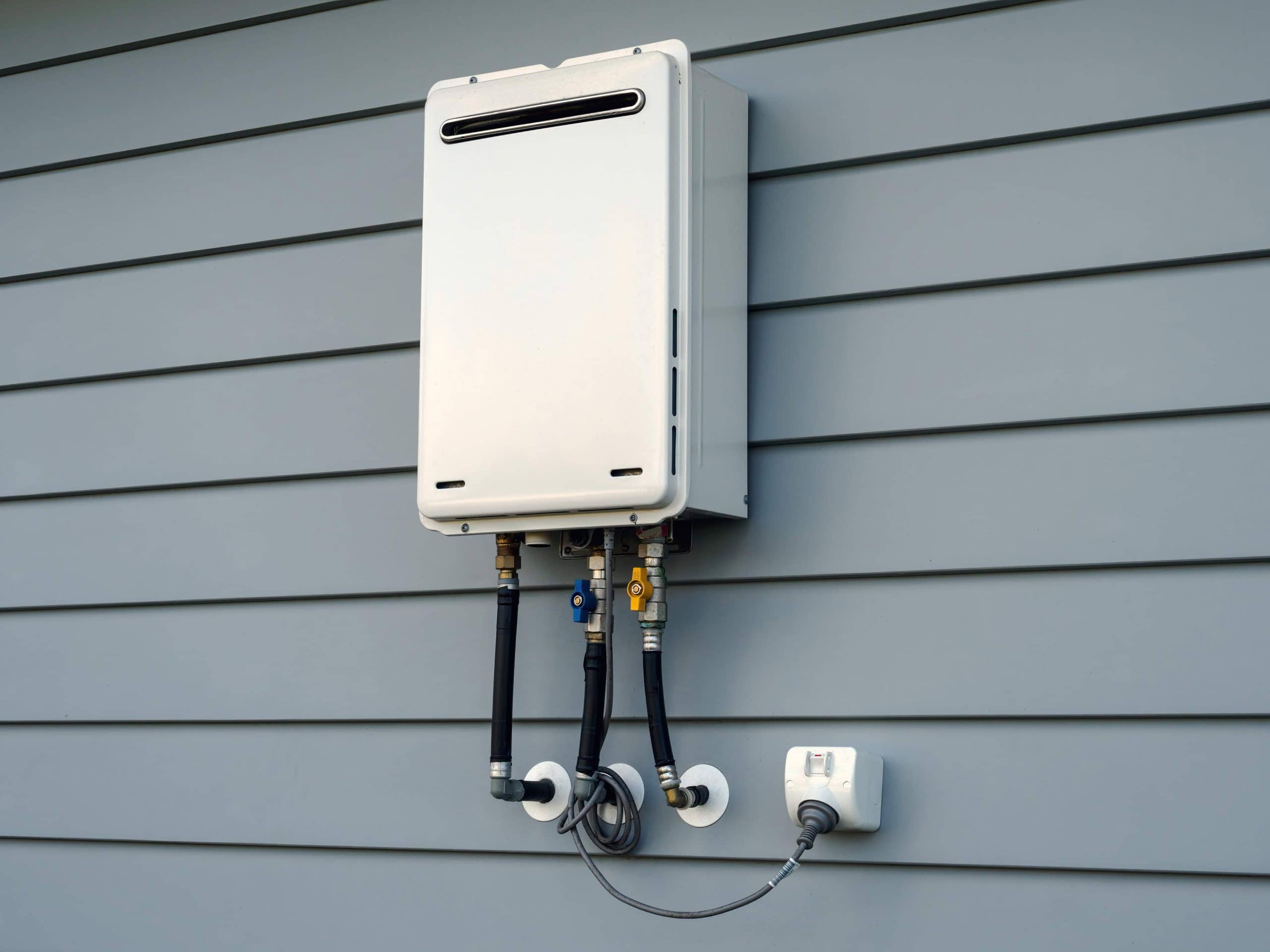
Outdoor tankless water heater mounted on a house exterior with multiple insulated pipes connected below it.

Summary:

If your water heater is approaching 10-15 years old, you’re likely weighing your replacement options. This guide breaks down the real benefits of upgrading to a tankless water heater, from dramatic energy savings to never running out of hot water again. Whether you’re dealing with an aging tank that’s on its last legs or planning ahead to avoid an emergency, understanding the advantages of modern tankless systems helps you make a confident decision. We’ll walk through what actually matters when it comes to hot water in your home.
Table of contents
Your water heater doesn’t announce its retirement. It just starts giving you lukewarm showers, strange rumbling sounds, and maybe a puddle on the basement floor. If your unit is pushing past the 10-year mark, you’re probably wondering whether to replace it with another traditional tank or explore something different. Tankless water heaters have moved from niche technology to mainstream option, and for good reason. They last longer, cost less to operate, and solve some of the most frustrating problems traditional tanks create. Here’s what you actually need to know about making the switch.

How Tankless Water Heaters Actually Work

Traditional tank water heaters store 30-50 gallons of water and keep it hot around the clock, whether you’re using it or not. That’s why you hear them kick on in the middle of the night. A tankless system works differently.

When you turn on a hot water tap, cold water flows through the unit and passes over a heat exchanger. Either a gas burner or electric element heats the water instantly as it moves through. The water reaches your desired temperature in seconds and keeps flowing as long as you need it.

There’s no storage tank. No waiting for water to reheat. The system only runs when you’re actually using hot water, which is where the efficiency gains come from.

A person in a blue uniform and cap stands indoors, smiling and giving a thumbs-up gesture, suggesting satisfaction in their work. They hold a blue clipboard, surrounded by various pipes and machinery, indicating expertise in hot water heater repair or other maintenance tasks.

What's the Real Lifespan of a Tankless Water Heater

This is where tankless systems separate themselves from traditional tanks. A well-maintained tankless water heater typically lasts 20 years or more. Some units push past 25 years with proper care.

Compare that to a traditional tank water heater, which usually gives you 8-12 years before it needs replacement. If you’re replacing a water heater today, you’re likely doing it because the tank has corroded from the inside out or developed a leak. That’s not a maintenance issue. That’s the tank reaching the end of its useful life.

Tankless units avoid this problem entirely because there’s no tank to corrode. The components that do wear out over time, like heating elements or sensors, can be replaced individually. You’re not throwing out the entire system when one part fails.

The longer lifespan means you’ll replace a tankless unit about half as often as a traditional tank. That matters when you’re looking at the total cost of ownership over 20-30 years. Yes, the upfront cost is higher. But you’re spreading that cost over twice the lifespan, which changes the math considerably.

Proper maintenance extends the life of any water heater. For tankless systems, that usually means annual flushing to prevent mineral buildup, especially if you have hard water. In areas like Monmouth County, Ocean County, and Middlesex County where water hardness varies, a water softener can help protect your investment and keep the system running efficiently.

Never Running Out of Hot Water During Peak Times

If you’ve ever been the fourth person to shower in the morning, you know exactly what happens when a tank runs out of hot water. The temperature drops mid-shower, and you’re left waiting 30-60 minutes for the tank to reheat.

Tankless systems eliminate this problem because they heat water continuously as it flows through the unit. There’s no stored supply to deplete. As long as water is running and the unit is sized correctly for your home, hot water keeps coming.

The key phrase there is “sized correctly.” Tankless water heaters are rated by flow rate, measured in gallons per minute. A typical shower uses about 2.5 gallons per minute. A dishwasher uses another 1-2 gallons per minute. If you’re running a shower and the dishwasher simultaneously, you need a unit that can handle at least 4-5 gallons per minute at your desired temperature.

For most homes in New Jersey, a properly sized whole-house tankless unit handles typical demand without issue. Larger households with high simultaneous usage might need a larger unit or even two units installed in parallel. That’s where working with an experienced plumber matters. We calculate your peak demand based on how many fixtures might run at once and recommend the right capacity.

One thing to understand: tankless doesn’t mean instant. You still have to wait a few seconds for hot water to travel from the heater to your faucet. That’s true with any system. The difference is that once the hot water arrives, it doesn’t run out.

Some homeowners install point-of-use tankless units at specific locations like a master bathroom or kitchen. These smaller units heat water right where it’s needed, eliminating the wait time and providing dedicated capacity for that fixture. It’s not necessary for most homes, but it’s an option if you have specific high-demand areas or want to minimize water waste while waiting for hot water to arrive.

Energy Efficiency and Lower Utility Bills with Tankless Systems

Tank water heaters lose energy constantly through what’s called standby heat loss. The water sits in the tank, slowly cooling, and the heater kicks on periodically to bring it back up to temperature. You’re paying to heat water even when you’re asleep or away from home.

Tankless systems only use energy when you turn on a hot water tap. No standby heat loss. No reheating water that’s just sitting there. For homes that use 41 gallons or less of hot water daily, tankless systems can be 24-34% more energy efficient than traditional tank heaters, according to the Department of Energy.

Even for homes with higher hot water usage, tankless systems still deliver 8-14% better efficiency. Over the course of a year, that typically translates to $100-150 in savings on utility bills, depending on your fuel source and local rates.

Image of a house exterior featuring a mounted tankless gas water heater with visible pipes and a hose reel nearby. The wall is covered with horizontal and corrugated paneling, and two windows are visible above.

How Much Money You Actually Save on Energy Costs

Let’s talk real numbers. The average New Jersey household spends $400-600 annually on water heating with a traditional tank system. Switching to tankless typically reduces that by $100-150 per year for gas systems and $40-50 per year for electric systems.

That might not sound dramatic, but multiply it over the 20+ year lifespan of a tankless unit, and you’re looking at $2,000-3,000 in total energy savings. Factor in the longer lifespan meaning you’re only buying one tankless unit in the time you’d replace a traditional tank twice, and the total cost of ownership starts to favor tankless.

The upfront cost difference is real. In New Jersey, a traditional tank water heater replacement typically runs $1,200-2,500 installed. A tankless system runs $3,000-5,500 installed, depending on whether you need electrical or gas line upgrades. That $2,000-3,000 premium is significant.

But here’s the full picture: over 20 years, you’re replacing the tank system twice (around $2,400-5,000 total) plus paying higher energy costs ($2,000-3,000 more). The tankless system costs more upfront but lasts the full 20 years with lower operating costs. The break-even point typically hits around year 7-10, depending on your usage patterns and energy rates.

If you’re planning to stay in your home long-term, tankless makes financial sense. If you’re planning to sell within a few years, a traditional tank might be the more practical choice. Modern, efficient appliances do add value to a home, but you might not recoup the full premium when you sell.

One more financial consideration: rebates and tax credits. Energy-efficient water heaters, including certain tankless models, may qualify for federal tax credits or local utility rebates. These can offset several hundred dollars of the installation cost. Check current programs before making your decision.

Space Savings and Installation Flexibility

Traditional tank water heaters are big. A 50-gallon tank stands about 5 feet tall and 2 feet wide. It needs floor space, clearance around it for maintenance, and proper venting if it’s gas-powered. In many New Jersey homes, that means dedicating a corner of the basement or a utility closet.

Tankless units are roughly the size of a small suitcase. Most mount on a wall and take up minimal space. That frees up floor space for storage or other uses. If you’re dealing with a tight basement or don’t have a basement at all, the space savings can be significant.

The smaller footprint also provides installation flexibility. Tankless units can be installed in locations where a traditional tank wouldn’t fit. Some can even be installed outdoors with proper weatherproofing, though that’s less common in New Jersey’s climate.

Installation does require proper venting for gas units and adequate electrical capacity for electric units. Retrofitting a tankless system where a traditional tank used to be sometimes requires upgrades to gas lines or electrical service. That’s part of why installation costs run higher. We assess your existing infrastructure and let you know what modifications are needed.

The installation process typically takes 4-8 hours for a straightforward replacement, longer if electrical or gas upgrades are required. We handle permits, which are required for all water heater installations in New Jersey. Permits typically add $100-250 to the project cost, but they ensure the work meets local codes and passes inspection.

One consideration: if you’re converting from electric tank to gas tankless or vice versa, the installation becomes more complex and expensive. Sticking with the same fuel source usually keeps costs more manageable. We can walk through the options and associated costs for your specific situation.

Making the Right Water Heater Replacement Decision for Your Home

Upgrading to a tankless water heater makes sense for many homeowners, but it’s not the automatic choice for everyone. If your current tank is approaching 10-12 years old, now’s the time to evaluate your options before you’re dealing with an emergency replacement.

Tankless systems deliver real benefits: longer lifespan, lower energy costs, endless hot water, and space savings. The higher upfront cost pays back over time through reduced utility bills and not having to replace the unit every decade.

If you’re in Monmouth County, Ocean County, or Middlesex County and facing a water heater replacement decision, we can walk you through your options with transparent pricing and no pressure. Our licensed technicians assess your home’s specific needs, explain the costs and benefits clearly, and handle the installation properly the first time.

Summary:

If your water heater is approaching 10-15 years old, you’re likely weighing your replacement options. This guide breaks down the real benefits of upgrading to a tankless water heater, from dramatic energy savings to never running out of hot water again. Whether you’re dealing with an aging tank that’s on its last legs or planning ahead to avoid an emergency, understanding the advantages of modern tankless systems helps you make a confident decision. We’ll walk through what actually matters when it comes to hot water in your home.
Table of contents
Your water heater doesn’t announce its retirement. It just starts giving you lukewarm showers, strange rumbling sounds, and maybe a puddle on the basement floor. If your unit is pushing past the 10-year mark, you’re probably wondering whether to replace it with another traditional tank or explore something different. Tankless water heaters have moved from niche technology to mainstream option, and for good reason. They last longer, cost less to operate, and solve some of the most frustrating problems traditional tanks create. Here’s what you actually need to know about making the switch.

How Tankless Water Heaters Actually Work

Traditional tank water heaters store 30-50 gallons of water and keep it hot around the clock, whether you’re using it or not. That’s why you hear them kick on in the middle of the night. A tankless system works differently.

When you turn on a hot water tap, cold water flows through the unit and passes over a heat exchanger. Either a gas burner or electric element heats the water instantly as it moves through. The water reaches your desired temperature in seconds and keeps flowing as long as you need it.

There’s no storage tank. No waiting for water to reheat. The system only runs when you’re actually using hot water, which is where the efficiency gains come from.

A person in a blue uniform and cap stands indoors, smiling and giving a thumbs-up gesture, suggesting satisfaction in their work. They hold a blue clipboard, surrounded by various pipes and machinery, indicating expertise in hot water heater repair or other maintenance tasks.

What's the Real Lifespan of a Tankless Water Heater

This is where tankless systems separate themselves from traditional tanks. A well-maintained tankless water heater typically lasts 20 years or more. Some units push past 25 years with proper care.

Compare that to a traditional tank water heater, which usually gives you 8-12 years before it needs replacement. If you’re replacing a water heater today, you’re likely doing it because the tank has corroded from the inside out or developed a leak. That’s not a maintenance issue. That’s the tank reaching the end of its useful life.

Tankless units avoid this problem entirely because there’s no tank to corrode. The components that do wear out over time, like heating elements or sensors, can be replaced individually. You’re not throwing out the entire system when one part fails.

The longer lifespan means you’ll replace a tankless unit about half as often as a traditional tank. That matters when you’re looking at the total cost of ownership over 20-30 years. Yes, the upfront cost is higher. But you’re spreading that cost over twice the lifespan, which changes the math considerably.

Proper maintenance extends the life of any water heater. For tankless systems, that usually means annual flushing to prevent mineral buildup, especially if you have hard water. In areas like Monmouth County, Ocean County, and Middlesex County where water hardness varies, a water softener can help protect your investment and keep the system running efficiently.

Never Running Out of Hot Water During Peak Times

If you’ve ever been the fourth person to shower in the morning, you know exactly what happens when a tank runs out of hot water. The temperature drops mid-shower, and you’re left waiting 30-60 minutes for the tank to reheat.

Tankless systems eliminate this problem because they heat water continuously as it flows through the unit. There’s no stored supply to deplete. As long as water is running and the unit is sized correctly for your home, hot water keeps coming.

The key phrase there is “sized correctly.” Tankless water heaters are rated by flow rate, measured in gallons per minute. A typical shower uses about 2.5 gallons per minute. A dishwasher uses another 1-2 gallons per minute. If you’re running a shower and the dishwasher simultaneously, you need a unit that can handle at least 4-5 gallons per minute at your desired temperature.

For most homes in New Jersey, a properly sized whole-house tankless unit handles typical demand without issue. Larger households with high simultaneous usage might need a larger unit or even two units installed in parallel. That’s where working with an experienced plumber matters. We calculate your peak demand based on how many fixtures might run at once and recommend the right capacity.

One thing to understand: tankless doesn’t mean instant. You still have to wait a few seconds for hot water to travel from the heater to your faucet. That’s true with any system. The difference is that once the hot water arrives, it doesn’t run out.

Some homeowners install point-of-use tankless units at specific locations like a master bathroom or kitchen. These smaller units heat water right where it’s needed, eliminating the wait time and providing dedicated capacity for that fixture. It’s not necessary for most homes, but it’s an option if you have specific high-demand areas or want to minimize water waste while waiting for hot water to arrive.

Energy Efficiency and Lower Utility Bills with Tankless Systems

Tank water heaters lose energy constantly through what’s called standby heat loss. The water sits in the tank, slowly cooling, and the heater kicks on periodically to bring it back up to temperature. You’re paying to heat water even when you’re asleep or away from home.

Tankless systems only use energy when you turn on a hot water tap. No standby heat loss. No reheating water that’s just sitting there. For homes that use 41 gallons or less of hot water daily, tankless systems can be 24-34% more energy efficient than traditional tank heaters, according to the Department of Energy.

Even for homes with higher hot water usage, tankless systems still deliver 8-14% better efficiency. Over the course of a year, that typically translates to $100-150 in savings on utility bills, depending on your fuel source and local rates.

Image of a house exterior featuring a mounted tankless gas water heater with visible pipes and a hose reel nearby. The wall is covered with horizontal and corrugated paneling, and two windows are visible above.

How Much Money You Actually Save on Energy Costs

Let’s talk real numbers. The average New Jersey household spends $400-600 annually on water heating with a traditional tank system. Switching to tankless typically reduces that by $100-150 per year for gas systems and $40-50 per year for electric systems.

That might not sound dramatic, but multiply it over the 20+ year lifespan of a tankless unit, and you’re looking at $2,000-3,000 in total energy savings. Factor in the longer lifespan meaning you’re only buying one tankless unit in the time you’d replace a traditional tank twice, and the total cost of ownership starts to favor tankless.

The upfront cost difference is real. In New Jersey, a traditional tank water heater replacement typically runs $1,200-2,500 installed. A tankless system runs $3,000-5,500 installed, depending on whether you need electrical or gas line upgrades. That $2,000-3,000 premium is significant.

But here’s the full picture: over 20 years, you’re replacing the tank system twice (around $2,400-5,000 total) plus paying higher energy costs ($2,000-3,000 more). The tankless system costs more upfront but lasts the full 20 years with lower operating costs. The break-even point typically hits around year 7-10, depending on your usage patterns and energy rates.

If you’re planning to stay in your home long-term, tankless makes financial sense. If you’re planning to sell within a few years, a traditional tank might be the more practical choice. Modern, efficient appliances do add value to a home, but you might not recoup the full premium when you sell.

One more financial consideration: rebates and tax credits. Energy-efficient water heaters, including certain tankless models, may qualify for federal tax credits or local utility rebates. These can offset several hundred dollars of the installation cost. Check current programs before making your decision.

Space Savings and Installation Flexibility

Traditional tank water heaters are big. A 50-gallon tank stands about 5 feet tall and 2 feet wide. It needs floor space, clearance around it for maintenance, and proper venting if it’s gas-powered. In many New Jersey homes, that means dedicating a corner of the basement or a utility closet.

Tankless units are roughly the size of a small suitcase. Most mount on a wall and take up minimal space. That frees up floor space for storage or other uses. If you’re dealing with a tight basement or don’t have a basement at all, the space savings can be significant.

The smaller footprint also provides installation flexibility. Tankless units can be installed in locations where a traditional tank wouldn’t fit. Some can even be installed outdoors with proper weatherproofing, though that’s less common in New Jersey’s climate.

Installation does require proper venting for gas units and adequate electrical capacity for electric units. Retrofitting a tankless system where a traditional tank used to be sometimes requires upgrades to gas lines or electrical service. That’s part of why installation costs run higher. We assess your existing infrastructure and let you know what modifications are needed.

The installation process typically takes 4-8 hours for a straightforward replacement, longer if electrical or gas upgrades are required. We handle permits, which are required for all water heater installations in New Jersey. Permits typically add $100-250 to the project cost, but they ensure the work meets local codes and passes inspection.

One consideration: if you’re converting from electric tank to gas tankless or vice versa, the installation becomes more complex and expensive. Sticking with the same fuel source usually keeps costs more manageable. We can walk through the options and associated costs for your specific situation.

Making the Right Water Heater Replacement Decision for Your Home

Upgrading to a tankless water heater makes sense for many homeowners, but it’s not the automatic choice for everyone. If your current tank is approaching 10-12 years old, now’s the time to evaluate your options before you’re dealing with an emergency replacement.

Tankless systems deliver real benefits: longer lifespan, lower energy costs, endless hot water, and space savings. The higher upfront cost pays back over time through reduced utility bills and not having to replace the unit every decade.

If you’re in Monmouth County, Ocean County, or Middlesex County and facing a water heater replacement decision, we can walk you through your options with transparent pricing and no pressure. Our licensed technicians assess your home’s specific needs, explain the costs and benefits clearly, and handle the installation properly the first time.
Article details:

Share: