Summary:
What Causes Water Lines to Fail in New Jersey
Water lines don’t fail overnight. They deteriorate slowly, and in New Jersey’s climate, that process speeds up.
Freezing and thawing cycles put stress on underground pipes every winter. Older homes—especially those built before the 1970s—often have galvanized steel or even lead pipes that corrode from the inside out. Tree roots seek out moisture and work their way into tiny cracks, expanding them over time. Ground shifts, soil erosion, and even heavy traffic over the line can cause breaks.
If your home is more than 50 years old and you’ve never replaced the water service line, you’re living on borrowed time. That doesn’t mean it’s failing right now, but it does mean you should know the warning signs and have a plan before you’re dealing with an emergency.
Signs Your Underground Water Line Needs Replacement
Most water line problems give you warning signs before they become full-blown disasters. The trick is recognizing them early.
Low water pressure throughout your house is one of the clearest indicators. If it’s just one faucet, that’s probably a fixture issue. But if every tap, shower, and appliance is running weak, your main water line could be leaking or clogged. Discolored water—brown, yellow, or rusty—means sediment, rust, or dirt is getting into your supply, usually through cracks in the pipe.
Unexplained spikes in your water bill are another red flag. Even a small leak can waste hundreds of gallons, and you’ll see it reflected in your monthly costs. Soggy spots in your yard, especially near where your water line runs from the street to your house, often mean water is leaking underground. You might also notice areas of your lawn that stay unusually green while everything else is brown—that’s a leak feeding the grass.
Strange noises when you turn on the water, like banging or whistling, can signal air pockets or pressure issues caused by a compromised line. If you’re experiencing more than one of these symptoms at the same time, it’s worth getting a professional plumber to inspect your system. Catching it early gives you more options and prevents the kind of damage that turns a manageable repair into a full-scale emergency.
We can run a camera inspection through your line to see exactly what’s happening underground. It’s non-invasive, relatively inexpensive, and gives you a clear picture of whether you need a water pipe replacement or just a repair. Don’t wait until water is pooling in your basement or your line bursts completely. By then, you’re dealing with water damage, mold risk, and a much bigger bill.
Why Homeowners Insurance Won't Cover Water Service Line Replacement
Here’s something that catches a lot of homeowners off guard: your insurance policy almost certainly doesn’t cover water line replacement.
Most standard homeowners policies exclude service lines—the pipes that run from the municipal water main to your house. That’s considered routine maintenance and wear-and-tear, not sudden damage. Even if your water line bursts and causes flooding, your policy might cover the water damage inside your home, but not the cost of fixing or replacing the line itself.
In New Jersey, you’re responsible for everything from the curb stop (where the city’s main line ends) all the way to your house and everything inside. That can be anywhere from 30 to 100 feet of pipe, depending on your property. If something goes wrong in that section, you’re paying for it out of pocket.
Some utility companies and third-party providers offer water line protection plans, but homeowners in towns like Freehold, Toms River, and Edison report mixed experiences. These plans often have limitations—they might only cover repairs, not full replacements, or exclude certain types of damage like “bellied” pipes or lines that have collapsed. And when you do file a claim, you’re often dealing with contractors hired by the insurance company, not ones you’ve chosen and vetted yourself.
The better approach is to budget for water line replacement as part of long-term home maintenance, especially if your house is older. In Monmouth County, Ocean County, and Middlesex County, a full water service line replacement typically runs between $2,000 and $5,000, depending on the length of the line, the method used, and site conditions. That’s a significant expense, but it’s also a once-in-a-lifetime job if done right. We offer financing options that can make the cost more manageable without putting it off until the problem gets worse.
Trenchless vs Traditional Water Line Replacement Methods
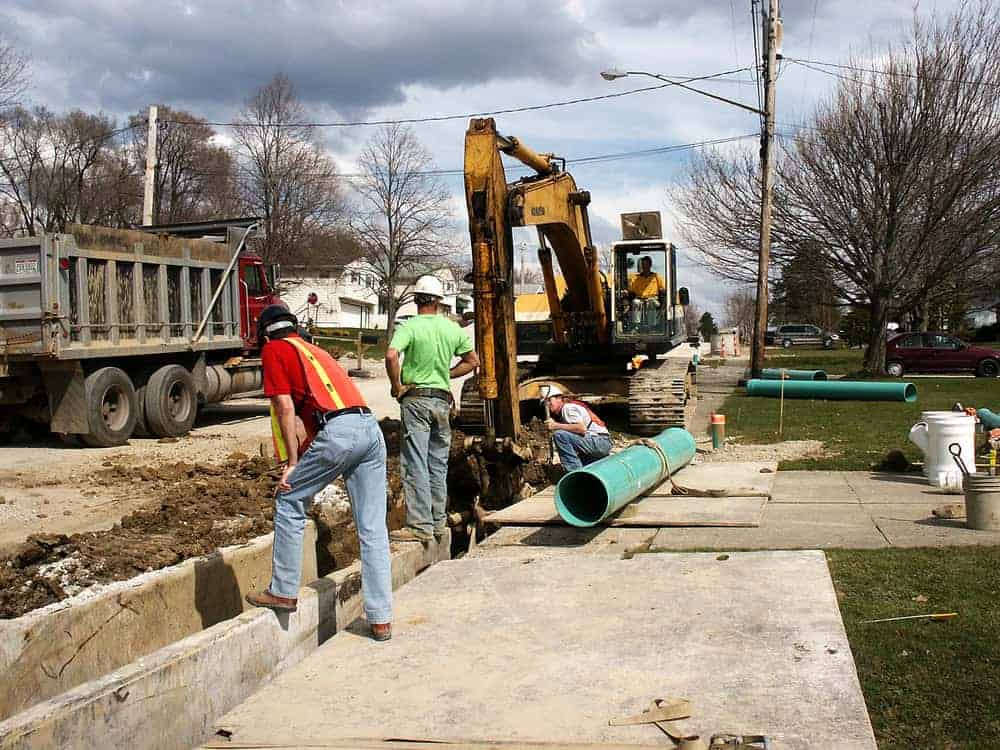
When most people think of water line replacement, they picture a backhoe tearing up their front yard, a trench running from the street to the house, and weeks of construction mess. That’s the traditional method, and it’s still used in certain situations.
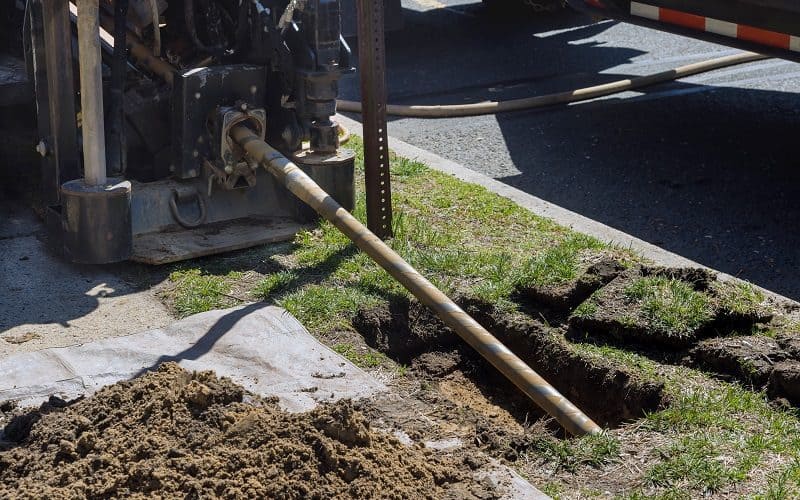
But trenchless technology has changed the game. Instead of digging up your entire yard, trenchless methods require only two small access points—one at each end of the pipe. From there, specialized equipment either bursts the old pipe and pulls a new one into place, or lines the inside of the existing pipe with a durable epoxy sleeve. The result is a brand-new water line with minimal disruption to your property.
The decision between trenchless and traditional isn’t always straightforward. Your property layout, soil conditions, and the condition of your existing pipe all play a role. Let’s break down what each method actually involves.
How Trenchless Water Line Replacement Protects Your Yard
Trenchless replacement comes in two main forms: pipe bursting and pipe lining. Both accomplish the same goal—giving you a new, durable water line—but they work differently.
Pipe bursting involves feeding a cone-shaped bursting head through your existing pipe. As it moves through, it fractures the old pipe outward and simultaneously pulls a new pipe into place behind it. The new pipe is typically made from high-density polyethylene (HDPE), which resists corrosion, root intrusion, and cracking. It’s strong, flexible, and designed to last 50 years or more.
Pipe lining, also called cured-in-place pipe (CIPP), works by inserting an epoxy-coated sleeve into the existing pipe. Once in position, the sleeve is inflated and cured, creating a smooth, seamless pipe within the old one. This method works well for pipes that still have structural integrity but are leaking or corroded on the inside.
The biggest advantage of trenchless methods is speed and minimal disruption. Most jobs are completed in a single day. Your lawn, driveway, and landscaping stay intact. There’s no need to remove and replace concrete, pavers, or flower beds. And because the process requires less labor and equipment, it often costs less overall when you factor in restoration expenses.
That said, trenchless isn’t always an option. If your existing pipe has completely collapsed, is severely misaligned, or is made of certain incompatible materials, traditional excavation may be the only way forward. A camera inspection will tell you whether trenchless is feasible for your situation. But when it is possible, it’s hard to beat the convenience and cleanliness of the process.
Homeowners in areas like Marlboro, Brick, and Old Bridge appreciate trenchless methods because they can get back to normal life the same day—no weeks of waiting for landscapers to fix what we tore up.
When Traditional Excavation Is the Right Choice
Traditional water line replacement isn’t obsolete—it’s still the right choice in certain situations, and sometimes it’s the only option.
If your water main has collapsed completely, trenchless tools can’t navigate through it. The same goes for lines with severe misalignments or sharp bends that make it impossible to pull new pipe through. In these cases, excavation gives us full access to remove the damaged section and install a new line with precision.
Traditional methods also tend to cost less upfront if your water line is in an easy-to-access location and doesn’t run under expensive landscaping or hardscaping. If the pipe runs straight from the street to your house under an open lawn, digging a trench is straightforward. The challenge comes when the line runs under a driveway, patio, or mature trees. That’s when excavation becomes costly and disruptive.
The process itself is fairly straightforward. We dig a trench along the path of your water line, remove the old pipe, and install a new one—usually copper or PEX. The trench is then backfilled, and the surface is restored as closely as possible to its original condition. Depending on the length of the line and site conditions, the work can take anywhere from a few days to a week.
One advantage of traditional excavation is visibility. With the entire pipe exposed, we can clearly assess conditions, identify any hidden issues, and make precise replacements. If there are multiple problems along the line, excavation ensures nothing gets missed.
The downside is the mess and the recovery time. Even with careful restoration, it takes time for grass to grow back, for soil to settle, and for your yard to look normal again. If the line runs under a driveway or sidewalk, you’re looking at concrete removal and replacement, which adds to the cost and timeline. For many homeowners in Monmouth County, Ocean County, and Middlesex County, that trade-off makes trenchless the preferred option whenever it’s feasible.
Getting Your Water Line Replaced the Right Way in Central New Jersey
Water line replacement is a significant project, but it doesn’t have to be overwhelming if you know what to expect. The process typically starts with an inspection—we’ll run a camera through your line to assess the damage and determine the best approach.
From there, you’ll get a detailed estimate that outlines the scope of work, the method being used, and the total cost. If permits are required—and they usually are in New Jersey—we’ll handle that process for you. Once everything is in place, the work itself is usually completed in one to two days for trenchless methods, or up to a week for traditional excavation.
Throughout the process, we’ll keep you informed, minimize disruption to your daily routine, and make sure the job is done right the first time. At AME Plumbing Heating and Cooling, you’ll have access to financing options, special offers like $500 off water line replacements, and the peace of mind that comes with working with licensed, insured professionals who understand local codes and conditions.
Your water line is one of the most important systems in your home. When it’s time to replace it, you want it done right—and you want your property left in good shape when the work is finished.