Servicing Areas Throughout New Jersey

Tankless Water Heater Repair: DIY vs Professional

Not all tankless water heater repairs are created equal. Some you can handle. Others? They're disasters waiting to happen if you try.

Share:

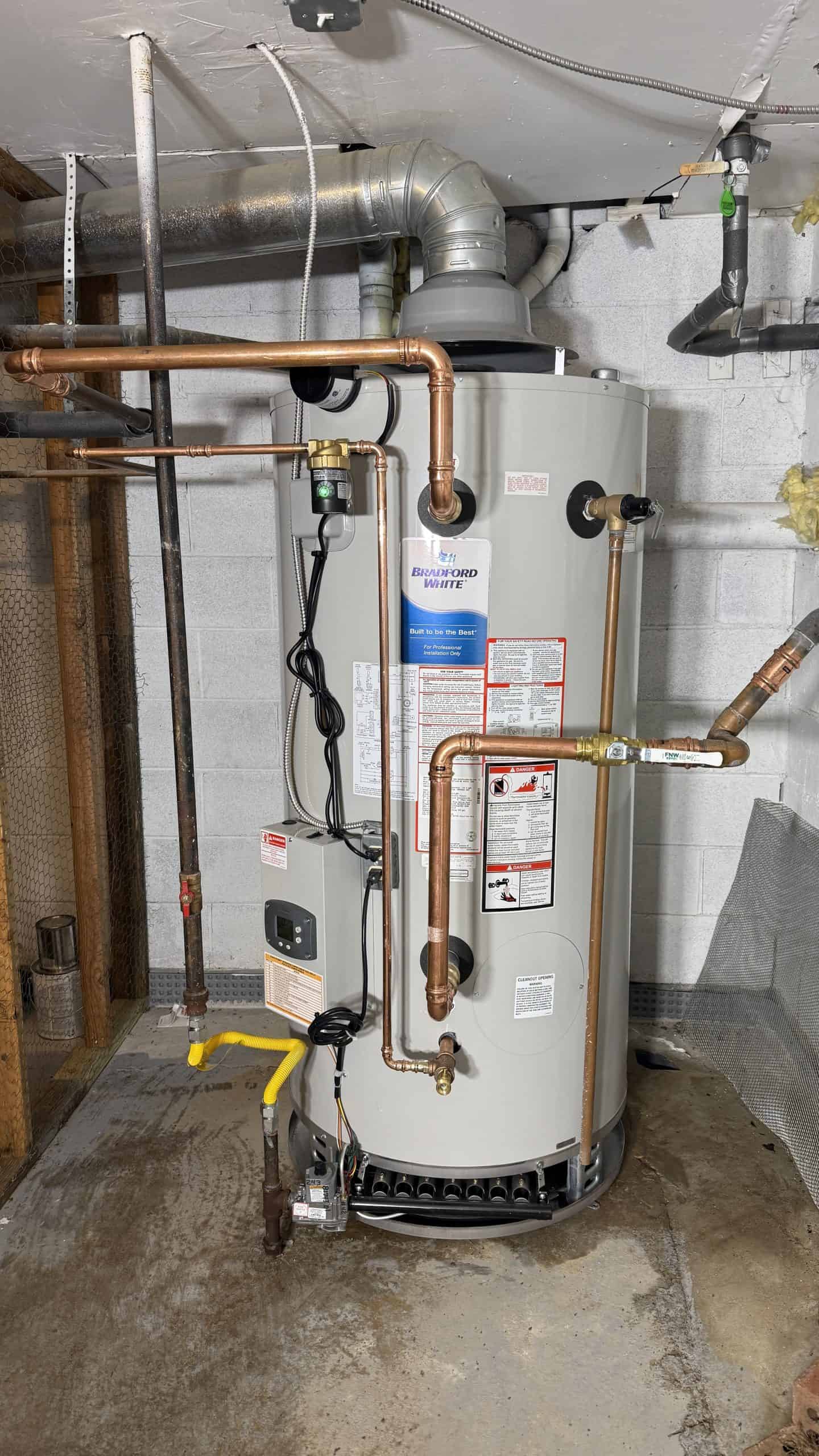
A water heater installed in a basement corner surrounded by pipes. It is a tall, cylindrical unit with copper piping connecting the top, and a ventilation duct extending upwards. The concrete floor and unfinished walls are visible.

Summary:

Your tankless water heater isn’t heating right, and you’re stuck deciding whether to fix it yourself or call someone. This isn’t about what’s cheaper upfront—it’s about what actually works and what keeps your warranty intact. This guide breaks down which tankless water heater repair and maintenance tasks you can safely handle at home, which ones require a licensed professional, and what the real costs look like in Monmouth County, NJ. You’ll learn what’s at stake with your warranty, how to avoid expensive mistakes, and when that DIY tutorial might cost you more than it saves.
Table of contents

Your shower went from hot to lukewarm halfway through. Again. Or the water pressure dropped to a trickle on the hot side while cold runs fine. You’re standing there with a wrench in one hand and your phone in the other, trying to decide if this is something you can fix or if you need to make the call.

Here’s the truth: some tankless water heater issues are straightforward enough for a capable homeowner. Others involve gas lines, electrical components, and manufacturer warranties that vanish with one wrong move. The difference between the two isn’t always obvious until you’re already in over your head. This guide shows you exactly where that line is, what the real costs look like in Monmouth County, NJ, and how to make the decision that saves you money without creating bigger problems.

Common Tankless Water Heater Problems Homeowners Face

Walk into any home in Monmouth County, NJ with a tankless water heater, and you’ll find the same handful of issues showing up again and again. Mineral buildup tops the list. Temperature swings that leave you guessing whether your next shower will be comfortable or shocking. Ignition problems where the unit just won’t fire up. Error codes flashing on the display with no clear explanation.

These aren’t random failures. They’re predictable problems that stem from how tankless systems work and what New Jersey’s moderately hard water does to them over time. Understanding what you’re actually dealing with makes the difference between a quick fix and an expensive mistake.

The key is knowing which problems have simple causes and which ones point to something that requires professional diagnosis. Not every issue needs a service call, but plenty of them do—and figuring out which is which before you start taking things apart matters more than you might think.
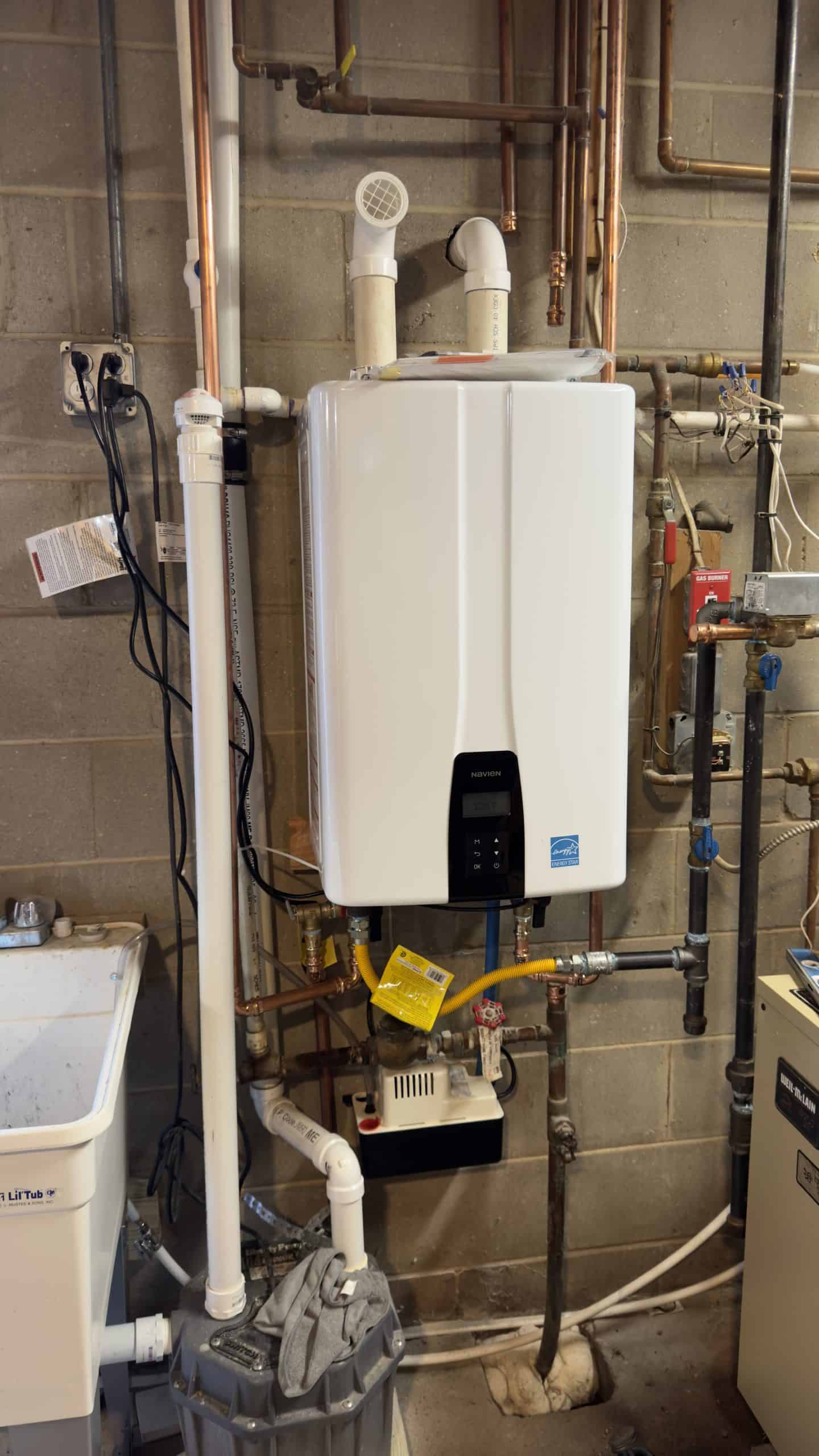
A mounted white tankless water heater with visible pipes and wiring on a concrete wall. Nearby are a utility sink and various plumbing components, including a pressure gauge and valves. A basement setting is suggested.

When Mineral Buildup Becomes Your Biggest Enemy

Monmouth County’s water supply carries enough minerals to create problems for tankless water heaters. Calcium and magnesium don’t just flow through your system—they stick to the heat exchanger, inlet screens, and internal passages. Every gallon of water leaves a tiny deposit behind.

You won’t notice it at first. The buildup is gradual. But after months or years without proper maintenance, those deposits accumulate into a layer of scale that chokes performance.

The first sign is usually water pressure. Hot water comes out weaker than it used to while cold water pressure stays normal. That’s scale clogging the inlet filter or restricting flow through the heat exchanger. Next comes temperature inconsistency—the infamous cold water sandwich where hot turns cold then hot again mid-use.

Scale acts like insulation around the parts that need to transfer heat. Your unit has to work harder and longer to achieve the same water temperature. Energy consumption goes up. Performance goes down. And the heat exchanger is under constant stress trying to compensate for reduced efficiency.

Left alone long enough, mineral buildup causes the heat exchanger to overheat and fail. That’s not a cheap repair. Heat exchangers are the most expensive component in a tankless system, and replacement often costs more than years of professional maintenance would have.

Here’s what catches people off guard: most manufacturer warranties require documented proof of annual maintenance. If your heat exchanger fails at year six and you can’t produce service records showing regular descaling, your warranty claim gets denied. You’re paying full price for a water heater repair that should have been covered.

Professional descaling involves shutting down the system, connecting a pump and hoses, circulating cleaning solution for 45 to 60 minutes, then flushing everything clean. It’s not complicated if you know the procedure, but there’s no margin for error. Wrong solution, incorrect valve sequence, or inadequate flushing time can damage components or leave the problem partially unresolved.

Ignition Failure and What's Actually Wrong

When your tankless water heater won’t ignite, you’re looking at gas supply issues, electrical problems, blocked venting, dirty burners, or failed ignition components. Sometimes it’s obvious. Often it’s not.

Start with the simple stuff. Is the gas valve fully open? Did a breaker trip? Is there power to the unit? These solve the problem more often than complex repairs do. If other gas appliances in your home work fine, the gas supply itself probably isn’t the issue.

Venting problems are common and often overlooked. Your tankless heater needs adequate airflow for combustion and exhaust. Blocked intake vents, clogged exhaust pipes, or debris in the combustion chamber trigger safety shutoffs. You might see error codes related to airflow or flame detection.

Dirty burners affect ignition and flame quality. Dust, combustion residue, and debris accumulate over time. The burner can’t maintain proper flame pattern, which causes the unit to fail ignition or shut down during operation. Cleaning burners requires accessing internal components and knowing what proper operation looks like.

Failed ignition components—igniters, flame sensors, gas valves—are where DIY becomes risky. These involve both gas and electrical systems. Misdiagnosis means buying parts you don’t need. Incorrect installation creates safety hazards. And working on gas components without proper training risks leaks or worse.

This is where calling a licensed professional makes sense. We have diagnostic equipment to pinpoint failures. We know which error codes correspond to which components. We can test gas pressure, verify electrical connections, and check venting—all things that require specialized tools and expertise.

Attempting complex repairs yourself doesn’t just risk making the problem worse. It can void your warranty, create safety hazards, and turn a manageable repair into an expensive emergency. The upfront cost of professional service is lower than the potential cost of getting it wrong.

Tankless Water Heater Cleaning and Maintenance You Can Do

Not every task requires a service call. There are maintenance jobs that fall squarely in DIY territory if you’re comfortable with basic tools and following procedures carefully.

Cleaning the inlet water filter is straightforward. This filter catches sediment before it enters your system. It’s typically located at the cold water inlet, accessible with a wrench. Turn off the water supply, remove the filter, rinse it under clean water, and reinstall. Every six to twelve months keeps it functioning properly.

Checking error codes and consulting your owner’s manual helps you understand what your unit is communicating. Modern tankless systems display specific codes when something’s wrong. Sometimes the fix is a simple reset. Other times the code points to a problem that needs professional attention. Knowing which is which saves unnecessary service calls.

Clearing visible debris from exterior vents maintains proper airflow. If you can see leaves, nests, or blockages, you can carefully remove them. Just don’t force anything or damage vent components while you’re at it.
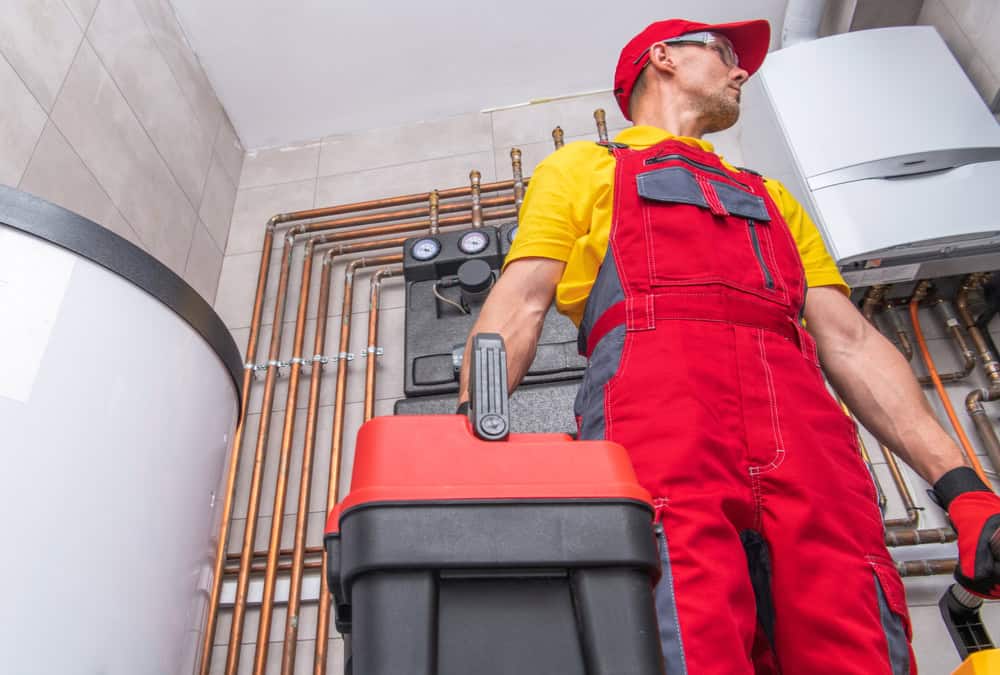
A plumber in red overalls stands in a utility room with various pipes and a water heater. He holds a tool case and looks to the side. The room has tiled walls and a modern heating system.

Flushing Tankless Water Heater: The Process and the Risk

Flushing is the most involved DIY maintenance you’ll tackle. It’s doable for someone with plumbing experience, but it requires the right equipment and careful attention to procedure.

You’ll need a tankless flush kit—pump, hoses, and bucket—plus descaling solution or white vinegar. Kits run $100 to $300 but they’re reusable. Solution costs $20 to $50 per flush.

The process involves shutting off power and gas, closing water isolation valves, opening service valves, connecting hoses, and circulating descaling solution through the system for 45 to 60 minutes. After the cycle completes, you flush with clean water, disconnect everything, and restore power and water. Total time is two to three hours if you know what you’re doing.

Here’s where mistakes happen. Mix up which valves to open or close and you can damage internal components. Don’t circulate solution long enough and mineral deposits remain. Use the wrong chemical and you risk corroding parts. Some manufacturers specifically warn against certain descaling agents.

Your warranty likely requires professional service for flushing. Check your documentation. Many manufacturers state that maintenance must be performed by licensed technicians to maintain coverage. DIY the work and something fails later, they can deny your claim.

Professional flushing runs $150 to $350 in Monmouth County, NJ. That includes expertise, proper equipment, warranty documentation, and a technician who spots other potential issues during service. DIY saves the labor cost but doesn’t provide documentation and leaves you responsible if something goes wrong.

If you’re comfortable with the process, have time, and your warranty doesn’t require professional service, DIY can work. But if any part feels uncertain, or if you need service records for warranty protection, professional service is worth every dollar.

Descaling Tankless Water Heater: Why It Matters More Than You Think

Descaling isn’t optional maintenance you can postpone. It’s the difference between a system that reaches its 20-year lifespan and one that fails at 10.

Every time water flows through your heater, minerals deposit on the heat exchanger. Calcium and magnesium bond to metal surfaces. Over time this creates a layer of scale that reduces efficiency and restricts flow.

Just 1/8 inch of buildup can reduce heat transfer efficiency by 20 to 30 percent. Your unit consumes more energy to achieve the same water temperature. Bills go up while performance drops.

Scale also narrows the passages in the heat exchanger. Water flow decreases. Pressure at your fixtures drops. The unit struggles to meet demand when multiple taps run simultaneously.

Real damage occurs when scale causes overheating. The system can’t transfer heat efficiently so temperatures spike. Safety shutdowns activate. Internal components wear faster. Eventually the heat exchanger fails—a repair that often costs more than years of professional maintenance.

Descaling frequency depends on water hardness. Monmouth County’s moderately hard water means annual service is the baseline. Water testing above 7 grains per gallon requires every six to nine months. Above 12 grains per gallon, some manufacturers void warranties unless you install a water softener.

We use commercial-grade solutions formulated for tankless systems. We know the right concentration, circulation time, and flushing procedure for your specific model. We inspect while we’re there, catching worn seals, corroded connections, or failing sensors before those become emergencies.

Documentation matters more than most homeowners realize. Professional service provides records proving you maintained the system per manufacturer requirements. If your heat exchanger fails during warranty, that documentation gets your claim approved instead of denied.

DIY descaling saves the service call but provides no documentation. Make a mistake—wrong solution, incorrect procedure, component damage—and you’re paying for repairs with no warranty coverage.

Knowing When to Handle It and When to Call for Help

Some tankless water heater maintenance belongs in DIY territory. Cleaning filters, clearing vents, checking error codes—these make sense if you’re comfortable with basic tasks. Flushing and descaling fall into gray area where your experience, warranty requirements, and available time determine the right choice.

But tankless water heater repair involving gas lines, electrical components, heat exchangers, or persistent problems after basic troubleshooting? Those belong with licensed professionals. The risk of making things worse, voiding your warranty, or creating safety hazards outweighs any upfront savings.

We serve Monmouth County, NJ with everything from routine maintenance to emergency repairs. Licensed technicians, transparent upfront pricing, and 24/7 availability when you need it most. Your hot water isn’t something to gamble with. Get it done right the first time.
Summary:

Your tankless water heater isn’t heating right, and you’re stuck deciding whether to fix it yourself or call someone. This isn’t about what’s cheaper upfront—it’s about what actually works and what keeps your warranty intact. This guide breaks down which tankless water heater repair and maintenance tasks you can safely handle at home, which ones require a licensed professional, and what the real costs look like in Monmouth County, NJ. You’ll learn what’s at stake with your warranty, how to avoid expensive mistakes, and when that DIY tutorial might cost you more than it saves.
Table of contents

Your shower went from hot to lukewarm halfway through. Again. Or the water pressure dropped to a trickle on the hot side while cold runs fine. You’re standing there with a wrench in one hand and your phone in the other, trying to decide if this is something you can fix or if you need to make the call.

Here’s the truth: some tankless water heater issues are straightforward enough for a capable homeowner. Others involve gas lines, electrical components, and manufacturer warranties that vanish with one wrong move. The difference between the two isn’t always obvious until you’re already in over your head. This guide shows you exactly where that line is, what the real costs look like in Monmouth County, NJ, and how to make the decision that saves you money without creating bigger problems.

Common Tankless Water Heater Problems Homeowners Face

Walk into any home in Monmouth County, NJ with a tankless water heater, and you’ll find the same handful of issues showing up again and again. Mineral buildup tops the list. Temperature swings that leave you guessing whether your next shower will be comfortable or shocking. Ignition problems where the unit just won’t fire up. Error codes flashing on the display with no clear explanation.

These aren’t random failures. They’re predictable problems that stem from how tankless systems work and what New Jersey’s moderately hard water does to them over time. Understanding what you’re actually dealing with makes the difference between a quick fix and an expensive mistake.

The key is knowing which problems have simple causes and which ones point to something that requires professional diagnosis. Not every issue needs a service call, but plenty of them do—and figuring out which is which before you start taking things apart matters more than you might think.

A mounted white tankless water heater with visible pipes and wiring on a concrete wall. Nearby are a utility sink and various plumbing components, including a pressure gauge and valves. A basement setting is suggested.

When Mineral Buildup Becomes Your Biggest Enemy

Monmouth County’s water supply carries enough minerals to create problems for tankless water heaters. Calcium and magnesium don’t just flow through your system—they stick to the heat exchanger, inlet screens, and internal passages. Every gallon of water leaves a tiny deposit behind.

You won’t notice it at first. The buildup is gradual. But after months or years without proper maintenance, those deposits accumulate into a layer of scale that chokes performance.

The first sign is usually water pressure. Hot water comes out weaker than it used to while cold water pressure stays normal. That’s scale clogging the inlet filter or restricting flow through the heat exchanger. Next comes temperature inconsistency—the infamous cold water sandwich where hot turns cold then hot again mid-use.

Scale acts like insulation around the parts that need to transfer heat. Your unit has to work harder and longer to achieve the same water temperature. Energy consumption goes up. Performance goes down. And the heat exchanger is under constant stress trying to compensate for reduced efficiency.

Left alone long enough, mineral buildup causes the heat exchanger to overheat and fail. That’s not a cheap repair. Heat exchangers are the most expensive component in a tankless system, and replacement often costs more than years of professional maintenance would have.

Here’s what catches people off guard: most manufacturer warranties require documented proof of annual maintenance. If your heat exchanger fails at year six and you can’t produce service records showing regular descaling, your warranty claim gets denied. You’re paying full price for a water heater repair that should have been covered.

Professional descaling involves shutting down the system, connecting a pump and hoses, circulating cleaning solution for 45 to 60 minutes, then flushing everything clean. It’s not complicated if you know the procedure, but there’s no margin for error. Wrong solution, incorrect valve sequence, or inadequate flushing time can damage components or leave the problem partially unresolved.

Ignition Failure and What's Actually Wrong

When your tankless water heater won’t ignite, you’re looking at gas supply issues, electrical problems, blocked venting, dirty burners, or failed ignition components. Sometimes it’s obvious. Often it’s not.

Start with the simple stuff. Is the gas valve fully open? Did a breaker trip? Is there power to the unit? These solve the problem more often than complex repairs do. If other gas appliances in your home work fine, the gas supply itself probably isn’t the issue.

Venting problems are common and often overlooked. Your tankless heater needs adequate airflow for combustion and exhaust. Blocked intake vents, clogged exhaust pipes, or debris in the combustion chamber trigger safety shutoffs. You might see error codes related to airflow or flame detection.

Dirty burners affect ignition and flame quality. Dust, combustion residue, and debris accumulate over time. The burner can’t maintain proper flame pattern, which causes the unit to fail ignition or shut down during operation. Cleaning burners requires accessing internal components and knowing what proper operation looks like.

Failed ignition components—igniters, flame sensors, gas valves—are where DIY becomes risky. These involve both gas and electrical systems. Misdiagnosis means buying parts you don’t need. Incorrect installation creates safety hazards. And working on gas components without proper training risks leaks or worse.

This is where calling a licensed professional makes sense. We have diagnostic equipment to pinpoint failures. We know which error codes correspond to which components. We can test gas pressure, verify electrical connections, and check venting—all things that require specialized tools and expertise.

Attempting complex repairs yourself doesn’t just risk making the problem worse. It can void your warranty, create safety hazards, and turn a manageable repair into an expensive emergency. The upfront cost of professional service is lower than the potential cost of getting it wrong.

Tankless Water Heater Cleaning and Maintenance You Can Do

Not every task requires a service call. There are maintenance jobs that fall squarely in DIY territory if you’re comfortable with basic tools and following procedures carefully.

Cleaning the inlet water filter is straightforward. This filter catches sediment before it enters your system. It’s typically located at the cold water inlet, accessible with a wrench. Turn off the water supply, remove the filter, rinse it under clean water, and reinstall. Every six to twelve months keeps it functioning properly.

Checking error codes and consulting your owner’s manual helps you understand what your unit is communicating. Modern tankless systems display specific codes when something’s wrong. Sometimes the fix is a simple reset. Other times the code points to a problem that needs professional attention. Knowing which is which saves unnecessary service calls.

Clearing visible debris from exterior vents maintains proper airflow. If you can see leaves, nests, or blockages, you can carefully remove them. Just don’t force anything or damage vent components while you’re at it.

A plumber in red overalls stands in a utility room with various pipes and a water heater. He holds a tool case and looks to the side. The room has tiled walls and a modern heating system.

Flushing Tankless Water Heater: The Process and the Risk

Flushing is the most involved DIY maintenance you’ll tackle. It’s doable for someone with plumbing experience, but it requires the right equipment and careful attention to procedure.

You’ll need a tankless flush kit—pump, hoses, and bucket—plus descaling solution or white vinegar. Kits run $100 to $300 but they’re reusable. Solution costs $20 to $50 per flush.

The process involves shutting off power and gas, closing water isolation valves, opening service valves, connecting hoses, and circulating descaling solution through the system for 45 to 60 minutes. After the cycle completes, you flush with clean water, disconnect everything, and restore power and water. Total time is two to three hours if you know what you’re doing.

Here’s where mistakes happen. Mix up which valves to open or close and you can damage internal components. Don’t circulate solution long enough and mineral deposits remain. Use the wrong chemical and you risk corroding parts. Some manufacturers specifically warn against certain descaling agents.

Your warranty likely requires professional service for flushing. Check your documentation. Many manufacturers state that maintenance must be performed by licensed technicians to maintain coverage. DIY the work and something fails later, they can deny your claim.

Professional flushing runs $150 to $350 in Monmouth County, NJ. That includes expertise, proper equipment, warranty documentation, and a technician who spots other potential issues during service. DIY saves the labor cost but doesn’t provide documentation and leaves you responsible if something goes wrong.

If you’re comfortable with the process, have time, and your warranty doesn’t require professional service, DIY can work. But if any part feels uncertain, or if you need service records for warranty protection, professional service is worth every dollar.

Descaling Tankless Water Heater: Why It Matters More Than You Think

Descaling isn’t optional maintenance you can postpone. It’s the difference between a system that reaches its 20-year lifespan and one that fails at 10.

Every time water flows through your heater, minerals deposit on the heat exchanger. Calcium and magnesium bond to metal surfaces. Over time this creates a layer of scale that reduces efficiency and restricts flow.

Just 1/8 inch of buildup can reduce heat transfer efficiency by 20 to 30 percent. Your unit consumes more energy to achieve the same water temperature. Bills go up while performance drops.

Scale also narrows the passages in the heat exchanger. Water flow decreases. Pressure at your fixtures drops. The unit struggles to meet demand when multiple taps run simultaneously.

Real damage occurs when scale causes overheating. The system can’t transfer heat efficiently so temperatures spike. Safety shutdowns activate. Internal components wear faster. Eventually the heat exchanger fails—a repair that often costs more than years of professional maintenance.

Descaling frequency depends on water hardness. Monmouth County’s moderately hard water means annual service is the baseline. Water testing above 7 grains per gallon requires every six to nine months. Above 12 grains per gallon, some manufacturers void warranties unless you install a water softener.

We use commercial-grade solutions formulated for tankless systems. We know the right concentration, circulation time, and flushing procedure for your specific model. We inspect while we’re there, catching worn seals, corroded connections, or failing sensors before those become emergencies.

Documentation matters more than most homeowners realize. Professional service provides records proving you maintained the system per manufacturer requirements. If your heat exchanger fails during warranty, that documentation gets your claim approved instead of denied.

DIY descaling saves the service call but provides no documentation. Make a mistake—wrong solution, incorrect procedure, component damage—and you’re paying for repairs with no warranty coverage.

Knowing When to Handle It and When to Call for Help

Some tankless water heater maintenance belongs in DIY territory. Cleaning filters, clearing vents, checking error codes—these make sense if you’re comfortable with basic tasks. Flushing and descaling fall into gray area where your experience, warranty requirements, and available time determine the right choice.

But tankless water heater repair involving gas lines, electrical components, heat exchangers, or persistent problems after basic troubleshooting? Those belong with licensed professionals. The risk of making things worse, voiding your warranty, or creating safety hazards outweighs any upfront savings.

We serve Monmouth County, NJ with everything from routine maintenance to emergency repairs. Licensed technicians, transparent upfront pricing, and 24/7 availability when you need it most. Your hot water isn’t something to gamble with. Get it done right the first time.
Article details:

Share: