Servicing Areas Throughout New Jersey

Tankless Water Heater: Benefits and How They Work

Tankless water heaters promise endless hot water and lower energy bills. But are they right for your home? This guide breaks down how they work, what they cost, and what you need to know.

Share:

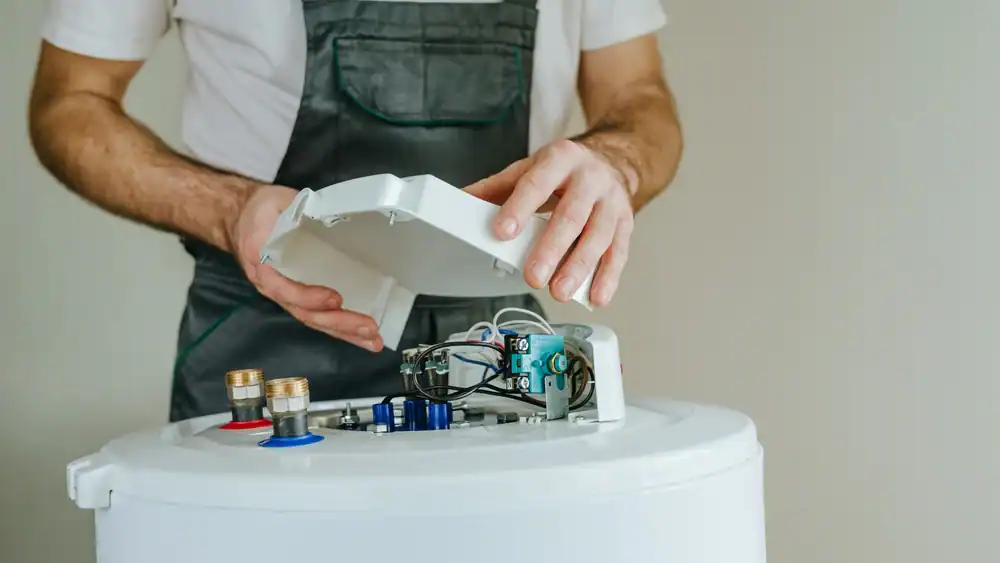
A person in work overalls opens the top cover of a water heater, exposing internal electrical components and connections.

Summary:

Deciding between a tankless water heater and a traditional tank system isn’t just about hot water—it’s about understanding your household’s needs, your budget, and what you’re willing to maintain. This guide walks you through how tankless systems actually work, what makes them different from traditional tanks, and the real costs involved. You’ll also learn about common issues, maintenance requirements, and whether the investment makes sense for your Monmouth County, NJ home.
Table of contents

You turn on the shower expecting hot water, but it runs cold halfway through. Or maybe your energy bills keep climbing because your old tank heater runs nonstop. These frustrations send a lot of Monmouth County, NJ homeowners searching for better options.

Tankless water heaters promise endless hot water and lower energy costs. But they also come with higher upfront prices and specific installation requirements. Before you decide if one belongs in your home, you need to understand how they actually work, what they cost over time, and whether they’ll solve the problems you’re facing. Let’s start with what makes these systems different from the tank heater sitting in your basement right now.

How Tankless Water Heaters Work

A tankless water heater doesn’t store hot water. Instead, it heats water the moment you turn on a faucet or shower. Cold water flows through a pipe into the unit, where either a gas burner or electric elements heat it instantly as it passes through a heat exchanger.

The system only activates when you need hot water. Turn on the tap, and sensors detect the flow. The heating elements kick in, raising the water temperature to your preset level before it reaches your faucet. Turn off the tap, and the system shuts down. No tank means no standby heat loss—that constant energy drain from keeping 40 or 50 gallons hot around the clock.

This on-demand approach is why these systems are sometimes called “on-demand water heaters” or “instant water heaters.” The technology isn’t new—it’s been standard in parts of Europe and Japan for decades. But it works differently than what most homeowners in Monmouth County, NJ are used to.
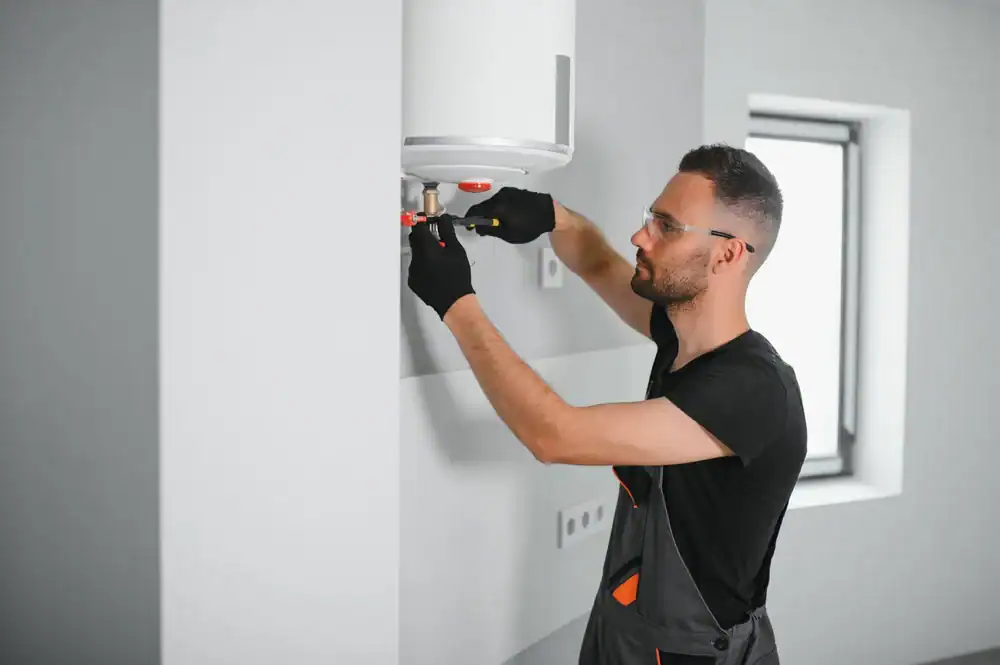
A man wearing safety glasses and gloves installs or repairs a water heater mounted on a wall inside a modern, bright room.

Electric Hot Water Heater vs Gas Tankless Systems

You’ll choose between electric and gas when you pick a tankless system. The difference matters more than you might think.

Electric tankless water heaters use copper heating elements powered by your home’s electrical system. They’re compact, don’t need venting, and can be installed in tighter spaces. Installation tends to be simpler if you already have the electrical capacity. But here’s the catch—a whole-house electric tankless water heater can pull 25,000 watts or more. That’s a lot of electricity. Your home might need an electrical panel upgrade and dedicated circuits just to handle the load. For smaller applications, like heating water for a single bathroom, electric units work fine. For a whole house, especially in colder climates where incoming water temperatures are lower, electric models can struggle to keep up.

Gas tankless water heaters burn natural gas or propane to heat water. They generate higher flow rates—meaning they can heat more gallons per minute—which makes them better suited for larger households. A gas unit can handle multiple showers running at once more reliably than most electric models. The tradeoff is complexity. Gas systems need proper venting to expel combustion gases safely. You might need to upgrade your gas line to handle the increased demand. Installation costs run higher because of these requirements.

Energy efficiency also differs. Electric tankless heaters can reach 98-99% efficiency because almost all the electricity converts directly to heat. Gas models typically hit 80-85% efficiency because some heat escapes through the venting system. But when you factor in local utility rates, gas often costs less to operate over time, especially if natural gas is cheaper than electricity in your area.

If you’re in Monmouth County, NJ and you already have a gas line, a gas tankless system usually makes more sense for whole-house use. If you’re heating water for a single fixture or your home runs entirely on electricity, an electric model might be the simpler choice.

Whole House Tankless Water Heater Sizing and Flow Rates

Tankless water heaters don’t run out of hot water, but they do have limits. Every unit has a maximum flow rate—the number of gallons per minute it can heat to your desired temperature. If you exceed that flow rate by running too many hot water fixtures at once, you’ll get lukewarm water instead of hot.

A typical tankless water heater produces 2 to 5 gallons per minute. That might sound like plenty, but add it up. A standard shower uses about 2.5 GPM. A dishwasher might use 1.5 GPM. If someone’s showering while the dishwasher runs, you’re already at 4 GPM. Try to wash your hands at the same time, and you’ve pushed past what many units can handle.

This is where sizing matters. You need to calculate your peak demand—the maximum amount of hot water your household uses simultaneously. Count how many fixtures might run at once during your busiest times. Morning routines are usually the test. If three people shower back-to-back while someone runs the washing machine, you need a unit that can keep up.

Incoming water temperature also affects sizing. In Monmouth County, NJ, groundwater temperatures average around 50-55°F in winter. To heat that to 120°F, your system needs to raise the temperature by 65-70 degrees. The colder the incoming water, the harder your unit works, and the lower its effective flow rate becomes. A unit rated for 5 GPM in warmer climates might only deliver 3-4 GPM when it’s cold outside.

For larger households or high simultaneous demand, you have options. You can install a larger, more powerful unit. You can install two smaller units—one for upstairs, one for downstairs. Or you can stagger your hot water use to stay within the system’s capacity. None of these solutions is wrong, but they all come with different price tags and practical considerations.

An undersized tankless water heater will frustrate you. It’ll work harder than it should, wear out faster, and leave you with temperature fluctuations. Proper sizing during installation isn’t optional—it’s essential.

Electric Water Heater Options: Tankless vs Heat Pump Systems

If you’re committed to electric water heating, you have two main paths: electric tankless or heat pump water heaters. They’re both more efficient than traditional electric tanks, but they work completely differently.

Electric tankless water heaters heat water instantly using high-powered heating elements. They’re compact, don’t need venting, and provide endless hot water as long as you stay within their flow rate limits. Efficiency ratings hit 98-99% because almost all the electricity converts to heat. But they pull massive amounts of power—whole-house units can require 25,000 watts or more, which means potential electrical upgrades and higher operating costs compared to gas systems.

Heat pump water heaters take a different approach. Instead of generating heat directly, they move heat from the surrounding air into the water—similar to how a refrigerator works in reverse. This makes them 2 to 3 times more efficient than conventional electric water heaters.
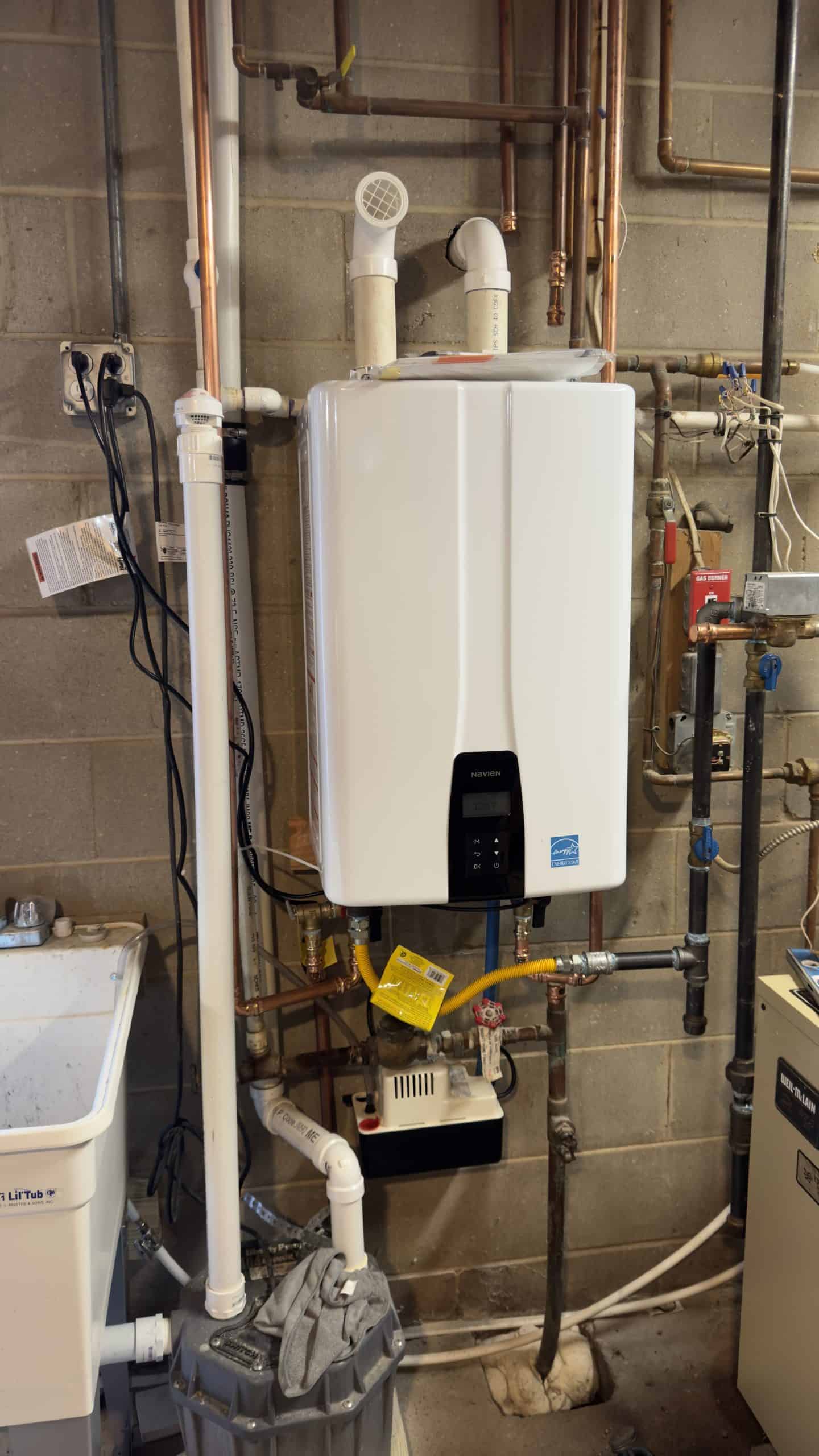
Wall‑mounted tankless water heater connected to multiple pipes and vents in a utility room with exposed plumbing.

Heat Pump Water Heater Efficiency and Cost Savings

Heat pump water heaters achieve Uniform Energy Factor (UEF) ratings up to 3.88. That efficiency translates to serious savings—up to $600 per year compared to standard electric tanks, or $6,000 over 10 years. For every dollar you spend on electricity, a heat pump water heater delivers 3 to 4 dollars’ worth of heating because it’s moving heat rather than creating it.

The catch is they need space and the right environment. They pull heat from the surrounding air, so they work best in warm areas with good airflow. If you install one in a cold basement or cramped utility closet, efficiency drops. They also include a storage tank, so you don’t get the endless hot water benefit of a tankless system. But the tank is typically well-insulated, and the unit only runs when needed, so standby losses stay low. Most heat pump water heaters last 12-15 years with proper maintenance.

Cost is another factor. Heat pump water heaters typically run $1,500 to $3,000 installed, but federal tax credits can reduce that by 30%—up to $2,000. That makes them competitive with or even cheaper than some tankless installations. Electric tankless units cost less upfront but don’t qualify for the same incentives.

For Monmouth County, NJ homeowners, the choice often comes down to priorities. If you want endless hot water and have the electrical capacity, electric tankless makes sense for point-of-use applications or smaller homes. If you want maximum efficiency and qualify for rebates, a heat pump water heater delivers better long-term savings, especially if you have space and ambient warmth for it to work effectively. Neither option is universally “best”—your home’s layout, electrical system, hot water demand, and budget all factor in.

Outdoor Tankless Water Heater and Installation Considerations

Some tankless water heaters are designed for outdoor installation, which can be a space-saving solution if your home lacks room for an indoor unit. Outdoor tankless water heaters mount on an exterior wall and are built to withstand weather conditions. They eliminate the need for indoor venting and free up interior space entirely.

But outdoor installations come with considerations. In Monmouth County, NJ, where winter temperatures can drop to the high 20s, freeze protection becomes important. Most outdoor units include built-in freeze protection that activates when temperatures approach freezing. This feature uses a small amount of energy to keep internal components from freezing, but it means the unit isn’t completely “off” during cold weather.

You’ll also need to think about placement. The unit should be easily accessible for maintenance but protected from direct exposure to harsh weather when possible. Some homeowners install small protective covers or enclosures. You’ll need proper clearances for combustion air and venting if you’re using a gas model. And you’ll want the unit positioned to minimize the distance hot water travels to your fixtures—longer pipe runs mean more heat loss and longer wait times for hot water to arrive.

Indoor water heater installations give you more control over the environment, but they require space and proper venting. Outdoor installations save space and simplify venting, but they need freeze protection and thoughtful placement. Neither is inherently better—it depends on your home’s layout and your priorities.

Tankless Water Heater Cleaning and Maintenance Requirements

Tankless water heaters last longer than traditional tanks, but only if you maintain them properly. The biggest maintenance task is descaling—removing mineral buildup that accumulates inside the heat exchanger. In areas with hard water, minerals like calcium and magnesium deposit on internal surfaces every time water flows through. Over time, these deposits reduce efficiency, restrict water flow, and can damage the heat exchanger.

How often you need to descale depends on your water hardness. In Monmouth County, NJ, where hard water is common, annual descaling is usually necessary. Some homes with very hard water might need it every 6 months. Neglecting this maintenance doesn’t just reduce performance—it can void your warranty and lead to premature failure.

Professional descaling typically costs $200 or more per visit. That’s an ongoing expense you need to factor into the total cost of ownership. Some newer models include scale prevention technology that reduces or eliminates the need for annual descaling, which can save you thousands of dollars over the unit’s lifespan.

Summary:

Deciding between a tankless water heater and a traditional tank system isn’t just about hot water—it’s about understanding your household’s needs, your budget, and what you’re willing to maintain. This guide walks you through how tankless systems actually work, what makes them different from traditional tanks, and the real costs involved. You’ll also learn about common issues, maintenance requirements, and whether the investment makes sense for your Monmouth County, NJ home.
Table of contents

You turn on the shower expecting hot water, but it runs cold halfway through. Or maybe your energy bills keep climbing because your old tank heater runs nonstop. These frustrations send a lot of Monmouth County, NJ homeowners searching for better options.

Tankless water heaters promise endless hot water and lower energy costs. But they also come with higher upfront prices and specific installation requirements. Before you decide if one belongs in your home, you need to understand how they actually work, what they cost over time, and whether they’ll solve the problems you’re facing. Let’s start with what makes these systems different from the tank heater sitting in your basement right now.

How Tankless Water Heaters Work

A tankless water heater doesn’t store hot water. Instead, it heats water the moment you turn on a faucet or shower. Cold water flows through a pipe into the unit, where either a gas burner or electric elements heat it instantly as it passes through a heat exchanger.

The system only activates when you need hot water. Turn on the tap, and sensors detect the flow. The heating elements kick in, raising the water temperature to your preset level before it reaches your faucet. Turn off the tap, and the system shuts down. No tank means no standby heat loss—that constant energy drain from keeping 40 or 50 gallons hot around the clock.

This on-demand approach is why these systems are sometimes called “on-demand water heaters” or “instant water heaters.” The technology isn’t new—it’s been standard in parts of Europe and Japan for decades. But it works differently than what most homeowners in Monmouth County, NJ are used to.

A man wearing safety glasses and gloves installs or repairs a water heater mounted on a wall inside a modern, bright room.

Electric Hot Water Heater vs Gas Tankless Systems

You’ll choose between electric and gas when you pick a tankless system. The difference matters more than you might think.

Electric tankless water heaters use copper heating elements powered by your home’s electrical system. They’re compact, don’t need venting, and can be installed in tighter spaces. Installation tends to be simpler if you already have the electrical capacity. But here’s the catch—a whole-house electric tankless water heater can pull 25,000 watts or more. That’s a lot of electricity. Your home might need an electrical panel upgrade and dedicated circuits just to handle the load. For smaller applications, like heating water for a single bathroom, electric units work fine. For a whole house, especially in colder climates where incoming water temperatures are lower, electric models can struggle to keep up.

Gas tankless water heaters burn natural gas or propane to heat water. They generate higher flow rates—meaning they can heat more gallons per minute—which makes them better suited for larger households. A gas unit can handle multiple showers running at once more reliably than most electric models. The tradeoff is complexity. Gas systems need proper venting to expel combustion gases safely. You might need to upgrade your gas line to handle the increased demand. Installation costs run higher because of these requirements.

Energy efficiency also differs. Electric tankless heaters can reach 98-99% efficiency because almost all the electricity converts directly to heat. Gas models typically hit 80-85% efficiency because some heat escapes through the venting system. But when you factor in local utility rates, gas often costs less to operate over time, especially if natural gas is cheaper than electricity in your area.

If you’re in Monmouth County, NJ and you already have a gas line, a gas tankless system usually makes more sense for whole-house use. If you’re heating water for a single fixture or your home runs entirely on electricity, an electric model might be the simpler choice.

Whole House Tankless Water Heater Sizing and Flow Rates

Tankless water heaters don’t run out of hot water, but they do have limits. Every unit has a maximum flow rate—the number of gallons per minute it can heat to your desired temperature. If you exceed that flow rate by running too many hot water fixtures at once, you’ll get lukewarm water instead of hot.

A typical tankless water heater produces 2 to 5 gallons per minute. That might sound like plenty, but add it up. A standard shower uses about 2.5 GPM. A dishwasher might use 1.5 GPM. If someone’s showering while the dishwasher runs, you’re already at 4 GPM. Try to wash your hands at the same time, and you’ve pushed past what many units can handle.

This is where sizing matters. You need to calculate your peak demand—the maximum amount of hot water your household uses simultaneously. Count how many fixtures might run at once during your busiest times. Morning routines are usually the test. If three people shower back-to-back while someone runs the washing machine, you need a unit that can keep up.

Incoming water temperature also affects sizing. In Monmouth County, NJ, groundwater temperatures average around 50-55°F in winter. To heat that to 120°F, your system needs to raise the temperature by 65-70 degrees. The colder the incoming water, the harder your unit works, and the lower its effective flow rate becomes. A unit rated for 5 GPM in warmer climates might only deliver 3-4 GPM when it’s cold outside.

For larger households or high simultaneous demand, you have options. You can install a larger, more powerful unit. You can install two smaller units—one for upstairs, one for downstairs. Or you can stagger your hot water use to stay within the system’s capacity. None of these solutions is wrong, but they all come with different price tags and practical considerations.

An undersized tankless water heater will frustrate you. It’ll work harder than it should, wear out faster, and leave you with temperature fluctuations. Proper sizing during installation isn’t optional—it’s essential.

Electric Water Heater Options: Tankless vs Heat Pump Systems

If you’re committed to electric water heating, you have two main paths: electric tankless or heat pump water heaters. They’re both more efficient than traditional electric tanks, but they work completely differently.

Electric tankless water heaters heat water instantly using high-powered heating elements. They’re compact, don’t need venting, and provide endless hot water as long as you stay within their flow rate limits. Efficiency ratings hit 98-99% because almost all the electricity converts to heat. But they pull massive amounts of power—whole-house units can require 25,000 watts or more, which means potential electrical upgrades and higher operating costs compared to gas systems.

Heat pump water heaters take a different approach. Instead of generating heat directly, they move heat from the surrounding air into the water—similar to how a refrigerator works in reverse. This makes them 2 to 3 times more efficient than conventional electric water heaters.

Wall‑mounted tankless water heater connected to multiple pipes and vents in a utility room with exposed plumbing.

Heat Pump Water Heater Efficiency and Cost Savings

Heat pump water heaters achieve Uniform Energy Factor (UEF) ratings up to 3.88. That efficiency translates to serious savings—up to $600 per year compared to standard electric tanks, or $6,000 over 10 years. For every dollar you spend on electricity, a heat pump water heater delivers 3 to 4 dollars’ worth of heating because it’s moving heat rather than creating it.

The catch is they need space and the right environment. They pull heat from the surrounding air, so they work best in warm areas with good airflow. If you install one in a cold basement or cramped utility closet, efficiency drops. They also include a storage tank, so you don’t get the endless hot water benefit of a tankless system. But the tank is typically well-insulated, and the unit only runs when needed, so standby losses stay low. Most heat pump water heaters last 12-15 years with proper maintenance.

Cost is another factor. Heat pump water heaters typically run $1,500 to $3,000 installed, but federal tax credits can reduce that by 30%—up to $2,000. That makes them competitive with or even cheaper than some tankless installations. Electric tankless units cost less upfront but don’t qualify for the same incentives.

For Monmouth County, NJ homeowners, the choice often comes down to priorities. If you want endless hot water and have the electrical capacity, electric tankless makes sense for point-of-use applications or smaller homes. If you want maximum efficiency and qualify for rebates, a heat pump water heater delivers better long-term savings, especially if you have space and ambient warmth for it to work effectively. Neither option is universally “best”—your home’s layout, electrical system, hot water demand, and budget all factor in.

Outdoor Tankless Water Heater and Installation Considerations

Some tankless water heaters are designed for outdoor installation, which can be a space-saving solution if your home lacks room for an indoor unit. Outdoor tankless water heaters mount on an exterior wall and are built to withstand weather conditions. They eliminate the need for indoor venting and free up interior space entirely.

But outdoor installations come with considerations. In Monmouth County, NJ, where winter temperatures can drop to the high 20s, freeze protection becomes important. Most outdoor units include built-in freeze protection that activates when temperatures approach freezing. This feature uses a small amount of energy to keep internal components from freezing, but it means the unit isn’t completely “off” during cold weather.

You’ll also need to think about placement. The unit should be easily accessible for maintenance but protected from direct exposure to harsh weather when possible. Some homeowners install small protective covers or enclosures. You’ll need proper clearances for combustion air and venting if you’re using a gas model. And you’ll want the unit positioned to minimize the distance hot water travels to your fixtures—longer pipe runs mean more heat loss and longer wait times for hot water to arrive.

Indoor water heater installations give you more control over the environment, but they require space and proper venting. Outdoor installations save space and simplify venting, but they need freeze protection and thoughtful placement. Neither is inherently better—it depends on your home’s layout and your priorities.

Tankless Water Heater Cleaning and Maintenance Requirements

Tankless water heaters last longer than traditional tanks, but only if you maintain them properly. The biggest maintenance task is descaling—removing mineral buildup that accumulates inside the heat exchanger. In areas with hard water, minerals like calcium and magnesium deposit on internal surfaces every time water flows through. Over time, these deposits reduce efficiency, restrict water flow, and can damage the heat exchanger.

How often you need to descale depends on your water hardness. In Monmouth County, NJ, where hard water is common, annual descaling is usually necessary. Some homes with very hard water might need it every 6 months. Neglecting this maintenance doesn’t just reduce performance—it can void your warranty and lead to premature failure.

Professional descaling typically costs $200 or more per visit. That’s an ongoing expense you need to factor into the total cost of ownership. Some newer models include scale prevention technology that reduces or eliminates the need for annual descaling, which can save you thousands of dollars over the unit’s lifespan.
Article details:

Share: