Propane tankless water heaters deliver endless hot water and energy savings. Learn key features, troubleshooting tips, and when to call professionals in Monmouth County, NJ.
Share:
Summary:
Cold showers aren’t just uncomfortable. They disrupt your morning routine, delay your day, and leave you wondering what went wrong with your water heater. If you’re dealing with no hot water right now, or you’re researching whether a propane tankless water heater makes sense for your Monmouth County home, you’re in the right place. This guide walks through how these systems work, what makes them different from traditional tank heaters, and most importantly, how to troubleshoot when things go wrong. You’ll also learn what features matter most and when it’s time to bring in professional help.
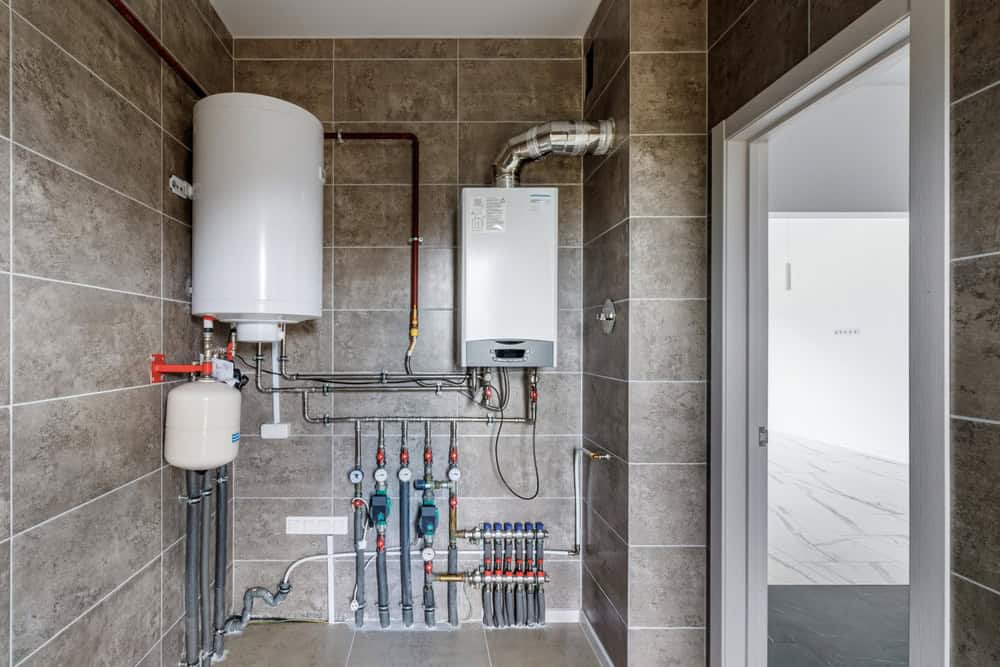
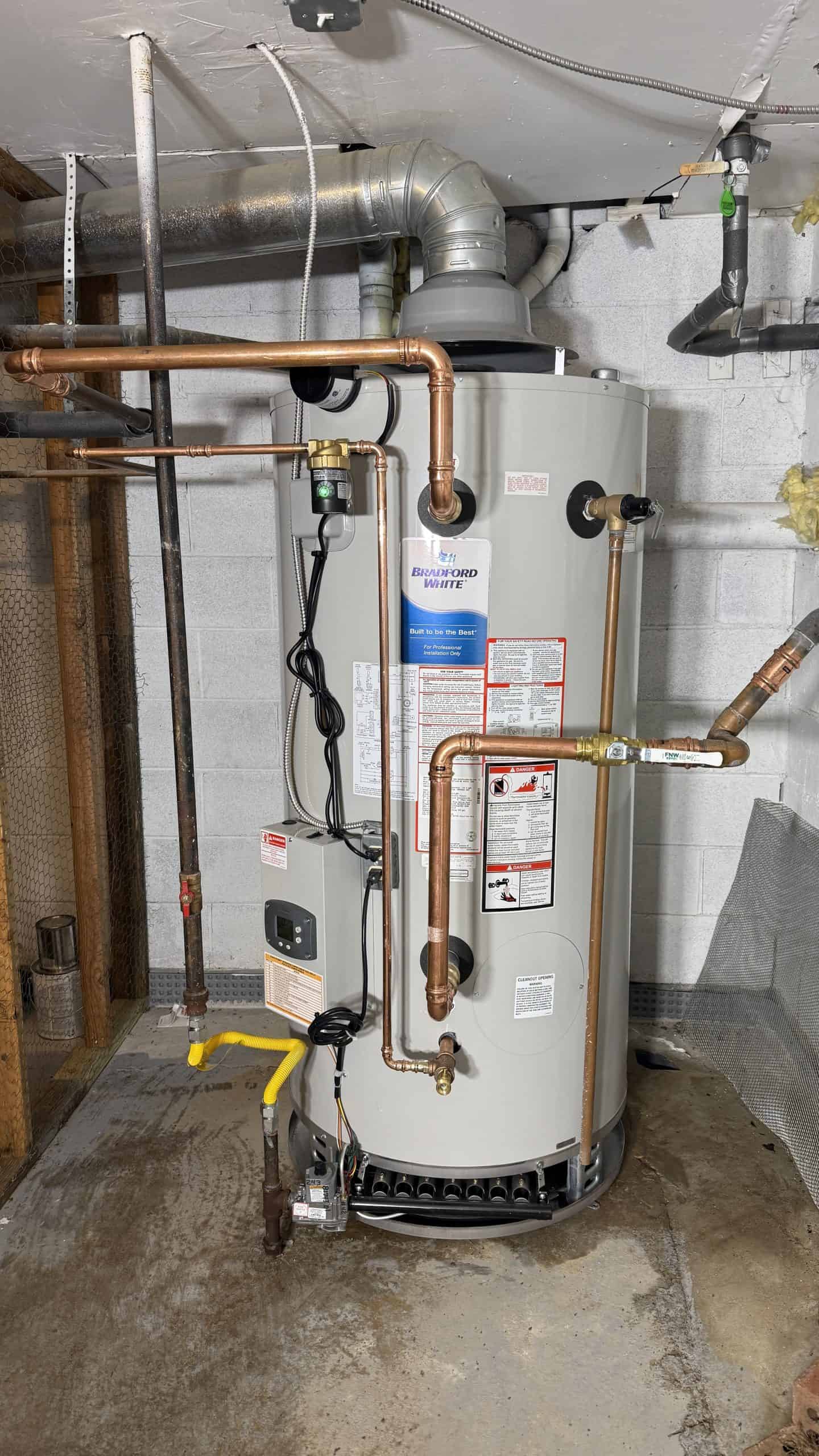
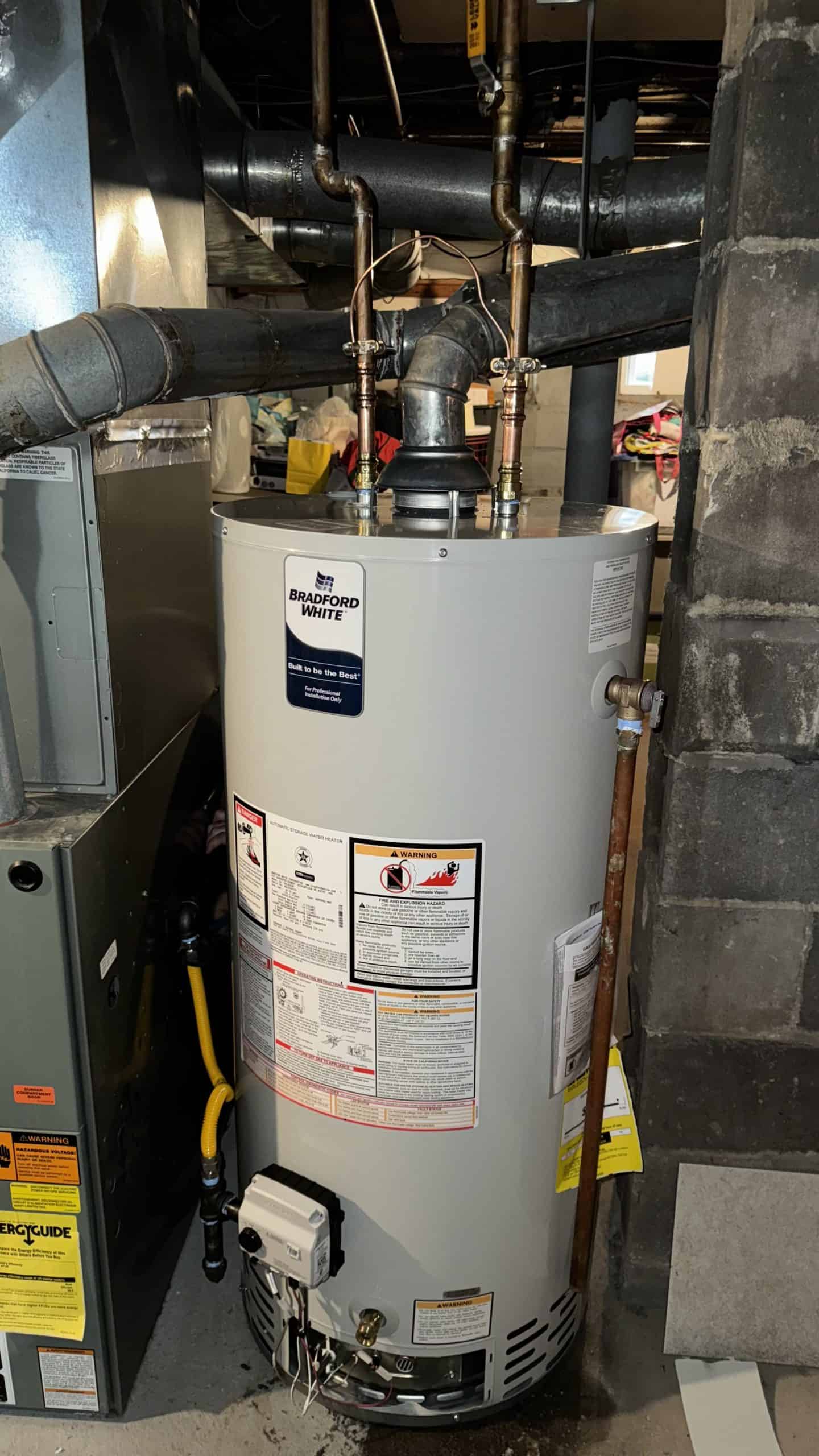
A propane tankless water heater heats water only when you need it. Unlike traditional tank systems that store 40-50 gallons of pre-heated water, tankless units activate when you turn on a hot water tap. Cold water flows through a heat exchanger where a propane gas burner rapidly heats it to your desired temperature. The result is continuous hot water without the wait.
This on-demand approach eliminates standby energy losses. Traditional tanks constantly burn fuel to keep stored water hot, even while you sleep. Tankless systems only use propane when you’re actually using hot water. According to the U.S. Department of Energy, this can save 24-34% on energy costs for homes using 41 gallons or less daily. For an average household, that translates to roughly $108-150 in annual savings.
The compact design matters too. Most propane tankless units mount on a wall and take up about as much space as a carry-on suitcase. If you’ve ever worked around a bulky tank water heater in a cramped utility closet or basement, you know how valuable that floor space becomes.

You turn on the tap expecting hot water, but only cold comes out. Your cold water works fine, so what’s happening? This specific scenario points to an issue with your water heater itself, not your home’s overall plumbing.
For propane tankless systems, several culprits could be at play. First, check your circuit breaker. Even though propane provides the heat, tankless units need electricity to operate their ignition systems and controls. A tripped breaker cuts power to these components, and your unit won’t fire up. Head to your electrical panel and look for any breakers in the off position or sitting between on and off. Reset them fully.
Next, verify your gas supply. If you use a propane tank, check the gauge to confirm you haven’t run out. It sounds obvious, but it happens more often than you’d think. Also make sure your gas valve at the unit is fully open. A partially closed valve restricts flow and prevents proper ignition.
Mineral buildup creates another common issue, especially in areas with hard water. Calcium and magnesium deposits accumulate inside the heat exchanger over time, creating a barrier between the burner and water. This reduces efficiency and can eventually block water flow entirely. If you haven’t flushed your system in over a year, sediment could be your problem.
The flow rate might also be too low. Tankless water heaters have a minimum flow rate requirement, typically around 0.5 gallons per minute. If you’re barely cracking the faucet open, the unit may not sense enough flow to activate. Try increasing the water flow and see if that triggers the heater.
Finally, consider whether you’re overloading the system. Running a shower, dishwasher, and washing machine simultaneously can exceed your unit’s capacity. Every tankless heater has a maximum flow rate measured in gallons per minute. If multiple fixtures demand hot water at once and exceed that capacity, you’ll get lukewarm or cold water. The solution is either staggering your hot water use or, if this happens regularly, upgrading to a higher-capacity unit.
Power outages create unique problems for tankless water heaters. Even propane models need electricity to function. When power returns, your heater doesn’t always automatically restart. Understanding why helps you get hot water flowing again faster.
The most common issue is a tripped circuit breaker. Power surges when electricity comes back online can trip breakers as a protective measure. Check your electrical panel first. Look for the breaker labeled for your water heater and make sure it’s fully in the on position. If it keeps tripping after you reset it, you likely have a deeper electrical problem that needs professional attention.
Many tankless units also have a reset button, usually red, located behind an access panel. Power interruptions can trip this internal safety switch. Turn off power to the unit at the breaker, remove the access panel (you may need a screwdriver), and locate the reset button. Press it firmly until you feel or hear a click, then restore power. Wait a few minutes and test your hot water.
Ignition systems can malfunction after outages too. Gas tankless heaters use electronic ignition rather than a pilot light. If the ignition pack was damaged during the power fluctuation, the burner won’t light even with power restored. You’ll typically see an error code on the unit’s display if this is the case. Different manufacturers use different codes, so check your owner’s manual or call a technician who can diagnose the specific error.
Thermostat issues sometimes develop after power events. The sudden loss and restoration of power can cause the thermostat to malfunction or lose its settings. If your unit powers on but water temperature seems off, check the thermostat setting. It should read between 120-140°F for optimal performance. If adjusting it doesn’t help, the thermostat itself may need replacement.
One often-overlooked issue is loose electrical connections. The vibration and stress from a power surge can loosen wiring connections inside the unit. This creates intermittent power delivery that prevents consistent operation. Unless you’re comfortable working with electrical components, this diagnosis and water heater repair should be left to a licensed professional.
If you’ve checked the breaker, pressed the reset button, and verified your gas supply, but still have no hot water, the problem likely requires professional troubleshooting. Continuing to attempt DIY fixes on complex electrical or gas components can be dangerous and may void your warranty.
When your hot water heater stops producing hot water, the cause could range from simple to complex. The key is methodical troubleshooting that eliminates possibilities one by one. Start with the easiest checks before moving to more involved diagnostics.
Power and fuel supply should be your first stop. Confirm the unit has electricity by checking for any indicator lights on the control panel. No lights usually means no power. Then verify you have propane in your tank and that the gas valve is open. These basic checks take less than five minutes but solve a surprising number of “broken” water heaters.
Temperature settings matter more than most homeowners realize. If someone recently adjusted your thermostat or it got bumped accidentally, your water may not be heating to the expected temperature. The recommended range is 120-140°F. Too low and you won’t get satisfyingly hot water. Too high and you risk scalding plus wasted energy.
Tankless systems fail for specific reasons that differ from traditional tank heaters. Knowing these common causes helps you identify problems faster and communicate more effectively with technicians when needed.
Ignition failure tops the list. You’ll often see a “no ignition” error message on the display. This happens when the gas supply is interrupted, the ignition pack has failed, or the gas valve isn’t fully open. Start by checking your propane tank level and confirming all valves are in the open position. If gas supply looks good, the ignition pack itself may have failed and needs professional hot water heater replacement.
Flame failure is related but different. The burner lights initially but won’t stay lit. This could indicate a gas pressure problem, a faulty flame sensor, or blocked venting. Gas pressure issues require a professional with proper testing equipment. Blocked vents you can sometimes spot yourself by inspecting the intake and exhaust pipes for debris, bird nests, or other obstructions.
Water flow sensors can malfunction and prevent the unit from activating. These sensors detect when you’ve opened a hot water tap and signal the burner to fire. If the sensor fails or gets clogged with debris, the unit thinks no one is requesting hot water and stays off. Cleaning or replacing the flow sensor solves this issue.
Heating element problems apply mainly to electric tankless units, but some propane models have electric backup elements. When elements fail, you get reduced hot water output or none at all. Testing elements requires a multimeter and some electrical knowledge. If you’re not comfortable with this, call a technician.
Frozen pipes can shut down outdoor tankless units during New Jersey winters. If your unit is mounted on an exterior wall and temperatures dropped below freezing, check for ice in the pipes. Never attempt to thaw frozen pipes with an open flame. Gentle heat from a hair dryer or warm towels works safely. Better yet, prevent freezing by insulating exposed pipes and considering a recirculation system that keeps water moving.
The “cold water sandwich” effect confuses many homeowners. You get hot water initially, then cold, then hot again. This isn’t a malfunction. It happens during back-to-back uses when residual hot water from the previous use sits in the pipes. When you turn on the tap, you get that leftover hot water first, then cold water while the tankless unit fires up, then hot water once it’s running. The solution is letting the water run a bit longer before stepping into the shower.
Knowing when to tackle a problem yourself versus calling a professional saves time, money, and potential safety hazards. Some issues are straightforward. Others require specialized tools, knowledge, and licensing.
You can safely handle these on your own: resetting tripped breakers, adjusting thermostat settings, checking gas tank levels, opening closed valves, increasing water flow at fixtures, and basic visual inspections of vents and pipes. These require no special tools and pose minimal risk.
Call a professional immediately for gas leaks. If you smell the distinctive rotten egg odor of propane, don’t investigate further. Shut off the gas supply if you can do so safely, evacuate the building, and call your gas company or a licensed plumber from outside. Gas leaks can cause fires or explosions. This isn’t an area for DIY experimentation.
Persistent electrical issues need professional attention too. If your breaker keeps tripping after you reset it, something is wrong with the electrical system. Continuing to reset a tripping breaker can cause fires. A licensed electrician or plumber who specializes in water heaters should diagnose the cause.
Complex error codes displayed on your unit’s control panel usually require professional interpretation. While your manual may list some codes, others indicate problems that need specialized diagnostic equipment to pinpoint. Manufacturers design many modern tankless systems with proprietary technology that only trained technicians can properly service.
Any leak from the unit demands professional evaluation. Water pooling around your tankless heater could mean a failed heat exchanger, loose connections, or a cracked component. Small leaks become big problems fast. Turn off water supply to the unit and call for service.
Regular maintenance should be professionally performed at least annually. This includes flushing the system to remove mineral buildup, inspecting all connections, testing safety features, and checking combustion efficiency. While some handy homeowners attempt this themselves, professionals have the right tools and experience to spot developing problems before they cause failures.
For Monmouth County, NJ homeowners, working with a local company that understands regional water conditions and building codes makes a difference. Hard water is common in New Jersey, which accelerates mineral buildup. A local professional can recommend appropriate flushing schedules and water treatment solutions based on your specific water quality.
Propane tankless water heaters deliver real benefits when properly sized, installed, and maintained. The energy savings, endless hot water supply, and compact footprint make them attractive for many Monmouth County homes. But they’re not maintenance-free, and knowing how to troubleshoot common issues keeps your system running reliably.
Most hot water problems have straightforward causes. Tripped breakers, closed valves, low propane, and simple resets solve many issues without professional help. But recognizing when a problem exceeds DIY solutions protects your safety and your investment. Gas leaks, persistent electrical faults, and complex component failures require professional expertise.
If you’re experiencing ongoing hot water issues or considering upgrading to a tankless system, we can help. Our team serves Monmouth County with transparent pricing, 24/7 emergency availability, and the expertise to properly size and install systems that match your household’s needs. Whether you need emergency repairs or want to explore your options for a new installation, working with licensed professionals ensures the job is done right.
Article details:
Share:
Continue learning: