Sewer line repair costs in Monmouth County range from $1,500 to $10,000+. Understanding your options—from spot repairs to full replacement—helps you make the right call.
Share:
Summary:
Your drains are slow. There’s a smell you can’t ignore. Or worse—sewage is backing up into your home. Now you’re staring down a sewer line repair, and the first question that hits is: what’s this going to cost?
The answer isn’t simple, because sewer work isn’t one-size-fits-all. Costs swing wildly based on what’s actually wrong, how deep your pipes sit, and whether you’re patching a crack or replacing the whole line. In Monmouth County, you’re looking at anywhere from $1,500 for a targeted fix to well over $10,000 for a full replacement—and that’s before you factor in things like driveways, tree roots, or aging clay pipes.
This guide walks you through the real numbers, the options you have, and what actually determines the price tag. Let’s start with understanding what you’re paying for.
The gap between a repair and a replacement isn’t just a few hundred dollars. It’s often the difference between $3,000 and $10,000. Understanding why starts with knowing what’s fixable and what’s not.
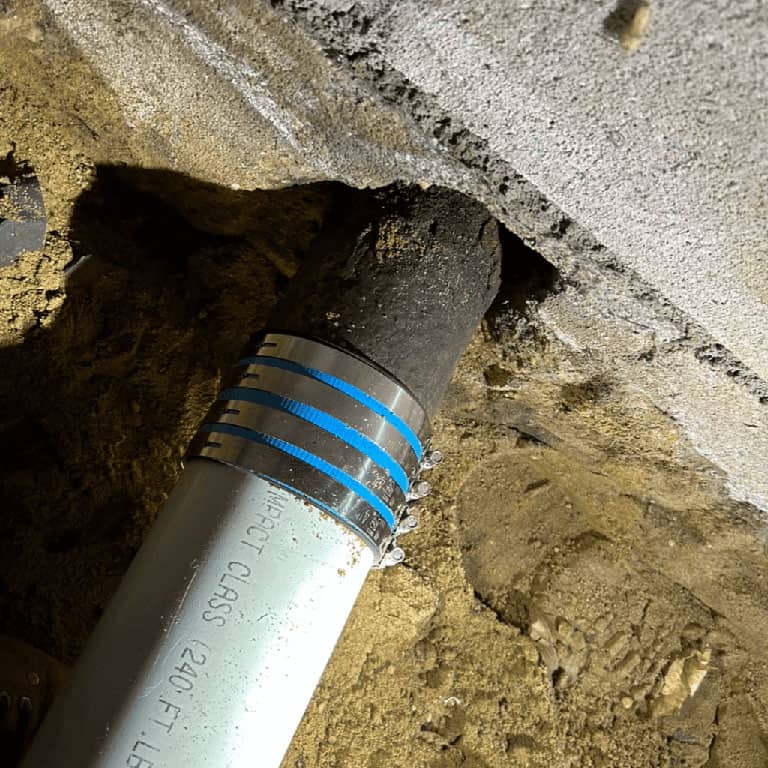
A repair makes sense when the damage is localized. Maybe tree roots cracked a section of pipe, or one joint separated. You’re replacing 10 to 15 feet of line, not the whole thing. In Monmouth County, that typically runs $1,500 to $5,000 depending on depth and access.
Replacement becomes the smarter move when your pipes are old, failing in multiple spots, or made from materials that are past their useful life. Homes built before 1980 often have clay tile or cast iron pipes. These were solid when installed, but decades of freeze-thaw cycles, root pressure, and ground shifts take their toll. If we find three separate problem areas during a camera inspection, patching one won’t solve the issue. You’ll just be back in the same mess six months later.
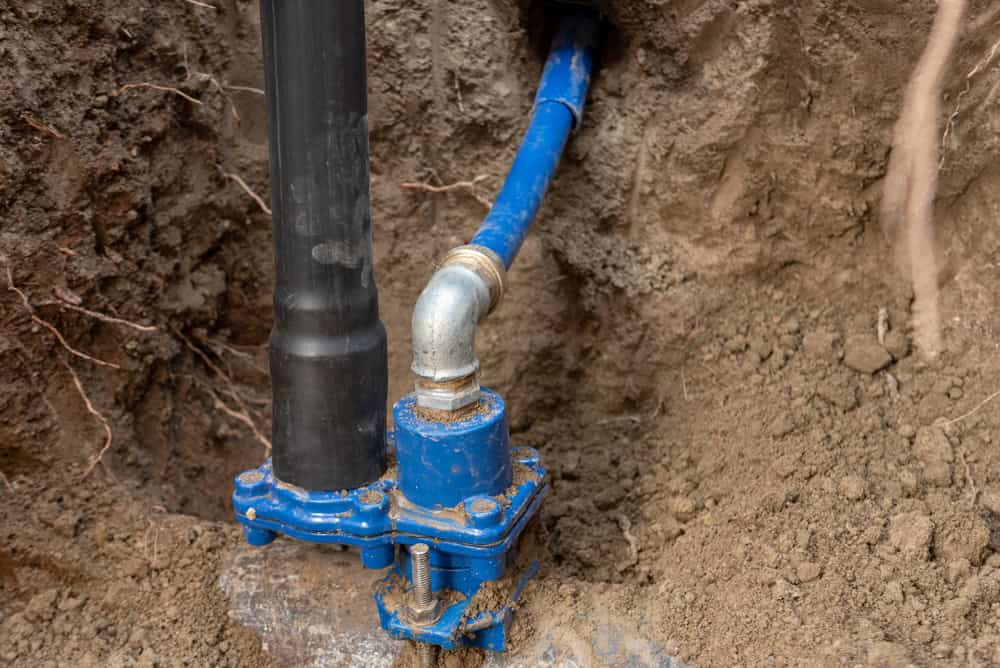
Let’s talk real numbers for Monmouth County. A full main sewer line replacement typically costs between $8,000 and $15,000 for a standard residential property. That’s not a scare tactic—it’s what the work actually involves.
You’re paying for excavation or trenchless equipment, 40 to 60 feet of new pipe, labor, permits, and often some level of property restoration. New Jersey’s labor rates run higher than national averages, and Monmouth County properties often have deeper lines than newer developments. Depth matters because anything over five feet requires protective systems for worker safety, which adds time and cost.
The material you choose also shifts the price. PVC is the most common and cost-effective option, running about $80 to $400 per 50 feet of pipe. Cast iron costs more—$1,200 to $3,700 for the same length—but it’s incredibly durable. We’ll explain the trade-offs based on your property’s specific conditions.
Here’s where it gets tricky. If your sewer line runs under your driveway, you’re not just paying for pipe work. You’re also paying to cut through concrete, replace it, and make sure it’s done to code. Same goes for landscaping. Mature trees, patios, and garden beds all add to the final bill. Traditional excavation can mean $3,000 to $8,000 in restoration costs on top of the pipe work itself.
That’s why many Monmouth County homeowners are turning to trenchless options. You avoid tearing up your yard, but the equipment and expertise cost more upfront. It’s a trade-off worth understanding before you commit to either route.
Trenchless sewer pipe relining has become the go-to solution for homeowners who want to avoid the mess of traditional excavation. It’s not always the right call, but when it works, it saves your property from looking like a construction zone.
The process involves inserting a flexible, resin-coated liner into your existing pipe. Once it’s in place, the liner is inflated and cured—usually with heat or UV light—creating a new pipe inside the old one. The result is a seamless, durable line that can last 50 years or more. No digging. No destroyed landscaping. No weeks of disruption.
In Monmouth County, sewer pipe relining typically costs $80 to $250 per linear foot, with most residential jobs averaging around $160 per foot. For a standard 40-foot run, you’re looking at $6,400 on average. That might sound steep compared to traditional methods, but here’s the catch: traditional excavation might cost $50 to $100 per foot for the pipe work alone, but then you’re adding back the cost of ripping up and replacing your driveway, re-sodding your lawn, or replanting landscaping. Those restoration costs can easily hit $5,000 to $10,000.
Relining works best when your pipes are structurally sound enough to support the liner. If you’ve got a completely collapsed section or severe misalignment, relining won’t fix it. That’s where a camera inspection becomes critical—it shows whether your pipes are candidates for this method or if you need a full replacement.
One thing to know: relining slightly reduces the interior diameter of your pipe. For most residential applications, this isn’t an issue. But if you’re already dealing with flow problems or undersized pipes, we’ll flag that before moving forward.
The other advantage is time. Most trenchless relining projects wrap up in one to two days. Traditional excavation can stretch to a week or more, especially if you’re dealing with permits, utility line coordination, or unexpected underground obstacles. For busy families, that time savings alone can tip the scale.
Before you spend thousands on sewer work, you need to know exactly what’s wrong. That’s where a sewer camera inspection comes in. It’s not a luxury—it’s the difference between guessing and knowing.
A camera inspection involves feeding a small, waterproof camera through your sewer line. The camera sends real-time video to a monitor, showing cracks, blockages, root intrusions, and the overall condition of your pipes. In Monmouth County, this service typically costs $250 to $500 if you have an accessible cleanout. Without one, we may need to remove a toilet or create access, which can push the cost to $500 to $750.
That might feel like an extra expense when you’re already facing a repair bill. But here’s why it’s worth it: without a camera, we’re making educated guesses. We might recommend a full replacement when a targeted repair would do the job. Or worse, we might patch a problem area without realizing there are three more failing sections just down the line. Either way, you’re spending money without the full picture.
A camera inspection doesn’t just show you where the problem is. It shows you why it’s happening and how bad it’s gotten. That level of detail changes the conversation entirely.
For example, if the camera reveals a single crack caused by a tree root, you’re looking at a spot repair. But if it shows multiple separations, sagging sections, or widespread corrosion, replacement becomes the smarter long-term move. The camera also identifies the pipe material—critical information if you’re dealing with outdated Orangeburg pipe or deteriorating clay tile, both common in older Monmouth County homes.
The inspection also pinpoints the exact location and depth of the problem. That matters because depth drives labor costs. A pipe that’s three feet down is far easier to access than one that’s eight feet underground. Knowing the depth ahead of time means your estimate is accurate, not a ballpark guess that changes once the work starts.
Many Monmouth County properties built before 1980 have clay tile sewer lines. These pipes were installed in short sections with multiple joints, and over time, those joints separate or allow root intrusion. A camera inspection shows exactly how many joints are compromised, which helps you decide whether spot repairs will hold or if you’re just delaying the inevitable.
Another benefit: proof. If you’re dealing with an insurance claim or need documentation for a real estate transaction, the video from a camera inspection provides clear evidence of the problem. We can even provide you with a copy of the footage for your records.
The bottom line is this: a $300 inspection can save you from a $5,000 mistake. It takes the guesswork out of the equation and gives you the information you need to make a confident decision.
Sewer line work is expensive. There’s no getting around that. But the cost doesn’t have to empty your savings account or force you to put off necessary repairs until the problem gets worse.
Financing options have become standard in the plumbing industry, and for good reason. A $6,000 sewer line replacement is a lot easier to manage when it’s broken into $150 monthly payments over three years. We offer 0% financing for the first 12 to 24 months through third-party lenders. That means no interest accrues during the promotional period, making it a genuinely interest-free loan if you pay it off in time.
Even if you don’t qualify for 0% financing, standard payment plans typically offer rates far lower than credit cards. You’re looking at fixed monthly payments with clear terms, not revolving debt that compounds over time. The application process is usually quick—often just a few minutes on your phone—and approvals come back fast, sometimes within the hour.
Here’s why financing makes sense for sewer work specifically: these aren’t optional repairs. If your sewer line is failing, waiting doesn’t make it cheaper. It makes it worse. A small crack today can become a collapsed pipe next month, turning a $3,000 repair into a $10,000 emergency. Financing lets you address the problem now, when it’s still manageable, instead of gambling on whether your pipes will hold out until you’ve saved enough cash.
Another factor to consider: sewer line replacements add value to your property. You’re not financing a vacation or a new TV. You’re investing in critical infrastructure that protects your home from water damage, foundation issues, and health hazards. When you sell, a new sewer line is a selling point, not a liability.
For homeowners on fixed incomes or tight budgets, financing can be the difference between getting the work done right and settling for a temporary patch that doesn’t solve the underlying issue. It’s also a way to avoid draining your emergency fund entirely, leaving you with a cushion for other unexpected expenses.
If you’re considering financing, ask about the terms upfront. Know what the interest rate will be after the promotional period, whether there are prepayment penalties, and what the total cost of the loan will be if you take the full term to pay it off. Transparency matters, and we’ll walk you through the details without pressure.
Sewer line repairs aren’t fun to think about, and they’re definitely not fun to pay for. But understanding your options—and what drives the costs—puts you in control of the decision instead of feeling blindsided by it.
Whether you’re dealing with a minor clog, a cracked pipe, or a full system failure, the smartest first step is a camera inspection. It gives you the facts. From there, you can weigh a spot repair against a full replacement, compare traditional excavation with trenchless methods, and figure out what makes sense for your budget and your property.
If the numbers feel overwhelming, financing can make even major sewer work manageable. You’re not putting off a problem that’s only going to get worse. You’re addressing it now, with a plan that fits your financial situation. We offer transparent pricing, multiple repair options, and financing solutions designed to make the process as straightforward as possible for Monmouth County homeowners dealing with sewer line issues.
Article details:
Share:
Continue learning: