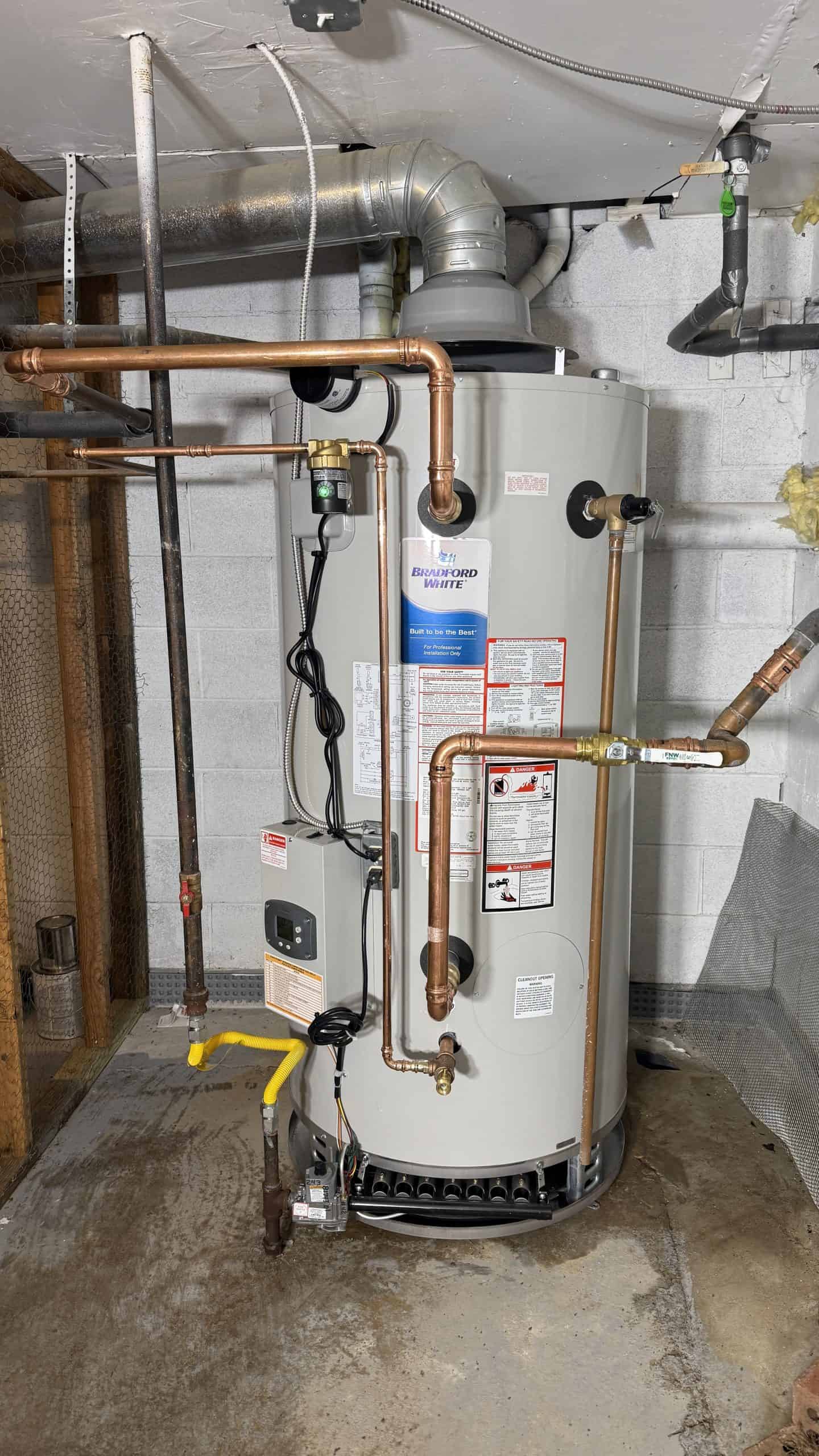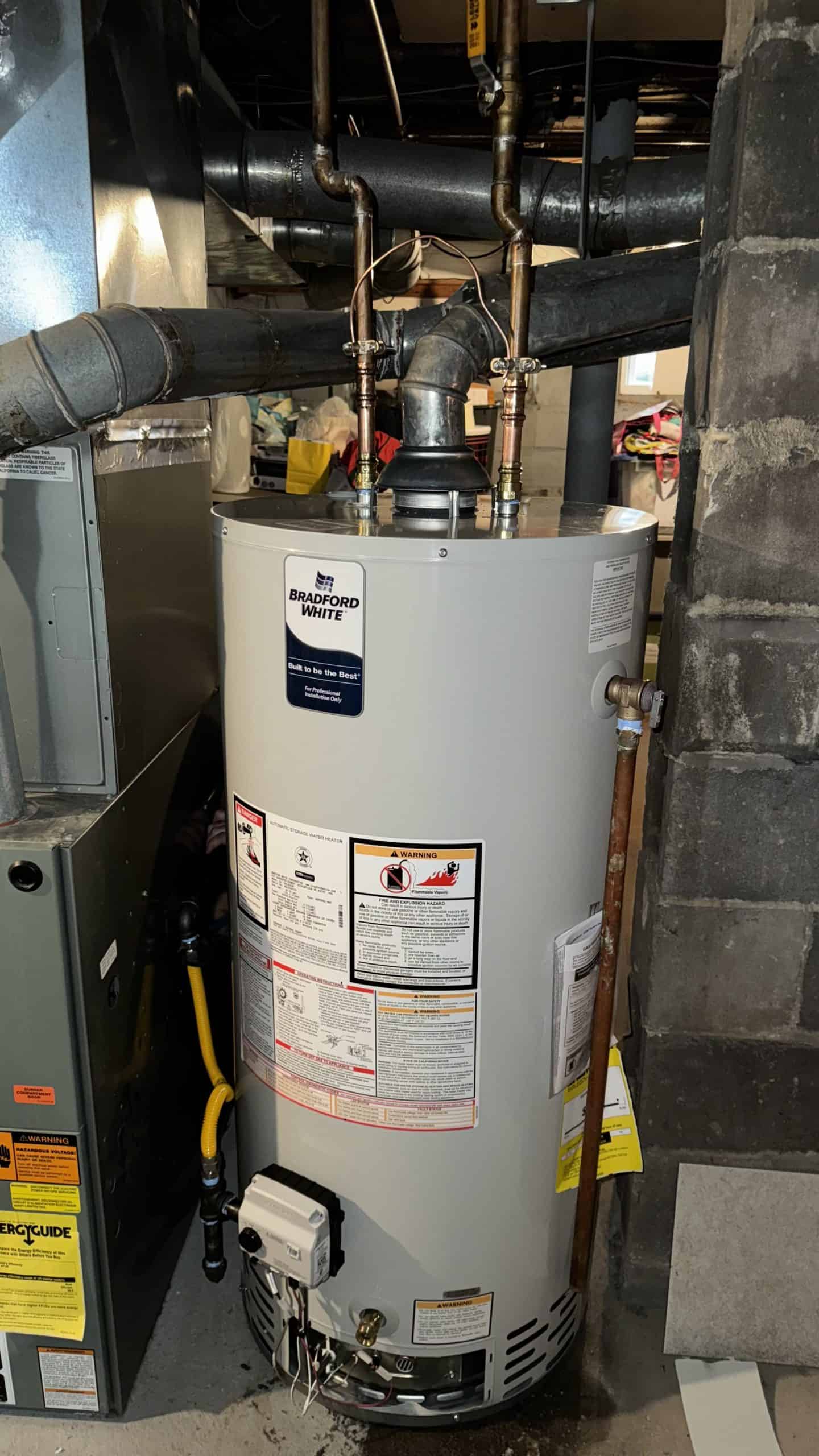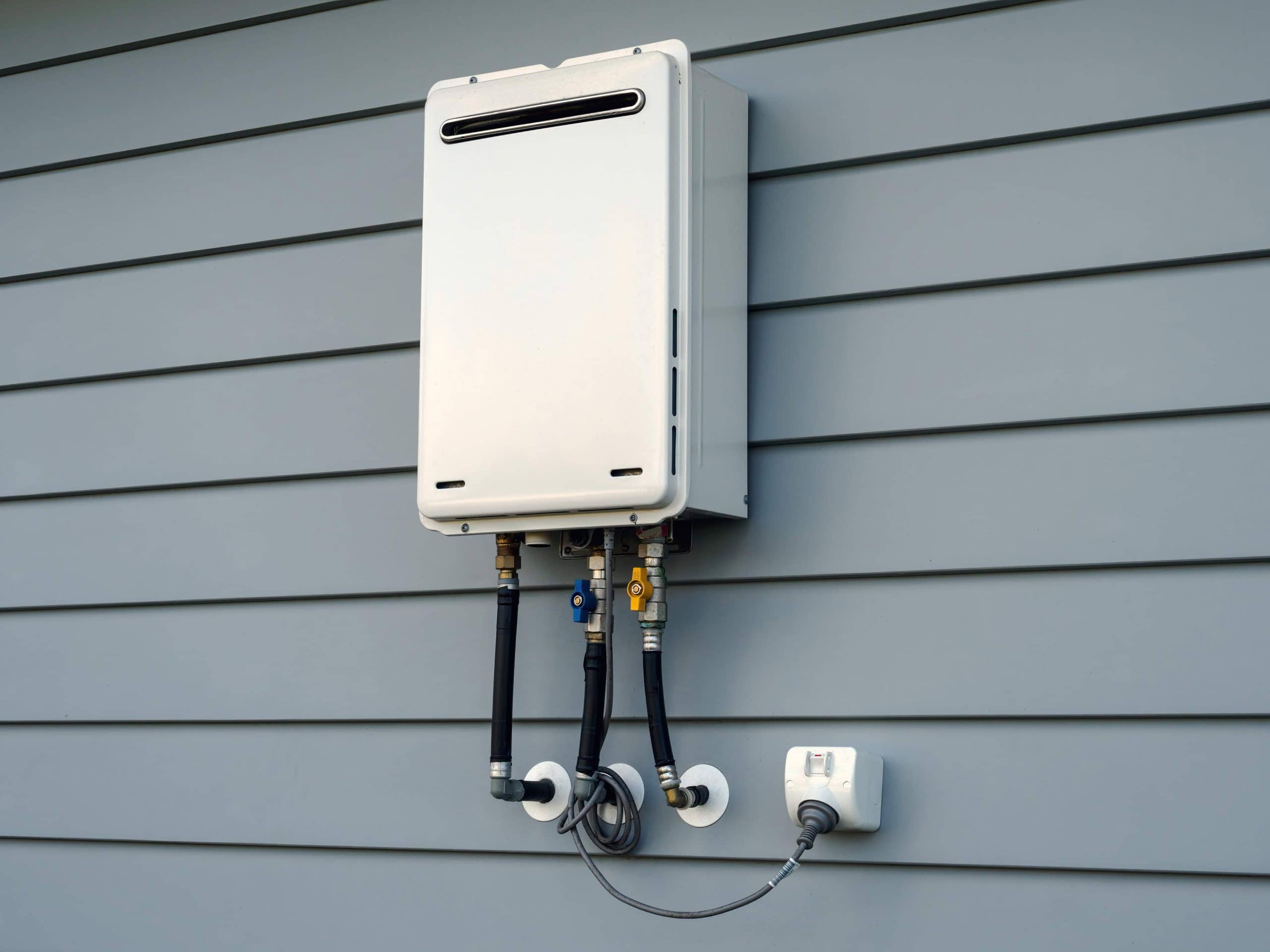
When your gas water heater fails, you need fast answers and safe solutions. This guide covers common problems, safety protocols, and how to decide between repair and replacement.
Share:
Summary:
Cold water hits you mid-shower. Your morning routine just got complicated, and now you’re standing there wondering what went wrong with your gas water heater.
When you have no hot water in your house, you’re not just dealing with inconvenience. Gas water heaters involve natural gas, combustion, and high-pressure water—three elements that require proper expertise to handle safely. One wrong move during diagnosis or gas water heater repair can create hazards that outlast the fix itself.
That’s why the safety-first approach matters more than speed. Let’s walk through what’s actually happening when your system fails and how to handle it correctly.
You turn on the tap expecting hot water. Nothing but cold comes out. This is the most common reason homeowners in Monmouth County, NJ search for gas water heater repair, and it’s usually one of several fixable problems.
The first thing to check is your pilot light. If it’s out, your burner can’t ignite to heat the water. Sometimes a draft or thermocouple failure causes this. Other times, you’re dealing with a gas supply interruption even when the pilot light looks fine.
Before you start troubleshooting, understand this: gas water heaters produce carbon monoxide during normal operation. When something’s wrong with combustion or venting, that colorless, odorless gas can enter your home instead of exhausting safely outside. That’s why we take safety protocols seriously—because the stakes go beyond cold showers.
Maybe you have hot water, but it doesn’t last. The shower starts warm, then turns lukewarm halfway through. Or your dishwasher runs cold even though you just had hot water at the sink minutes ago.
This pattern usually points to one of three issues. Your thermostat might be set too low or malfunctioning completely. Sediment buildup at the bottom of your tank creates a barrier between the burner and the water, reducing heating efficiency dramatically. Or your dip tube—the pipe that sends cold water to the bottom of the tank—has deteriorated, allowing cold water to mix with hot at the top where you draw from.
Sediment is particularly common in Monmouth County homes with hard water. Over time, minerals settle and harden at the tank bottom. You’ll hear popping or rumbling sounds as water tries to heat through this layer. Left unchecked, sediment reduces your tank’s capacity and makes your water heater work harder for less output.
The thermostat issue is simpler but just as disruptive. Water heaters should be set between 120 and 140 degrees Fahrenheit. Below that range, you won’t have enough hot water for household needs. Above it, you risk scalding and create conditions where bacteria can’t survive but energy costs spike unnecessarily.
If you’re constantly adjusting the temperature or finding it drifts from your settings, the thermostat itself has likely failed. This is a relatively affordable repair when caught early. Wait too long, and the strain on other components can turn a simple fix into a more expensive problem that requires full replacement.
Gas supply problems are trickier to diagnose. Your pilot light might be working perfectly, but if the main burner isn’t getting adequate gas flow, it can’t maintain temperature under demand. Check that your gas valve is fully open—not just cracked. Look for any kinks or damage to the gas supply line. If everything appears normal but you still lack consistent hot water, you’re likely dealing with a gas control valve issue that requires professional diagnosis and repair.
Here’s what most homeowners don’t realize until it’s too late: the biggest risk with gas water heater problems isn’t the inconvenience of cold water. It’s what happens when someone tries to fix it without understanding the safety protocols that protect your family.
If you smell gas—that distinctive rotten egg odor—stop everything immediately. Don’t flip light switches. Don’t use your phone inside the house. Don’t try to locate the leak yourself. Turn off the gas valve if you can reach it safely without creating a spark, open windows and doors, evacuate everyone including pets, and call your gas company and fire department from outside or a neighbor’s house.
Even a small gas leak can lead to explosion or fire. Natural gas is lighter than air and disperses relatively quickly with ventilation, but propane is heavier and collects in low areas like basements where it can reach dangerous concentrations. Both are extremely flammable when mixed with air in the right proportions.
Carbon monoxide is the silent threat that kills two hundred people every year. You can’t see it or smell it. Your water heater produces it during normal operation, but proper venting carries it safely outside through your chimney or vent pipe. When venting fails—due to blockages, improper installation, or deterioration—carbon monoxide accumulates inside your home instead. Early symptoms feel like flu: headaches, dizziness, nausea, confusion. Prolonged exposure causes serious health problems or death.
This is exactly why New Jersey requires permits and inspections for gas water heater work. It’s not bureaucracy for its own sake. It’s verification that your installation meets codes designed to prevent these exact scenarios. The permit process ensures proper venting, adequate combustion air, correct gas line sizing, and functional safety devices like the temperature and pressure relief valve that prevents your tank from becoming a pressure bomb.
We handle this automatically. We pull permits before starting work, schedule inspections with your local building department, and guarantee our work meets code requirements. When you hire someone who suggests skipping the permit to save money or time, you’re accepting risk that no amount of savings justifies. You’re also potentially voiding your homeowner’s insurance if something goes wrong.
The temperature and pressure relief valve deserves special attention during any gas water heater repair or replacement. This safety device prevents your water heater from exploding. If temperature or pressure inside the tank gets too high, the valve opens and releases water before catastrophic failure occurs. These valves should be tested annually and replaced every three years, even if they appear fine from outside. Corrosion and mineral deposits can prevent them from functioning when you need them most, and that’s when disaster strikes.
You’ve diagnosed the problem or called us to diagnose it for you. Now you’re facing the question that determines whether you spend a few hundred dollars or a few thousand: should you repair this gas water heater or replace it entirely?
The answer depends on three factors: your water heater’s age, the cost of the specific repair, and how many times you’ve needed service recently. There’s a simple rule that helps cut through the confusion: if the repair costs 50% or more of what a new water heater would cost installed, replacement makes better financial sense every time.
Most gas water heaters last eight to twelve years with proper maintenance. If yours is approaching or past that range and needs a major repair, you’re likely throwing money at a unit that will fail again soon. Better to invest in a new system with a fresh warranty, improved efficiency, and years of reliable service ahead.
Some gas water heater repairs are straightforward and cost-effective, especially when your unit is relatively young and the tank itself is sound.
Thermocouple replacement is one of the most common repairs for gas water heaters in Monmouth County, NJ. This safety device senses whether the pilot light is lit. When it fails, it shuts off gas flow even though nothing else is wrong with your system. The part itself costs under $20, and labor to install it runs $150 to $300 depending on your location. For a water heater that’s only a few years old, this repair buys you years of additional service for minimal investment.
Pilot light and gas control valve issues also fall into the repairable category. Sometimes the pilot assembly just needs cleaning to function properly again. Other times, the thermocouple we mentioned needs adjustment or replacement. If the gas control valve itself has failed, that’s a pricier repair—usually $300 to $500 installed—but still reasonable for a newer unit that has plenty of life left otherwise.
Thermostat problems are similarly fixable without breaking the bank. Replacing a faulty thermostat costs $150 to $400 depending on the model and local labor rates. If your water heater is under seven years old and this is the only issue you’re experiencing, the repair makes clear financial sense compared to replacement.
Sediment flushing isn’t technically a repair, but it solves many problems that feel like failures. If your water heater is making rumbling or popping noises, taking longer to heat water, or running out of hot water faster than it used to, sediment buildup is likely the culprit. Professional flushing costs $100 to $200 and can restore performance dramatically. This should be part of annual maintenance, but most homeowners skip it until problems appear and force the issue.
Minor leaks from fittings, connections, or the drain valve can often be repaired without replacing the entire unit. Tightening connections or replacing a valve costs far less than a new water heater. However—and this is critical—if water is leaking from the tank itself, you need replacement immediately. Tank leaks mean the metal has corroded through, and there’s no repair that makes that safe or reliable long-term.
Certain situations make replacement the clear winner, even when gas water heater repair is technically possible.
Age is the first factor we consider. If your gas water heater is ten years old or older and needs any significant repair, replacement protects you from the cycle of repeated breakdowns that drain your wallet. That first repair might work fine, but you’re likely facing another failure within months. The money you spend fixing an old unit delays the inevitable while you continue operating an inefficient appliance that costs more to run every single month.
Frequent repairs tell you the same story. If you’ve called for service two or three times in the past year, your water heater is failing systemically. Individual components might be fixable, but the underlying issue is age and wear throughout the entire system. Continuing to repair becomes more expensive than replacement when you add up the service calls, parts, and lost time dealing with recurring problems.
Tank leaks require immediate replacement. Period. When you see water pooling around the base of your water heater, the tank has corroded through. This isn’t repairable under any circumstances. The tank is under pressure, and a leak means the metal has failed structurally. Continuing to operate a leaking tank risks significant water damage to your Monmouth County, NJ home and complete tank failure that floods your basement or utility room with dozens of gallons of water.
Rusty water from your hot taps suggests internal tank corrosion that’s advanced. The anode rod inside your water heater is designed to corrode instead of the tank itself, protecting the metal from rust. When that rod is completely consumed and hasn’t been replaced during regular maintenance, corrosion attacks the tank directly. By the time you see rusty water coming from your faucets, the damage is usually advanced enough that replacement makes more sense than trying to salvage the unit.
Energy efficiency matters more than most people realize when comparing repair versus replacement costs. Units over ten years old operate 20 to 30 percent less efficiently than new models built to current energy standards. That efficiency loss happens gradually as components wear and sediment accumulates inside the tank. You’re paying more each month for the same amount of hot water your family uses. Modern water heaters use less energy while delivering better performance, and the monthly savings add up significantly over the unit’s lifespan.
Cost comparison makes the decision clear when you run the numbers. In Monmouth County, NJ, gas water heater repairs typically run $150 to $500 depending on the problem. Full replacement with professional installation costs $1,200 to $4,500 based on the unit type and any necessary upgrades to bring your installation up to current code. If you’re facing a $400 repair on an eight-year-old water heater that cost $1,200 installed, you’re spending 33 percent of replacement cost on a unit that’s two-thirds through its expected lifespan. That repair might buy you two more years, or it might buy you six months before the next component fails and you’re back to square one.
New Jersey’s permit requirements add another consideration to the repair versus replacement decision. Any water heater replacement requires a permit and inspection in Monmouth County, NJ. The permit costs $80 to $100 in most municipalities. We include this in our quotes and handle all the paperwork with your local building department. When you’re already facing permit costs for a major repair that involves gas lines or venting changes, the gap between repair and replacement narrows significantly.
Gas water heater problems don’t wait for convenient timing. When you’re dealing with no hot water or safety concerns, you need service that responds quickly and handles the work correctly the first time.
Our safety-first approach means proper diagnosis before jumping to solutions. It means pulling permits even when it adds time to the process. It means honest guidance about whether repair or replacement serves you better financially, not which option generates more revenue.
Our professional service includes handling all permit requirements, scheduling inspections with your local building department, and guaranteeing code-compliant work that protects your family. In Monmouth County, NJ, that matters because local building departments enforce strict standards designed to keep your family safe from gas leaks and carbon monoxide exposure.
When your gas water heater fails or shows warning signs, you deserve transparent pricing, licensed expertise, and work that protects your home for years to come. That’s what separates proper service from shortcuts that create bigger problems down the road. We provide exactly that kind of professional care to homeowners throughout Monmouth and Ocean County.
Article details:
Share:
Continue learning: