Electric water heater acting up? Before you panic, there are a few quick checks that might restore your hot water—and clear signs it's time for professional help.
Share:
Summary:
Cold water when you’re expecting hot isn’t just inconvenient—it throws off your entire day. If your electric water heater stopped working, you’re probably wondering whether it’s something you can fix yourself or if you need to call someone right away.
The good news is that some electric water heater issues have simple solutions you can try in minutes. Others need professional attention to avoid safety risks or making things worse. This guide breaks down the most common causes, what you can safely check yourself, and the clear signs that it’s time to bring in licensed help. Let’s start with the basics.
Most electric water heater failures come down to a handful of culprits. Understanding what typically goes wrong helps you troubleshoot smarter and faster.
The most frequent issue? A tripped circuit breaker. Electric water heaters pull serious power—usually 240 volts—and when something overloads the system, your breaker shuts everything down as a safety measure. Next on the list is the high-temperature limit switch, a red reset button that trips when your tank overheats. Both of these are relatively easy checks.
Beyond that, you’re looking at failed heating elements or faulty thermostats. Electric water heaters typically have two heating elements—one at the top, one at the bottom. When either fails, you’ll notice. A bad upper element means no hot water at all. A failed lower element means you get hot water, but it runs out fast.
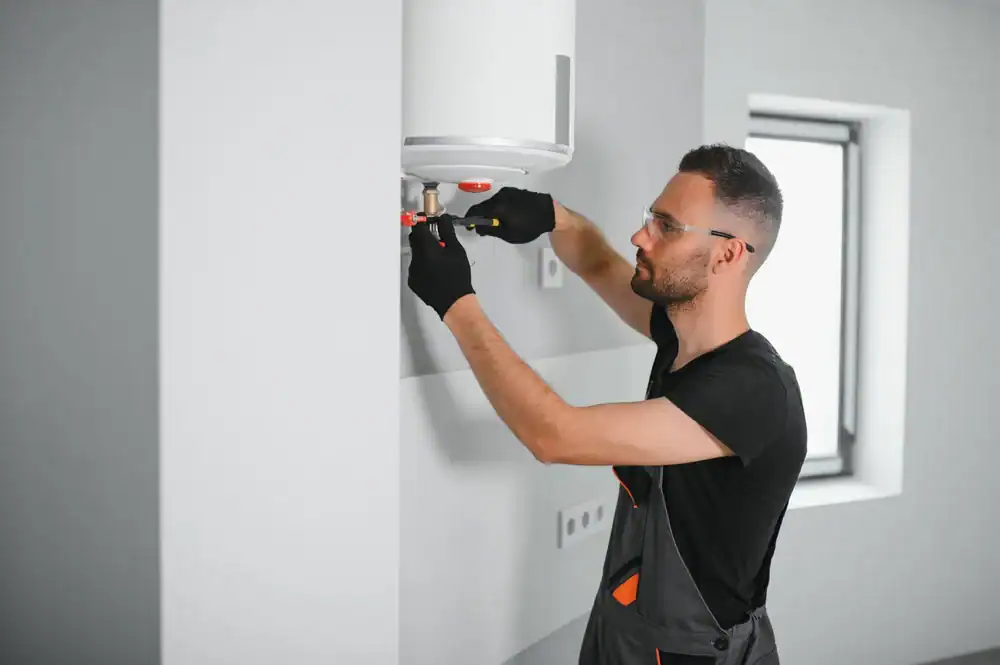
When you have zero hot water, start with the simplest explanation before you assume the worst. Walk over to your electrical panel and look for a tripped breaker. It’ll be in a middle position or flipped to “off” rather than sitting flush with the others.
If you find a tripped breaker, flip it all the way off, then back on. Wait about an hour—yes, a full hour—for the water to heat back up. If hot water returns, you solved it. If the breaker trips again immediately, stop. That’s a sign of a short circuit or grounded heating element. Continuing to reset it creates a fire hazard.
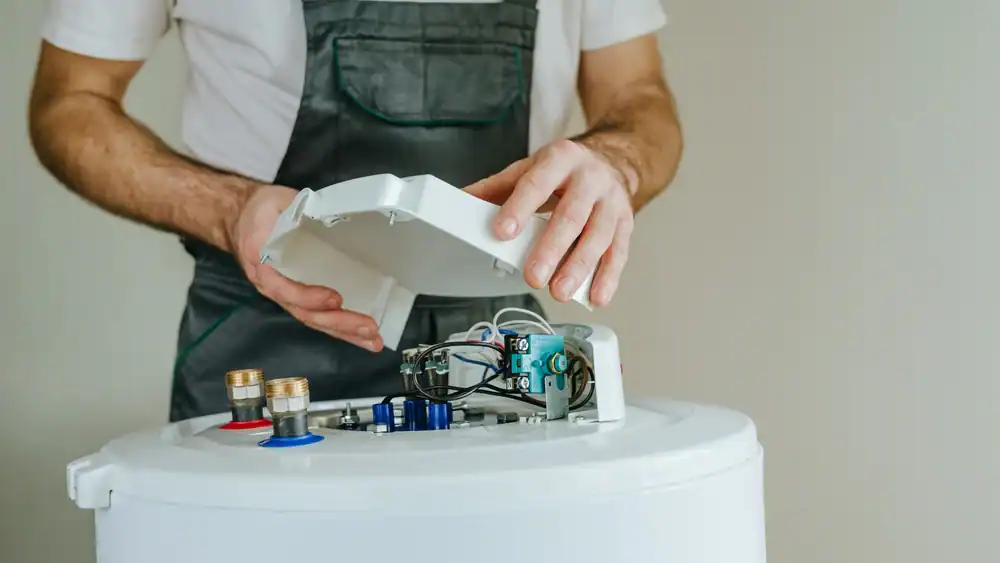
Next, check the reset button on your water heater itself. You’ll need to remove the upper access panel on the front of your tank—usually held on by a couple of screws. Behind it, you’ll find insulation and a small red button near the upper thermostat. Popped out? Press it firmly until you hear a click. Replace the panel, restore power, and wait an hour.
If the reset button trips repeatedly, something’s causing your water to overheat. Could be a faulty thermostat. Could be a shorted heating element. Either way, it’s not a DIY fix. Repeated overheating isn’t just an inconvenience—it’s a safety issue that needs professional diagnosis.
Here’s what you need to know about Monmouth County specifically: the coastal air here accelerates corrosion on water heater components. Saltwater humidity eats away at heating elements, connections, and even the tank itself faster than you’d see inland. If your unit is more than seven years old and you’re having repeated issues, corrosion might be the underlying cause. We understand these coastal challenges and can spot corrosion problems faster and recommend solutions that last.
If you’re in an apartment with no hot water, your troubleshooting path depends on your setup. Some apartments have individual water heaters in a closet or utility space. Others share a central system with the whole building.
Start by checking with neighbors. If they have hot water and you don’t, the problem is isolated to your unit. If everyone’s affected, it’s a building-wide issue and your landlord or property manager needs to handle it. Don’t wait—in most states, hot water is considered essential for habitability. Landlords are legally required to restore it within a reasonable timeframe, typically 24 to 48 hours.
For individual apartment water heaters, the troubleshooting steps are the same as any electric unit. Check your apartment’s circuit breaker first. If your unit has its own breaker box, look for a tripped switch. Shared main panel? You may need to contact building maintenance.
One apartment-specific issue to watch for: individual shutoff valves. Sometimes during maintenance or repairs, a valve gets partially closed and forgotten. Check under sinks and near your water heater for any valves that should be fully open. A partially closed valve restricts flow and can make it seem like your heater isn’t working when the real problem is just restricted water supply.
If you have access to your water heater and the landlord gives you permission, you can try pressing the reset button as described earlier. But never attempt electrical repairs on a unit you don’t own without explicit permission. If something goes wrong, you could be liable for damages. When in doubt, report the issue to management and let them bring in their maintenance team or contractor.
There’s a clear line between safe DIY troubleshooting and situations that require professional help. Knowing where that line sits keeps you safe and prevents you from turning a fixable problem into an expensive disaster.
If you’ve checked the breaker and reset button and still have no hot water, you’re done with DIY. At this point, the issue is likely a failed heating element, bad thermostat, or wiring problem. All of which require proper tools, testing equipment, and electrical knowledge to diagnose safely.
Here’s your safety cutoff: if it involves opening electrical components, testing voltage, or replacing parts, call a licensed plumber or electrician. Electric water heaters run on 240 volts. That’s more than enough to cause serious injury or death. There’s no room for guessing or learning as you go.
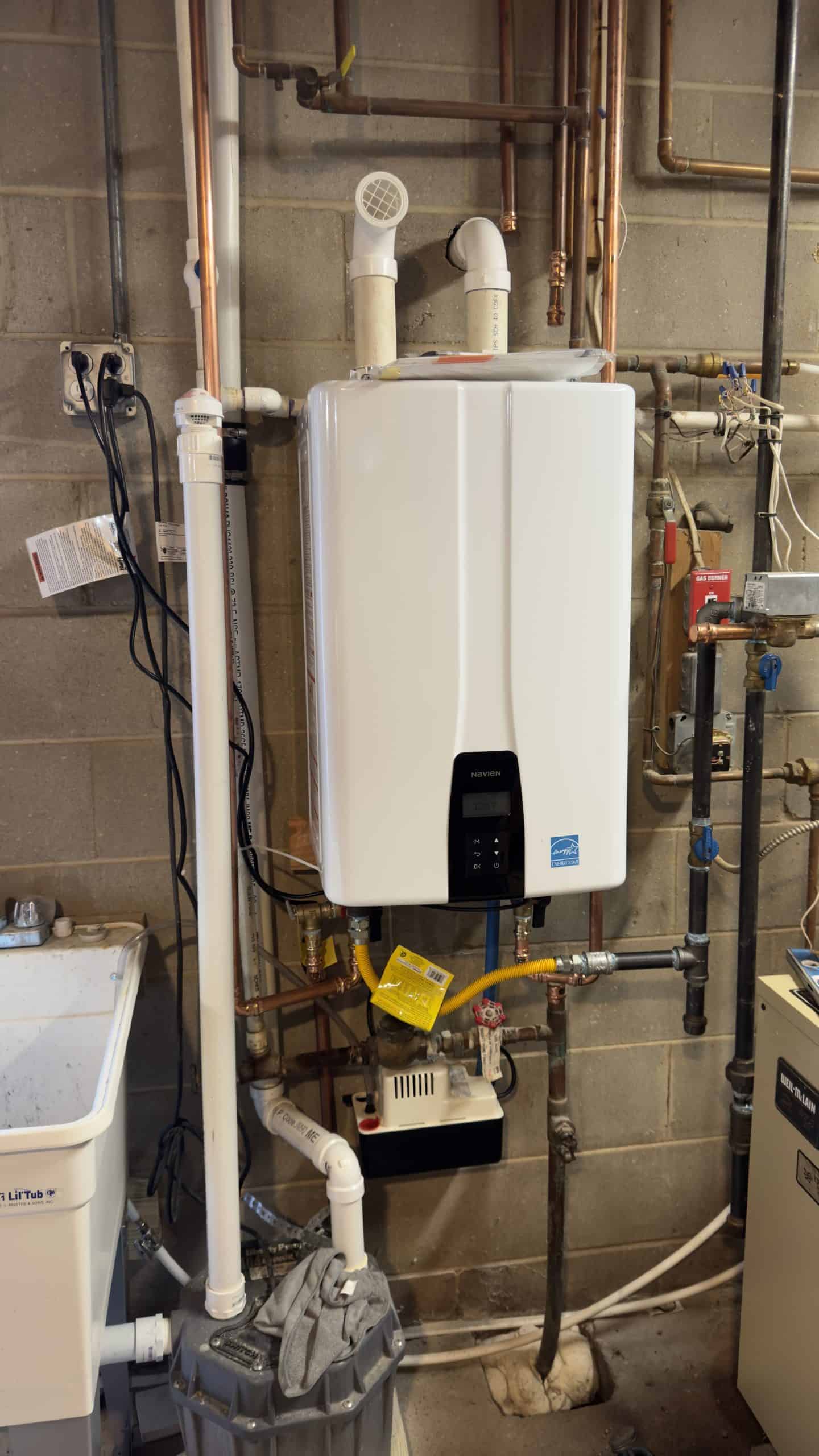
If you turn on the hot water tap and only get cold water—but your cold water works fine—that tells you something specific. The problem isn’t with your home’s water supply or pressure. It’s isolated to your hot water system.
This scenario points to one of a few issues. Your water heater might not be getting power at all. The heating elements could be burned out. Or the thermostats might have failed and aren’t telling the elements to heat.
Start with the power check. Make sure the circuit breaker is on and the reset button hasn’t tripped. If both check out and you still only get cold water, the heating elements are the next likely suspect. Most electric water heaters have two elements—upper and lower. When the upper element fails, you get no hot water at all because it’s responsible for heating the top portion of the tank first.
Testing heating elements requires a multimeter and working with live electricity. That’s where DIY stops and professional help begins. We can test continuity, check for grounded elements, and determine whether you need one element replaced, both replaced, or if the issue is actually with the thermostats.
Here’s something else to consider: sediment buildup. Over time, minerals from your water settle at the bottom of the tank. This sediment insulates the heating elements from the water, making them work harder and heat less effectively. If your water heater is several years old and has never been flushed, sediment could be reducing your hot water output even if the elements are technically still working.
Flushing a water heater isn’t complicated, but it does involve draining a large tank of hot water and working around electrical connections. Many homeowners prefer to have this done during routine maintenance visits. If you’re in Monmouth County, regular flushing is especially important. The hard water here accelerates mineral buildup faster than you’d see in other areas.
Some water heater problems can wait until regular business hours. Others need immediate attention. Knowing the difference helps you respond appropriately and avoid potential damage to your home.
Call for emergency service right away if you see water pooling around the base of your water heater. A leaking tank can cause significant water damage to floors, walls, and anything stored nearby. Even small leaks can indicate tank corrosion that’s about to get much worse. If you spot a leak, turn off the water supply to your heater and call for help.
Strange noises are another red flag. Loud popping, rumbling, or banging sounds usually mean sediment has hardened at the bottom of your tank. When water gets trapped beneath this sediment layer, it boils and creates those unsettling sounds. While not always an immediate emergency, these noises signal that your tank is working much harder than it should. It could fail soon.
If your circuit breaker trips repeatedly—not just once, but multiple times—stop resetting it and call a professional immediately. Repeated trips indicate a short circuit, grounded element, or other electrical fault that poses a fire hazard. Same goes if you smell anything burning or see any signs of scorched wiring near your water heater.
Here’s when you need help fast in Monmouth County, NJ: if you’re experiencing any of these issues and it’s affecting your daily routine, don’t wait. We offer 24/7 emergency service specifically because water heater failures don’t follow a schedule. You can reach us any time, day or night.
The benefit of calling a local, licensed professional isn’t just about fixing the immediate problem. It’s about getting a proper diagnosis that addresses the root cause. We’ll explain what failed, why it failed, and what you can do to prevent it from happening again. We’ll also give you upfront pricing before starting any work, so you’re never surprised by the bill. No hidden fees. No emergency surcharges that double your cost. Just honest pricing and quality work.
When your electric water heater stops working, you have a clear path forward. Check the circuit breaker. Press the reset button if it’s tripped. Wait an hour to see if hot water returns. If those simple steps don’t solve it—or if you see any signs of leaking, repeated tripping, or safety concerns—it’s time to call in professional help.
The key is knowing where DIY ends and professional service begins. You can safely check power and reset safety switches. But testing electrical components, replacing heating elements, and diagnosing complex failures requires licensed expertise and proper equipment.
If you’re in Monmouth County, NJ or Ocean County, NJ and need water heater repair, we bring the experience and transparency you’re looking for. Licensed professionals, upfront pricing with no hidden fees, 24/7 emergency availability, and the kind of local knowledge that understands how coastal conditions affect your equipment. Whether it’s a quick fix or a full replacement, you’ll know exactly what you’re getting before any work begins. Contact us to get your hot water flowing again.
Article details:
Share:
Continue learning: