
Reviews
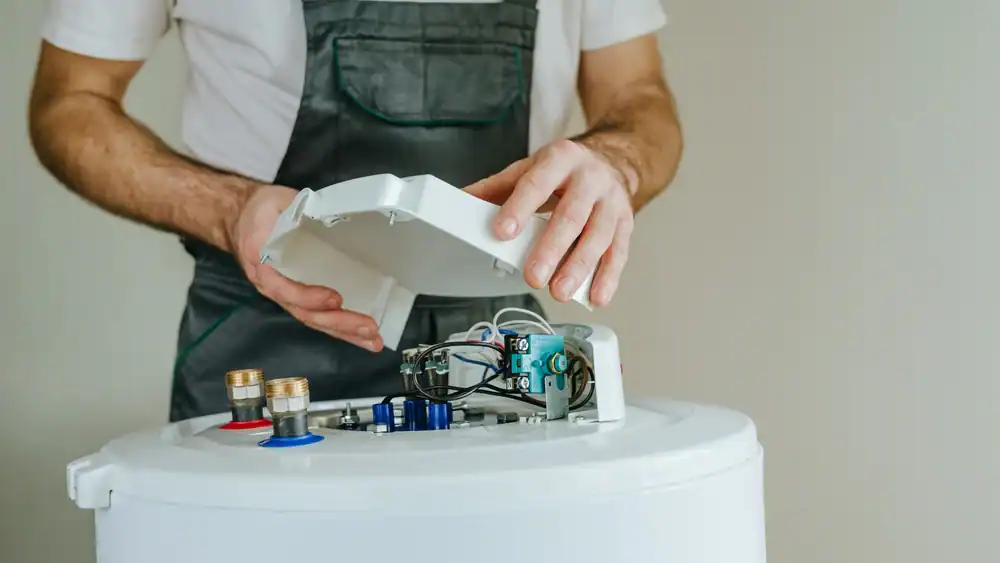
Most water heater failures don’t announce themselves. One morning there’s no hot water, and suddenly you’re dealing with a flooded utility room, a house full of guests, and a weekend that’s gone sideways. In Deal, that scenario hits differently — because the summers here aren’t casual. When your family arrives from Brooklyn for the season and six people need to shower before noon, a failing 40-gallon tank isn’t a minor inconvenience. It’s a real problem.
That’s what makes the right replacement matter so much. A properly sized system — whether that’s a new tank unit or a tankless upgrade — means you stop rationing hot water and start running your home the way it was meant to run. For the large, multi-bathroom homes along North Ocean Avenue and throughout Deal, tankless water heaters in particular are a natural fit. They don’t run out. They don’t take up the same footprint. And they last significantly longer than conventional tanks, which is worth considering when coastal salt air is already working against your equipment.
If your unit is more than ten years old and sitting in a home that sees hard seasonal use, the math usually favors replacement over repair. Getting ahead of it — before Memorial Day weekend — means you’re making a calm, informed decision instead of an emergency one.
We’re based in Manasquan — a short drive down the Shore from Deal — and have been serving Monmouth County homeowners since 2014. That proximity isn’t just a logistical detail. It means the technician showing up at your door knows Deal’s housing stock, understands the challenges that come with pre-war construction and coastal salt air, and isn’t learning on the job when they walk into a home with older venting and a gas line that hasn’t been touched in fifteen years.
With over 686 verified reviews across Google, Angi, and Nextdoor, the track record speaks for itself. Customers consistently mention the same things: fast response, honest pricing, and work done right without a follow-up call to fix what was missed. We’re fully licensed and insured in New Jersey, handle every required permit as part of the job, and offer 24/7 emergency availability for the moments when waiting until Monday simply isn’t an option.
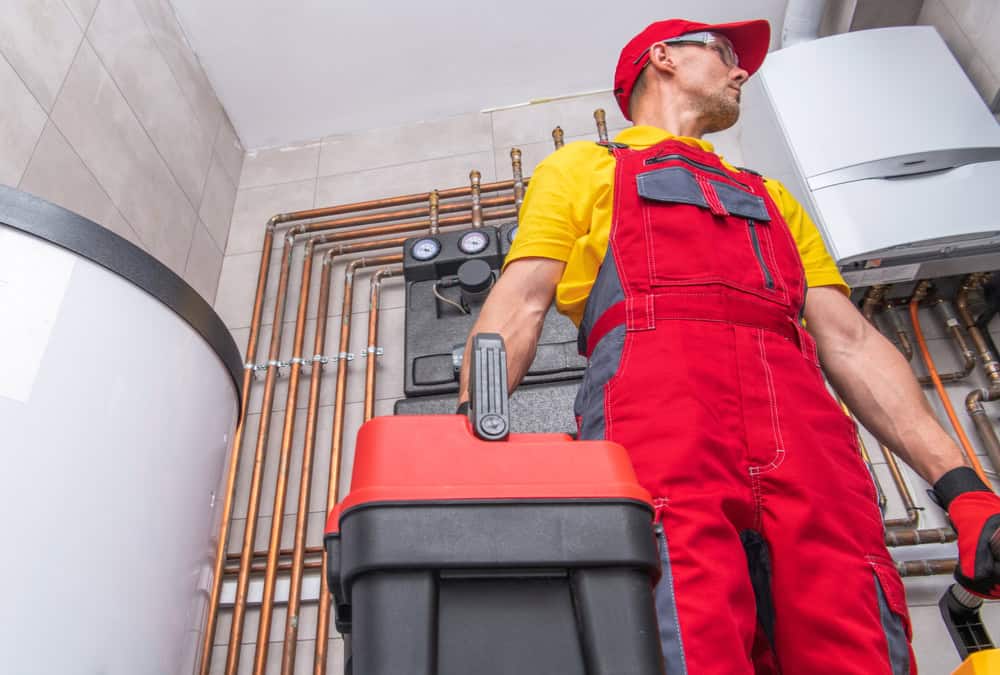
It starts with a call or a booking. We’ll ask a few straightforward questions — how old is the unit, what type of system you have, any visible signs of trouble — and get a technician scheduled, often the same day. If it’s an emergency, the line is answered around the clock.
When the technician arrives, the first step is a real assessment — not a sales pitch. They’ll look at your current unit, your home’s hot water demand, and whether any existing infrastructure needs attention before the new system goes in. In Deal homes, that often means checking the condition of gas lines in older properties, evaluating venting configurations, and factoring in whether the home has been sitting vacant through the winter. Sediment buildup in a tank that’s been on low-use for months is one of the more common things that accelerates failure in seasonal Shore properties, and it affects what the right replacement looks like.
Once the scope is confirmed, you’ll get a clear, upfront price before anything is touched. We pull all required New Jersey permits — gas or electric, depending on your system — and the installation is inspected and code-compliant when the job is done. No shortcuts, no paperwork left for you to figure out. You get hot water back, and you get it done right.

Ready to get started?
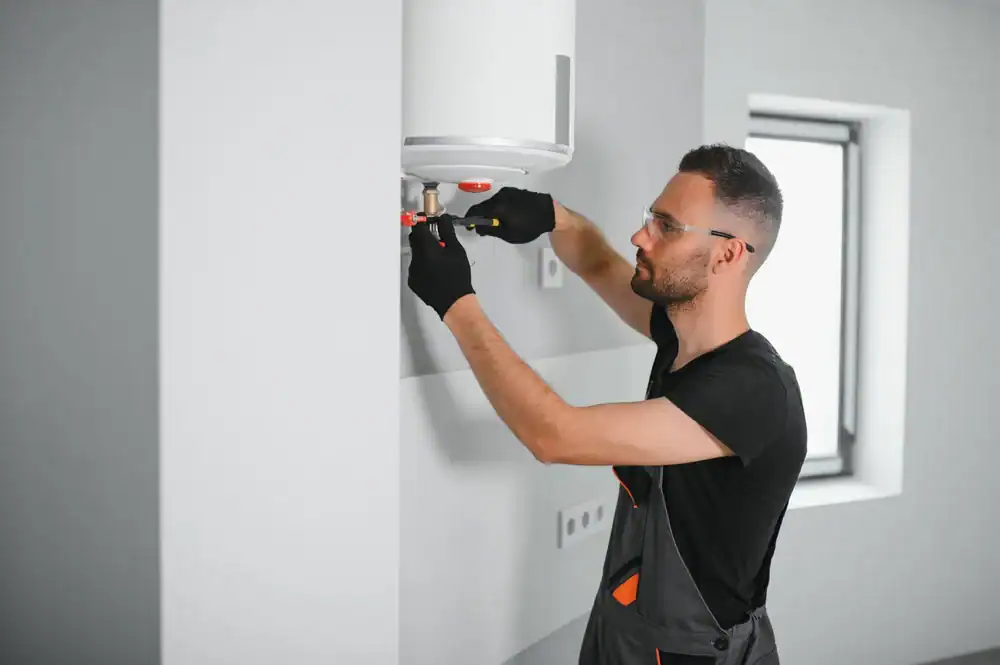
We install and replace all major types of residential water heaters — conventional tank units, tankless (on-demand) systems, and electric water heaters — for homes throughout Deal and the surrounding Monmouth County area. Whatever your current setup, the recommendation you get will be based on your home’s actual size, bathroom count, and how you use it — not on what’s easiest to install.
For the larger homes throughout Deal — many of them built in the early twentieth century with multiple bathrooms and high seasonal occupancy — tankless water heater upgrades are frequently the most practical long-term answer. You’re not storing 40 or 50 gallons and hoping it lasts through the morning rush. You’re heating water on demand, continuously, for as long as you need it. Tankless systems also carry a significantly longer lifespan than tank units, which matters in a coastal environment where salt air and humidity put extra wear on equipment over time.
Every installation includes permit management, proper disposal of the old unit, and a full walkthrough of the new system before we leave the job. Right now, we’re offering $100 off new water heater installations — and financing is available at 0% for those who want to spread the cost out. Military personnel and first responders receive an additional 10% off, every time, no expiration.
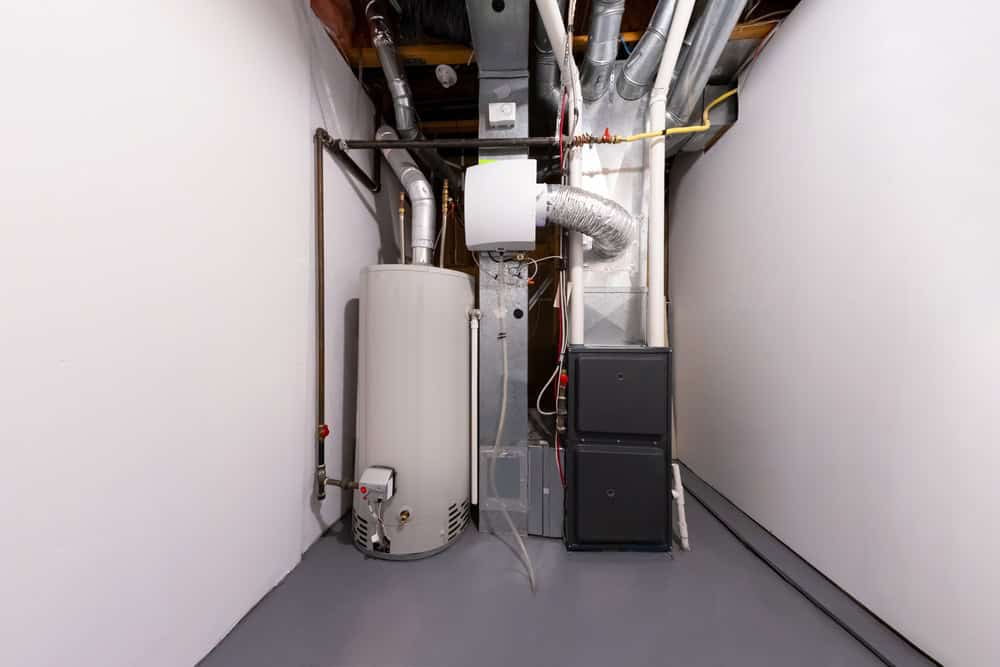
The honest answer is that it depends on the age of the unit and what’s actually wrong with it. If your water heater is under eight years old and the issue is something isolated — a faulty thermostat, a bad heating element, a failing pressure relief valve — repair usually makes sense. Those are fixable problems on a system that still has years of life left.
Once a unit hits the ten-year mark, the calculus shifts. At that age, one repair often leads to another, and you’re spending money to extend the life of a system that’s already near the end of its run. For homes in Deal specifically, that timeline can compress further. Coastal salt air accelerates corrosion on metal components, and a tank that’s been sitting on reduced load through a cold winter is more vulnerable than one in a year-round occupied home inland. If your unit is showing rust, making rumbling or popping sounds, or producing inconsistent hot water, those are signs that replacement is the more cost-effective move — even if a repair is technically possible.
Sizing a water heater correctly is one of the most commonly skipped steps in a replacement job, and it’s one of the most important ones. A standard 40-gallon tank might be fine for a two-person year-round home, but it’s undersized for a five-bedroom property in Deal that fills up with extended family every summer. The rule of thumb for tank units is roughly 10 to 15 gallons of capacity per person during peak use — so a household running eight to ten people on a busy weekend morning needs a system that can actually keep up.
For many of the larger homes in Deal, the more practical solution is a tankless water heater. Rather than storing a fixed volume of hot water, a tankless system heats water continuously on demand — which means it doesn’t run out regardless of how many people are in the house. We’ll assess your home’s specific demand before recommending a unit, factoring in bathroom count, typical occupancy, and whether the home is seasonal or year-round. Getting that sizing right upfront is what prevents the problem from coming back six months later.
Yes — in New Jersey, water heater replacement is a permitted job under the state’s Uniform Construction Code, and that applies whether you’re replacing a gas unit or an electric one. For a gas water heater, the permit process involves a Plumbing Subcode application and a Fire Subcode Technical form. For an electric replacement, it’s a Construction Permit Application and an Electrical Subcode Technical form. Either way, the installation needs to be inspected before it’s considered complete and code-compliant.
This matters more than it might seem. An unpermitted installation can create complications if you ever sell the property, void the manufacturer’s warranty, and create liability exposure in the event of a gas incident or water damage. We handle the entire permit process as part of every installation — you don’t have to file anything, schedule any inspections, or wonder whether the job was done to code. It’s included in the scope of work, and it’s handled correctly every time.
For most of the homes in Deal, yes — and the reasoning is straightforward. A conventional tank water heater that sits on minimal use through fall and winter accumulates sediment, experiences temperature stress, and often enters the summer season already weakened. When the house fills up in June and hot water demand spikes overnight, that’s exactly when a compromised tank tends to fail. A tankless system eliminates the storage tank entirely, which removes the risk of tank leaks and the sediment buildup that comes with low-use periods.
Beyond the seasonal reliability argument, tankless water heaters carry a life expectancy of 20 years or more — roughly double that of a conventional tank. In a coastal environment like Deal, where salt air and humidity accelerate wear on metal components, that durability gap is meaningful. The upfront cost is higher than a standard tank replacement, typically in the range of $1,400 to $5,600 installed depending on the system and any required modifications, but the long-term math tends to favor it for homes that see heavy seasonal use and have the infrastructure to support the upgrade.
For a straightforward swap — same fuel type, same location, no infrastructure changes needed — most water heater replacements take between two and four hours from start to finish. The technician removes the old unit, installs the new one, connects the supply lines and venting, and tests the system before leaving. You have hot water the same day in virtually every standard replacement scenario.
Where jobs take longer is when the existing setup needs attention before the new unit can go in. In older Deal homes — many of which were built in the early twentieth century — that might mean evaluating the condition of gas lines, modifying venting to meet current code, or addressing an electrical panel that needs upgrading to support a new system. We’ll identify any of those issues during the initial assessment and walk you through what’s involved before any work begins. There are no surprises mid-job, and the timeline is communicated clearly upfront.
We’re currently offering $100 off new water heater installations, which applies to both tank and tankless replacements. For homeowners who want to spread the cost out, 0% financing is available — which makes a larger investment like a tankless upgrade easier to manage without taking on interest. Military personnel and first responders receive 10% off as a standing discount with no expiration date.
Deal’s year-round community includes residents who serve in public safety roles throughout Monmouth County, and the military and first responder discount reflects a genuine commitment to the people who keep the area running. If you’re not sure which discount applies to your situation or how to combine them, just ask when you call — our team will walk you through what’s available and make sure you’re not leaving anything on the table before the job is scheduled.