Reviews
A failing sewer line doesn’t just cause backups — it creates a slow-building problem that touches everything. Sewage smells creeping into your yard. Drains that never quite clear. A gurgling toilet every time someone runs the dishwasher. Once the line is replaced, those symptoms stop. Not temporarily. For good.
Red Bank’s housing stock tells the story pretty clearly. A lot of the homes here — especially in Red Bank West, Hilltop Terrace, and the older blocks near downtown — were built in an era when clay tile pipe was the standard. That material has a lifespan. Most of it has already exceeded it. The borough itself had to finance a $1.6 million project just to replace deteriorating clay pipe in its own municipal sewer mains. The private laterals running from your home to those mains are the same vintage.
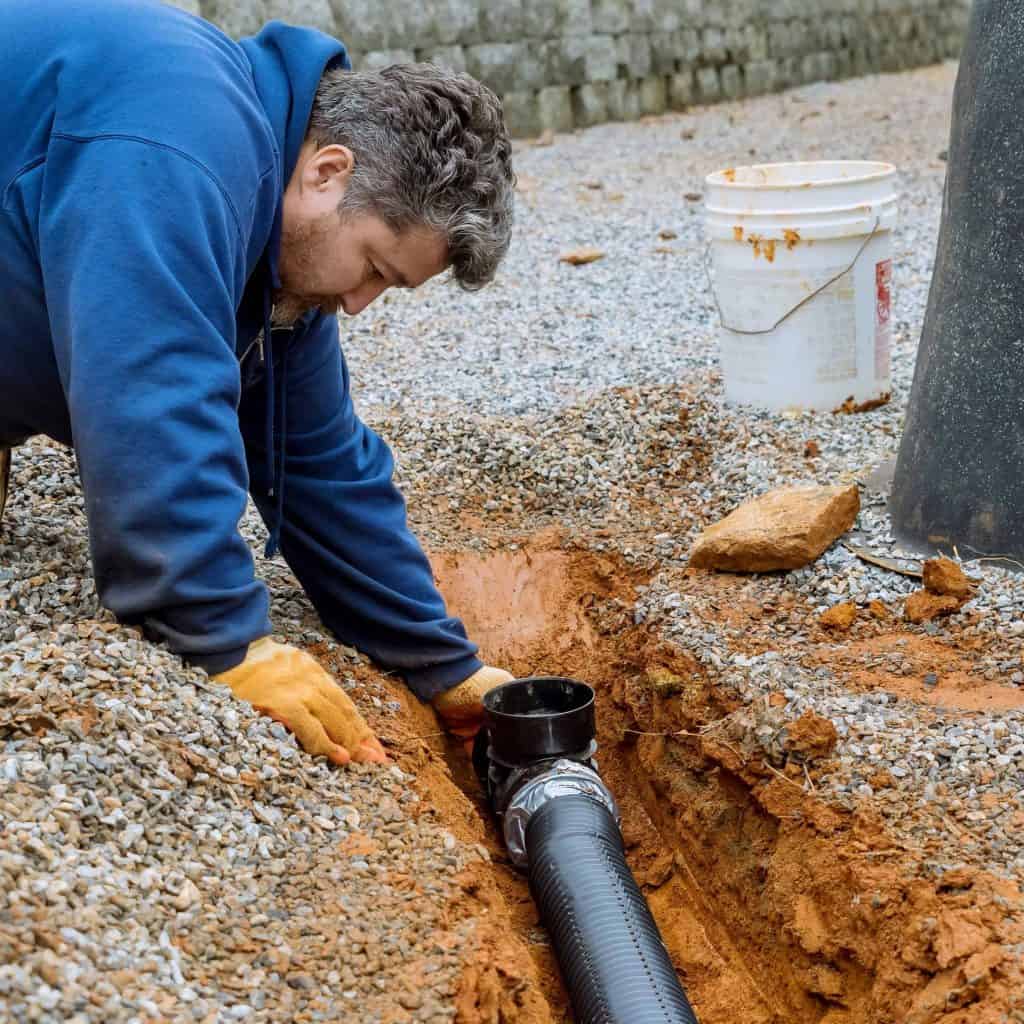
The other piece that matters here specifically is what’s above the pipe. Red Bank has mature trees, established landscaping, and in some cases brick driveways and historic sidewalks. Traditional excavation tears all of that up. Trenchless sewer replacement — pipe bursting or CIPP lining — gets the job done without destroying what took decades to grow. You get a new sewer line rated for 50 to 100 years, and your yard looks the same when we leave.
AME Plumbing Heating and Cooling is a family-owned company based in Manasquan — about 12 miles down Route 35 from Red Bank. We’ve been serving Red Bank and the rest of Monmouth County since 2014, and the underground infrastructure in this area is not a mystery to us. Clay pipe, cast iron, aging joints, root intrusion — we see it constantly in homes across this county, and Red Bank’s older neighborhoods are no exception.
We’re licensed and insured in New Jersey, which matters here because Red Bank Borough requires a permit before any sewer connection or replacement can legally take place. We handle all of that — the permit, the coordination with the borough’s Sewer Department, the inspection. You don’t have to chase paperwork or wonder if the work was done right by code.
What you’ll notice working with us is that we don’t recommend replacement until we’ve actually looked at the pipe. Every job starts with a camera inspection. If a repair or relining will do the job, we’ll tell you that. If replacement is the right call, we’ll show you exactly why on screen before we ever quote the work.
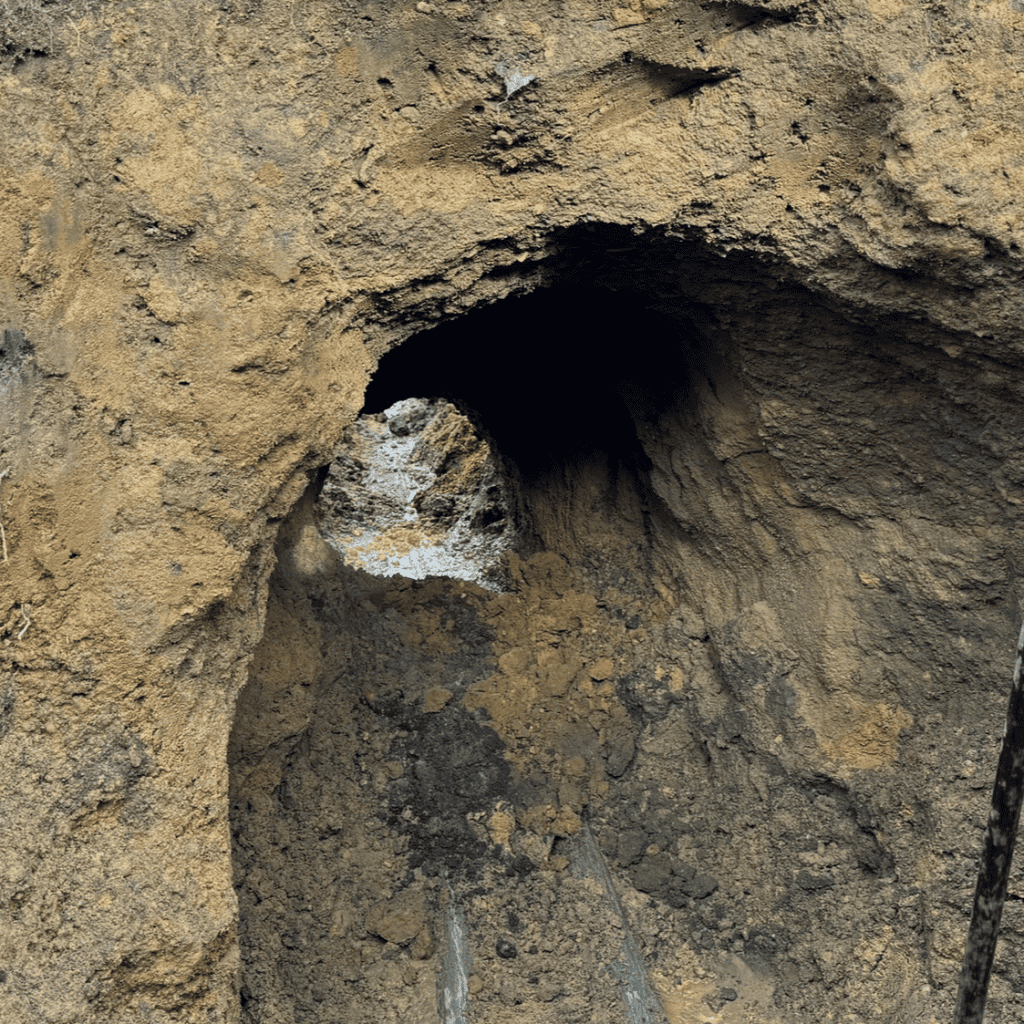
It starts with a camera inspection. We run a line through your sewer lateral so we can see the actual condition of the pipe — cracks, root intrusion, collapsed sections, joint separation. You see what we see. That inspection determines whether you need a targeted repair, a full replacement, or a trenchless relining. We don’t skip this step, and we don’t make recommendations before it’s done.
If replacement is the right move, we pull the required permit through Red Bank Borough’s Sewer Department before any work begins. This is non-negotiable — the borough’s municipal code explicitly requires a permit for any sewer connection, and unpermitted work can create serious problems if you ever sell the property or file an insurance claim. Once permits are in place, we assess whether trenchless pipe bursting or traditional replacement is the better fit for your specific property. For most Red Bank homes with mature trees or established landscaping, trenchless is the cleaner option by a wide margin.
The replacement itself typically takes one to two days for trenchless work, or two to four days if open excavation is required. After the new pipe is in — usually PVC, rated for 100-plus years — we schedule the final inspection with the borough and make sure everything is documented and closed out properly. You’ll have a complete record of the work, the permit, and the inspection for your files.
Ready to get started?
Every sewer line replacement with us starts with a camera inspection — not a guess, not a visual check from the cleanout, an actual look inside the pipe. From there, we give you a clear recommendation with the footage to back it up. The $500 off sewer line replacement discount applies to the full project, and financing is available if a $5,000 to $15,000 project isn’t something you want to absorb all at once.
For Red Bank properties specifically, we factor in the conditions that are common here. Homes near the Navesink River corridor sit in areas where soil saturation and ground movement from coastal storms can accelerate pipe joint failure — we account for that in how we approach the work. Properties in the denser residential blocks near Broad Street or the Oakland Street area often have limited access and mature root systems that make trenchless the only practical option. We carry the equipment for both pipe bursting and CIPP lining, so the method fits the property, not the other way around.
We also serve commercial properties in Red Bank’s downtown corridor. Red Bank’s municipal code requires grease traps for any commercial installation where fats or oils may be discharged — restaurants on Broad Street, for example — and we’re familiar with those requirements. Military personnel and first responders receive an additional 10% off. If you’re not sure whether you need a repair or a full replacement, a camera inspection is the right place to start.
Yes — and this is one of the more important things to understand before hiring anyone for this job. Red Bank Borough’s municipal code, under Chapter 695, Article IV, explicitly states that it is unlawful to make any connection with the borough’s sewer system without first securing a permit and paying the required fee. That applies to sewer lateral replacement, not just new construction.
The permit process involves coordination with Red Bank’s Sewer Department, and the work must be performed by a licensed New Jersey plumber who can sign off on the required documentation under the state’s Uniform Construction Code. We handle all of this — the permit application, the inspection scheduling, and the final closeout paperwork. You don’t need to navigate the borough’s process yourself. What you do need to make sure of is that whoever you hire is actually licensed to pull that permit, because unpermitted sewer work in Red Bank can void your homeowners insurance coverage and create real complications if you sell the property down the road.
The only reliable way to know is a camera inspection. Symptoms like slow drains, gurgling sounds, sewage smells in the yard, or recurring backups all point toward a sewer line problem — but they don’t tell you the severity. A partial root intrusion in an otherwise intact pipe might be cleared and relined. A pipe that’s collapsed in multiple sections, or one that’s shifted at the joints from years of freeze-thaw cycles and soil movement, typically needs full replacement.
In Red Bank, where a significant portion of the housing stock predates 1960, clay tile pipe is extremely common in private sewer laterals. Clay pipe has a typical lifespan of 50 to 60 years, and a lot of it in this borough is well past that. The borough itself had to finance a $1.6 million project to replace deteriorating clay pipe in its own municipal sewer mains — the private laterals running from homes to those mains are often the same material and the same age. A camera inspection gives you the actual picture, and with us, you see that footage before any recommendation is made.
Trenchless sewer replacement covers two main methods: pipe bursting and CIPP lining (Cured-In-Place Pipe). Pipe bursting pulls a new pipe through the old one, fracturing the old pipe outward as it goes — you end up with a brand-new line without digging a trench the full length of the run. CIPP lining installs a resin-saturated liner inside the existing pipe that cures in place, essentially creating a new pipe within the old one. Both methods require minimal excavation — usually just access points at each end.
For Red Bank specifically, trenchless is often the better fit. The borough’s residential neighborhoods have mature tree canopy, established landscaping, and in some cases brick driveways and decorative hardscaping that would be costly and disruptive to restore after open excavation. Trenchless work typically takes one to two days, leaves the yard largely intact, and produces a finished pipe rated for 50 years or more. We carry equipment for both methods and will recommend the right one based on your pipe’s condition, length, and the layout of your property.
The honest range for a full sewer line replacement runs from roughly $3,500 on the lower end to $15,000 or more for longer runs, difficult access, or properties that require significant restoration after excavation. The per-foot cost for the pipe work itself typically falls between $50 and $250 depending on the method — trenchless tends to run higher per foot but lower overall because there’s far less restoration involved. For most residential properties in Red Bank, a complete lateral replacement lands somewhere in the $4,500 to $9,000 range.
We take $500 off sewer line replacements, which is a real reduction on a project of this size. Financing is also available, which matters when a sewer failure shows up without warning and you weren’t planning for a five-figure repair. The best way to get an accurate number for your specific property is a camera inspection first — the scope of the job determines the cost, and you shouldn’t get a quote without one. Any contractor giving you a firm replacement price without looking at the pipe first is guessing.
Root intrusion is one of the most common causes of sewer line failure in older boroughs like Red Bank, and it’s directly tied to the pipe material. Clay tile pipe, which is prevalent in homes built before the 1960s throughout Red Bank’s residential neighborhoods, has joints every few feet. Those joints develop small gaps over time, and tree roots are drawn to the moisture and nutrients leaking from them. Once roots get inside, they grow fast. They cause blockages first, then joint separation, and eventually structural pipe collapse if left unaddressed.
Red Bank’s mature urban tree canopy — particularly in neighborhoods like Red Bank West and Hilltop Terrace — means root intrusion risk is real and ongoing. Summer is when root growth is most aggressive, so slow drains that develop in warmer months are worth taking seriously. A camera inspection will show you whether roots are present and how far they’ve progressed. In some cases, root intrusion can be addressed with hydro-jetting and relining. In others, especially where roots have caused joint failure or pipe collapse, replacement is the more durable solution.
Yes — we offer $500 off sewer line replacements, which applies directly to the project cost. On a job that commonly runs between $4,500 and $9,000 for a typical Red Bank residential property, that’s a meaningful reduction. Financing is also available for larger projects, so if the timing isn’t ideal and you need to spread the cost, that option is there.
Military personnel and first responders receive an additional 10% off. Red Bank is a community with strong ties to public service — Monmouth County has a significant veteran population, and the borough’s police and fire departments serve one of the densest, highest-call-volume areas in the county. The discount reflects that. If you’re not sure whether your situation qualifies or want to understand what the total cost looks like before committing to anything, a camera inspection is the right first step — it’s the only way to give you an honest number for your specific property and pipe condition.