Servicing Areas Throughout New Jersey

Sewer Line Replacement in Aberdeen, NJ

Strathmore Homes Have Been Running on Borrowed Time

If your Aberdeen home was built in the early 1960s, the sewer line under your yard is older than most cars on the road — and it’s been quietly failing ever since. We replace it before it becomes a basement full of sewage.
A worker in a bright yellow safety jacket and helmet operates a large truck-mounted vacuum excavation machine to clean a sewer line. The worker is bending down near an open manhole, surrounded by grass and a traffic cone.

Reviews

100% Customer Satisfaction

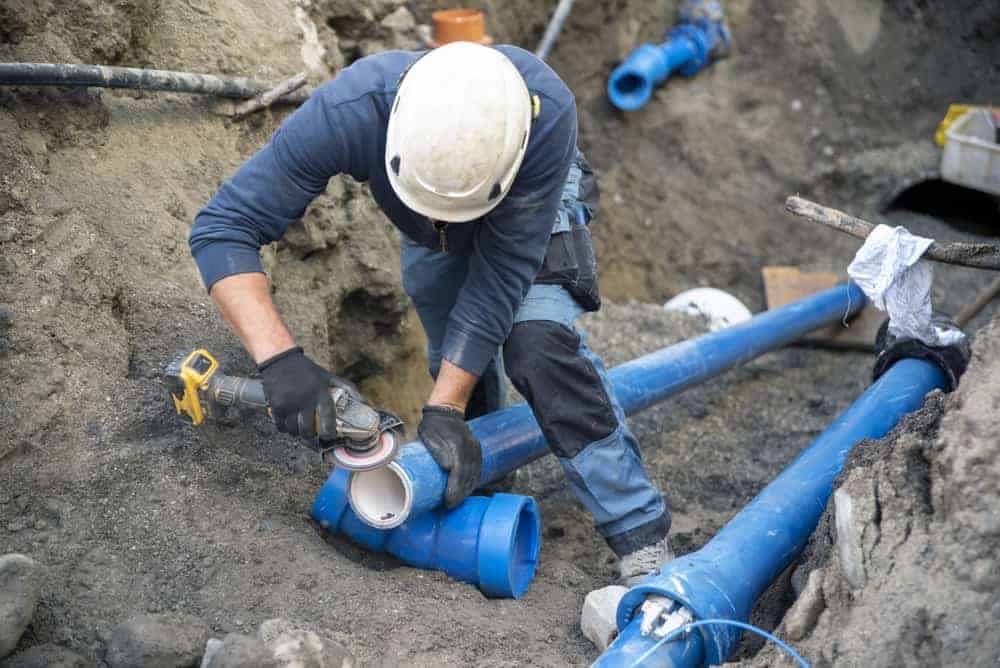
A construction worker in a helmet and blue attire uses a power tool to cut a section of large blue pipe in a trench, part of an extensive sewer line replacement. The area is surrounded by dirt and other pipe segments, highlighting the scale of the project.

Main Sewer Line Replacement Aberdeen NJ

What Changes When the Line Is Finally Replaced

The most immediate thing you notice is that the symptoms stop. No more slow drains that never quite clear. No more gurgling from the toilet when someone runs the dishwasher. No more faint smell in the basement that you’ve been blaming on everything else. Once the line is replaced, your plumbing works the way it’s supposed to — quietly, completely, without you thinking about it.

For homeowners in Strathmore, this matters more than it might somewhere else. Levitt and Sons built this Aberdeen neighborhood starting in 1961, and the clay tile and cast iron sewer laterals they installed have a design lifespan of 45 to 50 years. Those pipes are now 60-plus years old. They haven’t failed yet for most homes — but the root intrusion, joint separation, and corrosion happening underground right now means they will. Replacing the line now, on your timeline, costs a fraction of what it costs after a full backup or a collapsed pipe emergency.

For homes near Cliffwood Beach in Aberdeen, the risk is different but just as real. The ground near Raritan Bay shifts during heavy storms and flooding events — the kind that have closed Route 35 between Cliffwood Avenue and County Road more than once. That ground movement stresses pipe joints over time. If your home is in a flood-prone part of Aberdeen and you’ve never had the lateral inspected, you may be dealing with damage you can’t see yet. A camera inspection changes that. You find out what’s actually there, and you make a decision based on facts — not guesswork.

Licensed Sewer Replacement Contractor Aberdeen NJ

Local Roots, Monmouth County Standards, No Surprises

We’ve been serving Monmouth County homeowners since 2014. Our company is family-owned, based in Manasquan, and built around one operating principle: tell the customer exactly what’s happening, quote the job honestly, and do the work right. That’s it. No upsells, no vague estimates that balloon after the job starts, no disappearing after the invoice is paid.

Aberdeen is well within our core service area, and we know this housing stock. Strathmore’s Levitt-built homes, the older bungalows in Cliffwood Beach, the properties along the Route 34 corridor — these aren’t unfamiliar territory. When one of our technicians pulls up to your driveway in Aberdeen, they already know what they’re likely dealing with before they run the camera.

Every sewer line replacement we perform in Aberdeen Township is fully permitted under the New Jersey Uniform Construction Code. That means the $105 sewer service connection permit gets pulled, the work gets inspected, and everything is on record with the township — which protects you if you ever sell the home.

A blue water pipe lies in a trench dug in a sandy construction site. Soil is piled on both sides, and additional black cables are visible near the trench. The scene appears to be part of an underground installation project.

Trenchless Sewer Replacement Process Aberdeen NJ

From Camera to Completed Line — Here's the Honest Walkthrough

It starts with a camera inspection. Before we recommend anything, a technician runs a video camera through your sewer lateral to see exactly what’s there — the material, the condition, the location of any damage, and whether the problem is in your private line or further down in Aberdeen Township’s municipal main. If it turns out the blockage is in the township’s system, we’ll tell you to call the Aberdeen Sewer Division directly at 732-583-4200. You won’t be sold a replacement you don’t need.

If the camera confirms your lateral needs to be replaced, you’ll get a clear, upfront quote before any work begins. For most Strathmore homes, we recommend trenchless replacement — either pipe bursting or cured-in-place pipe lining — because it avoids digging a trench across your entire yard. With 60-plus years of mature trees, established landscaping, and concrete driveways on these properties, trenchless isn’t just a convenience. It’s the approach that makes sense. The new pipe goes in, your yard stays intact, and the job is typically done in one to two days.

Before work starts, we pull the required permit with Aberdeen Township. After the job is complete, the work is inspected and documented. If your lateral runs under a public road to reach the municipal connection, we handle the street opening permit as well. You don’t have to navigate any of that on your own.

A worker wearing gloves connects orange PVC pipes in a trench. One pipe has a Y-shaped junction. The soil around the trench appears freshly dug, and the worker is pointing to the pipe joint.

Ready to get started?

Explore More Services

About AME Plumbing Heating and Cooling

Get a Free Consultation

Underground Sewer Renewal and New Pipe Installation Aberdeen NJ

What's Actually Included When We Replace Your Sewer Line

Every sewer line replacement in Aberdeen starts with a video camera inspection — not as an add-on, but as the foundation of the diagnosis. You see what the camera sees. If the pipe can be repaired instead of replaced, we’ll tell you that. If it needs to come out, you’ll understand exactly why before you agree to anything.

For homes in Strathmore and Cliffwood where trenchless access is the right call, we perform both pipe bursting and CIPP lining depending on what the pipe condition and site layout require. Pipe bursting pulls a new pipe through while simultaneously fracturing the old one outward — no trench needed. CIPP lining installs a resin-saturated liner inside the existing pipe, which cures in place and creates a smooth, structurally sound new pipe within the old shell. Both methods are fully compliant with New Jersey plumbing code and are inspected by Aberdeen Township upon completion.

All sewer line replacements currently include $500 off the total project cost — a meaningful reduction on a job that typically runs between $3,500 and $15,000 depending on pipe length, method, and site conditions. Financing is available if you need to spread the cost. Active military and first responders receive an additional 10% off. We serve both residential homeowners and commercial property owners along the Route 34 corridor and throughout Aberdeen Township.

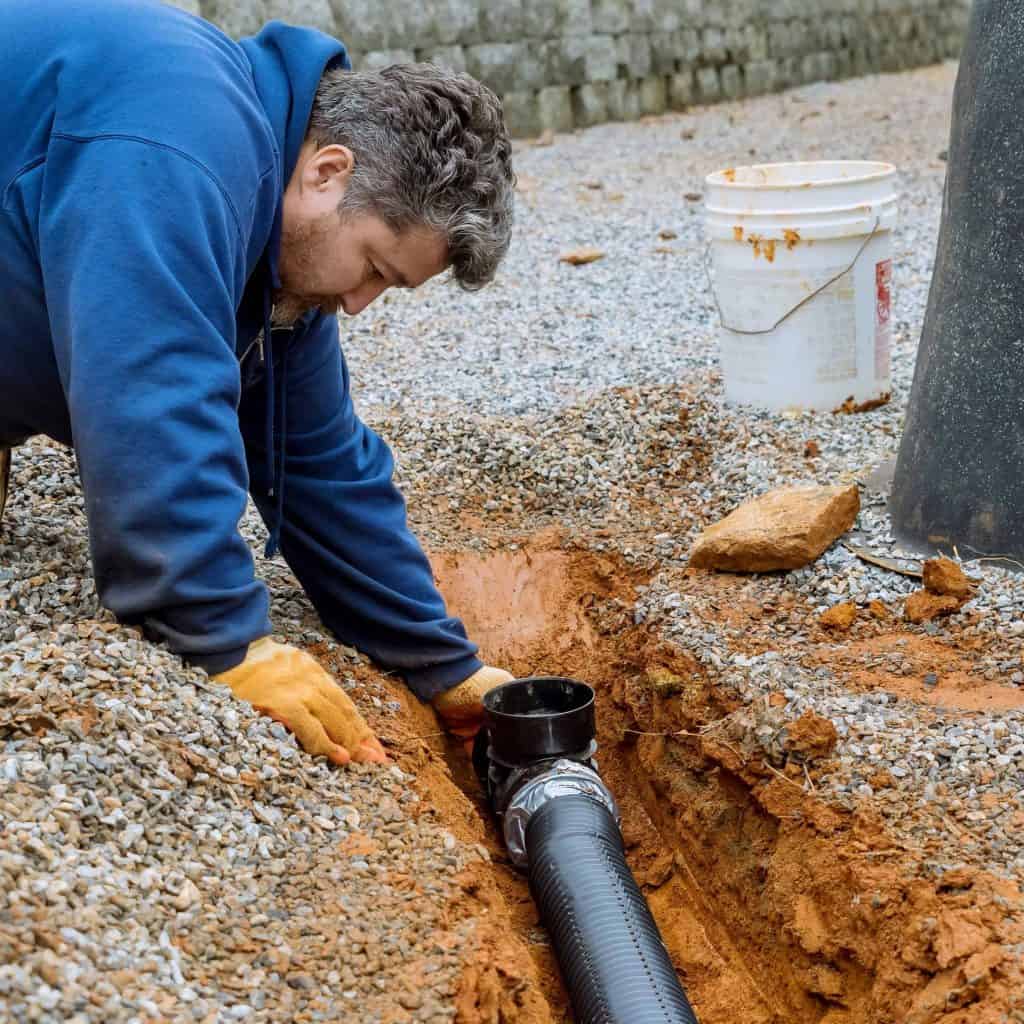
Orange drainage pipe installed underground in a shallow trench, surrounded by soil and patches of grass. The pipe features an elbow joint to redirect the flow.

Yes, and this is not optional. Aberdeen Township requires a permit for sewer lateral replacement under the New Jersey Uniform Construction Code. The sewer service connection permit carries a fee of $105 per connection, and a licensed plumber must sign and seal the required documentation before any work begins. After the job is complete, the township conducts an inspection to confirm the work meets code.

This matters more than most homeowners realize. If you hire someone who skips the permit — whether to save time or cut costs — you’re left with unpermitted plumbing work on record. That becomes a serious problem if you ever sell your home, refinance, or file a homeowner’s insurance claim related to the sewer system. We handle all permitting as part of every sewer line replacement in Aberdeen, including the street opening permit if the work requires accessing the connection point under a public road.

The honest answer is that you can’t know without a camera inspection. A slow drain or a single backup could be a root intrusion that clears with a cleaning — or it could be a sign that a 60-year-old clay pipe has collapsed at a joint and needs to come out entirely. The symptoms overlap, and guessing gets expensive fast.

We run a video camera through the lateral before recommending anything. If the pipe has isolated damage — a single cracked joint, a localized root intrusion — a spot repair or lining may be all you need. If the camera shows widespread deterioration, joint separation along multiple sections, or a pipe that has lost its structural integrity, replacement is the right call. For Strathmore homes with original 1961-era clay tile or cast iron laterals, full replacement is increasingly common simply because the pipe has reached and passed its design lifespan. The camera removes the guesswork and gives you a real answer.

Trenchless sewer replacement means installing a new pipe without digging a continuous trench from your house to the street. There are two main methods: pipe bursting, which pulls a new pipe through while breaking the old one outward, and CIPP lining, which installs a resin liner inside the existing pipe that cures into a smooth, structurally sound new pipe. Both are performed through small access points rather than a full excavation.

For Strathmore properties specifically, trenchless is often the preferred approach. These homes were built in the early 1960s, which means the trees planted alongside them have had over six decades to grow. Root systems on mature oaks and maples in Strathmore extend well beyond the drip line — sometimes across entire yards and under driveways. Trenching through that landscape means removing trees, breaking up concrete, and spending weeks restoring what was there before. Trenchless avoids all of that. The yard looks the same when the crew leaves, and the job is typically done in one to two days.

The township is responsible for the municipal sewer main running under the street. You are responsible for the private lateral — the pipe that connects your home to that main. This is true even if part of your lateral runs under the sidewalk or the public right-of-way. Aberdeen Township’s Sewer Division operates over 70 miles of gravity sewer mains and 15 pumping stations, all of which ultimately discharge to the Bayshore Regional Sewage Authority. But none of that infrastructure is your concern. Your lateral is.

When a backup occurs, the first question is always which side of the connection is failing. Our camera inspection answers that directly. If the problem is in the municipal main, you’ll be directed to call Aberdeen Township’s Sewer Division. If it’s in your private lateral — which is far more common, especially in older Strathmore and Cliffwood Beach homes — you’ll see exactly where the damage is and what it will take to fix it. No assumptions, no unnecessary work.

Sewer line replacement in New Jersey generally runs between $3,500 and $15,000 depending on the length of the lateral, the method used, and the site conditions. Traditional excavation tends to fall on the lower end for the pipe work itself, but once you factor in restoring a driveway, replacing landscaping, or repairing hardscaping, the total cost often exceeds what a trenchless method would have cost from the start. Trenchless replacement typically runs between $6,000 and $12,000 but avoids most of those restoration costs.

For Aberdeen homeowners, we currently offer $500 off every sewer line replacement — applied directly to the project total. Financing is also available, which matters on a job of this size. A $9,000 sewer replacement is a significant unplanned expense for most households, and spreading that cost over time makes it manageable without delaying a repair that is only going to get worse. We provide upfront written quotes before any work begins, so you know exactly what you’re committing to.

It can, and it does more often than people expect. The Cliffwood Beach neighborhood sits directly on Raritan Bay, and it has experienced repeated flooding events severe enough to close Route 35 between Cliffwood Avenue and County Road. The U.S. Army Corps of Engineers has specifically studied this stretch of coastline as part of a Raritan Bay Coastal Storm Risk Management project. When the ground in a flood-prone area saturates and then drains repeatedly over years, the soil shifts. That movement puts stress on pipe joints — particularly the older clay tile and cast iron laterals found in Cliffwood Beach’s pre-war and post-war housing stock.

The failure mode isn’t always dramatic. It often shows up as a joint that separates slightly, allowing groundwater infiltration and root intrusion over time. Left alone, that becomes a partial collapse, then a full blockage. If your Cliffwood Beach home has been through multiple flooding events and you’ve never had the sewer lateral inspected, a camera inspection is the most useful thing you can do right now. It takes less than an hour and tells you exactly what condition the pipe is in — before a storm event turns a compromised joint into a backed-up basement.