Reviews
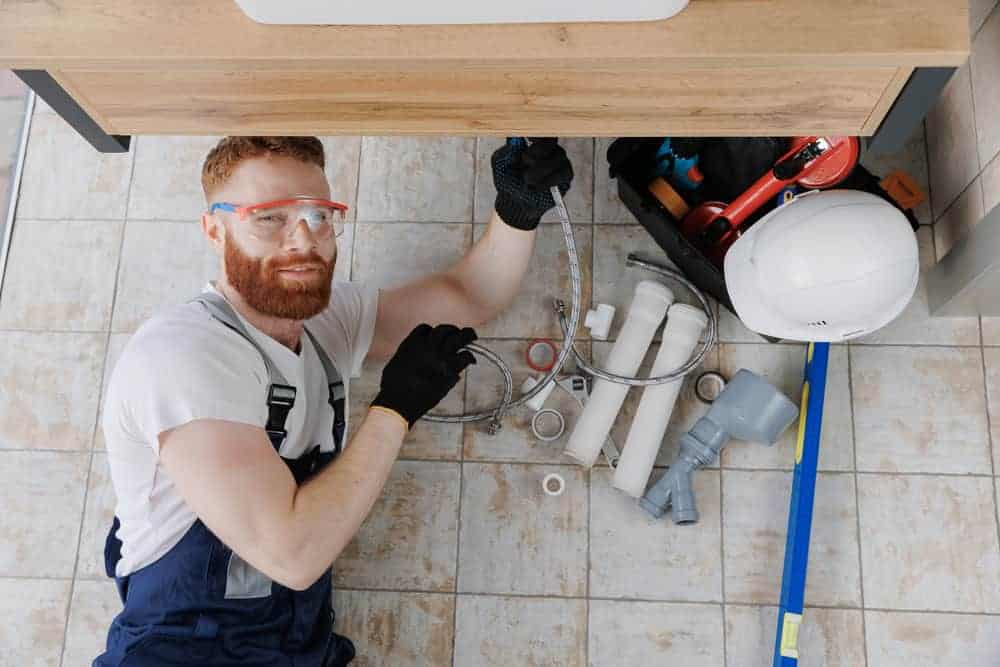
A plumbing issue doesn’t stay small for long. What starts as a slow drain or a little rust in the water turns into a bigger job — and a bigger bill — if it sits. The sooner it gets looked at by someone who knows what they’re doing, the less it costs you in the long run.
Englishtown runs on artesian well water drawn from two wells inside the borough — one of them over 600 feet deep. That water naturally carries iron, and even after filtration, it leaves its mark on pipes, fixtures, and water heaters over time. If your water looks slightly off after the borough flushes the mains, or your fixtures keep staining no matter how often you clean them, that’s not a coincidence. It’s the local water doing what it does.
Most of the homes in Englishtown were built between the 1970s and 1990s. That puts a lot of local plumbing systems right in the window where things start to go. Pipes corrode, water heaters age out, sewer lines crack. Getting ahead of it — or at least getting a clear picture of where things stand — is exactly what a good plumbing inspection does for you.
We’ve been working in Monmouth County since 2014, and we know Englishtown’s water system, its aging housing stock, and the specific challenges that come with both. That’s over a decade of showing up on time, quoting jobs honestly, and doing the work right the first time — in communities just like yours.
One customer said it plainly: “I will recommend Mark and his company until the day I die. They gave us the fairest quote to have a huge job done in front of my house.” That’s the kind of thing that gets said when a company is straight with people. Not when we’re the cheapest. When we’re honest.
We’re fully licensed and insured under New Jersey law, which means every job meets state code, every technician is qualified, and you’re protected if anything goes sideways. For Englishtown homeowners navigating the borough’s permit process or coordinating with the Western Monmouth Utilities Authority on sewer work, that compliance isn’t a formality — it matters.
When you call us, the first thing that happens is an actual conversation — not a voicemail loop or an automated scheduler. You describe what’s going on, and we figure out whether it needs same-day attention or can be handled on a schedule that works for you. For true emergencies — burst pipes, sewer backups, water heater failures — a licensed technician is typically dispatched within about an hour.
Once the technician arrives, we inspect the problem and diagnose the root cause before anything else. You get a clear, written price before any work begins. Not a ballpark. Not a range. A number. If you say yes, the work gets done. If you have questions, they get answered. There’s no pressure and no upsell.
For jobs that involve Englishtown’s water system or the WMUA sewer service area, we handle the permitting and coordinate with the relevant departments. You don’t have to figure out who to call or what forms to file — that’s part of the job. After the work is complete, the technician walks you through what was done and makes sure everything is working before they leave.
Ready to get started?
We handle the full range of residential plumbing — leak detection and repair, drain cleaning, pipe repair and replacement, water heater installation, sewer line work, fixture installs, and emergency response. Whether it’s a slow drain in a 1985 colonial off County Route 522 or a sewer line that’s been quietly failing under a Covered Bridge home for years, the process is the same: find it, explain it, fix it.
The iron content in Englishtown’s artesian water supply is worth taking seriously if you haven’t already. Over time, it accelerates corrosion in older pipes and builds up inside water heaters, cutting their lifespan shorter than it should be. We can assess how your system is holding up and tell you honestly whether you need a repair, a replacement, or just a closer eye on things going forward.
For larger jobs — full sewer line replacements, repiping, new water heater installations — we currently offer $250 off water and sewer line repairs, $500 off replacements, and $100 off new water heater installations. Military personnel and first responders receive 10% off any service. If the cost of a bigger job is a concern, 0% financing is available for qualifying work. These aren’t conditions buried in the fine print — they apply to Englishtown customers the same as anyone else we serve across Monmouth County.

Englishtown Borough flushes its water mains twice a year to clear out sediment and mineral buildup from the distribution system. During and shortly after those flushes, it’s normal to see temporarily discolored water — usually a brownish or rust-colored tint — coming out of your taps. The borough’s own guidance is to run cold water for a few minutes until it clears, and to hold off on doing laundry until the water looks normal again.
That said, if you’re seeing rust-colored water outside of the flushing periods, or if the discoloration doesn’t clear up after running the tap, that’s a different situation. Englishtown’s water is sourced from artesian wells with naturally occurring iron, and even after filtration, older pipes can corrode from the inside over time. Persistent discoloration, staining on fixtures, or a metallic taste are signs worth having us look at — not something to keep ignoring.
The honest answer is that you usually can’t tell just by looking. Pipes fail from the inside out — corrosion, mineral buildup, and joint deterioration happen behind your walls and under your floors long before anything visible shows up. By the time you see water damage or a significant drop in pressure, the problem has typically been developing for a while.
For homes in Englishtown built in the 1980s, there’s a specific concern worth knowing about: polybutylene pipes. They were widely used in NJ residential construction from the late 1970s through the mid-1990s, and they’re now known to be failure-prone — to the point where many insurers flag them. If your home was built during that window and has never had a plumbing inspection, it’s worth finding out what you’re working with. We can assess the condition of your system, identify anything that’s aging out, and give you a straight answer about what needs attention now versus what can wait.
First, shut off the main water supply to your home. In most Englishtown homes, the main shutoff is near the water meter — typically in the basement, utility room, or near the front foundation wall. Turning it off stops the flow and limits the damage while you wait for help. Then call a licensed emergency plumber. Don’t try to patch a burst pipe with tape or a temporary fix — it won’t hold, and in older homes with aging pipe systems, disturbing one section can stress the surrounding connections.
Burst pipes in central New Jersey most often happen in January and February, when overnight temperatures drop hard and pipes in exterior walls or unheated spaces freeze. If your home was built before 1990 and has pipes running through poorly insulated areas, that risk is real. We dispatch for true plumbing emergencies within about an hour, around the clock, every day of the year — so if it happens at 2 a.m. on a cold night, you’re not waiting until morning.
Yes. In New Jersey, most plumbing work beyond basic repairs requires a permit pulled through the local building department, and any job over $500 requires the contractor to be registered with the NJ Division of Consumer Affairs. We’re fully licensed and registered, which means we can pull the necessary permits directly — you don’t have to navigate that process yourself.
For work that involves Englishtown’s municipal water system or connects to the sewer lines serviced by the Western Monmouth Utilities Authority, there are additional coordination steps involved. We handle that too. It’s not something most homeowners want to figure out on their own, and it’s also not something an unlicensed contractor can legally do. If a plumber you’re considering can’t clearly tell you how they handle permits in Englishtown, that’s worth paying attention to before you hire them.
Most standard tank water heaters last between 8 and 12 years under normal conditions. In Englishtown, “normal conditions” includes water with naturally occurring iron content — and even after the borough filters it, that mineral load puts more wear on water heater tanks and components than you’d see in areas with softer water. That tends to push the lifespan toward the lower end of the range, especially if the unit hasn’t been flushed or serviced regularly.
Signs that a water heater is on its way out include inconsistent hot water, rumbling or popping sounds during heating cycles, visible rust or corrosion around the tank or connections, and water that smells metallic or looks discolored when you first run the hot tap. If your unit is over 10 years old and showing any of those signs, replacement is usually the smarter call over repair. We currently offer $100 off new water heater installations for customers in Englishtown and throughout Monmouth County.
They do. We offer 10% off to active military, veterans, and first responders — and that applies to any job in Englishtown the same as anywhere else we work in Monmouth County. Just mention it when you call and it gets applied to your invoice.
Englishtown and the broader area have a strong community of people who serve and have served — in the military, in local fire and EMS, and in law enforcement. The discount is our way of acknowledging that directly, not as a promotional line, but as a straightforward policy that’s been part of how we do business since the beginning. If you’re not sure whether you qualify, ask when you call. The answer is usually yes, and we’re not going to make you jump through hoops to claim it.