
Reviews

When your heating and cooling system is running the way it should, you stop thinking about it. That’s the goal. No more waking up in January to a cold house, no more window units running all night because your AC gave out in July, and no more wondering if that strange noise means something expensive. You just live comfortably — and that matters a lot more when you’re surrounded by water on three sides and the weather doesn’t give you a lot of warning.
In Highlands, the environment does real damage to HVAC equipment. Sandy Hook Bay to the east, the Shrewsbury River wrapping around to the south and west — the salt air here is constant, not seasonal. It corrodes condenser coils, eats through electrical connections, and can cut your outdoor unit’s lifespan nearly in half compared to an inland home. When your system is properly maintained, sized right, and installed with coastal conditions in mind, it lasts longer and costs less to run. That’s not a small thing when full system replacements in NJ run anywhere from $9,000 to $16,000.
And for the homeowners in Highlands’ downtown and bayside neighborhoods who rebuilt after Sandy — many of those systems are now 10 to 13 years old. They’ve done their job. But they’re entering the window where maintenance becomes more critical and replacement planning starts to make sense. Getting ahead of that is always less expensive than reacting to a failure in the middle of a January nor’easter.
We’ve been serving Monmouth County since 2014. We’re a locally owned, family-operated company based in Manasquan — another shore community that knows what salt air, coastal storms, and post-Sandy rebuilding actually look like in practice. We’re not dispatching from a regional hub or routing your call through a national call center. When you call us, you’re talking to people who work this stretch of the Jersey Shore.
For Highlands specifically, that local knowledge matters. We understand the borough’s flood zone permit requirements, the elevation rules that govern where mechanical equipment can be placed, and the difference between servicing a home on the bluff near the Twin Lights and one in the low-lying downtown area near Bay Avenue. That’s not something you can learn from a training manual. It comes from doing this work in these communities, year after year.
We’re licensed, insured, and straightforward about pricing. You’ll know what the job costs before we start — no surprises on the invoice, no pressure to upgrade to something you don’t need.
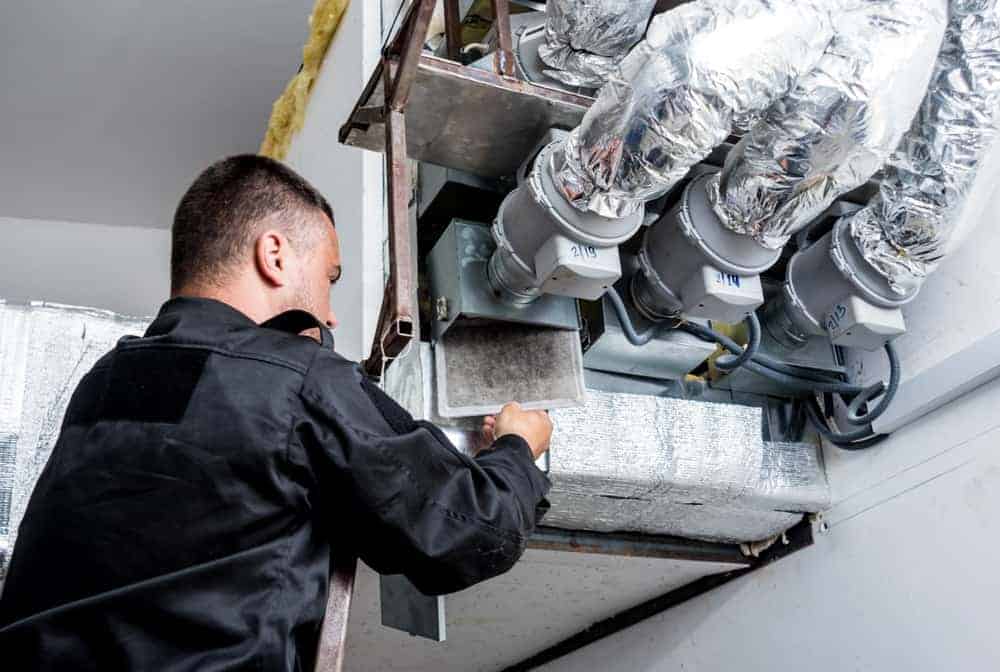
It starts with a real assessment, not a sales pitch. When we come out to your home, we’re looking at your current system, your home’s layout, how it’s been performing, and what the environment around it is doing to the equipment. In Highlands, that last part is especially important. We’re checking for salt corrosion on outdoor components, looking at where equipment is positioned relative to flood elevation requirements, and factoring in whether your home is one of the post-Sandy elevated builds or an older structure that survived the storm.
From there, we give you a clear picture of what’s going on and what your options are. If a repair makes sense, we’ll tell you. If replacement is the smarter move given the age and condition of the system, we’ll explain why — with specifics, not vague recommendations. Any work in Highlands’ Special Flood Hazard Area requires a Floodplain Development Permit through the Borough’s Department of Buildings and Housing, and we handle that as part of the job. You don’t have to figure out the permitting side on your own.
Once the work is done, we walk you through what was installed, what to watch for, and how to get the most out of your system in a coastal environment. That includes honest guidance on maintenance intervals — because a system in Highlands needs more frequent attention than one sitting ten miles inland, and we’d rather tell you that upfront than have you call us in two years wondering why it failed early.
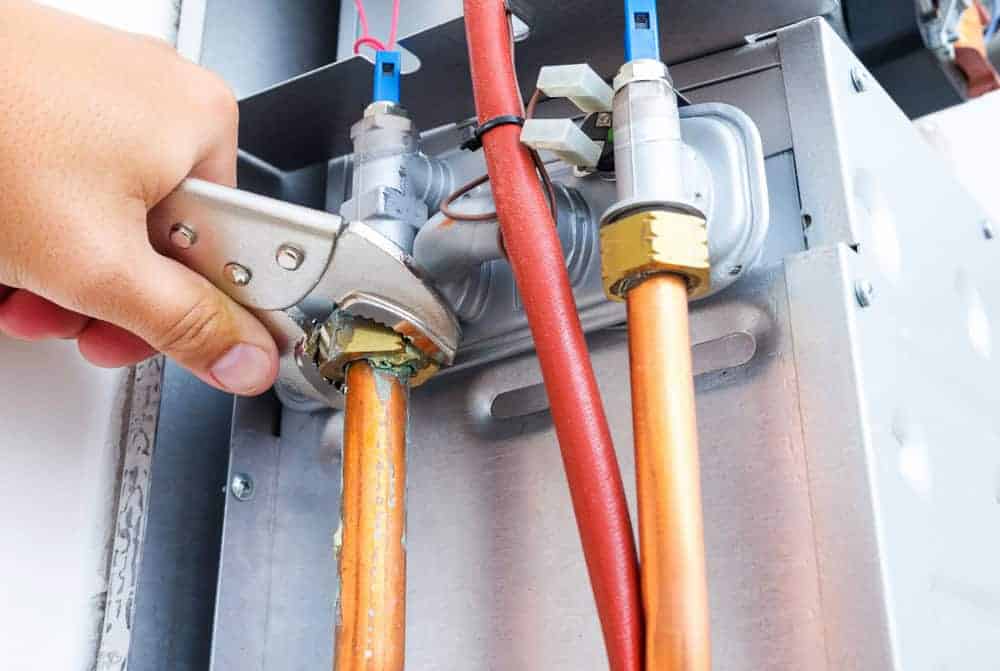
Ready to get started?
The HVAC services we provide in Highlands cover the full range — system installations, replacements, heating repairs, AC repairs, seasonal maintenance, and 24/7 emergency calls. But the way we approach that work here is shaped by what this borough demands. Coastal-rated equipment, protective coil coatings, proper elevation placement, and floodplain-compliant installations aren’t upgrades we charge extra for. They’re how we do the job correctly in a town where cutting corners on any of that has real consequences.
For homeowners in the Lenape Woods area or up on the bluff near the Twin Lights, the concerns are different than for those in the flood-prone neighborhoods closer to the ferry terminal and Bay Avenue. We account for that. Homes on the higher ground have different exposure profiles and different structural characteristics than the elevated post-Sandy rebuilds downtown. We size systems appropriately, place equipment where it belongs, and make sure everything is permitted and inspected before we close out the job.
We also handle indoor air quality — whole-home dehumidification, UV air purification, and high-efficiency filtration. In a borough surrounded by open water with year-round humidity, that’s not a luxury addition. It’s a practical one, especially for homeowners who’ve dealt with mold issues after flooding or who have older family members in the home sensitive to air quality. If you’re also dealing with a plumbing issue at the same time, we handle that too — one call, one team, one permit process.

Yes, and this is one of the most important things to understand before hiring any HVAC contractor in Highlands. Because a significant portion of the borough sits within FEMA’s Special Flood Hazard Area, any HVAC installation or replacement in those zones requires a Floodplain Development Permit through the Borough of Highlands’ Department of Buildings and Housing. This is separate from — but integrated into — the standard NJ Uniform Construction Code permit process.
The permit requirement exists because all mechanical, electrical, and HVAC systems in the flood zone must be installed at or above the Design Flood Elevation as defined by ASCE 24, which New Jersey has adopted. Equipment placed below that elevation is not just a code violation — it’s a liability for your flood insurance and a real risk of total loss in the next storm surge event. Before any work begins, your contractor should be pulling the correct permits and coordinating with the Borough’s Floodplain Administrator. We handle all of this as a standard part of every job in Highlands, not an add-on.
Salt air is one of the most damaging environmental factors for outdoor HVAC equipment, and Highlands is surrounded by it from multiple directions — Sandy Hook Bay to the east and the Shrewsbury River to the south and west. There’s no inland buffer here. Salt particles in the air accelerate corrosion on condenser coil fins, copper refrigerant lines, electrical connections, and cabinet components. In a typical inland NJ home, a well-maintained outdoor unit can last 15 to 18 years. In a coastal environment like Highlands, that lifespan can drop to 8 to 12 years without the right precautions.
The good news is that this is manageable. Coastal-rated equipment with corrosion-resistant components, protective coatings applied to coil fins, strategic placement that limits direct salt air exposure, and more frequent maintenance intervals all make a measurable difference. When we install or service equipment in Highlands, we factor all of this in. We’d rather have that conversation with you upfront than have you replace a unit in year six because it wasn’t set up correctly for this environment.
The honest answer is that it depends on a few things: the age of the system, what’s actually failing, and what it would cost to keep it running reliably versus replacing it. A general rule of thumb is that if a repair costs more than 50% of the value of a new system and the equipment is already 10 or more years old, replacement usually makes more financial sense over time. But that’s a starting point, not a formula — the specifics of your situation matter.
For Highlands homeowners, there’s an additional layer to consider. A lot of the HVAC systems installed during the post-Sandy rebuilding wave between 2012 and 2015 are now entering their second decade. They’ve been running in a salt air environment, some in flood zone conditions, and the wear on those systems can be more advanced than their age alone would suggest. When we come out for an assessment, we’re running actual diagnostics — not just looking at the unit and guessing. You’ll get a clear, honest breakdown of what’s going on and what your options are, with real numbers attached.
A full HVAC system replacement in New Jersey — including equipment, labor, and permits — typically runs between $9,000 and $16,000 depending on the size of your home, the type of system, and any site-specific requirements. In Highlands, flood zone permitting and elevation compliance can add steps to the installation process, and coastal-rated equipment may carry a modest premium over standard residential units. These are real costs worth understanding upfront rather than discovering mid-project.
The good news is that there are ways to offset some of that investment. Under the Inflation Reduction Act, homeowners who install qualifying heat pumps or high-efficiency HVAC systems may be eligible for a federal tax credit of up to 30% of the cost, capped at $2,000 per year. NJ Clean Energy Program rebates may stack with that depending on the equipment. We also offer financing options for qualifying customers, which makes larger system replacements more manageable without having to time everything around a single lump-sum payment. We’ll walk you through what’s available when we put together your estimate.
Call immediately and don’t wait to see if it comes back on its own. In Highlands, a heating failure during a nor’easter or a hard cold snap off Sandy Hook Bay is a different situation than a furnace issue in an inland suburb. The wind chill off the open water here accelerates how fast a home loses heat, and for older residents or anyone with health vulnerabilities, that timeline matters. We offer 24/7 emergency HVAC service — not a voicemail system that promises a callback in the morning, but actual availability around the clock.
When you call, be ready to describe what you’re seeing: whether the system is completely off, whether the thermostat is responding, whether you’re hearing any unusual sounds, and when you last had it serviced. That information helps us get the right technician and the right parts to you faster. If you have electric baseboard heat or space heaters as a backup, use them safely in the meantime — but don’t delay the call. Getting someone out quickly in a coastal winter emergency is always the right move.
Yes — we offer 10% off for military personnel and first responders. Highlands has a strong working-class and veteran community along the northern Monmouth County bayshore, and the first responders who served this borough during and after Sandy did work that most people don’t fully appreciate. This discount is a straightforward acknowledgment of that, applied directly to your invoice with no hoops to jump through.
If you’re active duty, a veteran, a firefighter, EMT, police officer, or other qualifying first responder, just mention it when you call or when we’re putting together your estimate. It applies to HVAC services as well as plumbing work, so if you’re dealing with both at the same time — which happens more often than you’d think in a borough where flood zone requirements touch both trades — you can apply it to the full scope of the job. We also offer $250 off water and sewer line repairs, $500 off replacements, and $100 off new water heater installations for anyone who qualifies.