
Reviews

A system that’s been properly maintained — or correctly replaced — doesn’t just keep you comfortable. It stops costing you money in ways you don’t immediately see. Energy bills that creep up every summer, a unit that runs constantly but never quite cools the upstairs, a furnace that kicks on and off all night — those aren’t normal. They’re symptoms of a system that’s struggling.
For homes along the Manasquan River waterfront in Brielle, the challenge is real and specific. The tidal salt air that makes this borough one of the most desirable spots on the Jersey Shore is the same thing that quietly corrodes condenser coils, eats through aluminum fins, and accelerates wear on outdoor equipment. A system that might last 15 years inland can start showing serious problems in 10 if it isn’t maintained with that environment in mind. Knowing that going in changes how we approach every service call and every installation here.
The humidity factor matters too. Brielle’s riverfront location means your system isn’t just cooling air — it’s working overtime to pull moisture out of it. When that’s done right, your home feels genuinely comfortable, not just cold. When it’s not, you get that heavy, damp feeling even when the thermostat reads 72. Getting the system sized and maintained correctly for your specific home makes a difference you’ll notice the same day.
We’re based in Manasquan — literally across the Manasquan River from Brielle, connected by the Route 35 bridge that most Brielle residents cross on a regular basis. That’s not a marketing detail. It means when you call us, someone local answers, and a local technician shows up. No dispatch hub routing your call to a subcontractor two counties over.
We’ve been serving Monmouth County since 2014. That’s over a decade of working on homes throughout this stretch of the Shore — waterfront properties on Riverview Drive, homes near the Manasquan River Golf Club, neighborhoods tucked off Route 35 in Brielle. We know the housing stock here, we know the coastal conditions, and we know what it takes to do this work right in this environment.
We’re fully licensed and insured, we pull every required permit, and we don’t hand you a bill that doesn’t match the quote we gave you. That’s not a special offer — that’s just how we operate.
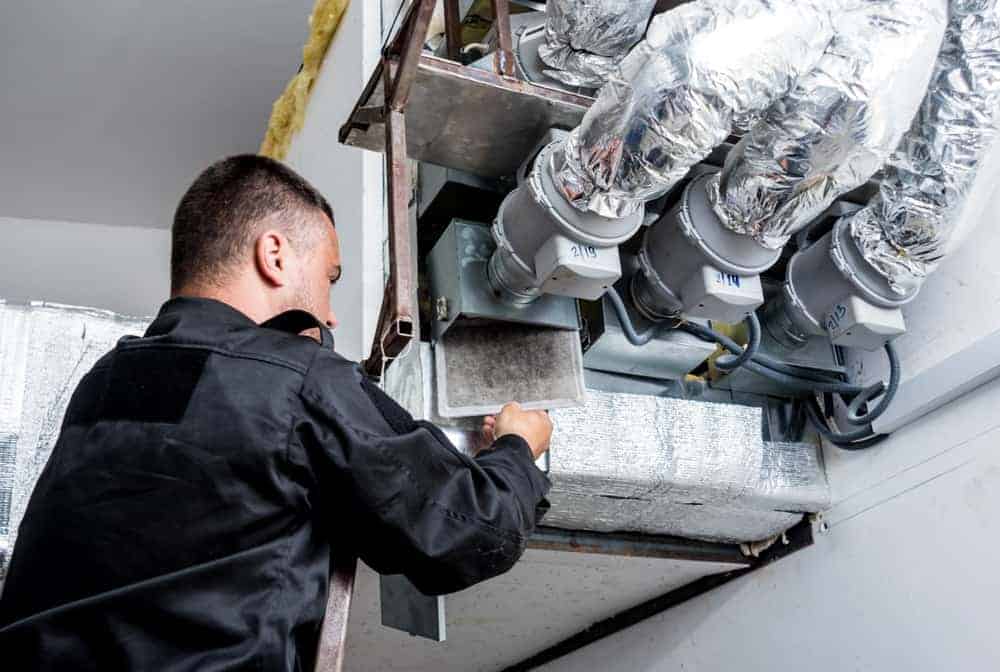
It starts with a straightforward call or booking. You tell us what’s going on — whether it’s an emergency at midnight in January or a system that’s been underperforming all summer — and we figure out the right next step together. We don’t push you toward a replacement before we’ve actually looked at what you have.
When we come out, we assess the full picture. For Brielle homes, that means paying attention to things a less experienced contractor might overlook: corrosion on outdoor equipment from salt air exposure, humidity load from the river, how the system is handling the specific layout of your home. If there’s a repair that makes sense, we tell you. If the system is at the point where repair costs are going to stack up faster than a replacement would, we’re honest about that too — and we give you a clear, written price before anything gets started.
If you’re replacing a system, we handle the permitting process through Brielle’s Building Department, including the zoning clearance that’s required before a construction permit can be issued here. That step catches a lot of contractors off guard, but it’s part of protecting your investment — especially in a home where values are what they are in this borough. Once the work is done, we don’t leave until it’s commissioned, inspected, and running the way it should.
Ready to get started?
Every home in Brielle has its own set of variables — how close it is to the river, how old the ductwork is, whether it’s been expanded or renovated over the years, how much of the year it’s occupied. We account for all of that. A waterfront property on Ashley Avenue has different needs than a home set back near the golf course, and we don’t run the same playbook on both.
Our HVAC services cover the full range: repairs, full system replacements, heat pump installations, ductless mini-splits for homes where extending ductwork doesn’t make sense, and ongoing maintenance plans that keep coastal systems running longer than they would without attention. If you’re looking at a new system, we’ll walk you through what qualifies for the federal Inflation Reduction Act tax credits — up to 30% back on qualifying heat pump installations, capped at $2,000 annually — so you’re not leaving money on the table.
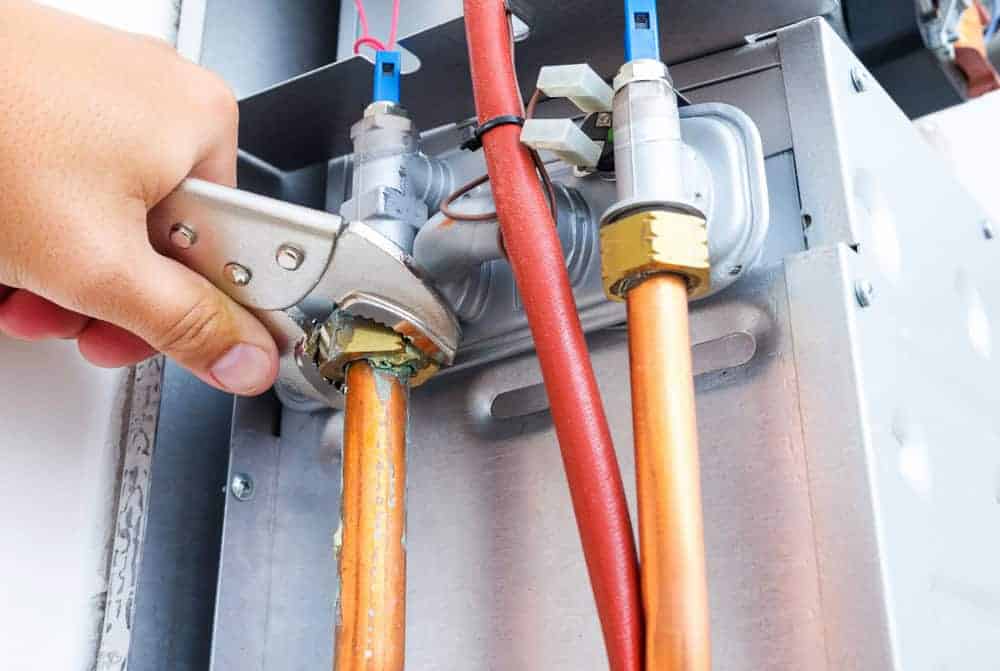
We also handle plumbing under the same roof, which matters in older Brielle homes where an HVAC service call sometimes uncovers water heater issues or aging supply lines in the same mechanical room. One call, one company, one accountable point of contact. If you’re active military, a veteran, or a first responder, we take 10% off — and that applies to every job, not just certain services.

Yes, and it’s one of the most underestimated maintenance issues for Brielle homeowners. The Manasquan River at Brielle is tidal and salty — not a freshwater river — which means properties along the waterfront and near the marina areas are exposed to salt-laden air year-round. That salt accelerates corrosion on the aluminum fins, copper refrigerant lines, and electrical connections on your outdoor condenser unit at a significantly faster rate than you’d see on an inland system. Without the right maintenance intervals and protective measures, a system that might last 15 years in a protected environment can start breaking down in 10.
The fix isn’t complicated, but it does require a contractor who’s actually paying attention to it. Regular coil rinses, corrosion-resistant coatings on vulnerable components, and knowing which equipment holds up better in coastal conditions all make a real difference. If you’re on or near the river in Brielle and you haven’t had your outdoor unit inspected recently, that’s worth prioritizing before the next cooling season starts.
It does, and Brielle’s process has a specific step that trips up contractors who aren’t familiar with it. Before a construction permit can be issued for a heating system installation in an existing home, you need a zoning clearance from Brielle’s Zoning Officer first. That’s a two-step process — zoning clearance, then construction permit — and skipping or rushing it creates real problems down the line.
An uninspected HVAC installation can void the manufacturer’s warranty on your equipment. It can also complicate a future home sale, which is a significant issue in Brielle where median home values are approaching $1.73 million. We handle both steps through Brielle’s Building Department as part of every installation we do. You don’t have to track down the right forms or figure out the sequence — we manage it, and we don’t consider the job done until it’s passed final inspection.
The honest answer is that it depends on the age of the system, what’s failing, and what repairs are going to cost relative to replacement. A general rule of thumb in the industry is that if a repair is going to cost more than half the price of a new system, and your equipment is already 10 or more years old, replacement usually makes more financial sense over the next few years.
For Brielle homes specifically, the coastal environment accelerates that timeline. A system that’s been exposed to salt air for a decade without proper maintenance may have corrosion damage that makes repairs less reliable even if the immediate fix holds. We look at the full picture when we come out — not just the part that’s failing right now — and give you a clear read on where the system actually stands. If repair is the right call, we’ll tell you. If the math points toward replacement, we’ll show you why rather than just pushing you toward a bigger ticket.
For waterfront and near-waterfront properties in Brielle, equipment selection matters more than it does in a protected inland setting. Coastal-rated condenser units — sometimes called “coastal series” or “salt-air rated” models — use components and coatings specifically designed to resist the accelerated corrosion that comes with salt air exposure. They cost a bit more upfront, but they hold up significantly better in this environment and reduce the frequency of service calls over the life of the system.
Ductless mini-split systems are also worth considering for certain applications in Brielle homes, particularly older properties that have been renovated or expanded where extending existing ductwork is impractical or expensive. They’re highly efficient, they handle humidity well, and because the outdoor unit is compact and can be positioned strategically, you have more flexibility in minimizing direct salt air exposure. We’ll walk you through the options that make sense for your specific home — there’s no single right answer, and it depends on your layout, your current system, and how you use the space.
Yes. Under the Inflation Reduction Act, homeowners who install qualifying high-efficiency heat pumps can claim a federal tax credit of up to 30% of the installation cost, with an annual cap of $2,000. On a system replacement in the $10,000 to $14,000 range — which is a realistic cost window for a full system in a Brielle home given New Jersey’s labor and permitting costs — that’s a meaningful reduction in your net out-of-pocket expense.
The key is making sure the equipment you’re installing actually qualifies, and that the installation is documented correctly. Not every system and not every installation automatically qualifies — there are efficiency thresholds the equipment needs to meet, and the work needs to be done by a licensed contractor. We know which systems qualify under current IRA guidelines and can make sure you have what you need for your tax filing. If you’re already planning a replacement, it’s worth having that conversation before you commit to a specific system.
Yes — and in Brielle, that matters more than it might somewhere else. The area sees roughly 101 nights per year below freezing, with January lows that can drop into the low 20s. A heating system that quits at 2 AM in February isn’t something you can wait until morning to deal with, especially in an older home or if you have family members who are more vulnerable to the cold.
Our 24/7 emergency service is an actual answered phone, not a voicemail that gets returned the next business day. When you call, a real person picks up and we get a technician moving. We’re based in Manasquan — across the Route 35 bridge from Brielle — so response time is real, not theoretical. The same applies in summer. An AC system that fails on a humid July night near the river, when the heat index is pushing 95 and the moisture in the air is already high, is a genuine problem. We’re available for that too.