Reviews

Port Monmouth isn’t your average New Jersey town, and your heating system takes on more than most. Salt air off Raritan Bay quietly corrodes burners, heat exchangers, and flue connections over time — cutting years off a system that might otherwise run fine ten miles inland. When a technician understands that going in, the diagnosis is sharper and the repair actually holds.
A lot of the homes in Port Monmouth were built as summer cottages and converted over the decades. Others were elevated or rebuilt after Sandy, which means systems that went in around 2012 to 2014 are now hitting that ten-to-twelve-year mark — the phase where components start to go. If your furnace has been running harder lately, cycling on and off, or struggling to keep up on cold nights, that’s not a coincidence. It’s a pattern our technicians recognize because we’ve seen it in homes just like yours along the bayshore.
What you get on the other side of a proper repair isn’t just heat. It’s a system running at the efficiency it’s supposed to, lower energy bills, and the confidence that you won’t be back in this same situation in six weeks. That’s the outcome that matters.
We’re a family-owned business based in Monmouth County — not a national franchise routing your call through a regional hub. Since 2014, we’ve been serving homeowners across the bayshore, including Port Monmouth, Belford, and the surrounding Middletown Township neighborhoods. That matters when our technician pulls up already knowing what Route 36 homes look like, how older bayshore construction is laid out, and what post-Sandy rebuilds typically involve from an HVAC standpoint.
Every technician is licensed, insured, and compliant with New Jersey HVAC codes and Middletown Township permit requirements. There are no subcontractors, no rotating crews, no guessing. When you call, you get someone who knows Port Monmouth, explains what we found in plain language, and charges you exactly what we quoted — nothing more.
With 686+ verified reviews across Google, Angi, and HomeAdvisor, the track record is there to look at before you ever pick up the phone.

It starts with a call or a booking — any time of day or night. We offer 24/7 emergency availability, and a verified customer review documents a technician dispatched within two hours of an emergency call. If you’re a commuter catching the Seastreak Ferry from Belford and you come home to a cold house, you’re not sitting on hold or waiting until morning.
When our technician arrives, we do a full diagnostic before anything else. We’re looking at the whole system — not just the obvious symptom. In a Port Monmouth bayshore home, that means checking for salt-corrosion wear on components, inspecting the heat exchanger, and assessing whether the issue is an isolated part failure or a sign of something broader. You get a clear explanation of what’s wrong and a written price before any work starts. No pressure, no upsell, no mystery fees.
If the repair requires a permit — which is handled through Middletown Township’s Building Department for any furnace replacement work — we manage that process. You don’t have to figure out the paperwork. Once the work is done, the system is tested, and you’re walked through what was repaired and why. If there’s a financing option that makes sense for your situation, that conversation happens before you commit — not after.
Ready to get started?
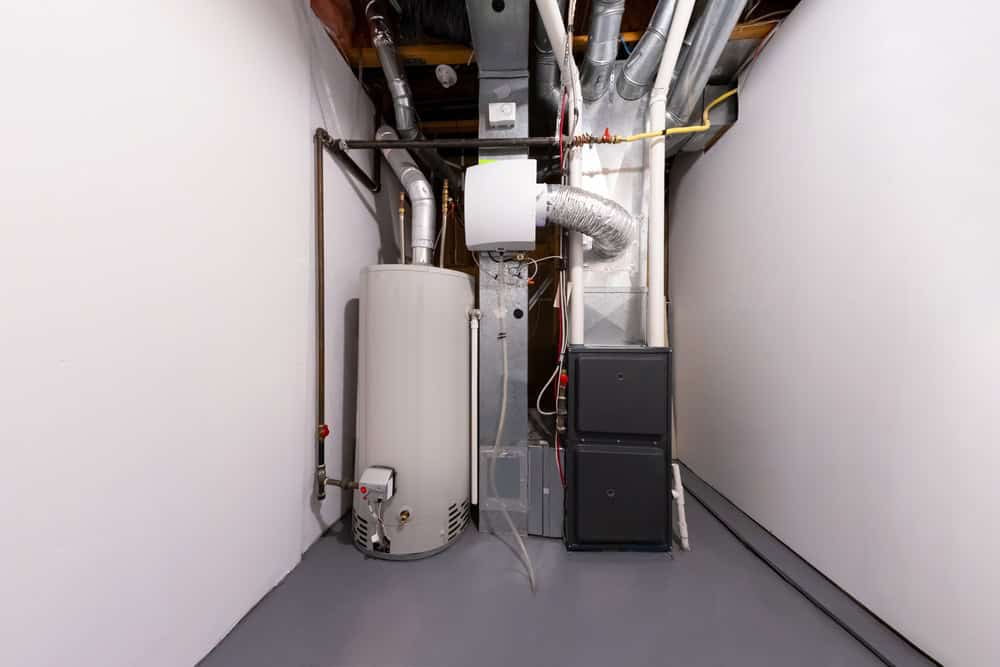
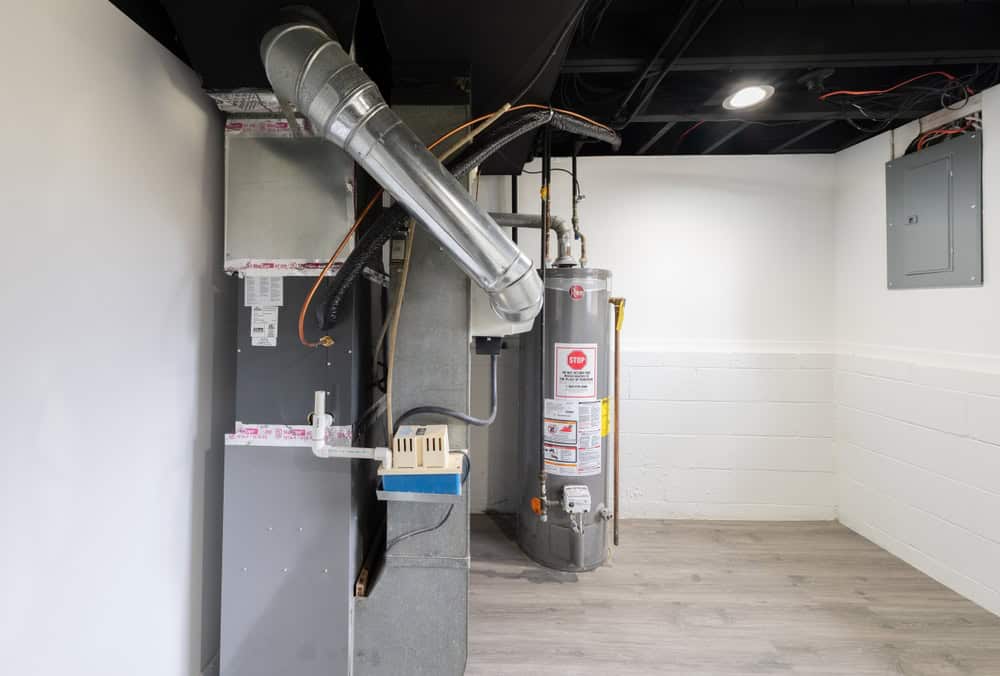
We handle the full range of furnace repair and gas furnace service — ignitor failures, blower motor issues, cracked heat exchangers, faulty limit switches, pressure switch problems, and everything in between. If it’s a broken furnace, we can diagnose it. If it’s repairable, we’ll repair it. If replacement genuinely makes more sense given the system’s age and condition, we’ll tell you that too — with the actual numbers laid out so you can make the call.
For Port Monmouth homes specifically, a few things come up more often than they do inland. Salt air corrosion on older systems is one. Legacy ductwork in converted cottages is another. And for homes that were elevated after Sandy, there are sometimes mechanical configurations that require a technician who’s actually worked in those setups before — not one who’s seeing it for the first time. Our team has that experience across the Middletown bayshore.
Pricing is upfront and in writing. We also offer 0% financing for larger repairs or full system replacements, so a $2,000 repair doesn’t have to blow up your month. Military personnel and first responders receive 10% off, and if your situation leads toward a new system, there are additional savings available on installations. The goal is a repair that holds — not a quick fix that brings you back to the same problem in February.

It’s a real issue, not just something people say to explain away normal wear. Salt-laden air off Raritan Bay accelerates corrosion on metal furnace components — burners, heat exchangers, flue connections, and electrical contacts — faster than you’d see in a home ten or fifteen miles inland. The effect compounds over time, and it’s one reason why a Port Monmouth furnace might show significant wear at twelve years old while a similar unit in Freehold or Holmdel is still running clean at sixteen or seventeen.
During a diagnostic visit, a technician who understands coastal conditions will specifically look for this kind of corrosion — not just the symptom that triggered the call. That’s important because salt-related wear on a heat exchanger, for example, is a safety issue, not just a performance one. Catching it early can mean a component repair instead of a full system replacement. If you haven’t had your system inspected in a while and you’re within close range of Raritan Bay, it’s worth getting eyes on it before the next heating season starts.
Not necessarily. A lot of systems that went in during the 2012 to 2014 post-Sandy rebuilding period in Port Monmouth are now between ten and twelve years old, which is right when components start to wear out regardless of brand. Add the bayshore environment into the equation — salt air, elevated humidity, systems that run harder in winter because older Port Monmouth homes lose heat faster — and it’s not unusual to see wear showing up earlier than the average lifespan would suggest.
There’s also the reality that some post-Sandy HVAC installs were done quickly, under pressure, and not always by contractors who are still around to stand behind the work. If you’re not sure what you have, a diagnostic visit gives you a clear picture of the system’s condition — what’s holding up, what’s close to the end of its useful life, and what the most cost-effective path forward looks like. That’s a much better position to be in than finding out on the coldest night of the year.
Common furnace repairs — things like ignitor replacements, pressure switch issues, or thermocouple failures — typically run between $130 and $500. Larger component repairs involving blower motors or heat exchangers can run $800 to $1,500 depending on the part and the system. Emergency calls during peak winter months can carry a premium over standard scheduling, which is worth factoring in if your system has been showing signs of trouble for a while.
What you won’t get from us is a vague estimate followed by a larger bill. The price is written out before any work begins, and that’s the price you pay. If the diagnostic reveals something more involved than the initial call suggested, that conversation happens before the work does — not after. For larger repairs or full replacements, 0% financing is available so you can get the heat back on without absorbing the full cost at once.
For most repair work — replacing a part, fixing a component, cleaning and tuning a system — no permit is required. But if you’re replacing the furnace unit itself, a permit is required through Middletown Township’s Building Department, since Port Monmouth is an unincorporated community within Middletown Township rather than its own municipality. Any licensed contractor doing a full furnace replacement in Port Monmouth should be pulling that permit automatically — if one doesn’t mention it, that’s a flag worth paying attention to.
For homes in FEMA flood zones, which cover portions of Port Monmouth’s waterfront area, there’s an additional layer to consider. Mechanical equipment in elevated homes must be installed above the base flood elevation, and proper documentation of that installation can matter for your flood insurance coverage. Working with a fully licensed contractor who understands these requirements isn’t just about code compliance — it’s about protecting yourself if you ever need to file a claim.
The most common warning signs are things people tend to write off until they can’t anymore. Uneven heating — where some rooms are warm and others stay cold no matter what the thermostat says — often points to a blower issue, ductwork problems, or a heat exchanger that’s not performing the way it should. Short cycling, where the furnace kicks on and off repeatedly without completing a full heating cycle, is another one. So is a furnace that’s running constantly but still struggling to hit the temperature you’ve set.
In Port Monmouth’s older housing stock, you’ll also sometimes see issues tied to the original ductwork in converted cottages — systems that were designed for seasonal use and then asked to heat a home through a full bayshore winter. Unusual noises — banging, rattling, or a high-pitched squeal — usually mean something mechanical is worn or loose. And if your energy bills have climbed noticeably without a change in how you’re using the heat, that’s the system telling you it’s working harder than it should to do the same job.
Yes. Military personnel and first responders receive 10% off service, which is something we offer because these are real members of the Monmouth County community — people who live and work here, and whose households deal with the same bayshore heating challenges as everyone else. If you’re a veteran or an active first responder in Port Monmouth or the surrounding Middletown area, that discount applies to furnace repair and HVAC service.
For larger jobs — full system replacements or significant repairs — 0% financing is available with online prequalification. That’s relevant in a community where a lot of homeowners are managing the ongoing costs of maintaining older bayshore homes, and where an unexpected $2,000 or $3,000 repair bill isn’t something everyone can absorb in one payment. The financing option exists so that cost doesn’t become the reason you delay a repair that your home actually needs. If a new water heater or sewer line replacement comes up at the same time, we also offer $100 off new water heater installations and $250 off water and sewer line repairs.