Reviews
You’re not calling because you want to learn about boilers. You’re calling because it’s 20 degrees outside and your house feels like a freezer.
When your boiler’s working the way it should, you stop worrying about whether the kids’ rooms are warm enough. You stop checking the thermostat every hour. You stop wondering if that noise means something expensive is about to break.
A properly repaired boiler heats your home evenly, runs quietly, and doesn’t spike your gas bill because it’s struggling to keep up. It just works. That’s what you’re paying for—reliability when the temperature drops and peace of mind when you’re trying to sleep.
Most boiler problems don’t fix themselves. A small leak today turns into water damage next month. A strange noise becomes a full system failure during the coldest week of winter. The longer you wait, the more it costs and the worse the timing gets.
We work throughout Monmouth County, and we’ve seen just about every boiler problem that can happen in Spring Lake Heights homes. Older colonials with original cast iron radiators. Newer builds with high-efficiency systems. Townhouses with combination units that handle heat and hot water.
We’re licensed and insured in New Jersey, which means we follow state codes and our work is backed by real accountability. Our techs carry the tools and parts to handle most repairs on the first visit, so you’re not waiting days for a follow-up.
We don’t upsell replacements when a repair will do the job. We also don’t patch something that’s going to fail again in two months. You’ll know what’s wrong, what it costs to fix, and how long the repair should last before we start any work.

You call or message us with the problem. No heat, leaking water, strange sounds, pilot light won’t stay lit—whatever it is. If it’s an emergency, we prioritize getting someone out the same day.
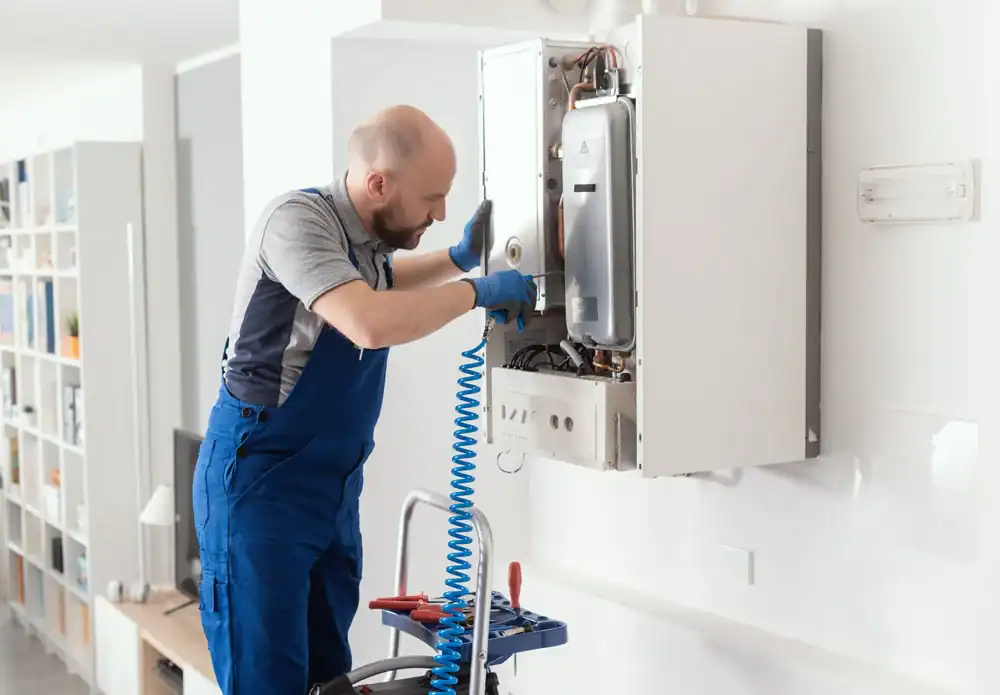
When the technician arrives, they’ll inspect your boiler to figure out what’s actually wrong. That includes checking the pressure, testing the ignition system, looking for leaks, and running through the safety controls. Most of the time, we can tell you what’s broken and what it’ll cost to fix within the first 30 minutes.
Once you approve the estimate, we handle the repair. That might mean replacing a circulator pump, fixing a leaking valve, cleaning out a clogged heat exchanger, or resetting a tripped safety switch. If we need a part we don’t have on the truck, we’ll let you know how long it’ll take to get it.
After the repair, we test the system to make sure it’s heating properly and holding pressure. You’ll get a clear explanation of what we did and any maintenance tips to keep things running smoothly.
Ready to get started?
Every boiler repair starts with a full system diagnostic. We don’t just fix the obvious problem and leave. We check the whole system to catch anything else that might fail soon.
Spring Lake Heights homes deal with hard water, which causes sediment buildup in boilers over time. That buildup makes your system work harder and shortens its lifespan. If we see that during the inspection, we’ll let you know what it means for your heating costs and how long your boiler’s likely to last.
Common repairs we handle include fixing leaks around valves and fittings, replacing faulty pressure relief valves, repairing or replacing circulators that move hot water through your radiators, and fixing ignition problems that keep your burner from firing. If your boiler’s leaking water, we’ll find the source and stop it before it damages your floors or encourages mold growth.
You’ll get upfront pricing before we start. No surprises, no hidden fees. If you’re military or a first responder, you’ll get 10% off the service. And if the repair ends up costing more than a replacement makes sense, we’ll walk you through both options so you can make the call.
Most boiler repairs in Spring Lake Heights run between $300 and $1,200, depending on what’s broken. A simple fix like replacing a pressure relief valve or resetting a safety control might cost $300 to $500. More involved repairs—like replacing a circulator pump, fixing a cracked heat exchanger, or addressing multiple leaks—can run $800 to $1,200 or more.
The age of your boiler matters. If your system is over 15 years old and needs a major repair, you might be better off replacing it. A new high-efficiency boiler costs between $3,500 and $7,500 installed, but it’ll save you money on heating bills and won’t need constant repairs.
We’ll give you an upfront estimate before starting any work. If the repair doesn’t make financial sense, we’ll tell you. You’re not locked into anything until you approve the price.
The most common issue we see is low water pressure. Boilers need a certain pressure level to operate safely, and if it drops too low, the system shuts down. That’s usually caused by a leak somewhere in the system or a faulty pressure relief valve.
Ignition problems are another frequent culprit. If the pilot light won’t stay lit or the burner won’t fire, it could be a bad thermocouple, a clogged burner, or an issue with the gas supply. Sometimes it’s as simple as a tripped safety switch that needs to be reset.
Circulator pump failures are common in older systems. The pump moves hot water from the boiler through your radiators or baseboard heaters. When it fails, the boiler might run, but your house won’t heat up. You’ll also see issues with leaking valves, airlocks in the system, and sediment buildup that clogs pipes and reduces efficiency.
If your boiler is under 10 years old and the repair costs less than a third of what a replacement would cost, repairing usually makes sense. If it’s over 15 years old and needs a major repair, replacement is often the smarter move.
Older boilers are less efficient, which means higher heating bills. A boiler from the 1990s might run at 70-80% efficiency, while a new high-efficiency model runs at 90-98%. That difference adds up over a New Jersey winter, especially with gas prices up 16% this year.
Also consider how often you’re calling for repairs. If you’ve had two or three service calls in the past year, you’re throwing money at a system that’s on its way out. At that point, a replacement gives you reliability and lower monthly costs. We’ll walk you through the math so you can see what makes sense for your situation.
Most boiler repairs take between one and three hours once the technician arrives. Simple fixes—like resetting a safety control, replacing a thermocouple, or adjusting water pressure—can be done in under an hour.
More complex repairs take longer. Replacing a circulator pump usually takes two to three hours. Fixing multiple leaks or addressing a clogged heat exchanger can take three to four hours, depending on how accessible everything is.
If we need to order a part, that adds time. We carry common parts on the truck, but if your boiler uses a specialized component, it might take a day or two to get it. We’ll let you know right away if that’s the case and give you a realistic timeline. For emergency calls during winter, we’ll do everything we can to get your heat back on the same day, even if it means a temporary fix while we wait for the right part.
Turn off the boiler immediately. There should be a power switch near the unit—flip it off. Then locate the water supply valve and shut that off too. This stops more water from entering the system and limits the damage.
Put towels or a bucket under the leak to protect your floor. Don’t try to fix it yourself, especially if it’s a gas boiler. Boiler leaks can be caused by corroded pipes, faulty valves, or a cracked heat exchanger, and some of those issues involve pressurized water or gas lines that need professional handling.
Call us as soon as you notice the leak. Even a small leak can cause serious water damage to floors, walls, and subflooring if it’s not addressed quickly. It can also lead to mold growth, which becomes a bigger problem than the boiler itself. We’ll get someone out fast to find the source, stop the leak, and repair the damage before it gets worse.
Yes. We’re available 24/7 for heating emergencies. If your boiler goes out in the middle of the night or during a winter storm, you can reach us and we’ll get a technician out as quickly as possible.
Emergency calls get priority, especially when it’s dangerously cold outside. We understand that losing heat in January isn’t something you can wait until Monday to fix. Our trucks are stocked with common parts so we can handle most repairs on the spot, even during off-hours.
Emergency service does cost more than a scheduled appointment, but you’re paying for immediate response when you need it most. We’ll still give you upfront pricing before we start the work. And if you’re military or a first responder, you’ll still get the 10% discount, even on emergency calls.