Reviews
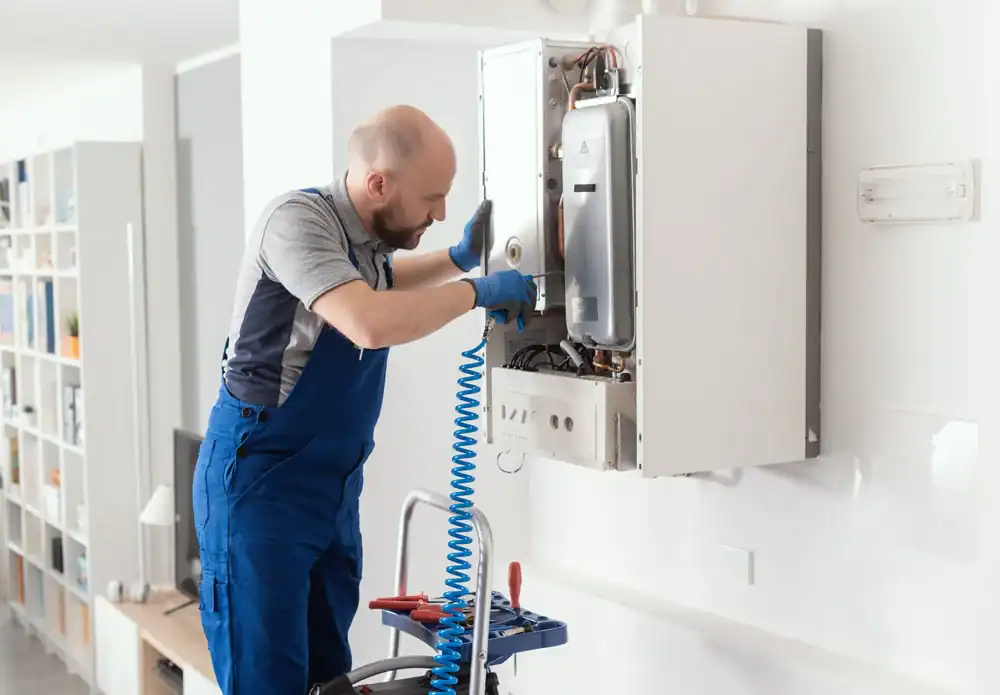
You know that sinking feeling when you come downstairs and the house is freezing. Or when you hear banging in the basement at 2 AM. That’s your boiler telling you something’s wrong, and ignoring it just makes the repair bill bigger.
Here’s what changes when your heating system actually works. Your energy bills stop creeping up every month. You’re not constantly adjusting the thermostat hoping for a miracle. Your family stops complaining about cold bedrooms.
Most boiler problems in Shark River Hills come down to a few things: frozen condensate pipes during those brutal Jersey winters, mineral buildup from hard water, or worn-out parts that finally gave up. The good news? Catching these early means you’re looking at a few hundred dollars instead of a few thousand.
When your boiler’s running right, you forget it exists. That’s exactly how it should be.
We’ve been handling heating repair and plumbing throughout Monmouth County for over a decade. We’re not a national chain that sends whoever’s available. We’re local, licensed, and we actually answer our phones.
Most homes in Shark River Hills were built in the 60s, which means a lot of boilers are working overtime. We’ve seen every issue these systems throw at homeowners, from pressure valve failures to circulation pump breakdowns.
Our techs are licensed and insured, which matters more than you’d think. When someone’s working on your heating system, you want to know they’re doing it right and you’re covered if something goes sideways. We also offer financing options and 10% off for military and first responders, because that’s just how we operate.

First, you call or contact us online. If it’s an emergency, we can usually get someone to your home the same day. No waiting around for a three-day window.
When we arrive, we start with a full diagnostic. That means checking your pressure levels, inspecting the heat exchanger, testing the thermostat connection, and looking for leaks or corrosion. We’re not guessing—we’re finding the actual problem.
Before we touch anything, you get a clear price. No hidden fees or surprise charges after the work’s done. If you need a part replaced, we explain what it does and why it matters. If your system is on its last legs, we’ll tell you that too, along with what a replacement would run.
Most repairs take a few hours. We test everything before we leave to make sure your heat’s working properly. You’ll also get straightforward advice on maintenance so you’re not calling us back in two months with the same issue.
Ready to get started?
Boiler leaking water? That’s usually a pressure valve issue or a crack in the heat exchanger. We’ll find the source, not just patch the symptom. Leaks can cause serious damage to your floors and walls if you let them go.
Strange noises mean trapped air, sediment buildup, or a failing pump. That banging or whistling sound isn’t normal, and it’s your system telling you it’s working too hard. We’ll flush the system, bleed the radiators, or replace the faulty component.
No heat at all? Could be your thermostat, your pilot light, or a circulation problem. We check the simple stuff first before assuming you need major work. Sometimes it’s a quick fix that takes twenty minutes.
In Shark River Hills, frozen condensate pipes are a real problem during January and February. Your boiler shuts down to protect itself when that line freezes. We’ll thaw it safely and show you how to prevent it next winter. This is one of those local issues that out-of-town companies don’t always catch right away.
Most boiler repairs in this area run between $200 and $800, depending on what’s broken. A simple thermostat replacement or pressure valve fix sits on the lower end. If you need a circulation pump, heat exchanger, or control board, you’re looking at the higher end or beyond.
Here’s the thing: the longer you wait, the more expensive it gets. A small leak becomes a cracked heat exchanger. A strange noise becomes a seized pump. We’ve seen $300 repairs turn into $2,000 replacements because someone hoped the problem would go away.
We give you the price before we start work. No surprises, no “well, actually” moments when we hand you the bill. If your boiler is old enough that repairs don’t make financial sense, we’ll tell you that too and explain your replacement options.
Most repairs take two to four hours from start to finish. That includes diagnosing the problem, getting the parts if we don’t have them on the truck, doing the actual repair, and testing the system.
Simple fixes like replacing a thermostat or bleeding radiators might only take an hour. More involved work like swapping out a circulation pump or fixing a gas valve takes longer. If we need to order a specialty part, that can add a day or two, but we’ll let you know upfront.
Emergency repairs sometimes take a bit longer because we’re working fast to get your heat back on. But we’re not rushing through the job—we’re just prioritizing getting your system running safely. The last thing you need is a quick fix that fails again in a week.
If your boiler is over 15 years old and needs a major repair, replacement usually makes more sense. Here’s the math: older boilers run at 80-85% efficiency on a good day. New high-efficiency models hit 95-98%, which means lower heating bills every single month.
Let’s say you’re looking at a $1,500 repair on a 20-year-old boiler. That same money could go toward a new system that’ll last another 15-20 years and cut your energy costs by 15-20%. Plus, you’re not gambling on what else might break next winter.
We’re not going to push you toward a replacement if a repair makes sense. But if you’re throwing good money after bad, we’ll have that conversation honestly. Some boilers are worth fixing. Some aren’t. We’ll walk you through the actual numbers so you can make the right call for your situation and budget.
Leaks usually come from one of three places: the pressure relief valve, the pump seal, or a crack in the heat exchanger. The pressure valve is designed to release water if the system pressure gets too high, so sometimes that’s actually working as intended—but it means your pressure needs adjusting.
Pump seals wear out over time, especially if your system is running constantly during cold stretches. That’s a straightforward fix that doesn’t cost much. A cracked heat exchanger is more serious because it means your boiler has corroded from the inside, usually from age or poor maintenance.
The location of the leak tells us a lot. Water pooling under the boiler points to the heat exchanger. Dripping from pipes means a connection issue or valve problem. We’ll trace it to the source and explain what’s happening before we fix anything. Ignoring a leak just leads to water damage, mold, and a bigger repair bill down the road.
That banging sound—called “kettling”—happens when mineral deposits build up on your heat exchanger. Water gets trapped under the buildup, boils, and creates steam bubbles that collapse loudly. It’s the same principle as a kettle on the stove, just much louder and more annoying.
Whistling usually means trapped air in the system or a partially closed valve restricting water flow. Sometimes it’s as simple as bleeding your radiators. Other times, it’s a sign that your pump is struggling or your system pressure is off.
These noises mean your boiler is working harder than it should, which drives up your energy bills and wears out components faster. We’ll flush the system to remove sediment, bleed the air out, and check all your valves and connections. Most noise issues are fixable without major repairs, but you don’t want to let them go until something actually breaks.
Yes. We’re available 24/7 for heating emergencies, which in January in New Jersey is pretty much any time your boiler stops working. You’re not waiting until Monday morning when it’s 15 degrees outside and your pipes are at risk of freezing.
When you call for emergency service, you’re talking to someone who can actually help you, not an answering service reading from a script. We’ll ask a few quick questions to understand what’s happening, then get a tech to your house as fast as possible—usually within a few hours.
Emergency rates are higher than regular service calls, but we’re upfront about that cost before we come out. Sometimes we can walk you through a temporary fix over the phone to get you through the night, then schedule a proper repair the next day at standard rates. We’re not here to gouge you when you’re in a bind—we’re here to get your heat back on safely and quickly.