Reviews
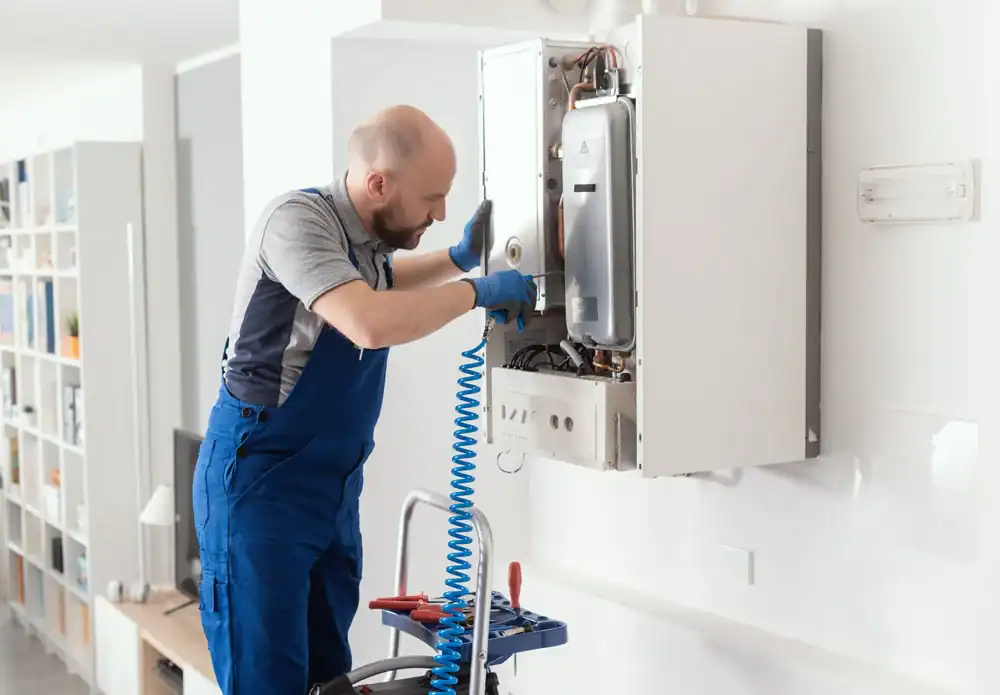
When your boiler quits in the middle of a Jersey winter, you’re not thinking about efficiency ratings or maintenance schedules. You need heat. Now.
Most boiler breakdowns happen at the worst possible time—overnight, during a cold snap, right when you have family visiting. The house gets cold fast. You’re layering up indoors, worrying about pipes freezing, and wondering how much this is going to cost you.
A working boiler means you stop thinking about your heating system entirely. No more strange noises keeping you up at night. No more cold spots in the house. No more checking the thermostat every hour hoping something changed. Just consistent warmth when you need it, without the stress of wondering if it’ll make it through another winter.
We work throughout Monmouth County, and we know Sea Girt homes. Many of the properties here were built in the 60s or earlier—beautiful homes with heating systems that have seen decades of hard Jersey winters.
We’re fully licensed and insured in New Jersey, which matters more than most people realize until something goes wrong. When we’re working on your heating system, you’re covered. Our trucks carry the parts that actually fail in older boilers, so we’re not making multiple trips or ordering components that take a week to arrive.
You’ll get upfront pricing before any work starts. No hourly rates that climb while we’re diagnosing. No surprise fees when the job takes longer than expected. We tell you what it costs, you decide if it makes sense, and we move forward from there.

You call us, and a real person answers—not a voicemail system that routes you through six options. If it’s an emergency and your heat is out, we prioritize getting someone to you fast. For non-emergency service, we schedule a time that actually works for you.
When we arrive, we’re diagnosing the actual problem, not just the obvious symptom. A boiler that won’t fire up could be a bad ignitor, a pressure issue, a faulty circulator pump, or a dozen other things. We test the system properly to find out what’s really wrong.
Once we know what needs fixing, we give you the price. If you approve, we handle the repair right there—most of the time on the first visit because we stock common parts. We test everything after the repair to make sure your heat’s working correctly, not just technically “on.” Then we clean up and get out of your way.
If your boiler is old enough that repairs don’t make financial sense anymore, we’ll tell you that too. You’re not getting sold a new system because it’s more profitable for us. You’re getting honest advice about whether fixing it buys you another few years or if you’re just delaying the inevitable.
Ready to get started?
Most boiler failures in Sea Girt fall into a few categories. Ignition problems are common—your system tries to fire up but nothing happens. That’s usually an ignitor, a gas valve issue, or a problem with the pilot light assembly.
Leaking water is another frequent call. Sometimes it’s a small drip from a valve or fitting that’s easy to fix. Other times it’s a crack in the heat exchanger, which is a bigger problem. We find the source and tell you what it means for your system.
No heat upstairs but the downstairs is fine? That’s often a circulation issue—either a pump that’s failing or air trapped in the lines. Strange noises like banging, whistling, or gurgling usually point to pressure problems, sediment buildup, or components that are wearing out.
We also handle pressure drops, thermostat issues, and frozen condensate lines—something that happens more than you’d think during hard Jersey freezes. If your boiler is running but your energy bills are climbing, that’s often a sign that parts are wearing out and the system is working harder than it should to keep up.
Most boiler repairs run between $150 and $800 depending on what’s broken and what parts are needed. Simple fixes like replacing a faulty thermostat or bleeding air from the lines are on the lower end. Replacing a circulator pump, gas valve, or ignitor costs more because the parts themselves are more expensive.
Emergency service outside normal business hours usually comes with a trip fee, which can add $100 to $350 to the total cost. That’s standard across the industry, not something unique to us. If you’re calling at 2 a.m. because your heat went out, you’re paying for the availability.
We give you the full price before we start any work. You’ll know what the repair costs, what the part costs, and what you’re paying for. If the repair estimate is high enough that replacing the boiler makes more sense, we’ll walk you through that math so you can make an informed decision.
Most repairs take one to three hours once we’re on site and have diagnosed the problem. Straightforward fixes like replacing an ignitor or a pressure relief valve are usually done in under two hours. More involved repairs like replacing a circulator pump or fixing a leak in the heat exchanger take longer.
The diagnosis itself usually takes 30 to 45 minutes. We’re testing components, checking pressure, looking at the combustion process, and making sure we understand what’s actually failing—not just guessing based on symptoms.
If we need a part that’s not on the truck, that adds time. We stock the most common failure points for boilers in this area, so same-day completion happens more often than not. But if your system is older or uses a less common part, we might need to order it and come back. We’ll tell you that upfront so you’re not sitting around waiting.
If your boiler is less than 10 years old and the repair costs less than a third of what a new system would cost, repairing usually makes sense. You’re buying yourself several more years of reliable heat without the expense of a full replacement.
If your boiler is 15 years or older and you’re looking at a repair that costs $1,000 or more, replacement becomes worth considering. Older systems are less efficient—sometimes running at only 50 or 60 percent efficiency compared to modern boilers that hit 90 percent or higher. That difference shows up in your energy bills every month.
Frequent repairs are another sign. If you’re calling for service every year or multiple times per season, you’re spending money on a system that’s just going to keep breaking. At that point, the cost of ongoing repairs and higher energy bills often exceeds the cost of replacing it with something reliable. We’ll walk you through the actual numbers so you can decide what makes sense for your situation and your budget.
Leaks usually come from one of a few places. Pressure relief valves can start dripping when they wear out or when the system pressure is too high. That’s a relatively simple fix—either adjusting the pressure or replacing the valve.
Corrosion is another common cause, especially in older boilers. Over time, the metal components deteriorate and develop small holes or cracks. If the leak is coming from a pipe fitting or a valve connection, that’s often fixable. If it’s coming from the heat exchanger itself, that’s a more serious problem because the heat exchanger is the core of the system.
Pump seals can also fail and cause leaks around the circulator pump. That usually means replacing the pump. Sometimes leaks are caused by loose connections that just need to be tightened, but you need someone who knows what they’re looking at to determine the real source. A small drip can turn into a bigger problem fast, especially if it’s near electrical components or if it’s causing water damage to your floors or walls.
Yes. We’re available 24/7 for heating emergencies, which in the middle of a New Jersey winter is a real need, not a marketing line. When your heat goes out overnight and the temperature is dropping, that’s not something that can wait until Monday morning.
Emergency calls get prioritized. We aim to have someone on site within an hour for true emergencies where you have no heat. That doesn’t mean we’re always exactly 60 minutes, but we’re moving fast to get your heat back on.
Emergency service does cost more than scheduled service—that’s the trade-off for immediate availability at any hour. We’re upfront about that pricing before we dispatch. If your situation can wait until normal business hours, we’ll tell you that too. But if you’re dealing with freezing temperatures and no heat, we’ll get someone to you as quickly as possible.
Annual maintenance is the standard recommendation, ideally in the fall before you’re running your heat constantly. A yearly inspection catches small problems before they turn into expensive failures in the middle of winter.
During a maintenance visit, we’re cleaning components, checking for wear, testing safety controls, and making sure everything is operating efficiently. That includes looking at the heat exchanger for cracks, testing the pressure, checking the venting system, and making sure the combustion process is clean and complete.
Regular maintenance extends the life of your boiler and keeps it running efficiently, which lowers your energy bills. It also reduces the chances of a breakdown when you actually need heat. Most boiler failures happen during the coldest stretches of winter because that’s when the system is working hardest. A well-maintained boiler is far less likely to quit on you during a cold snap than one that hasn’t been looked at in years.