Reviews
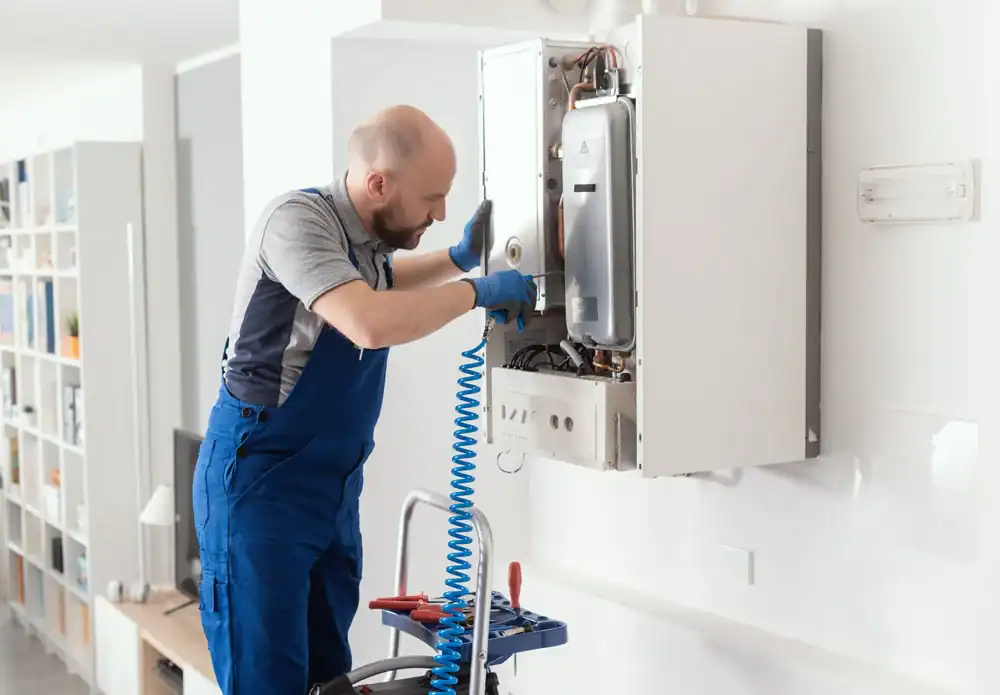
You’re not just paying for a repair. You’re paying to stop worrying about whether your house will be warm when you wake up tomorrow.
When your boiler’s running the way it should, your mornings are quieter. No banging pipes. No cold spots in the bedrooms. No wondering if today’s the day it quits for good.
You’re also protecting what matters. A boiler that’s leaking water or losing pressure isn’t just uncomfortable—it’s a risk. Frozen pipes. Carbon monoxide. Water damage that spreads before you even notice it. Getting ahead of that means you’re not dealing with an insurance claim in February.
And if your system’s older or inefficient, a proper repair can actually lower your heating bills. New Jersey winters are expensive enough without a boiler that’s burning fuel just to keep up. You want a system that heats your home without costing you an extra hundred bucks a month.
AME Plumbing Heating and Cooling is locally owned and based right here in Monmouth County. We’re not a franchise that rotates techs through your town—we live here, and we’ve been fixing boilers and heating systems for years.
Our team is fully licensed and insured to work on residential and commercial systems throughout New Jersey. That means we’re held to state standards, and you’re covered if anything goes sideways. We also stock parts on our trucks, so most repairs get done the same day we show up.
Port Monmouth winters don’t mess around, and neither do we. When your heat goes out overnight, we’re available 24/7. You call, we come. No runaround, no waiting until Monday.

First, we pick up the phone. If it’s an emergency, we prioritize your call and get someone out fast—usually within a few hours. If it’s not urgent, we schedule a time that works for you.
When we arrive, we run a full inspection of your boiler. That means checking pressure, looking for leaks, testing the pilot light, inspecting the heat exchanger, and making sure your system isn’t throwing any error codes. We’re not just fixing the obvious problem—we’re finding out why it happened in the first place.
Once we know what’s wrong, we explain it in plain terms. No jargon. No upselling. Just a clear breakdown of what needs to happen and what it’ll cost. You get upfront pricing before we touch anything.
If you’re good to move forward, we handle the repair right there. Most jobs get finished the same visit because we carry common parts with us. After the work’s done, we test the system to make sure everything’s running smooth, and we walk you through what we did.
Ready to get started?
We handle the full range of boiler issues—leaks, pressure problems, pilot light failures, strange noises, no heat, and everything in between. If your boiler’s not doing its job, we figure out why and fix it.
That includes repairing or replacing faulty valves, fixing circulation pumps, bleeding radiators, replacing thermostats, addressing ignition issues, and stopping leaks before they cause water damage. We also check your system for carbon monoxide risks and make sure your venting is clear.
In Port Monmouth and the surrounding Monmouth County area, a lot of homes are running older boiler systems. That’s fine—they can last decades if they’re maintained. But when something breaks, you need someone who knows how to work on older equipment and can still find the right parts. We do that.
We also understand the local climate. New Jersey winters mean your boiler’s running hard from October through April. Add in the rising cost of natural gas—up 16% for over 500,000 families in the state—and you can’t afford a system that’s wasting fuel. A well-maintained boiler runs more efficiently, which saves you money every month.
If your boiler’s under 15 years old and the repair cost is less than half the price of a new system, fixing it usually makes sense. Most boilers are built to last 20 to 30 years if they’re maintained, so age alone isn’t a reason to replace.
That said, if your system’s breaking down multiple times a year, or if the heat exchanger is cracked, replacement might be the smarter move. A cracked heat exchanger is a safety issue—it can leak carbon monoxide into your home. That’s not something you patch up.
We’ll walk you through the math when we’re at your house. You’ll know what the repair costs, what a new system costs, and how much longer your current boiler is likely to last. Then you decide.
Leaks usually come from one of three places: a broken seal, a faulty pressure valve, or corrosion in the tank or pipes. If the pressure in your system gets too high, the relief valve opens to let water out—that’s actually a safety feature, but it means something else is wrong.
Corrosion happens over time, especially if your system’s older or if the water in your area is hard. Monmouth County water can be tough on boilers. Once corrosion starts, it spreads, and that’s when you see leaks around joints, valves, or the tank itself.
If you’re seeing water pooling under your boiler, don’t ignore it. Even a small leak can cause serious damage to your floors, walls, or foundation. And if the leak’s coming from the heat exchanger, that’s a bigger problem—it could mean your system’s done.
Most repairs take between one and three hours, depending on what’s broken and whether we have the part on the truck. If it’s something straightforward—like replacing a thermostat, bleeding a radiator, or fixing a valve—we’re usually done in under two hours.
If the issue’s more complex, like a failing circulator pump or a problem with the control board, it might take longer. And if we need to order a part, we’ll get it as fast as possible and come back to finish the job.
For emergency calls, we move fast. If your heat’s out in the middle of winter, we’re not taking our time. We get your system running again so your house doesn’t turn into an icebox overnight.
Yes. We’re available 24/7 for heating emergencies in Port Monmouth and throughout Monmouth County. If your boiler shuts down overnight or on a weekend, you don’t have to wait until Monday morning to get help.
When you call, we prioritize emergency situations—especially if you have no heat, a gas leak, or a system that’s leaking water. We typically arrive within a few hours, and we bring the tools and parts needed to handle most repairs on the spot.
Emergency service costs more than a scheduled appointment, but that’s standard across the industry. You’re paying for someone to drop what they’re doing and come to your house at 2 a.m. in January. If that’s what you need, we’ll be there.
Regular maintenance is the best way to avoid a breakdown when you need your heat the most. That means scheduling an annual inspection before the heating season starts—ideally in the fall, before you’re running your boiler every day.
During a maintenance visit, we check all the critical components: the heat exchanger, the pressure, the venting, the ignition system, and the safety controls. We also bleed the radiators, test for leaks, and make sure your system’s running efficiently. Catching small issues early means they don’t turn into expensive emergencies later.
We also recommend keeping an eye on your boiler throughout the winter. If you hear strange noises, notice uneven heating, or see your energy bills spike, don’t wait. Call us before it turns into a no-heat situation at the worst possible time.
Boilers involve both plumbing and heating systems, so you need someone who’s licensed to work on both. A standard plumber can handle the water lines and pressure issues, but if the problem’s with the burner, ignition, or gas lines, you need a heating technician.
At AME Plumbing Heating and Cooling, our team is trained and licensed for both plumbing and HVAC work. That means we can handle anything your boiler throws at us—whether it’s a leaking pipe, a faulty thermostat, or a burner that won’t fire.
You don’t need to call two different companies or figure out who’s responsible for what. We handle the whole system, and we’re insured to do the work throughout New Jersey. That’s one less thing you have to worry about when your heat’s not working.