Reviews
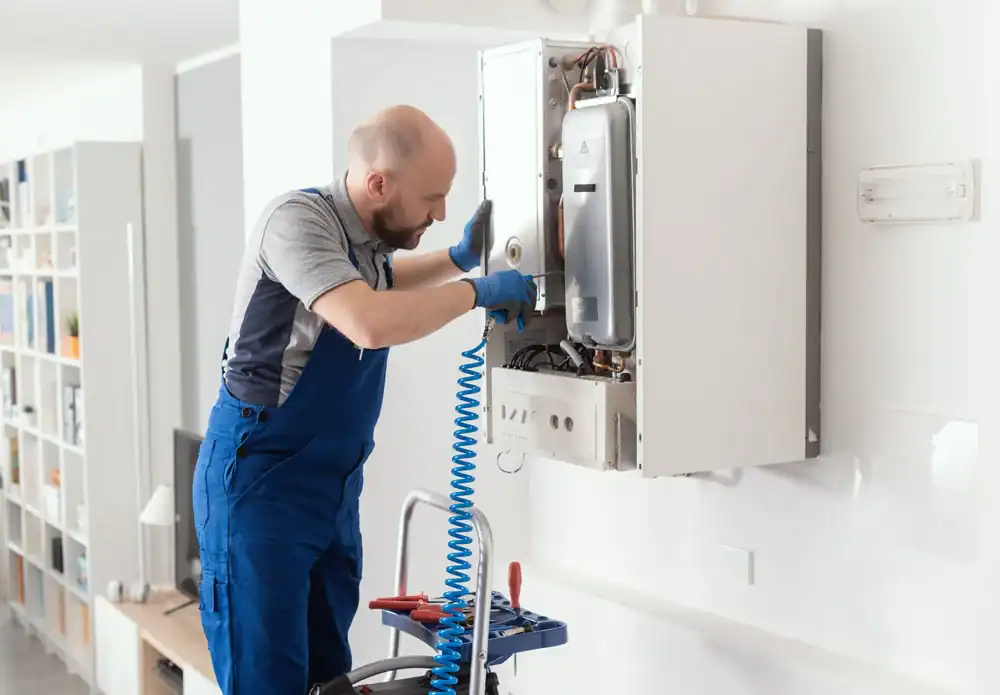
You wake up to a warm house. Your shower doesn’t run cold halfway through. Your energy bill stops creeping up every month because your system isn’t working twice as hard to do half the job.
That’s what happens when your boiler gets fixed correctly the first time. No callbacks. No bandaid repairs that fall apart three weeks later when the temperature drops again.
You’re not dealing with strange banging noises at 2 a.m. or watching your breath fog up in your own kitchen. Your system runs quietly, heats evenly, and doesn’t make you wonder if today’s the day it finally quits. You get reliability—and in Neptune Township winters, that’s not a luxury.
When your boiler’s leaking water or making sounds like it’s about to launch into orbit, you need someone who knows what they’re looking at. Not someone who’s guessing or learning on your dime.
We work in Monmouth County, and we’ve seen what Neptune Township’s coastal air does to heating systems. Salt corrosion, humidity buildup, older homes with even older boilers—it’s not the same as fixing a system twenty miles inland.
We’re licensed, insured, and local. That means we’re not sending someone who’s never worked on a boiler like yours or doesn’t understand why coastal homes have different problems than the rest of the state.
You get upfront pricing before we touch anything. No surprises on the bill, no “oh, we found another issue” upsells. If your system needs work, we’ll tell you what it costs and why it matters. If it doesn’t, we’ll say that too.

You call or message us, and we schedule a time that actually works for you—not a four-hour window where you’re stuck waiting around. If it’s an emergency, we move faster. Same-day service is available when your heat goes out and it’s 28 degrees outside.
Our tech shows up on time, walks through what’s going on with your system, and runs a full diagnostic. We’re checking your safety controls, inspecting the heat exchanger, testing airflow, looking for leaks, and making sure every part of your boiler is doing what it should.
Then we explain what we found in plain language. No jargon. No scare tactics. Just the actual problem, what it takes to fix it, and what it costs. You approve the work, we handle it, and we test everything before we leave to make sure it’s running right.
You also get warranty coverage on the repair work and a follow-up if anything feels off. We’re not disappearing the second the job’s done.
Ready to get started?
We’re diagnosing the whole system, not just the part that broke. That means looking at your burner assembly, checking gas or oil lines, testing the thermostat, inspecting the circulator pump, and making sure your pressure relief valve isn’t stuck or leaking.
If you’ve got a leak, we’re finding the source—not just mopping it up and calling it fixed. If your boiler’s making noise, we’re identifying whether it’s kettling from hard water buildup, air in the lines, or a failing pump. If it won’t fire up, we’re testing igniters, flame sensors, and gas valves until we know exactly why.
Neptune Township homes deal with specific issues. Older housing stock means older systems. Coastal humidity accelerates corrosion on pipes and fittings. Salt air gets into everything. We’ve worked on enough systems here to know what fails first and how to fix it so it lasts.
You’re also getting transparency on whether a repair makes sense or if you’re better off replacing the unit. If your boiler’s 20 years old and the repair costs half what a new system would, we’re going to tell you that. We’re not in the business of selling you a fix that buys you six more months of problems.
Most boiler repairs in Monmouth County fall between $150 and $950, depending on what’s broken and whether it’s a gas or oil system. Oil boilers tend to run higher because parts cost more and the work takes longer.
If it’s something straightforward—a faulty thermostat, a tripped safety switch, or a clogged filter—you’re looking at the lower end. If we’re replacing a circulator pump, fixing a cracked heat exchanger, or dealing with a major leak, the price goes up.
Emergency calls cost more than scheduled service, but if your heat’s out in January and your pipes are at risk of freezing, waiting isn’t an option. We give you the price before we start, so you’re never surprised when the bill comes. And we offer 0% financing if the repair cost is more than you want to pay all at once.
If your boiler’s under 15 years old and the repair costs less than half of what a new system would run, fixing it usually makes sense. If it’s older than that and you’re calling for repairs every year, you’re throwing money at a system that’s on its way out.
Other signs it’s time to replace: your energy bills keep climbing even though you’re not using more heat, the system can’t keep up with cold days anymore, or you’re seeing rust and corrosion on the unit itself. Those aren’t things a repair fixes long-term.
We’ll walk you through the math. If a $600 repair buys you another five years, that’s worth it. If it buys you six months and then something else breaks, you’re better off putting that money toward a new boiler. We’re not going to sell you something you don’t need, but we’re also not going to let you keep sinking money into a system that’s done.
Leaks are at the top of the list, especially in older homes where pipes and fittings corrode faster because of coastal humidity and salt air. You’ll see water pooling around the base of the unit or dripping from valves and connections.
Kettling is another big one—that’s the banging or rumbling noise that sounds like your boiler’s about to explode. It’s usually caused by limescale buildup from hard water, and it makes your system work harder and wear out faster.
No heat or inconsistent heating happens when safety controls fail, igniters go bad, or the circulator pump stops moving hot water through your system. Sometimes it’s a simple fix. Sometimes it’s a sign that multiple parts are wearing out at once. Either way, it’s not something you want to ignore, especially when the temperature drops and your system’s running nonstop.
Yes. We’re available 24/7 for heating emergencies, and we mean actual emergencies—not just “it’d be nice to get this looked at soon.” If your heat’s out, your house is getting cold, and you’ve got kids or elderly family members at home, that’s an emergency.
Same goes for active leaks, gas smells, or anything that’s a safety risk. We’ll get someone out as fast as we can, usually same-day, and we’ll prioritize getting your heat back on before we worry about anything else.
Emergency calls do cost more than regular service appointments because we’re pulling a tech off another job or coming in after hours. But we’re upfront about that cost before we roll, and we’re not going to leave you without heat in the middle of winter because you’re worried about the bill.
Once a year, ideally in the fall before you’re running your heat every day. Maintenance catches small problems before they turn into expensive repairs or middle-of-the-night breakdowns.
We’re cleaning the burner, checking the heat exchanger for cracks, testing safety controls, inspecting the venting system, and making sure everything’s firing and circulating the way it should. We’re also flushing out sediment and checking for early signs of corrosion—especially important in Neptune Township where salt air accelerates wear.
Regular maintenance can cut your emergency repair costs by up to 40% and add years to your system’s lifespan. It also keeps your energy bills lower because a clean, well-maintained boiler doesn’t have to work as hard to heat your home. If you’re not scheduling annual service, you’re gambling that nothing breaks when you need your heat most.
Don’t. Boilers involve high-pressure water, gas or oil combustion, and safety controls that can fail in ways that put your home and family at risk. If something’s wrong, it’s not a YouTube tutorial situation.
You can reset a tripped switch or check your thermostat batteries, but anything beyond that—leaks, pressure issues, ignition problems, strange noises—needs a licensed tech. Gas leaks can cause explosions. Cracked heat exchangers can leak carbon monoxide. Pressure relief valves that fail can turn your boiler into a bomb.
New Jersey requires licensed professionals for boiler work for a reason. We carry insurance, we know the codes, and we’ve seen what happens when someone tries to DIY a repair and makes it worse. It’s not worth the risk, and it’s definitely not worth the cost of fixing what breaks when the repair goes wrong.