Reviews
A boiler failure in Monmouth Beach isn’t the same as one in an inland suburb. You’re on a peninsula where the Atlantic wind doesn’t let up, temperatures drop to 25°F, and exposed waterfront homes lose heat faster than most. When your system goes down in the middle of winter, the margin for waiting is thin — especially if you’ve been in this house for decades and this is your primary residence.
The older housing stock here tells its own story. A lot of homes in Monmouth Beach were built in the 1960s or earlier, and many of those boilers have been running through salt air and coastal humidity for years longer than they were designed to. That kind of environment accelerates corrosion on burner assemblies, promotes scale buildup in hydronic systems, and pushes components toward failure faster than you’d see in a town twenty miles inland. Getting ahead of that — or responding quickly when it catches up — is exactly what our service is built for.
What you get on the other side of a proper boiler repair isn’t just heat. It’s a system that’s been assessed by someone who actually knows what coastal conditions do to mechanical components, priced honestly before any work starts, and backed by our team that answers the phone when you need us — not the next business day.
AME Plumbing Heating and Cooling is a family-owned company based right here in Monmouth County — not a franchise, not a call center routing you to whoever’s available. We’ve been serving homeowners across the Shore corridor since 2014, and Monmouth Beach has been part of our territory from the start. When you call, you’re reaching people who know Route 36, who understand what post-Sandy renovations changed about how mechanical systems are installed here, and who’ve worked in these homes before.
With 686-plus verified reviews averaging 4.9 stars across multiple independent platforms, our track record isn’t something you have to take on faith. Our licensing covers both HVAC and plumbing under New Jersey state requirements — which matters in a borough where the Construction Department enforces post-Sandy floodplain standards on all permitted mechanical work. You need a contractor whose work will pass inspection, not create liability down the road.
Every job comes with a written estimate before anything starts. No surprises. No inflated emergency rates buried in the final bill.

When you call — whether it’s 2pm on a Tuesday or 11pm on a Saturday — a real person picks up. For emergency calls, our goal is to have a technician on Route 36 heading toward your home within the hour. That’s not a marketing line; it’s what our reviews consistently document, including late-night and holiday dispatches.
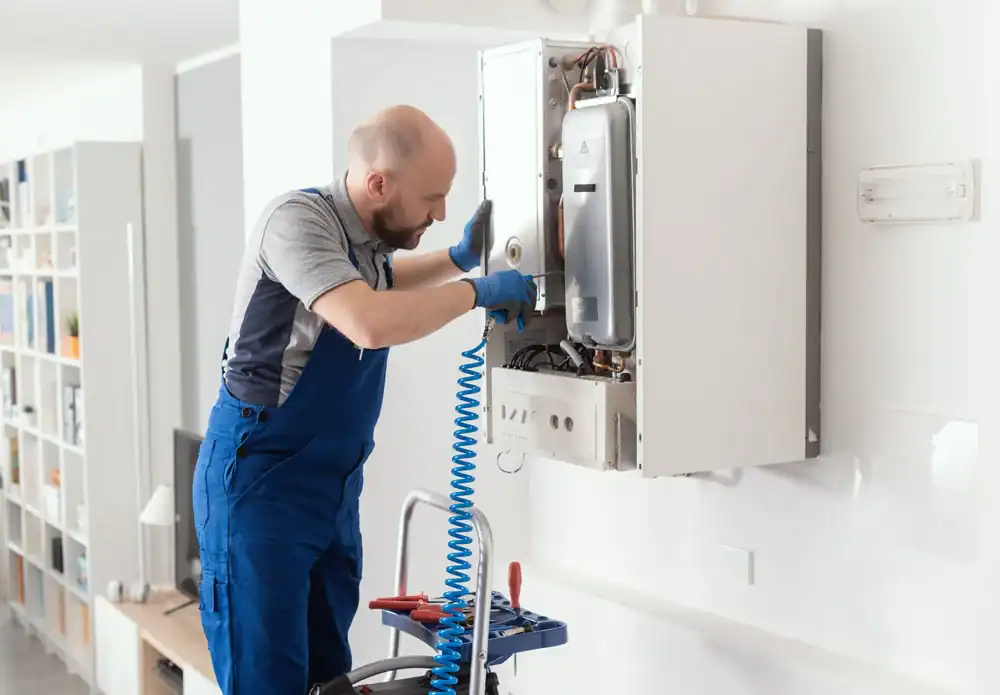
Once on-site, our technician does a full diagnostic before anything else. That means checking ignition components, heat exchanger condition, pressure levels, venting, and the overall state of the system — not just the obvious symptom that brought them out. In a Monmouth Beach home, that assessment also accounts for what the coastal environment may have done to the system over time: corrosion on metal components from salt air, mineral scaling in hydronic lines from hard coastal water, and any signs of past moisture intrusion in homes that sit in flood zones. If your home was elevated or renovated after Sandy, our technician will work with whatever mechanical room configuration was built to code at that time.
After the diagnostic, you get a clear, written estimate. If you approve it, the work gets done. If a repair isn’t the right call — if the cost of fixing it pushes past 40% of what a replacement would run — you’ll hear that directly, with the numbers in front of you. Boiler replacement in NJ typically runs $3,000 to $10,000 depending on the system, and we offer financing if the timing isn’t ideal. Either way, the decision stays yours.
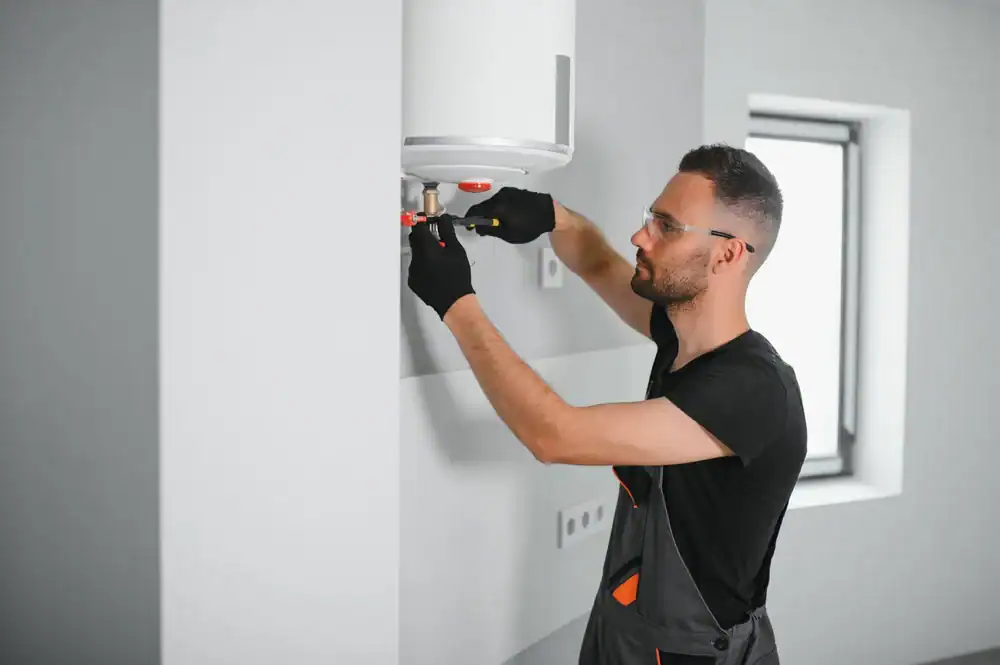
Ready to get started?
Boiler repair in a coastal community like Monmouth Beach isn’t a one-size-fits-all job. Salt air gets into burner assemblies. Hydronic systems in older homes accumulate scale. Pressure relief valves degrade. Expansion tanks fail quietly until they don’t. A technician who only looks at the part that stopped working and calls it done is leaving you with the next breakdown already in progress.
Every service call we perform covers a full system assessment — not just the failed component. That includes checking combustion efficiency, inspecting venting for blockages or corrosion, testing pressure and temperature controls, and evaluating whether the boiler as a whole is worth repairing or approaching the point where replacement makes more financial sense. For homes in Monmouth Beach’s flood zones, that assessment also includes a look at whether moisture exposure has compromised any components — a real consideration in a borough where 237 homes took damage when Sandy breached the Route 36 seawall.
Annual boiler maintenance is also available and is the single most effective way to avoid a mid-winter emergency call. The best window for that in Monmouth Beach is September or early October — before the first cold snap off the Atlantic hits and before every HVAC company in Monmouth County is fielding emergency calls at once. We offer 10% off all services for military personnel and first responders, and financing options are available for larger repairs or full system replacements.
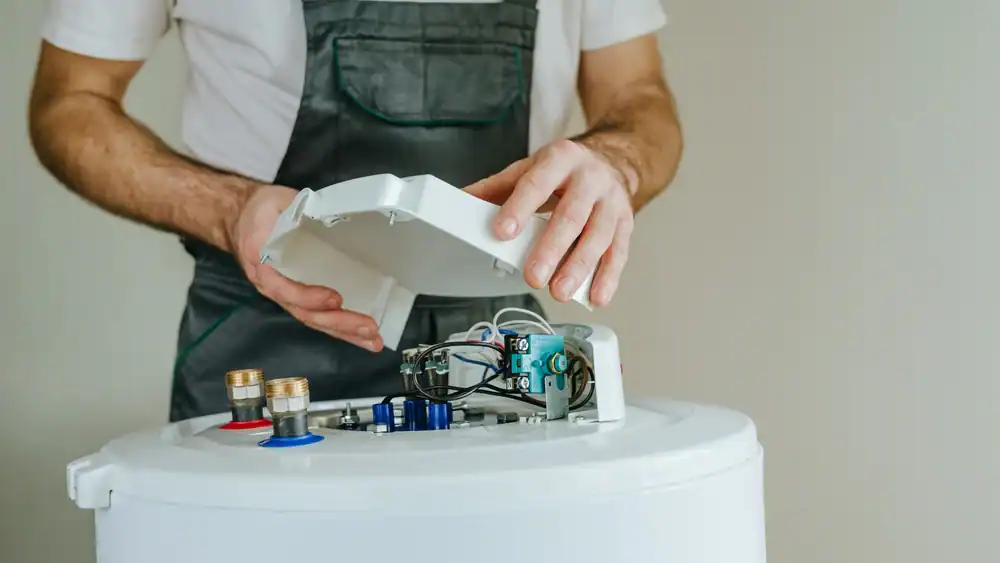
The general rule in the industry is this: if a single repair is going to cost more than 40% of what a new boiler would run, replacement is usually the smarter financial move. In New Jersey, boiler replacement typically costs between $3,000 and $10,000 depending on the system size and type. If a repair quote is coming in at $1,500 or more on a system that’s already 15-plus years old, that’s a conversation worth having honestly.
In Monmouth Beach specifically, the coastal environment adds a layer to that calculation. Salt air and humidity accelerate corrosion on metal components, which means systems here sometimes reach the end of their practical life faster than the manufacturer’s expected lifespan suggests. If a technician finds widespread corrosion across multiple components — not just one failed part — that’s a signal that you’re likely to be back in the same conversation within a year or two regardless of what gets repaired today. We lay out both options clearly, with real numbers, and let you decide.
For routine boiler repairs in NJ — a failed igniter, a faulty thermocouple, a pressure issue — you’re generally looking at $200 to $600. Emergency or after-hours calls, which are common during Monmouth Beach winters when the first hard freeze hits and systems that sat dormant all summer suddenly fail to fire, typically run $400 to $900 depending on what’s involved.
Those ranges assume the repair is isolated. If the diagnostic turns up multiple issues — which is more common in older homes along the Shore where deferred maintenance has compounded — the cost can climb. That’s exactly why a written estimate before any work starts matters. You should know what you’re approving before the job begins, not after. We provide that estimate upfront on every call, emergency or not.
Yes, and it’s one of the more underappreciated maintenance factors for homeowners on the northern Shore. Salt air is corrosive to metal components — burner assemblies, heat exchangers, flue pipes, and exterior venting are all more vulnerable in a coastal environment than they would be in an inland town like Holmdel or Aberdeen. Over time, that corrosion can compromise combustion efficiency, create small cracks in heat exchangers, and cause venting components to deteriorate faster than the standard maintenance schedule accounts for.
For Monmouth Beach homeowners, this means annual boiler maintenance isn’t optional — it’s the difference between catching a corroding component before it fails and dealing with an emergency call in February. A technician who knows coastal NJ conditions will check specifically for salt-related wear during any service visit, not just the obvious symptoms. If your system hasn’t been looked at in a few years and your home sits close to the ocean or the Shrewsbury River, that inspection is worth scheduling before the heating season starts.
For most boiler repairs — replacing a component, fixing a pressure issue, servicing an igniter — a permit isn’t required. But once you’re talking about a full boiler replacement, new venting, or any modification to the gas line or combustion air system, a mechanical permit through Monmouth Beach’s Construction Department is required under New Jersey’s Uniform Construction Code.
What makes Monmouth Beach different from most NJ towns is the additional layer of the borough’s post-Sandy floodplain ordinance. After Sandy breached the Route 36 seawall and damaged hundreds of homes, the borough adopted floodplain management standards that exceed the state minimum. If your home is in a designated flood zone — and a significant portion of properties in this borough are — any permitted mechanical work, including boiler replacement, has to comply with those elevated standards, not just the base NJ code. Hiring a fully licensed contractor who understands that regulatory environment isn’t just a good idea; it’s the only way to make sure the work passes inspection and doesn’t create liability for you down the road.
September or early October is the window. Here’s why: boilers that have been sitting dormant through the summer often develop issues during that off period — pressure drops, igniter degradation, scale buildup in hydronic systems — that don’t surface until the first time you fire the system up in fall. If you wait until the first cold night to find out something’s wrong, you’re competing with every other homeowner in Monmouth County who had the same problem at the same time, which means longer wait times and tighter availability.
Monmouth Beach’s coastal location also means the heating season can start and end slightly later than inland communities, but the first hard cold snap off the Atlantic tends to arrive fast when it does. Getting a tune-up done in late September puts you ahead of that — and ahead of the emergency queue. A pre-season maintenance visit typically catches the small issues before they become the 11pm call in January, and it costs a fraction of what an emergency repair runs.
Yes — we offer 10% off all services for military personnel and first responders. Monmouth County has a strong tradition of civic and military service, and this discount is a straightforward acknowledgment of that. It applies to boiler repair, maintenance, and replacement — not just select services.
If you’re a veteran, active-duty service member, or a first responder living in Monmouth Beach or anywhere else in our service area, just mention it when you call. There’s no complicated verification process or fine print that limits when it applies. On a boiler replacement that runs $4,000 to $6,000, that’s $400 to $600 back in your pocket — meaningful savings on a job you’re likely already dealing with under pressure. We also offer financing for larger jobs if you need to spread the cost, regardless of whether the discount applies.