Reviews
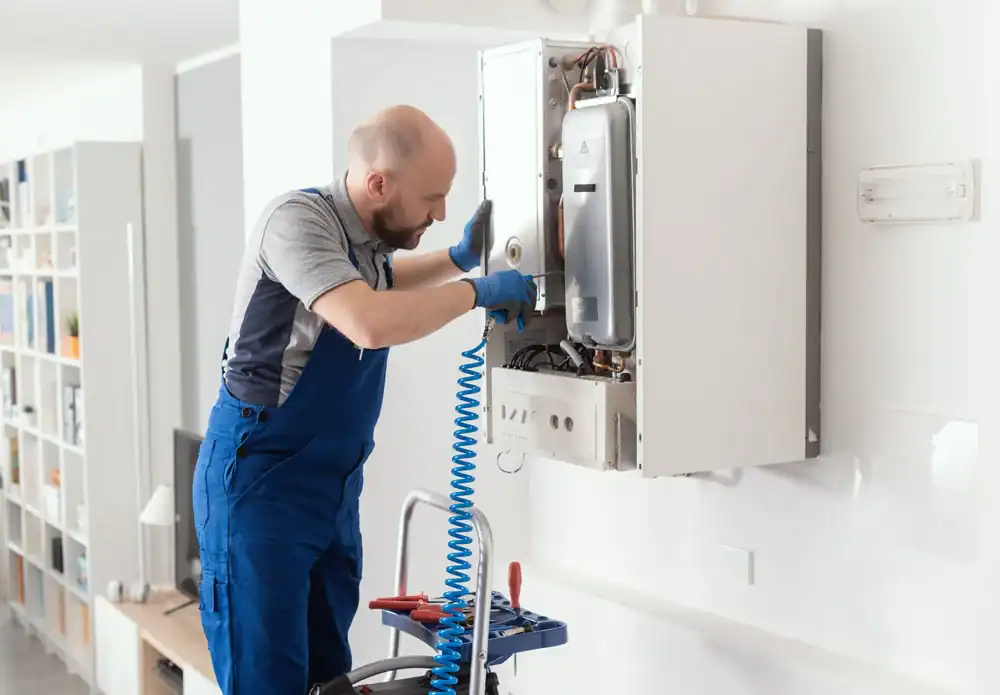
You’re not looking for a sales pitch right now. You’re cold, your family’s uncomfortable, and you need heat.
Here’s what actually matters: a licensed plumber who answers the phone, shows up when they say they will, and knows how to diagnose boiler problems without dragging things out. Someone who can tell you upfront what’s wrong, what it costs, and how long it takes.
Most boiler repairs in Millstone get handled same-day. Leaking pipes, pressure issues, ignition problems, strange noises—these aren’t mysteries when you’ve seen them a hundred times. The faster you call, the faster you’re back to normal. And if it’s the middle of the night, that’s fine too.
We’ve been handling heating and plumbing work across Monmouth County for years. We’re licensed and insured to work on boilers, furnaces, and all kinds of heating systems throughout New Jersey.
Most of our calls come from Millstone, Freehold, and the surrounding towns—places where boilers are common and winters don’t mess around. When your heat goes out at 2 a.m., you’ll reach a real person, not a voicemail.
We keep our pricing transparent because nobody likes surprise bills, especially during an emergency. You’ll know what the repair costs before any work starts.

You call or contact us, and we ask a few quick questions about what’s going on. No heat? Leaking water? Strange sounds? That helps us know what to bring.
We give you a timeframe for arrival—usually within a few hours, even for emergency calls. Once we’re there, we run a full inspection of your boiler to figure out what’s actually wrong. Could be a faulty valve, a pressure issue, a clogged heat exchanger, or something with the ignition system.
After the inspection, we walk you through what we found and what it’ll take to fix it. You get the price before we do anything. If you’re good with it, we handle the repair on the spot in most cases. Then we test the system to make sure everything’s running the way it should.
You’re not stuck waiting days or dealing with a runaround. Most boiler service calls in Millstone get wrapped up the same day.
Ready to get started?
Millstone winters put a lot of demand on boilers, and certain problems come up more than others. If your boiler’s leaking water, that’s usually a valve, seal, or pressure issue. Left alone, it leads to bigger damage and higher bills.
No heat at all? That’s often tied to the ignition system, thermostat, or a tripped safety feature. Banging or kettling noises mean there’s likely mineral buildup on the heat exchanger, which makes your system work harder and costs you more to run.
Pressure problems show up as either too much or too little—both cause performance issues and can shut your system down completely. And if some rooms stay cold while others are fine, that points to circulation issues or airlocks in the lines.
We handle all of it. Repairs, maintenance, inspections, and full diagnostics. If your system’s older and starting to nickel-and-dime you, we’ll also let you know when replacement makes more sense than another repair.
Most standard boiler repairs in Millstone run between $150 and $800, depending on what’s wrong. A simple fix like a faulty valve or thermostat issue sits on the lower end. More involved work—like replacing a circulator pump, fixing a heat exchanger problem, or dealing with a significant leak—costs more.
You’ll get an upfront price before any work starts, so there’s no guessing. If it’s an emergency call in the middle of the night, there may be an additional service fee, but we’ll tell you that on the phone.
If your boiler’s older than 15 years and needs a major repair, we’ll also talk through whether fixing it makes sense or if you’re better off replacing it. Sometimes a $600 repair on a 20-year-old system just buys you another year of problems.
Most boiler repairs get done in a few hours once we’re on-site. Something straightforward like a pressure adjustment, thermostat replacement, or valve swap might take an hour or two.
More complicated issues—like a leaking heat exchanger, a full circulator pump replacement, or clearing out a clogged system—can take three to five hours. If we need to order a part that’s not on the truck, that adds a day or two, but we’ll let you know right away if that’s the case.
For emergency calls, we prioritize getting your heat back on as fast as possible. Even if the full repair takes longer, we can often get your system running temporarily while we finish the job properly.
If you have no heat at all, that’s obviously urgent—especially in winter. But there are other signs that mean you should call sooner rather than later.
Water pooling around your boiler means something’s leaking, and that can cause serious damage if it’s not addressed. Strange noises like banging, clanking, or hissing point to pressure problems or buildup inside the system. A sudden spike in your energy bill usually means your boiler’s working way harder than it should to keep up.
If you smell gas or notice a yellow flame instead of blue, shut the system down and call immediately—that’s a safety issue. Same goes if your carbon monoxide detector goes off. And if your boiler keeps shutting itself off or won’t stay on, that’s a sign the safety controls are kicking in because something’s wrong.
Yes. We’re available 24/7 for heating emergencies in Millstone and throughout Monmouth County. If your boiler goes out in the middle of the night or on a weekend, you can reach us.
Most emergency calls get a response within a few hours. We know that losing heat in January isn’t something you can wait until Monday to deal with. Our trucks are stocked with common parts, so there’s a good chance we can fix the issue on the first visit.
Emergency service does come with an additional fee compared to standard appointments, but we’ll tell you that upfront when you call. If it’s truly urgent—no heat, active leak, safety concern—don’t wait. The longer a problem sits, the worse it gets.
It depends on the age of your system, the cost of the repair, and how it’s been running. If your boiler’s under 10 years old and the repair is under $500, fixing it almost always makes sense.
If it’s 15 to 20 years old and you’re looking at a major repair—anything over $1,000—you’re often better off replacing it. At that age, you’re likely to keep running into problems, and a new system will be more efficient and reliable.
Also consider how often you’ve had to call for service in the last couple years. If it’s been more than two or three times, that’s a sign the system’s on its way out. We’ll walk you through the math and help you make the call that actually makes sense for your situation, not just what’s easiest for us.
A full boiler maintenance visit includes inspecting all the major components—heat exchanger, circulator pump, valves, vents, and controls. We check the pressure, test the thermostat, and make sure the ignition system is firing properly.
We’ll also flush the system if needed to clear out sediment and buildup, which is one of the biggest causes of inefficiency and breakdowns. All safety controls get tested to make sure they’re working the way they should.
You’ll get a rundown of anything that looks like it might need attention soon, so you’re not caught off guard later. Regular maintenance catches small problems before they turn into expensive emergencies, and it keeps your system running efficiently so you’re not overpaying on energy bills all winter.