Reviews
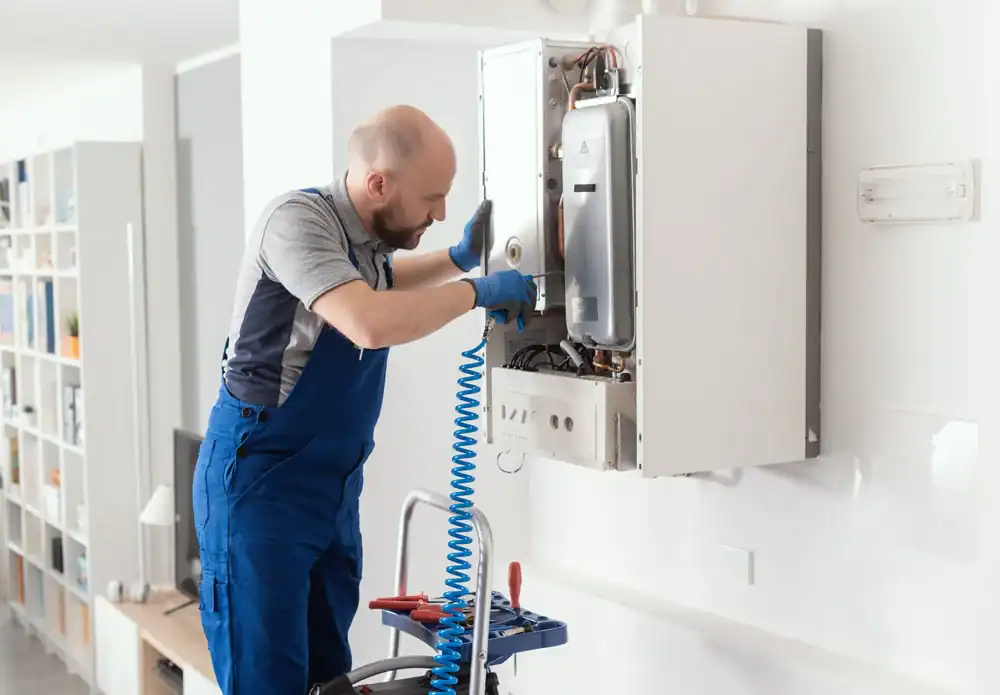
You woke up to a cold house. Your boiler’s leaking water, making weird noises, or just stopped working entirely. Now you’re wondering how long you’ll be without heat and how much this is going to cost.
Here’s what happens when you call us. You get a licensed technician who shows up when we say we will, diagnoses the actual problem, and gives you a clear price before any work starts. No hidden fees. No upselling you on things you don’t need.
We fix the issue right the first time. Whether it’s a faulty pressure valve, a circulation pump that’s gone out, or sediment buildup causing your system to overheat, we handle boiler repairs across Long Branch every day. You’re not our first emergency call, and you won’t be our last.
Your heat comes back on. Your family’s comfortable again. And you know exactly what you paid for and why.
We’re based right here in Monmouth County. We’re licensed, insured, and we’ve been handling heating repair and plumbing emergencies for Long Branch homeowners through some brutal winters.
We know what breaks down in this area. Older boiler systems that haven’t been maintained. Pressure issues from hard water. Corrosion from salt air near the shore. These aren’t surprises to us—they’re Tuesday.
When you call, you’re getting technicians who live and work in this community. We’re not a national chain with rotating contractors. We show up, we fix it, and we stand behind our work because we’ll see you at the grocery store next week.

First, you call or contact us online. If it’s an emergency, we prioritize getting someone to your home as fast as possible—often same day. We’ll give you an arrival window and actually stick to it.
When our technician arrives, they’ll inspect your boiler system thoroughly. That means checking the pressure gauge, examining the heat exchanger, testing the thermostat, looking for leaks, and listening to how the system runs. We’re diagnosing the root cause, not just the symptom.
Before we touch anything, you get a clear explanation of what’s wrong and what it’ll cost to fix. You decide if you want to move forward. No pressure, no games.
Once you approve, we get to work. Most boiler repairs are completed the same visit. We test everything before we leave to make sure your heat’s working properly. Then we clean up, walk you through what we did, and answer any questions you have about maintaining your system going forward.
Ready to get started?
Every boiler repair call includes a full system diagnostic. We’re not just fixing the obvious problem—we’re making sure there aren’t other issues waiting to fail next week. You get a licensed technician who knows boiler systems inside and out, whether you’ve got a gas boiler, oil boiler, or steam heating system.
Long Branch winters are no joke. When temperatures drop into the teens and your boiler quits, you need someone who can handle emergency heating repair without charging you double just because it’s after hours. Our pricing stays consistent, and we’re available 24/7 when you need us.
We also handle boiler maintenance if you want to avoid emergency calls altogether. Regular service catches small issues before they become expensive failures. Think of it like changing your oil—skip it long enough, and you’ll pay a lot more later.
If your boiler is old enough that repairs don’t make financial sense anymore, we’ll tell you straight. We can walk you through replacement options and help you understand whether it’s worth fixing or time to upgrade to something more efficient. We’re not here to sell you what we want to install—we’re here to give you the information you need to make the right call for your home and your budget.
It depends entirely on what’s broken. A simple fix like replacing a pressure relief valve might run a few hundred dollars. A more involved repair—like replacing a circulation pump or fixing a cracked heat exchanger—will cost more.
Here’s what affects the price: the part that failed, how long the repair takes, and whether your system needs any additional work to meet current safety codes. Older boilers sometimes need updates to things like venting or gas lines, especially if they haven’t been serviced in years.
We give you the price before we start. You’ll know what the repair costs, what the part costs, and what you’re paying for labor. If something unexpected comes up during the repair, we stop and talk to you before moving forward. You’re never going to get a bill that’s wildly different from what we quoted.
Age is the first thing to consider. If your boiler is over 20 years old and needs a major repair, replacement often makes more sense financially. You’re looking at a system that’s already lived past its expected lifespan, and efficiency has likely dropped significantly over the years.
Frequency of repairs matters too. If you’re calling for service multiple times a season, you’re throwing money at a system that’s telling you it’s done. At that point, the cost of repeated repairs plus higher energy bills usually exceeds what you’d pay for a new, efficient system.
We’ll assess your specific situation and give you honest input. Sometimes a repair buys you a few more good years. Sometimes it’s just delaying the inevitable. We’ll walk you through the math so you can make an informed decision. If repair makes sense, we’ll fix it. If replacement makes sense, we’ll explain why and what your options are.
Leaking water is one of the most common calls we get. It’s usually a pressure issue, a faulty valve, or corrosion in the heat exchanger. Sometimes it’s as simple as a loose connection. Other times it signals a bigger problem that needs immediate attention.
No heat is obviously the other big one. That can be anything from a tripped breaker to a failed ignition system to a broken circulation pump. Thermostats fail. Pilot lights go out. Air gets trapped in the lines. There are a dozen reasons a boiler stops heating, and diagnosing it correctly the first time is what separates a real repair from a guess-and-check approach.
Strange noises—banging, whistling, gurgling—usually mean sediment buildup, air in the system, or a pump that’s struggling. These aren’t things you ignore. They’re early warnings that something’s wrong. Catching them early usually means a simpler, cheaper fix than waiting until the system fails completely in the middle of a cold snap.
Yes. We’re available 24/7 for heating emergencies, and we actually mean it. If your boiler goes out at 2 a.m. on a Sunday in January, you can call us and get a real person who will send a technician to your home.
Emergency service doesn’t mean emergency pricing that’s double or triple our normal rate. We charge fair prices regardless of when you call. You’re already dealing with a stressful situation—we’re not going to make it worse by gouging you because it’s inconvenient timing.
Same-day service is standard for us, even for non-emergency calls. We know you don’t want to wait three days to get your heat back. We prioritize boiler repairs during cold weather because we understand what’s at stake. No heat isn’t just uncomfortable—it’s a safety issue, especially if you have young kids or elderly family members in the home.
Most repairs are done in a few hours. Something straightforward like replacing a valve, resetting a pressure switch, or bleeding air from the lines usually takes an hour or two once we’ve diagnosed the problem.
More complex repairs take longer. If we’re replacing a circulation pump, repairing a gas line, or addressing multiple issues at once, plan on a half day. We’ll give you a time estimate upfront so you know what to expect.
The diagnosis itself usually takes 30 to 45 minutes. We’re thorough because misdiagnosing the problem just means we’ll be back next week fixing what we should have caught the first time. Once we know what’s wrong and you’ve approved the repair, we move quickly. Our trucks are stocked with common parts, so we’re not making multiple trips to the supply house while you sit there without heat.
Call a professional. Boilers involve high pressure, gas lines, and electrical components. One mistake can cause a dangerous situation—carbon monoxide leaks, gas leaks, or even an explosion in extreme cases.
Some homeowners think they’ll save money by trying a DIY fix. What usually happens is they make the problem worse, and now we’re fixing the original issue plus whatever got damaged during the attempted repair. That costs more than if you’d called from the start.
New Jersey requires licensed professionals for boiler work for a reason. We’re trained on safety codes, proper installation procedures, and how to diagnose problems without creating new ones. We carry insurance in case something does go wrong. You don’t. If you’re not licensed and insured and something happens, you’re personally liable—and your homeowner’s insurance may not cover damage from unpermitted work.