
Reviews
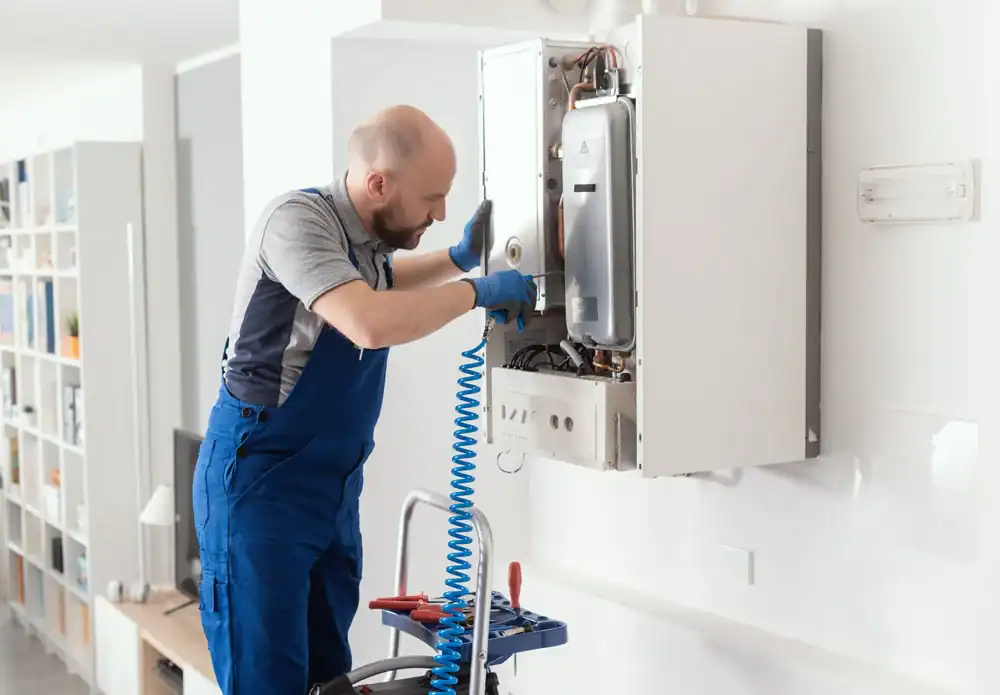
A working boiler is not a luxury in Loch Arbour in January — it’s the difference between a warm home and a serious problem. When your system is running the way it should, you stop worrying. You stop listening for strange noises at 2am. You stop wondering if today is the day it finally quits on you.
What most homeowners in Loch Arbour don’t realize is that the coastal environment here accelerates wear on heating systems in ways that inland communities simply don’t deal with. Salt air off the Atlantic is corrosive to metal components — heat exchangers, flue pipes, pressure valves — and the humidity that comes off Deal Lake adds another layer of stress on systems that are already working hard. If your home was built before 1970, which roughly three out of four homes in Loch Arbour were, your boiler is operating in a demanding environment and likely approaching or past the window where small issues become expensive ones.
Getting it properly diagnosed and repaired means you’re not just buying yourself warmth today. You’re buying peace of mind for the rest of the season, and honest guidance on whether your system has years left or whether a replacement conversation makes more sense. Either way, you deserve a straight answer — not a sales pitch.
We’re based in Manasquan — a few miles down the same Shore corridor that Loch Arbour sits on. Since 2014, we’ve been serving homeowners across Monmouth County, and our team understands what older coastal homes actually deal with in terms of aging systems, salt-air exposure, and the specific demands of a Jersey Shore winter. We’re not a company routing calls through a regional dispatch center three counties away.
Every technician is licensed and insured under New Jersey state requirements for both HVAC and plumbing work. That matters because boiler systems don’t exist in isolation — gas lines, water connections, and pressure components are all part of the picture, and having one team that can handle all of it legally and properly is not something every contractor in this market can offer.
With a 4.9-star rating across more than 686 verified reviews, our track record speaks clearly. Loch Arbour homeowners who expect professional-grade service get exactly that.

When you call us, you’re not leaving a voicemail and hoping someone calls back by morning. The line is answered around the clock, every day of the year — including weekends, holidays, and the kind of cold January nights when your boiler decides it’s done. Once you reach out, a technician is dispatched and, based on the documented experience of past customers in Monmouth County, on-site arrival typically happens within the hour.
When the technician arrives, the first step is a full diagnostic — not a glance at the obvious symptom, but a real assessment of the entire system. In a village where most homes were built between 1940 and 1969, that means looking at the boiler itself alongside the components that age alongside it: the expansion tank, pressure relief valve, circulator pump, and any corrosion-related wear that the coastal environment tends to accelerate. Before any repair work begins, you receive a written upfront estimate. You approve it. That number doesn’t change after the job is done.
If the repair is straightforward, it gets handled the same visit. If the assessment reveals something more significant — or raises a genuine repair-versus-replace question — you’ll get an honest answer, not a recommendation shaped by what earns the higher ticket. New Jersey requires permits for certain boiler work involving gas lines or venting modifications, and we handle that compliance as part of the job so you’re protected legally and with your insurance.

Ready to get started?
A boiler repair call with us is not a single-symptom fix. Our technician looks at the full system because, especially in older Loch Arbour homes, the presenting issue is often a signal of something broader. A pressure drop might mean a slow leak somewhere in the hydronic loop. A banging noise might mean sediment buildup that’s been accumulating for years. A system that’s short-cycling might be a thermostat issue or a failing heat exchanger — and those two repairs are very different conversations.
We handle all major boiler makes, models, and fuel types — gas, oil, and electric. Our services include emergency boiler repair, boiler maintenance and tune-ups, component replacements, and full boiler system replacements when the honest assessment points in that direction. For Loch Arbour homeowners who use their properties seasonally, we offer pre-season boiler inspections to catch the dormancy-related issues — pressure loss, corrosion, ignition problems — that tend to surface the first time a system fires up after sitting idle through summer.
Financing options are available for larger repairs and full replacements, which matters when an aging system in a pre-1970 home crosses the threshold where replacement is the smarter long-term call. Military personnel and first responders receive a 10% discount. Pricing is always presented upfront in writing — no estimates that shift after the work is done.

Most boiler repairs in New Jersey fall somewhere between $200 and $600 for standard daytime service calls. Emergency or after-hours repairs — the kind that happen on a Saturday night in February when the temperature is dropping and the wind off the Atlantic isn’t helping — typically run $400 to $900, reflecting the after-hours premium that most licensed contractors charge for urgent dispatch.
What affects the final number is the specific component that failed, the age and condition of the system, and whether any parts need to be sourced. In Loch Arbour, where the majority of homes were built before 1970 and coastal salt air accelerates wear on metal components, it’s not uncommon for a repair call to uncover secondary issues that weren’t the original complaint. That’s exactly why we provide a written estimate before touching anything — so you know what you’re approving before the work begins, and the number you see is the number you pay.
The industry standard threshold is straightforward: if a single repair costs more than 40% of what a new boiler would cost, replacement usually makes more financial sense. If you’ve had two or more significant repairs within the past three years, that’s another strong signal that the system is on its way out rather than just having a rough season.
For Loch Arbour homeowners specifically, age is a critical factor. If your home was built in the 1950s or 1960s and the boiler is original or close to it, you may be well past the 15-to-20-year expected lifespan that defines a system’s serviceable life. Add the corrosive effect of salt air on heat exchangers and flue components, and the wear curve can be steeper than it would be for an identical system in an inland community. A licensed technician can give you a real assessment of remaining useful life — which is the most valuable thing you can get before making a $5,000 to $10,000 decision.
The most common warning signs are ones that homeowners in older Shore homes tend to notice gradually and then ignore until they can’t anymore. Unusual noises — banging, kettling, or gurgling — usually indicate sediment buildup or air in the system. A boiler that cycles on and off frequently without reaching temperature is often a pressure or thermostat issue. Visible rust or corrosion on the unit itself, especially around fittings and the expansion tank, is a sign that the system has been dealing with moisture infiltration — a particular concern in Loch Arbour given the humidity that comes off Deal Lake and the salt air from the ocean.
Uneven heat distribution throughout the house, where some rooms are warm and others stay cold, often points to circulation problems or a partially blocked zone. And if your energy bills have been climbing without an obvious explanation, a boiler that’s working harder than it should to maintain temperature is a likely contributor. None of these symptoms fix themselves — catching them early is almost always cheaper than waiting.
It depends on the scope of the work. Routine repairs — replacing a pressure relief valve, fixing a circulator pump, addressing a thermostat issue — typically don’t require a permit. But work that involves gas line modifications, changes to the venting or flue system, or a full boiler replacement does fall under New Jersey’s Uniform Construction Code and requires a permit and inspection through the local construction code office.
For a village as small as Loch Arbour, permit administration may be handled through a shared arrangement with a neighboring municipality’s code office — but the requirement is the same regardless of how it’s administered locally. Unpermitted work on a boiler creates real problems: it can void your homeowner’s insurance coverage for related damage claims, complicate a future property sale, and leave you personally liable if something goes wrong. We’re fully licensed under NJ state requirements for both HVAC and plumbing work, which means we can pull permits, coordinate inspections, and ensure the work is fully code-compliant from start to finish.
Seasonally occupied homes in Loch Arbour are among the highest-risk properties for boiler failures at the start of heating season. When a system sits dormant through the warmer months, several things can develop quietly: slow pressure loss from minor leaks in the hydronic loop, corrosion in components that weren’t running, sediment that settled during the off-season, and ignition or pilot issues that only become apparent the first time the system fires up in October or November.
The smartest move is a pre-season boiler inspection before you need the heat — not the night you arrive and realize the house is cold. We offer boiler maintenance and tune-up services that specifically address dormancy-related wear: checking system pressure, inspecting the expansion tank and relief valve, cleaning burners, testing ignition, and looking for any corrosion that the summer’s salt air and Deal Lake humidity may have accelerated. Catching a $300 problem in September is a very different situation from dealing with a system failure at 10pm on a cold October night.
We offer a 10% discount for military personnel and first responders. In a Monmouth County Shore community like Loch Arbour — where many long-tenure residents have served or have family members who have — that discount is a straightforward acknowledgment of that service, applied directly to the repair or maintenance bill.
Beyond that specific discount, we offer financing options for larger repairs and full boiler replacements. For homeowners in a village where the majority of the housing stock is over 50 years old and replacement decisions are increasingly common, having the option to spread a $5,000 to $8,000 boiler replacement over time — rather than absorbing it as a single unexpected expense — is a practical benefit that removes a real barrier to making the right long-term call. Pricing is always presented upfront in writing before work begins, so there are no surprises regardless of which direction the job goes.