Reviews
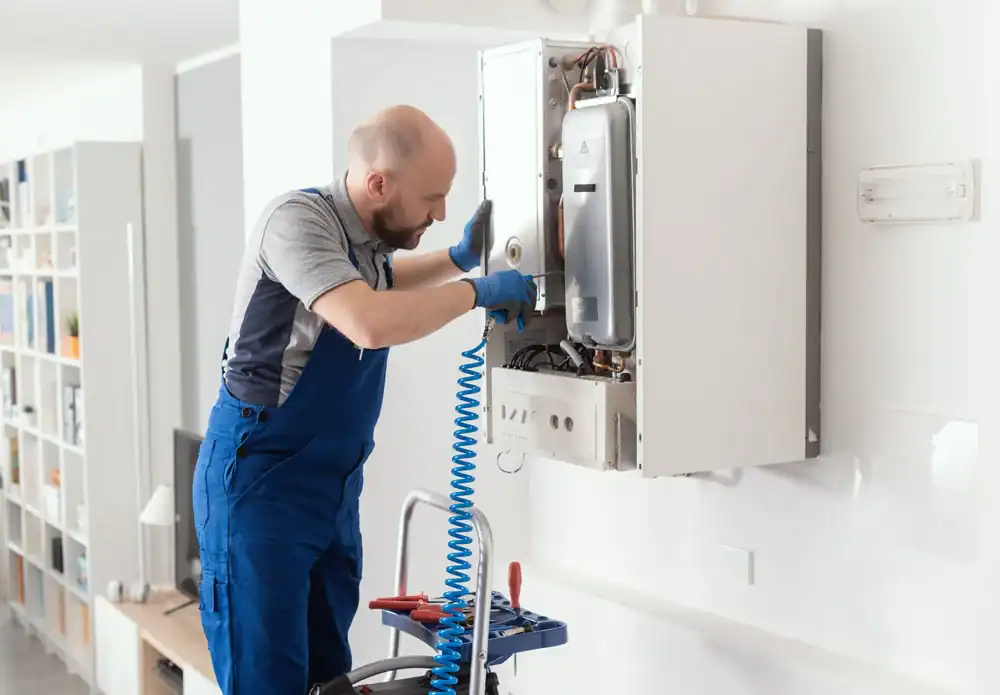
You’re not looking for a lecture on how boilers work. You need heat, and you need someone who can figure out what’s wrong without dragging it out or upselling you into a full replacement when a repair will do.
That’s what matters when your boiler stops working in the middle of a Freehold winter. Not whether the company has a nice website or uses words like “premier” and “trusted.”
When we show up, you get a real diagnosis. We’ll tell you what’s broken, what it costs to fix, and whether it makes sense to repair or replace. No pressure. No hidden fees after the fact. Just a straight answer so you can make the call.
Most boiler repairs in Freehold run between $200 and $600 depending on the issue. If it’s an emergency call at night or on the weekend, expect to add another $200 to $300. We’ll tell you the price before we start the work. If something changes, we’ll let you know before we charge you for it.
You’ll have heat again. The job will be done right. And you won’t be wondering if you got taken for a ride.
We’ve been serving Monmouth County since 2014. We’re a family-owned company, fully licensed and insured, and we handle both residential and commercial heating repair.
Our techs aren’t subcontractors. They’re trained, experienced, and they work for us. That means when something goes wrong, you’re not dealing with a call center or a guy who disappears after the check clears.
We’re based here. We work here. And when winter hits Freehold hard and boilers start failing across the county, we’re the ones answering the phone at 2 a.m. because we know what it’s like when your heat goes out and your pipes are at risk.

First, we pick up the phone. If it’s an emergency, we’ll get someone out the same day—usually within a few hours depending on where you are in Freehold or Monmouth County.
When the tech arrives, they’ll run a full diagnostic on your boiler. That means checking the thermostat, inspecting the pressure, looking for leaks, testing the pump, and making sure the condensate line isn’t frozen. A lot of no-heat calls in New Jersey come down to frozen pipes or a tripped safety switch. If it’s something simple, we’ll fix it on the spot.
If it’s more involved—like a cracked heat exchanger, a failing circulator pump, or a valve that needs replacing—we’ll walk you through what’s wrong, what it takes to fix it, and what it costs. You’ll get the price upfront. If you want to move forward, we’ll usually have the parts on the truck or can grab them locally and finish the job that day.
Once the repair is done, we’ll test the system to make sure it’s heating properly and holding pressure. Then we’ll clean up and show you what we did. If you have questions or want to know how to avoid the same issue down the road, we’ll talk you through it.
Ready to get started?
Every boiler repair starts with a diagnostic. We don’t guess. We test the system, identify the problem, and give you a clear explanation of what needs to happen.
Common repairs we handle in Freehold include fixing boilers that won’t heat, stopping leaks from corroded pipes or faulty valves, replacing broken pumps or pressure relief valves, thawing frozen condensate lines, and resetting systems that shut down due to low pressure or sensor issues. If your energy bills have spiked and your boiler is running constantly, that’s usually a sign something’s wearing out. We’ll find it.
Monmouth County winters are tough on boilers. Temperatures drop fast, and systems that haven’t been maintained start failing when you need them most. A lot of emergency calls we get in Freehold are preventable—things like dirty filters, low water pressure, or condensate pipes that freeze because they’re routed outside without insulation.
We’ll also let you know if your boiler is near the end of its lifespan. Most units last 15 to 20 years. If yours is older and you’re looking at a major repair, we’ll give you the honest math on whether it makes sense to fix it or replace it. Modern high-efficiency boilers can cut your fuel costs by up to 50%, so sometimes replacement is the smarter move. But that’s your call, not ours.
Most boiler repairs in Freehold cost between $200 and $600 depending on what’s broken. Simple fixes like resetting the system, replacing a thermostat, or thawing a frozen pipe are on the lower end. More involved repairs—like replacing a circulator pump, fixing a valve, or addressing a leak—run higher.
If you need emergency service at night or on the weekend, expect to pay an additional $200 to $300. That covers the after-hours call and faster response time. We’ll give you the full price before we start any work, so there’s no surprise when the bill comes.
If your boiler is old and needs a major repair—like a new heat exchanger—we’ll also talk through whether replacement makes more sense. Sometimes it does. Sometimes it doesn’t. But you’ll have the numbers either way.
No heat or hot water is usually caused by a faulty thermostat, low water pressure, or a broken circulator pump. If the system isn’t getting the signal to fire up, or if there’s not enough pressure to move water through the pipes, it won’t heat.
Leaks and drips typically come from a corroded pipe, a bad pressure relief valve, or a worn seal. If you see water pooling around the base of your boiler, don’t ignore it. That can lead to bigger damage and higher repair costs if it’s not addressed quickly.
Frozen condensate pipes are a big one in Freehold during cold snaps. Many boilers drain condensate outside, and when temps drop below freezing, that pipe can freeze solid. The boiler will shut itself down to prevent damage. We see this all the time in January and February across Monmouth County.
It depends on what’s wrong and how old your boiler is. If it’s under 10 years old and the issue is something like a pump, valve, or sensor, repair almost always makes sense. Those are normal wear items and they’re not expensive to replace.
If your boiler is 15 years or older and you’re looking at a major repair—like a cracked heat exchanger or a failing burner assembly—that’s when replacement starts to make more financial sense. Older boilers are less efficient, and parts can be harder to find. You might spend $1,200 on a repair for a system that fails again in two years.
We’ll walk you through the math. Modern high-efficiency boilers operate at 90% to 98% efficiency, compared to 80% to 85% for older models. That can cut your heating costs significantly. But if your boiler just needs a small fix and has years of life left, we’ll tell you that too.
Most boiler repairs take between one and three hours depending on the issue. If it’s something straightforward—like a frozen condensate line, a tripped safety switch, or a thermostat replacement—we can usually knock it out in under an hour.
More complex repairs, like replacing a circulator pump or fixing a leak in the piping, can take two to three hours. If we need to source a part that’s not on the truck, it might take longer, but we’ll let you know upfront if that’s the case.
Emergency calls get priority. If your heat is out in the middle of winter, we’ll get someone to your house in Freehold as fast as we can—usually the same day, often within a few hours. Once we’re there, we move quickly because we know you need your heat back on.
Yes. Most boiler breakdowns are preventable with regular maintenance. That means having a tech inspect and service your system once a year—ideally in the fall before heating season starts.
During a maintenance visit, we’ll clean the burner, check the pressure, test the pump and valves, inspect for leaks, and make sure the condensate line is clear and insulated. We’ll also check the thermostat and safety controls to make sure everything’s communicating properly. Small issues get caught before they turn into expensive emergency repairs.
Monmouth County winters are hard on heating systems. If your boiler hasn’t been serviced in a few years, it’s working harder than it should, and that leads to breakdowns. A $150 maintenance visit can save you from a $600 emergency repair in January when every HVAC company in Freehold is booked solid.
Yes. If your boiler goes out in the middle of the night or on a weekend, you can call us and we’ll get someone out. We know that losing heat in winter isn’t something that can wait until Monday morning.
Emergency calls cost more—usually an extra $200 to $300 on top of the repair cost—but that covers the after-hours response and priority scheduling. We’ll still give you upfront pricing before we start the work, even on emergency calls.
We serve all of Freehold and Monmouth County, and we keep common boiler parts on our trucks so we can handle most repairs without needing to order anything. If your heat is out and your pipes are at risk, don’t wait. Call us and we’ll take care of it.