Reviews
You’ve probably been told your boiler needs a $2,500 fix when the real issue costs $200 to solve. That’s the problem with companies that upsell instead of diagnose.
Here’s what changes when the repair is done right: your heat stays consistent through February. Your energy bill stops climbing every month. You’re not calling someone back three weeks later because the same issue returned.
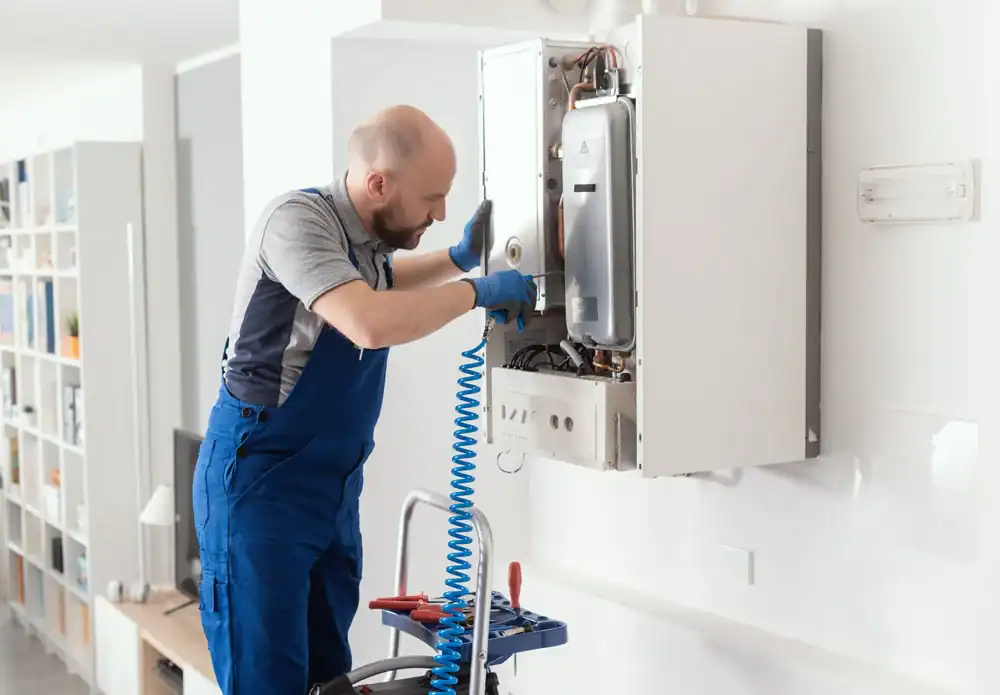
A proper boiler repair means identifying the actual problem—whether it’s a faulty pressure valve, a clogged heat exchanger, or a failing circulator pump—and fixing that specific issue. Not everything around it. Not the whole system unless it truly needs replacing.
Most boiler issues in Fair Haven homes come down to wear on a few key components. When those get addressed correctly the first time, your system runs efficiently for years. That’s the outcome worth paying for.
We’re a family-owned company based in Monmouth County. We’ve handled heating repairs in Fair Haven for over a decade, which means we’ve seen how these systems behave in your specific climate and in homes like yours.
Our team is fully licensed and insured. We show up with the diagnostic tools that matter—thermal imaging, pressure testing equipment, and the experience to interpret what we’re seeing. You’re not getting a rookie with a wrench.
Fair Haven has some of the highest property values in New Jersey, and homeowners here expect work that protects that investment. We price our services upfront, we don’t pad the bill, and we’re available 24/7 when your heat goes out in the middle of the night.

First, we listen. You tell us what’s happening—no heat, strange noises, leaking water under the boiler, whatever the issue is. We ask a few questions to get a clearer picture before we even leave the shop.
When we arrive, we run a full diagnostic. That includes checking your thermostat settings, inspecting the pressure gauge, testing the ignition system, and looking for leaks or corrosion. We use thermal imaging to spot heat loss you can’t see with your eyes.
Once we know what’s wrong, we explain it in plain terms. You’ll know what failed, why it failed, and what it costs to fix. If there’s more than one option—like repair vs. replace—we’ll walk through both so you can make the call.
Then we fix it. Most boiler repairs finish the same day. If we need a part that’s not on the truck, we’ll let you know the timeline and keep you updated. After the repair, we test the system to make sure it’s heating properly and holding pressure. You’re not paying for a maybe—you’re paying for heat that works.
Ready to get started?
Every boiler repair includes a full system diagnostic, not just a patch on the obvious problem. We check the pressure relief valve, the expansion tank, the circulator pump, and the heat exchanger. If your boiler is leaking water, we trace it to the source—whether that’s a cracked pipe, a bad seal, or a valve that’s lost its integrity.
Fair Haven homes often have older boiler systems that were built to last but now need parts that aren’t stocked at every supply house. We keep common components on hand and have access to specialty parts for brands like Weil-McLain, Peerless, and Burnham.
You’ll also get a realistic assessment of your system’s remaining lifespan. If your boiler is 25 years old and running at 60% efficiency, we’ll tell you that a repair might buy you another season—but a replacement will cut your heating costs and eliminate the emergency calls. That’s not upselling. That’s helping you plan.
We also offer maintenance plans that catch small issues before they become expensive ones. A yearly tune-up costs a fraction of what you’d spend on an emergency repair in January, and it keeps your system running at peak efficiency all winter long.
Most boiler repairs in Monmouth County fall between $200 and $900, depending on what’s broken. A simple fix—like replacing a pressure relief valve or a thermocouple—usually costs $200 to $400. More involved repairs, like replacing a circulator pump or fixing a cracked heat exchanger, can run $500 to $900.
If someone quotes you $2,000+ for a repair, ask what exactly they’re replacing and why. Sometimes that’s legitimate—if your heat exchanger is cracked and you have an older cast-iron boiler, replacement might make more sense than repair. But if they’re recommending a full system replacement without showing you why the current one can’t be fixed, get a second opinion.
We price everything upfront. You’ll know the cost before we start the work, and we don’t add fees after the fact. If the repair ends up being simpler than expected, you pay less—not the original estimate.
The most common issue we see is a faulty thermostat or a tripped circuit breaker. It sounds too simple, but it happens more than you’d think. After that, it’s usually a problem with the pilot light or ignition system—especially in older boilers.
Low water pressure is another frequent culprit. If your pressure gauge is reading below 12 PSI, your boiler won’t fire up. That can be caused by a leak somewhere in the system, a faulty pressure relief valve, or a failing expansion tank.
Circulator pump failure is also common in boilers that are 10+ years old. The pump is what moves hot water through your radiators or baseboard heaters. When it fails, the boiler runs but you don’t get heat in the rooms. You might hear the boiler firing, but the house stays cold.
Sediment buildup in the heat exchanger can also cause shutdowns, especially if your boiler hasn’t been maintained regularly. When sediment blocks water flow, the system overheats and shuts down as a safety measure.
If your boiler is under 15 years old and the repair costs less than a third of what a new system would cost, repairing usually makes sense. If it’s over 20 years old and you’re looking at a $1,000+ repair, replacement is often the smarter move.
Here’s why: older boilers run at 60-70% efficiency, which means you’re losing 30-40% of your heating cost to wasted energy. A new high-efficiency boiler runs at 95% or higher. That difference adds up fast during a Fair Haven winter.
Also consider how many repairs you’ve made in the past few years. If this is your third or fourth service call in two years, you’re spending more on repairs than the system is worth. At that point, you’re just delaying the inevitable.
We’ll walk you through both options with real numbers. If a repair buys you five more solid years, we’ll tell you. If you’re throwing money at a system that’s on its last legs, we’ll tell you that too.
A boiler leaking water usually points to one of three issues: a faulty pressure relief valve, a crack in the heat exchanger, or a bad seal around a pipe connection. Where the water is coming from tells us a lot about what’s wrong.
If water is dripping from the pressure relief valve, it’s likely releasing because the system pressure is too high. That can be caused by a failing expansion tank or an overfilled system. This is a straightforward fix in most cases.
If you see water pooling under the boiler and it’s coming from the body of the unit itself, that’s more serious. It could mean a crack in the heat exchanger, which usually happens in older boilers due to corrosion or thermal stress. A cracked heat exchanger often means it’s time to replace the boiler, not repair it.
Leaks around pipe fittings or valves are usually caused by worn gaskets or loose connections. These are simple repairs, but they need to be addressed quickly. Even a small leak can cause water damage to your basement or utility room, and it can also lead to pressure loss that prevents your boiler from heating properly.
Yes. We’re available 24/7 for heating emergencies, which includes boiler breakdowns in the middle of the night or on weekends. When it’s 20 degrees outside and your heat goes out, that’s not something that can wait until Monday morning.
Emergency calls get prioritized, and we keep our trucks stocked with the most common boiler parts so we can complete repairs on the spot. If your system needs a specialty part, we’ll do everything we can to get your heat back on temporarily while we order what’s needed.
Fair Haven winters are cold enough that losing heat isn’t just uncomfortable—it’s a safety issue, especially if you have young kids or elderly family members in the house. It can also lead to frozen pipes, which creates a much bigger and more expensive problem.
When you call, you’ll talk to a real person who can walk you through some basic troubleshooting while we’re on the way. Sometimes it’s something simple you can reset yourself. If not, we’ll be there as fast as we can with the tools and parts to get your boiler running again.
Once a year, ideally in the fall before heating season starts. A yearly tune-up catches small problems before they turn into expensive repairs, and it keeps your system running efficiently so you’re not overpaying on your energy bills.
During a maintenance visit, we clean the heat exchanger, test the pressure relief valve, check for leaks, inspect the flue pipe, and make sure the circulator pump is working properly. We also test the thermostat and verify that your system is hitting the right temperature in every zone.
Regular maintenance extends the life of your boiler. A well-maintained system can last 20-25 years. One that’s ignored might only make it 12-15 years before it needs replacing. That’s a significant difference when a new boiler costs $5,000 to $7,500 installed.
If you’re in Fair Haven and your boiler is over 10 years old, annual service isn’t optional—it’s essential. These systems work hard through long, cold winters, and the wear adds up. Catching a failing part during a tune-up costs a fraction of what you’d pay for an emergency repair in January when that part finally gives out.