Reviews
You’re not dealing with a cold house because your boiler decided to quit in the middle of January. You’re not waiting around all day for a plumber who might not show up. You’re not getting hit with surprise fees after the work’s already done.
Your boiler gets diagnosed correctly the first time. The repair happens fast, with parts that last and work that holds up through the coldest months Monmouth County throws at you. You know what it costs before anyone picks up a wrench.
That’s what happens when the job gets done right. Your family stays warm, your mornings aren’t miserable, and you’re not scrambling to find space heaters or calling three more companies hoping someone picks up.
AME Plumbing Heating and Cooling is a family-owned company based right here in Monmouth County. We’ve spent the last decade keeping homes in Eatontown warm through some brutal New Jersey winters.
Our team is fully licensed and insured. We show up when we say we will, we explain what’s wrong in plain language, and we give you the price upfront—no hidden fees, no surprises after the fact.
Eatontown winters aren’t forgiving. Temperatures drop fast, and older boiler systems feel it. We’ve seen every kind of breakdown, from cracked heat exchangers to pressure valve failures, and we know how to fix them without dragging the job out longer than it needs to be.

You call or reach out online, and we get back to you fast—usually within a few hours, even for emergency calls. We ask a few questions about what’s happening with your boiler so we can come prepared with the right tools and parts.
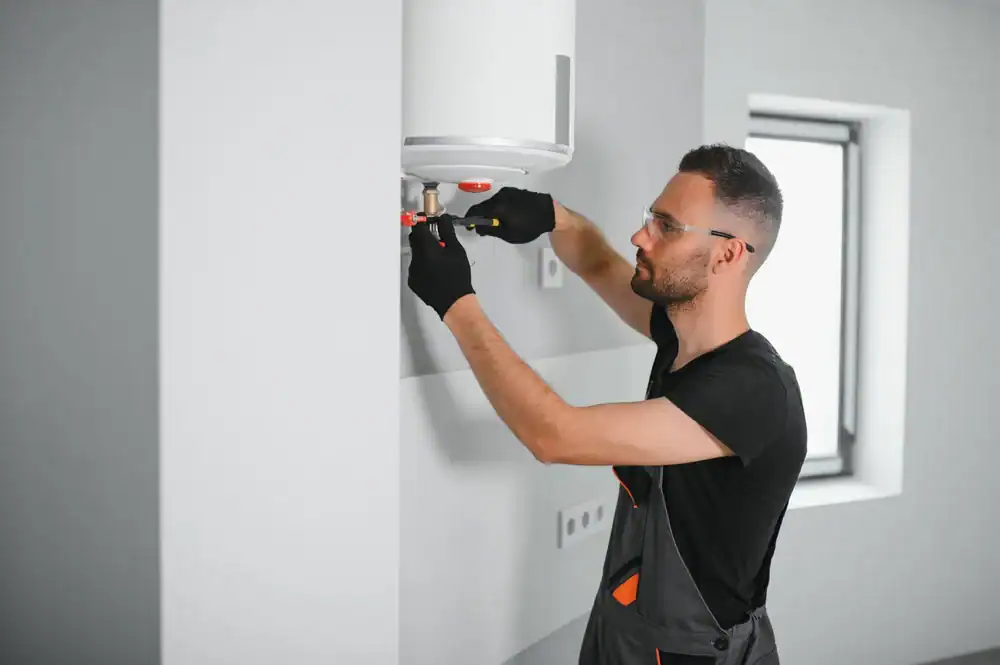
Our plumber arrives on time and runs a full diagnostic. That means checking your pressure levels, inspecting the heat exchanger, testing the ignition system, and looking for leaks or corrosion. We don’t guess. We figure out exactly what’s broken and why.
Once we know what’s wrong, we walk you through it. You get a clear explanation of the problem and an upfront price for the repair. No jargon, no upselling, no pressure. If you approve the work, we handle it right there—most boiler repairs get finished the same day.
After the repair, we test the system to make sure everything’s running the way it should. You get heat back, and we make sure you know how to spot warning signs before they turn into bigger problems down the road.
Ready to get started?
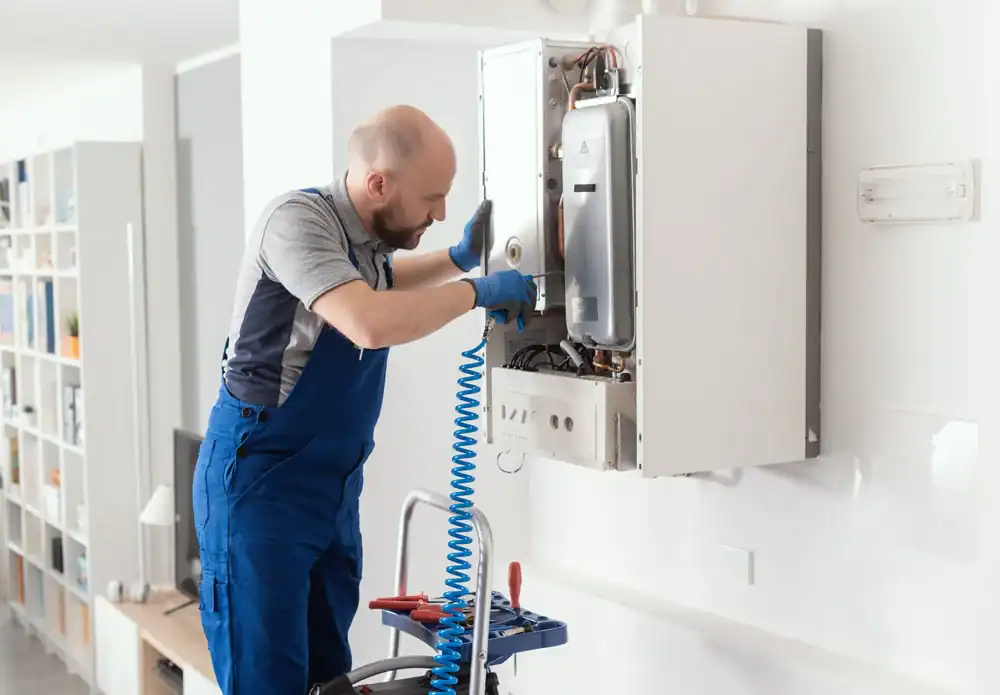
Boiler repairs cover the full range of heating system breakdowns. That includes fixing leaks, replacing faulty pressure relief valves, repairing or replacing circulators, addressing ignition failures, and fixing issues with thermostats or zone valves.
If your boiler is making strange noises—banging, gurgling, or whistling—that’s usually a sign of sediment buildup, air in the lines, or a failing pump. We handle all of it. If you’re seeing water pooling around the base of your unit, that’s a leak that needs immediate attention before it damages your floors or leads to mold.
In Eatontown, a lot of homes still run on older cast iron boilers. These systems are tough, but when they fail, the repairs can get complicated fast. Cracked heat exchangers, corroded pipes, and pressure imbalances are common in systems that are 15 years or older. We work on all boiler types—gas, oil, and electric—and we stock parts for the brands most common in Monmouth County.
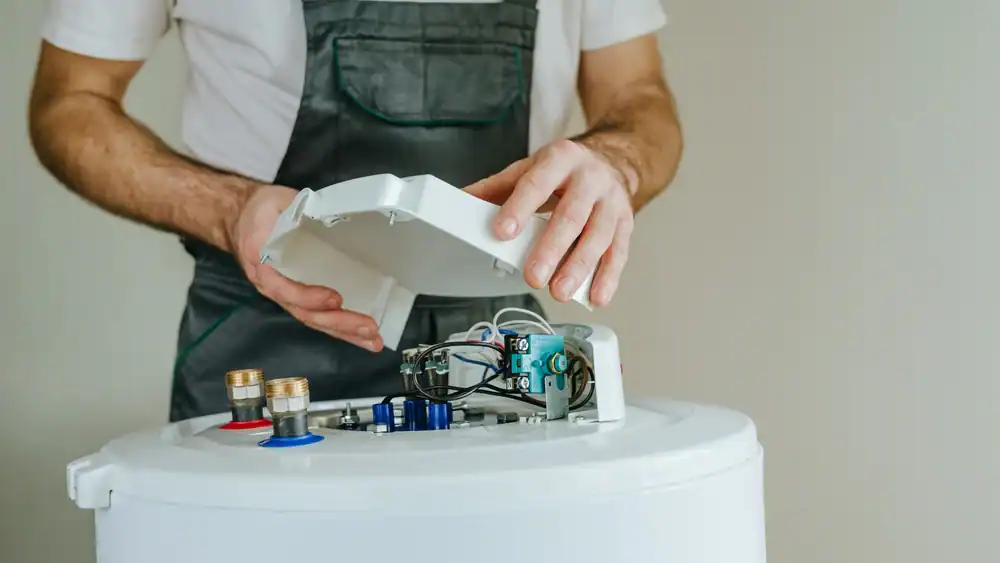
Most repairs cost between $104 and $944 depending on what’s broken and what parts are needed. You’ll know the cost before we start. If your system is beyond repair or nearing the end of its lifespan, we’ll tell you that too—and explain your options without the sales pitch.
If your boiler is less than 15 years old and the repair cost is under $1,000, fixing it usually makes sense. Most breakdowns at that age are isolated issues—a bad valve, a worn-out circulator, or a clogged heat exchanger. These repairs buy you several more years of reliable heat.
If your system is older than 15 years and you’re looking at a major repair—like a cracked heat exchanger or a failing burner assembly—replacement starts to make more financial sense. Older boilers are less efficient, and they tend to break down more often as parts wear out. You’ll spend less on energy bills with a new system, and you won’t be calling for repairs every winter.
We’ll walk you through the math. If repair makes sense, we’ll fix it. If replacement saves you money in the long run, we’ll explain why and give you options that fit your budget.
Leaks usually come from one of three places: the pressure relief valve, the pump seals, or corrosion in the heat exchanger or pipes. If you see water dripping from the pressure relief valve, that means your system pressure is too high—either from a faulty expansion tank or an issue with the fill valve.
Pump seal leaks happen when the circulator that moves hot water through your system starts to wear out. These leaks are usually small at first but get worse over time. If the leak is coming from the body of the boiler itself, that’s a sign of internal corrosion, which is more serious and sometimes means the unit is near the end of its life.
Don’t ignore a leaking boiler. Even a small leak can cause water damage to your floors, walls, or basement. It can also lead to rust and mold if it’s not addressed quickly. We can pinpoint where the leak is coming from and fix it before it turns into a bigger problem.
Most boiler repairs take between one and three hours, depending on what’s broken. Simple fixes—like replacing a thermostat, resetting the system, or swapping out a pressure relief valve—can be done in under an hour.
More involved repairs, like replacing a circulator pump, fixing a zone valve, or addressing a heat exchanger issue, take longer. If we need to order a part that’s not in the truck, we’ll let you know upfront and get it as fast as possible—usually same-day or next-day in Monmouth County.
Emergency calls get priority. If your heat is out in the middle of winter, we move fast. Our goal is to get your system back up and running the same day whenever possible, so you’re not left in the cold overnight.
Some basic troubleshooting is safe to try—like checking your thermostat settings, making sure the power switch is on, or verifying that your circuit breaker hasn’t tripped. You can also check the pressure gauge on your boiler. If it’s reading below 12 psi, you might just need to add water using the fill valve.
Beyond that, boiler repairs should be handled by a licensed plumber. Boilers operate under pressure and involve gas lines, electrical components, and high-temperature water. Mistakes can lead to carbon monoxide leaks, explosions, or serious water damage.
New Jersey requires licensed professionals to work on boiler systems for a reason. If your system isn’t heating, if you smell gas, or if you see water leaking, call someone who knows what they’re doing. It’s not worth the risk.
A tune-up is preventive maintenance. It’s what you do when your boiler is working fine, but you want to keep it that way. During a tune-up, we clean the heat exchanger, check the pressure levels, test the ignition system, inspect for leaks, and make sure all the safety controls are functioning properly. It usually takes about an hour and costs between $200 and $300.
A repair is what happens when something breaks. Your boiler isn’t heating, it’s leaking, it’s making noise, or it won’t turn on. Repairs are reactive—they fix a specific problem that’s keeping your system from working the way it should.
Regular tune-ups reduce the chances you’ll need a repair. They catch small issues before they turn into expensive breakdowns. Most boilers should be serviced once a year, ideally in the fall before heating season starts.
Yes. We’re available 24/7 for heating emergencies. If your boiler goes out in the middle of the night or over the weekend, you can reach us, and we’ll get someone to your home as quickly as possible—usually within a few hours.
Emergency calls get prioritized because we know what it’s like to lose heat in January in New Jersey. It’s not just uncomfortable—it’s unsafe, especially if you have young kids or elderly family members in the house.
We don’t charge extra just because it’s after hours. You pay for the repair, not for the time of day. Our pricing stays transparent no matter when you call.