Reviews
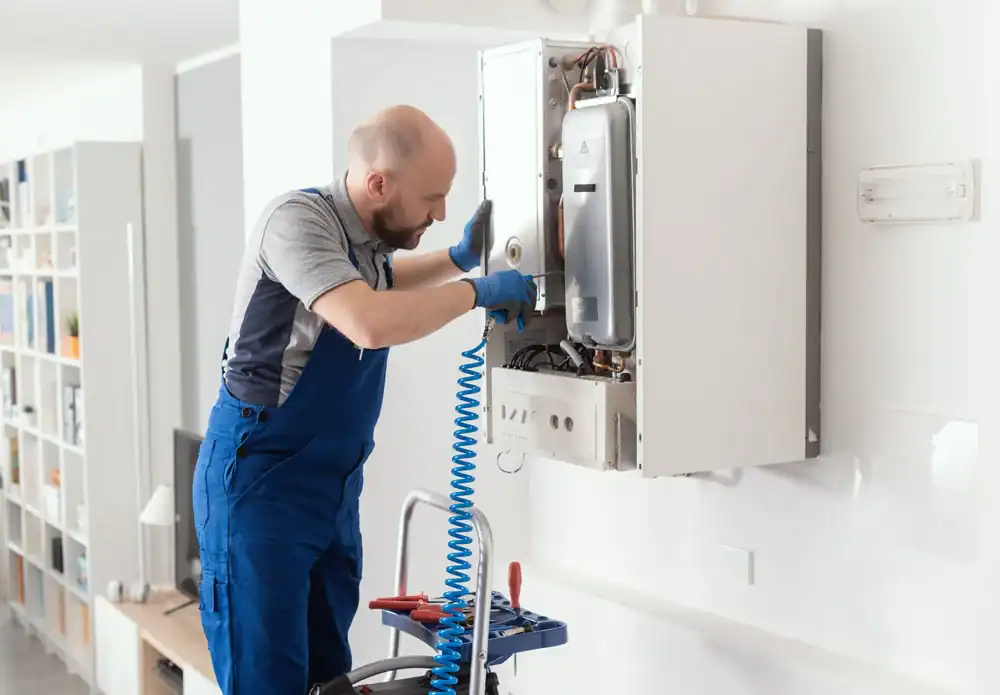
You’re not calling for boiler repair because you enjoy talking to plumbers. You’re calling because it’s cold, your family’s uncomfortable, and you need heat now.
When we fix your boiler, you get your house back to normal. No more layering up indoors. No more worrying whether the pipes will freeze overnight. No more wondering if this is going to cost you thousands because someone’s trying to sell you a whole new system when all you needed was a repair.
Most boiler problems in East Freehold homes—leaking water, strange noises, no heat—can be fixed the same day if you catch them early. The longer you wait, the worse it gets. A small leak becomes a flooded basement. Low pressure becomes a complete shutdown. That banging noise you’ve been ignoring? It’s your boiler telling you something’s wrong before it quits entirely.
We show up, figure out what’s actually broken, tell you what it’ll cost before we start, and get your heat back on. That’s it.
AME Plumbing Heating and Cooling is a family-owned company based right here in Monmouth County. We’re fully licensed and insured to work on heating systems throughout New Jersey, and we’ve spent years learning how boilers behave in homes like yours—older construction, mature systems, cold winters.
East Freehold has a lot of homes built in the 1980s, which means a lot of boilers that are either original or close to it. We’ve worked on just about every make and model you’ll find in this area. We know what fails first, what’s worth repairing, and when you’re better off replacing.
You won’t get a sales pitch from us. If your boiler can be fixed, we’ll fix it. If it can’t, we’ll tell you why and what your options are. We’re here 24/7 for emergencies because we know boilers don’t break on a schedule.

First, you call or contact us and describe what’s going on. No heat? Leaking? Making noise? We’ll ask a few questions to get a sense of the problem and schedule a time to come out. If it’s an emergency, we move faster.
When we arrive, we’ll inspect your boiler and the surrounding system. We’re looking for the root cause, not just the symptom. A leak might be a bad seal, but it could also be pressure issues or corrosion. A boiler that won’t fire up could be the ignition, the thermostat, a clogged condensate line, or low water pressure.
Once we know what’s wrong, we’ll explain it in plain terms and give you an upfront price for the repair. No hidden fees. No surprise charges. If you approve, we fix it right then if we have the parts. Most common repairs we can handle same-day.
After the repair, we test the system to make sure everything’s working properly. We’ll also let you know if we noticed anything else that might need attention soon—not to upsell you, but so you’re not caught off guard next month.
Ready to get started?
We handle the full range of boiler problems: no heat or hot water, leaking water around the unit, strange noises like banging or whistling, pressure issues, pilot light or ignition failures, and frozen condensate pipes. If your boiler’s not doing what it’s supposed to do, we can fix it.
East Freehold winters are cold enough that heating problems aren’t just inconvenient—they’re urgent. With median home values over $600,000 in this area, you’ve got a serious investment to protect. Frozen pipes, water damage from leaks, and system failures can cost you a lot more than a repair if you wait too long.
We use quality parts and materials because cheap fixes don’t last. You’re not paying us to come back in three months for the same problem. We also offer financing options and discounts for military and first responders, so the cost doesn’t have to be a barrier to getting your heat back on.
Our pricing is upfront. We’ll tell you what it costs before we do the work. If something changes, we’ll let you know before we proceed. We’re licensed, insured, and local—we’re not some national chain owned by an investment firm. We’re accountable to the people in this community.
It depends on what’s broken. Simple fixes like a faulty thermostat, a clogged filter, or resetting the system usually run between $150 and $300. Mid-level repairs—replacing a circulator pump, fixing a valve, or addressing a minor leak—typically cost $300 to $800.
Bigger problems cost more. If you need a heat exchanger, a new burner assembly, or major component replacement, you’re looking at $1,000 or more. A full boiler replacement in this area can run $4,000 to $8,000 depending on the size and type of system.
We’ll give you an exact price before we start any work. No surprises. If the repair costs more than half what a new boiler would cost, we’ll tell you that too so you can make an informed decision.
Low water pressure is a big one, especially in older systems. If the pressure drops too low, the boiler locks out as a safety measure. You might be able to repressurize it yourself, but if it keeps happening, there’s usually a leak or a faulty valve.
Frozen condensate pipes are common in New Jersey winters. If the pipe that drains condensation from your boiler freezes, the system shuts down. Thawing it carefully usually fixes the problem, but you need to insulate it so it doesn’t happen again.
Ignition problems, thermostat issues, and airlocks in the system are also frequent culprits. Sometimes it’s as simple as a tripped breaker or a pilot light that went out. Other times it’s a failed component that needs replacement. We diagnose it properly so you’re not guessing.
Most repairs take one to three hours once we’re on site. If it’s something straightforward like a thermostat replacement, a pressure adjustment, or clearing a blockage, we’re usually done in under an hour.
More involved repairs—replacing a pump, fixing a significant leak, or swapping out a control board—can take two to four hours depending on the system and how accessible everything is.
If we need to order a part, that adds time. We carry common parts with us, but if your boiler’s older or uses a specialized component, we might need a day or two to get it. We’ll let you know upfront if that’s the case and do what we can to get you temporary heat in the meantime.
If your boiler is under 10 years old and the repair costs less than a third of what a new system would cost, repairing usually makes sense. If it’s over 15 years old and you’re looking at a major repair, replacement is often the smarter move.
Boilers typically last 15 to 20 years with proper maintenance. If yours is in that range and starting to have multiple issues, you’re likely entering the phase where repairs become more frequent and expensive. At that point, a new system saves you money in the long run and gives you better efficiency.
We’ll be straight with you about where your system stands. If it’s worth fixing, we’ll fix it. If you’re throwing good money after bad, we’ll tell you that too. We’re not here to sell you something you don’t need, but we’re also not going to patch a failing system just to have you call us back in two months.
Yes. We’re available 24/7 for heating emergencies. If your boiler goes out in the middle of the night or on a weekend and your house is getting cold, call us. We’ll get someone out as quickly as possible—usually within a few hours.
Emergency calls do cost more than scheduled service because we’re pulling a technician away from their time off or other jobs, but we’re upfront about that pricing before we come out. When it’s 20 degrees outside and you have no heat, waiting until Monday morning isn’t an option.
We prioritize emergency calls based on severity. No heat with kids or elderly family members in the house? We move fast. If your system’s limping along and you just want it checked, we can usually schedule that for the next business day.
First, figure out where the water’s coming from. If it’s dripping from a pipe or valve, it might be a loose connection you can tighten. If it’s pooling around the base of the unit, that’s more serious—could be a crack in the heat exchanger or a failed seal.
Turn off the boiler if the leak is significant. Continuing to run it can cause more damage and waste water. If you can safely locate the shutoff valve for the water supply to the boiler, close that too.
Call us right away. Even a small leak can lead to bigger problems—water damage, corrosion, mold, and system failure. We’ll identify the source, explain what’s causing it, and fix it. Some leaks are simple. Others mean the boiler’s nearing the end of its life. Either way, you’ll know what you’re dealing with and what it’ll take to fix it.