Reviews
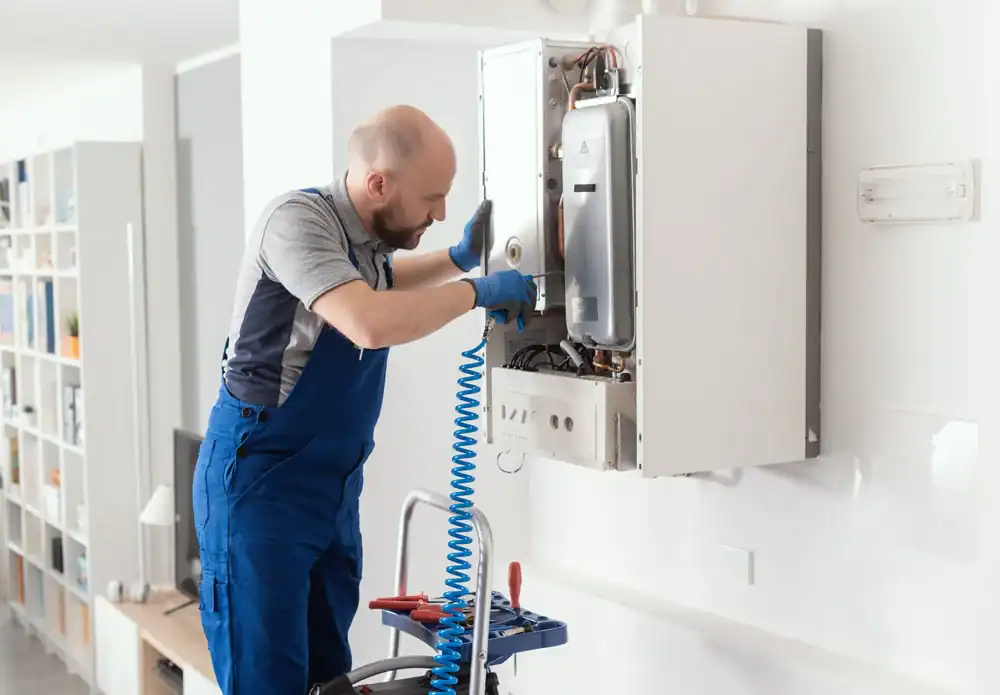
You wake up to a warm house. Your energy bills stop climbing every month. Your family isn’t huddled around space heaters wondering when the system will quit again.
That’s what a properly functioning boiler does. It runs quietly in the basement while you go about your day. No leaks pooling on the floor. No strange banging at 2 a.m. No cold showers before work.
In Brick, NJ, where winters hit hard and fast, your boiler isn’t optional. Flash freeze events can shut down a failing system overnight. Cracked heat exchangers and frozen condensate pipes are common here, especially in older homes. Regular boiler service catches these issues before they become midnight emergencies that cost five times more to fix.
Homes with documented maintenance histories retain 15-20% higher resale value in Monmouth County. That’s not just about the boiler—it’s about showing the next buyer you took care of the property. But more importantly, it’s about not spending your winter dealing with heating failures when you have better things to do.
We operate throughout Monmouth County with licensed, insured technicians who know how New Jersey winters treat heating systems. We’ve seen what happens when a boiler goes down during a January cold snap in Brick Township—and we respond the same day.
Our trucks carry the parts most boilers need. We give you the price before we start the work. No hidden fees, no surprise charges when the job’s done. If it’s 3 a.m. and your heat just quit, we’re available. That’s not a marketing line—it’s how we run the business.
We’re local. We know the housing stock in Brick, the common boiler issues in older neighborhoods, and what the updated NJ building codes require. You’re not getting a sales pitch from us. You’re getting a straight answer about what’s wrong and what it’ll take to fix it.

You call or submit a request online. We ask a few questions about what’s happening—no heat, strange noises, water leaking, whatever you’re seeing. We schedule a time that works for you, often the same day.
A licensed technician shows up in a marked truck with the tools and common parts already on board. They’ll diagnose the issue, explain what’s wrong in plain terms, and give you an upfront price for the repair. If you approve, they fix it. If it’s something that requires ordering a part, they’ll tell you the timeline and cost before moving forward.
Once the repair is done, they’ll test the system to make sure it’s heating properly and check for any other issues that might cause problems down the road. You get a clear invoice, an explanation of what was done, and direct contact info if something doesn’t seem right later. Most repairs are completed in one visit. If your boiler is beyond repair, we’ll walk you through replacement options and costs without pressuring you into anything.
Ready to get started?
We handle the full range of boiler issues—leaking water from cracked heat exchangers or damaged seals, no heat from faulty thermostats or circulation pumps, strange noises from sediment buildup or air in the lines, and pilot light problems in older gas boilers. If your system is short cycling, losing pressure, or just not heating like it used to, we’ll find out why.
In Brick, NJ, we see a lot of frozen condensate pipes during winter. That’s a common failure point in modern high-efficiency boilers when temperatures drop fast. We also deal with boiler leaking water issues in homes with older cast iron systems that crack during seasonal temperature swings. Both problems need immediate attention before they cause water damage or a complete system shutdown.
We work on gas boilers, oil boilers, and combination units. We’re familiar with the brands and models common in Monmouth County homes. Our technicians stay current on NJ plumbing and HVAC codes, so any work we do meets state requirements. That matters for inspections, insurance claims, and resale value.
If your boiler needs frequent repairs—more than twice in a heating season—we’ll tell you. At that point, you’re better off replacing it than continuing to sink money into an aging system. Most oil-fired boilers last around 15 years. Gas boilers can go 20 if they’re maintained. We’ll give you the honest assessment, not the one that makes us the most money.
Most boiler repairs in Brick range from $300 to $1,200 depending on what’s broken. A simple fix like a faulty thermostat or air in the lines runs on the lower end. Replacing a circulation pump or repairing a cracked heat exchanger costs more.
Emergency repairs cost more than scheduled service—that’s true everywhere. But here’s the thing: a $200 preventative maintenance visit can catch issues before they become a $5,000 midnight emergency. We’ve seen it happen repeatedly in Monmouth County, especially during flash freeze events when systems get pushed to their limits.
We give you the price upfront before starting any work. No surprises, no “we found something else” upsells unless there’s genuinely another problem that needs addressing. You approve the cost or you don’t. If your boiler is old and needs multiple expensive repairs, we’ll tell you if replacement makes more financial sense than continuing to fix it.
If your boiler is under 10 years old and this is the first major issue, repair it. If it’s over 15 years old and you’re calling for the third repair in two years, start looking at replacement costs.
Here’s the math that matters: if the repair costs more than half of what a new boiler would cost, and your system is already past its expected lifespan, replacement usually makes more sense. You’re not just avoiding future repairs—you’re also cutting energy costs. Older boilers can cost 20% more to operate annually due to decreased efficiency.
In Brick, NJ, where heating season runs long and hard, that efficiency difference adds up. Modern high-efficiency boilers also qualify for rebates and financing options that can offset the upfront cost. We’ll walk you through both scenarios with actual numbers so you can make the call that fits your budget and timeline.
Water leaking from your boiler usually means a cracked heat exchanger, damaged seal, or pressure valve issue. In Brick, NJ, we see this a lot in older systems that have gone through years of seasonal temperature changes—the metal expands and contracts until something gives.
If the leak is coming from around a valve or fitting, that’s often a seal that needs replacing. If it’s coming from the tank itself, that’s more serious and usually means the heat exchanger has cracked. That’s not a small repair. Depending on the age and condition of your boiler, replacement might be the better option.
Don’t ignore a boiler leaking water. Even a small leak can cause water damage to your basement and surrounding areas. It also means your system is losing pressure, which affects heating performance and can lead to a complete shutdown. Call someone to look at it the same day you notice it. The longer you wait, the worse it gets and the more expensive the fix becomes.
Once a year, ideally in the fall before heating season starts. Annual maintenance catches small issues before they become expensive failures in the middle of January.
During a maintenance visit, our technician will clean the system, check for leaks, test safety controls, inspect the heat exchanger for cracks, and make sure everything is running at the right pressure and temperature. This isn’t just about preventing breakdowns—it’s about efficiency. A well-maintained boiler uses less fuel and heats more effectively.
In Monmouth County, regular maintenance can reduce your emergency repair costs by up to 40%. That’s not a guess—it’s what we’ve seen over years of service calls. The homeowners who schedule annual maintenance rarely call us for emergencies. The ones who skip it are the ones dealing with no heat at the worst possible time. A $200 service visit beats a $5,000 emergency repair every time.
Strange noises—banging, whistling, or gurgling—usually mean sediment buildup, air in the lines, or a failing pump. If your boiler sounds like it’s working harder than it used to, something’s wrong.
No heat or inconsistent heating means a problem with the thermostat, circulation pump, or heat distribution. If some rooms are warm and others aren’t, that’s a circulation issue. If nothing’s heating, the boiler isn’t firing properly or the pilot light is out.
Rising energy bills without a clear reason often point to efficiency loss. Your boiler is running longer to produce the same amount of heat, which means it’s not operating correctly. Visible water around the unit, frequent pressure drops, or the system shutting off repeatedly are all signs you need us to take a look. Don’t wait until you have no heat—these warning signs give you time to fix the problem before it becomes an emergency.
Yes. We’re available 24/7 for heating emergencies in Brick, NJ and throughout Monmouth County. If your boiler quits in the middle of the night or during a winter storm, you can reach us.
Emergency calls cost more than scheduled service—that’s standard across the industry because of after-hours labor and immediate response. But if you’re without heat in January, waiting until Monday morning isn’t an option. We’ll get someone to your home as quickly as possible, usually within a few hours of your call.
Our trucks carry common parts, so many emergency repairs can be completed the same visit. If we need to order something, we’ll do what we can to get your heat working temporarily until the part arrives. We also offer financing options, including 0% financing, to make emergency repairs more manageable if the cost is higher than expected.