
Reviews
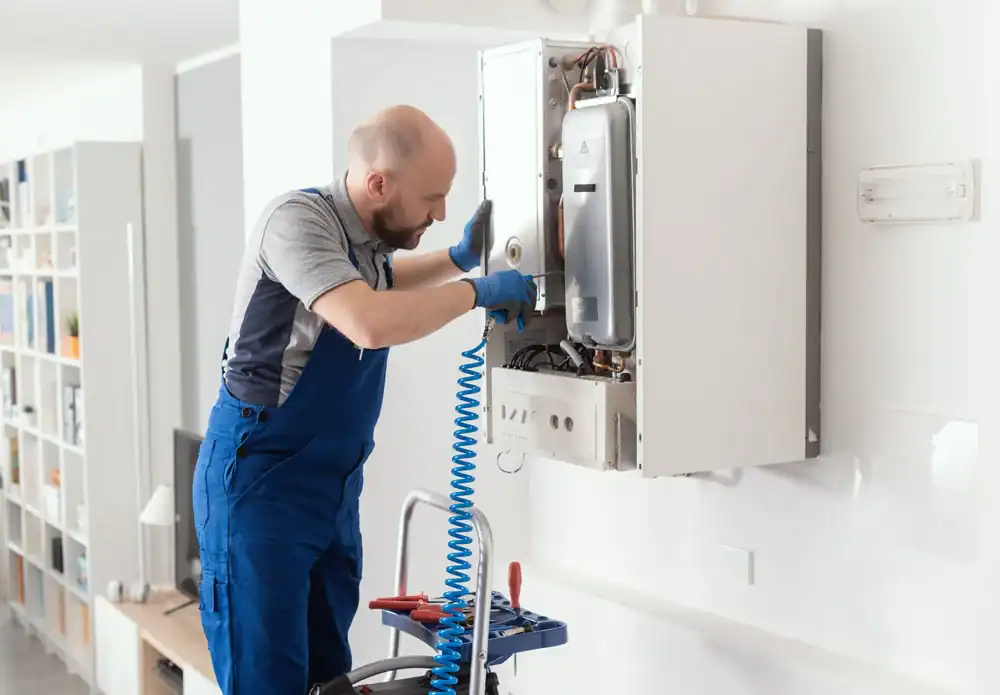
Your house is warm again. Every room heats evenly, and you’re not layering blankets in your own living room or worrying about pipes freezing overnight.
The strange noises stopped. No more banging, gurgling, or whistling coming from your basement. Your boiler runs quietly in the background like it’s supposed to.
Your energy bills go back to normal. When your boiler works efficiently, you’re not burning extra fuel trying to compensate for a system that’s struggling. A properly functioning boiler heats your home without the waste, and you’ll see that reflected in what you pay each month.
You’re not dealing with this again next week. The repair actually holds because it was done by someone who knows what they’re doing, uses quality parts, and doesn’t cut corners to get to the next job.
We’ve been handling boiler repairs and heating emergencies across Asbury Park and Monmouth County for over a decade. We’re a family-owned company, and everyone on our team is licensed and insured to work on your heating system.
We know how Asbury Park winters work. Coastal cold and humidity put extra strain on boilers, and when something goes wrong, it usually happens at the worst possible time. That’s why we offer 24/7 emergency boiler service with same-day response when you need it most.
You’ll get upfront pricing before any work starts. No hidden fees, no surprises when the job’s done. We show up, diagnose the issue, tell you what it costs, and let you decide.

You call or contact us, and we schedule a time that works for you. If it’s an emergency and your heat is out, we prioritize getting someone to your home as quickly as possible, often the same day.
Our licensed technician arrives and runs a full diagnostic on your boiler. We’re looking at pressure levels, checking for leaks, inspecting the heat exchanger, testing the pilot light and ignition system, and listening for any unusual sounds that point to specific problems. Most boiler issues fall into a few common categories—thermocouple failures, pressure valve problems, pump malfunctions, or buildup causing inefficiency.
Once we identify the issue, we explain what’s wrong in plain terms. You’ll know what needs to be fixed, why it matters, and exactly what it costs before we touch anything. If it’s a straightforward repair like relighting a pilot or replacing a faulty valve, we can usually handle it in a few hours. If it’s something more involved, we’ll walk you through the timeline.
After the repair, we test the system to make sure everything’s running properly. You’ll have heat again, and we’ll answer any questions you have about maintaining your boiler or spotting warning signs before they turn into bigger problems.
Ready to get started?
We handle every type of boiler repair for Asbury Park homes and businesses. That includes gas boilers, oil boilers, electric systems, combi boilers, and traditional system boilers. If your boiler is leaking water, that’s usually a pressure issue, a broken seal, or corrosion in the tank. We’ll find the source and fix it before it causes water damage or a complete system failure.
Strange noises like banging or kettling mean there’s likely mineral buildup on your heat exchanger. That forces your boiler to work harder, burns more fuel, and shortens the system’s lifespan. We’ll clean or replace the affected parts so your boiler runs efficiently again.
If your boiler isn’t heating properly or only some rooms are warm, that points to circulation problems, air in the lines, or a failing pump. We’ll bleed the system, check the pump, and restore even heat throughout your home. Pilot light problems and ignition failures are common in older systems, especially during extended cold snaps when your boiler’s running nonstop. We’ll repair or replace the thermocouple, ignition assembly, or gas valve depending on what’s causing the issue.
Asbury Park’s coastal location means salt air and humidity can accelerate wear on boiler components. We see more corrosion-related issues here than in other parts of Monmouth County, so we pay close attention to seals, valves, and any metal parts exposed to moisture. Regular maintenance helps, but when something breaks, fast repair prevents a small problem from turning into a full replacement.
Most boiler repairs in Asbury Park run between $200 and $600 for standard residential service. That covers common issues like pilot light repairs, valve replacements, pressure adjustments, and minor leaks.
If you need emergency boiler repair after hours, on weekends, or during a holiday, expect to pay an additional $200 to $300 for priority service. That puts emergency repairs in the $400 to $900 range depending on the complexity of the problem and parts needed.
The final cost depends on what’s actually wrong with your boiler. A simple fix like relighting a pilot or replacing a thermocouple costs less than rebuilding a pump or replacing a heat exchanger. We give you upfront pricing after diagnosing the issue, so you’ll know exactly what you’re paying before any work starts.
Most standard boiler repairs take a few hours from start to finish. If it’s something straightforward like a pilot light issue, pressure adjustment, or valve replacement, we can usually get your heat back on the same day.
More involved repairs—like replacing a circulator pump, fixing a cracked heat exchanger, or addressing extensive mineral buildup—might take longer. In those cases, we’ll give you a clear timeline upfront so you know what to expect.
If we need to order a specific part that’s not in our truck, that can add a day or two depending on availability. But we keep common boiler parts on hand specifically to avoid delays. Our goal is to restore your heat as quickly as possible without rushing through the job and creating future problems.
If your boiler isn’t producing heat or only heats part of your home, that’s an immediate problem, especially in winter. You shouldn’t have to wait around in a cold house hoping it fixes itself.
Strange noises—banging, whistling, gurgling—mean something inside your boiler isn’t working right. Banging usually points to mineral buildup or a failing pump. Whistling often indicates a pressure issue or a blockage. Gurgling means there’s air trapped in the system. None of these go away on their own.
Leaking water around your boiler is another red flag. Even a small leak can lead to bigger problems like water damage, corrosion, or a complete system failure. If you see water pooling near your boiler, call someone before it gets worse.
A yellow or flickering pilot light instead of a steady blue flame can indicate incomplete combustion, which means carbon monoxide could be present. That’s a safety issue, not just a comfort issue. If you smell gas or notice a yellow pilot light, turn off your boiler and call for emergency service immediately.
DIY boiler repairs aren’t worth the risk. Boilers involve high-pressure water, natural gas or oil combustion, and electrical components. One mistake can lead to gas leaks, carbon monoxide exposure, explosions, or serious water damage.
Even something that seems simple—like relighting a pilot—can be dangerous if you don’t know what you’re doing. If the pilot won’t stay lit, there’s usually an underlying issue with the thermocouple, gas valve, or ventilation. Forcing it without diagnosing the real problem just creates more risk.
New Jersey requires licensed professionals to work on boilers for a reason. A licensed plumber or HVAC technician has the training, tools, and experience to diagnose problems accurately and make repairs that actually hold. They also carry insurance, so if something does go wrong, you’re covered.
Hiring a professional costs money upfront, but it’s a lot cheaper than dealing with a botched repair, a flooded basement, or a boiler that needs full replacement because someone without experience made the problem worse.
Annual boiler maintenance is the standard recommendation, ideally before winter starts. A yearly inspection catches small issues before they turn into expensive emergency repairs in the middle of January.
During a maintenance visit, a technician will check your pressure levels, inspect the heat exchanger for cracks or buildup, test the ignition system, bleed air from the lines, and make sure all safety controls are working. They’ll also clean components that accumulate dirt and mineral deposits over time.
If your boiler is older than 10 years, or if you’re in an area like Asbury Park where salt air accelerates wear, you might benefit from more frequent checkups. Older systems have parts that wear out faster, and catching those early extends the life of your boiler.
Regular maintenance won’t prevent every repair, but it reduces the chances of a complete breakdown and keeps your system running efficiently. An efficient boiler costs less to operate and lasts longer, which saves you money in the long run.
Repair makes sense when the issue is isolated and your boiler still has years of life left. If you’re dealing with a broken valve, a faulty thermocouple, or a pump that needs replacing, and your boiler is less than 15 years old, repairing it is usually the smarter financial move.
Replacement becomes the better option when your boiler is old, inefficient, or facing multiple expensive repairs. Boilers typically last 15 to 20 years. If yours is near the end of that range and you’re constantly calling for repairs, you’re throwing money at a system that’s going to fail soon anyway.
A cracked heat exchanger is one of those repairs that often tips the scale toward replacement. It’s expensive to fix, and if your boiler is already old, it doesn’t make sense to invest in a major repair when other parts are likely to fail next.
We’ll be honest with you about whether repair or replacement makes more sense for your situation. If your boiler can be fixed and will run reliably for a few more years, we’ll tell you that. If you’re better off replacing it now and avoiding repeated breakdowns, we’ll tell you that too. You’ll get a straight answer based on what’s actually best for your home and your budget, not what makes us the most money.