Reviews

Your energy bill drops because the system isn’t running constantly just to keep up. You stop waking up at 2 a.m. in a sweat because one bedroom won’t cool down. The humidity that makes your house feel sticky even when the thermostat says 72? Gone.
A properly installed or repaired AC system doesn’t just push cold air. It removes moisture, cycles efficiently, and keeps every room comfortable without working itself to death. That’s what matters when you’re three miles from the ocean and dealing with 68% average humidity in August.
West Freehold sits in a coastal climate that’s harder on HVAC systems than most people realize. Salt air corrodes condenser coils. Humidity breeds mold in ductwork. Systems that sit idle all winter need more than a quick tune-up before summer hits. You need someone who knows what breaks first and why.
AME Plumbing Heating and Cooling operates throughout Monmouth County with licensed, insured technicians who’ve seen what coastal conditions do to HVAC equipment. We’re not a franchise. We’re local, and we answer our phones.
We stock parts on our trucks so most repairs get finished the same day. We give you a price before we start. And if your system fails at midnight in July, we’ll be there—because emergency service isn’t something we outsource or schedule three days out.
You’re not hiring a salesperson. You’re hiring someone who knows the difference between a refrigerant leak and a failing compressor, and who can explain both without making you feel like you need a degree to understand your own air conditioner.

You call or message us with the problem. We ask a few questions to understand what’s happening—whether your system isn’t cooling, making noise, leaking, or just stopped working entirely. Then we schedule a time that works for you, usually same-day if it’s an emergency.
When we arrive, we run diagnostics on your system. That means checking refrigerant levels, testing electrical connections, inspecting the condenser and evaporator coils, and looking at airflow. We’re not guessing. We’re measuring.
Once we know what’s wrong, we explain it in plain terms and give you an upfront price. If it’s a repair, we tell you what’s broken and what it’ll cost to fix. If it’s time for a replacement, we walk through your options based on your home’s size, your budget, and how long you plan to stay in the house. Then you decide. We don’t push. We don’t upsell. We just give you the information you need to make the call.

Ready to get started?
We handle everything from emergency repairs to full system replacements and seasonal maintenance. If your AC stops cooling during a heat wave, we’ll get it running again. If it’s 15 years old and finally giving up, we’ll help you choose a new system that fits your home and your budget.
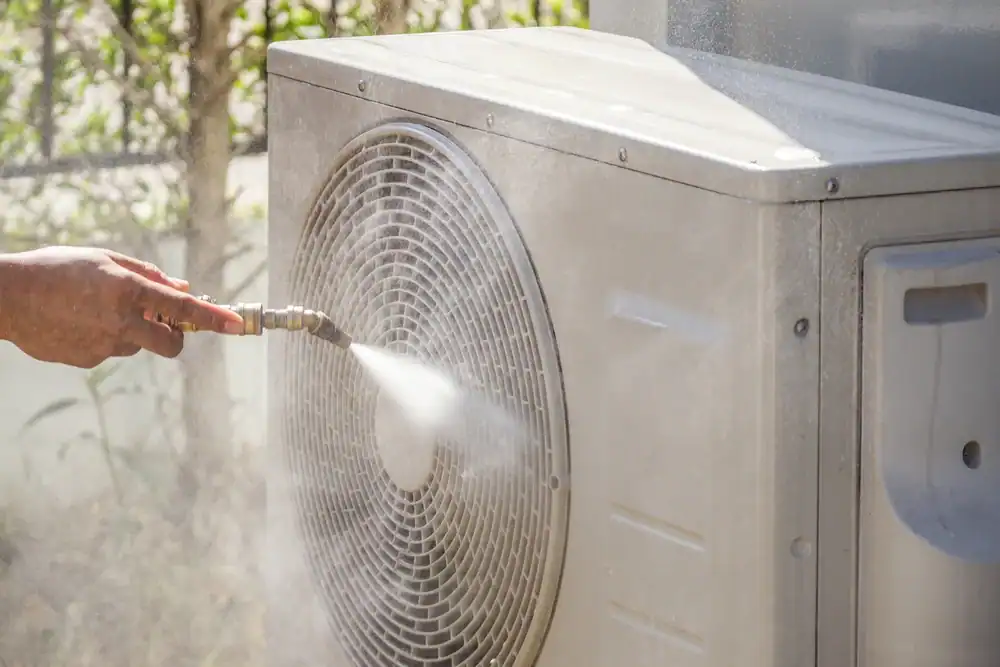
West Freehold’s coastal location means your outdoor unit takes a beating from salt air and humidity. We see corroded coils, rusted cabinets, and failing electrical connections more often here than in towns 20 miles inland. During an AC tune-up, we clean those coils, check refrigerant levels, tighten electrical connections, and test the system under load. It’s not glamorous, but it’s what keeps your AC from dying in August.
Starting in 2025, R-410A refrigerant is being phased out. If your system uses it—and most residential units installed in the last 15 years do—you need to know what that means for repairs and replacements. We’ll walk you through it without the panic or the sales pitch. Some systems can be retrofitted. Some can’t. We’ll tell you which category yours falls into and what your options are.

Most central air conditioning installations in West Freehold run between $5,000 and $12,000, depending on the size of your home, the efficiency rating you choose, and whether your ductwork needs modifications. A 1,500-square-foot home typically needs a 2.5 to 3-ton unit. A 2,500-square-foot home might need a 4-ton system.
Higher SEER ratings mean better energy efficiency and lower electric bills, but they cost more upfront. A 14 SEER system is the minimum allowed in New Jersey. A 16 to 18 SEER system will save you money over time if you plan to stay in the house for more than five years. We don’t push the highest-efficiency models on everyone because they don’t always make financial sense.
If you’re replacing an older system, we’ll inspect your ductwork first. Leaky or undersized ducts waste energy and make even a new system perform poorly. Sometimes a few duct repairs add $500 to the job but save you $50 a month on your electric bill. We’ll tell you if that’s the case before we start.
When outdoor temperatures hit 95 degrees or higher, your air conditioner works harder than it does on a mild day. If the system is already struggling—low refrigerant, dirty coils, a failing capacitor—that extra demand pushes it over the edge. It’s not bad luck. It’s physics.
Low refrigerant is one of the most common culprits. Your AC doesn’t “use up” refrigerant like gas in a car. If it’s low, there’s a leak. Dirty condenser coils are another issue, especially near the coast where salt and debris build up faster. When those coils can’t release heat, the compressor overheats and shuts down.
A failing capacitor is the third usual suspect. The capacitor gives your compressor and fan motors the jolt they need to start. When it’s weak, the system struggles to kick on during peak demand. Replacing a capacitor takes 20 minutes and costs a fraction of what you’d pay for a new compressor. That’s why regular maintenance matters—it catches these problems before they strand you in a heat wave.
Once a year, ideally in spring before cooling season starts. Coastal humidity and salt air mean your system needs attention more than units farther inland. An annual tune-up catches small problems before they become expensive ones.
During a maintenance visit, we clean the condenser coils, check refrigerant levels, inspect electrical connections, test the thermostat, and measure airflow. We also look for signs of corrosion or mold—both common in this area. If your outdoor unit sits near the ocean or in a shaded, damp spot, it’s even more vulnerable.
Skipping maintenance doesn’t just increase the chance of a breakdown. It voids most manufacturer warranties. If your compressor fails and you haven’t had the system serviced, the warranty won’t cover it. That’s a $2,000 mistake you can avoid with a $150 tune-up.
It depends on your home’s square footage, insulation, window placement, and how much sun hits your roof. A 1,500-square-foot home typically needs a 2.5 to 3-ton unit. A 2,500-square-foot home usually needs a 4-ton system. But those are rough estimates. Oversizing or undersizing both cause problems.
An oversized AC cools your home fast but shuts off before it removes enough humidity. You end up cold and clammy. It also cycles on and off more frequently, which wears out the compressor faster. An undersized system runs constantly, never quite catches up, and drives your electric bill through the roof.
We run a load calculation before recommending a system size. That means measuring your home, checking insulation levels, counting windows, and factoring in your ductwork. It takes 30 minutes and ensures you’re not paying for more capacity than you need—or worse, installing a system that can’t keep up.
Yes, but it gets more complicated. Starting January 1, 2025, manufacturers can’t produce new R-410A refrigerant. Existing stockpiles will still be available for repairs, but prices are expected to climb as supply shrinks. If your system springs a leak in 2026, you might pay double or triple what refrigerant cost in 2024.
That doesn’t mean you need to replace your AC immediately. If your system is running fine and doesn’t have leaks, it’ll keep working for years. But if it’s already 10 to 12 years old and needs a major repair, it might make more sense to replace it now with a system that uses the newer A2L refrigerants.
We’re not going to pressure you into a replacement if your current system has life left. We’ll give you the numbers—what the repair costs now, what it might cost in two years, and what a new system would run. Then you decide what makes sense for your situation.
Yes. We’re available 24/7 for emergency service because air conditioners don’t wait for business hours to fail. If your system goes out at 11 p.m. on a Saturday in July, we’ll come out that night. We stock common parts on our trucks, so most emergency repairs get finished on the first visit.
Emergency service costs more than a scheduled appointment—that’s standard across the industry. But we’ll tell you the price before we come out, so there’s no surprise when we hand you the bill. If it’s something we can’t fix immediately, we’ll at least diagnose the problem and give you options.
We don’t outsource emergency calls to an answering service or make you wait until Monday. When you call AME, you’re talking to someone who can actually help you, not someone reading from a script. That’s how we’ve always operated, and it’s not changing.