Reviews

Your home cools down when you need it to. The system doesn’t quit on the hottest day in July or start making that grinding noise at 2 a.m. You’re not calling three different companies trying to find someone available, and you’re not getting a different price every time you ask.
If we’re installing new equipment, you’re looking at a system designed for coastal conditions—not the same unit someone’s putting in a house 30 miles inland. That means coil coatings that resist salt air, drain systems that handle humidity, and components that don’t corrode in three years.
If we’re repairing what you have, you get a straight answer about whether it’s worth fixing or if you’re throwing money at something that’s already done. We’re not here to sell you a new system if a $300 repair buys you two more years. But we’re also not going to patch something six times when replacement makes more sense.
We’ve spent over a decade working in Monmouth County. We know what happens to condenser coils near the ocean. We know how quickly electrical connections fail when salt air gets to them. We know that homes built in the 1950s and 1960s—which is most of Wanamassa—weren’t designed for the AC loads people expect today.
We’re licensed, insured, and local. That means faster response times when your system goes down, and it means we’ve seen your exact problem in your exact type of home before. You’re not getting a generic diagnosis from someone who drove in from two counties over.
We also don’t hide pricing. You’ll know what the job costs before we start, and that number doesn’t change unless you ask us to do something different.

You call or contact us, and we schedule a time that works for you—not just whenever we have an opening. If it’s an emergency, we’re available 24/7, and that’s not an answering service. It’s an actual technician who can get to you.
When we show up, we assess what’s going on. If it’s a repair, we diagnose the issue, explain what failed and why, and give you a price to fix it. If it’s an installation, we look at your home’s size, your ductwork, your insulation, and how coastal conditions affect equipment life. Then we recommend a system that actually fits your situation—not the one with the highest margin.
Once you approve the work, we handle permits, installation, and cleanup. You’re not dealing with three different subcontractors or waiting two weeks between phases. We finish the job, test everything, and make sure you understand how to operate and maintain your new system. If something’s not right, we come back and make it right.

Ready to get started?
For installations, you’re getting equipment rated for coastal environments, proper sizing based on actual load calculations, and ductwork modifications if your existing setup can’t handle the new system. We pull permits, coordinate inspections, and make sure everything’s up to code. You also get information on federal tax credits—up to $600 for high-efficiency systems in 2024 and 2025—and financing options if you need them.
For repairs, we’re diagnosing the root cause, not just swapping parts until something works. If your system’s failing because of salt air corrosion, we’re addressing that. If it’s undersized for your home and running constantly, we’re telling you that. And if it’s a simple fix, we’re not inventing problems.
We also handle maintenance and tune-ups. In Wanamassa, where humidity stays high and salt air accelerates wear, regular maintenance isn’t optional if you want your system to last. Most coastal AC units last about 10 years compared to 15 years inland. Proper maintenance pushes that number higher. We check refrigerant levels, clean coils, inspect electrical connections, and catch small issues before they become expensive ones.
New Jersey’s electricity rates run $0.20 to $0.25 per kilowatt-hour. An inefficient or failing AC system costs you real money every month. A new high-efficiency unit can cut energy use by up to 30%, which adds up fast when you’re running it from May through September.

Most AC systems in coastal areas like Wanamassa last around 10 years, compared to 15 years for the same equipment installed inland. Salt air corrodes condenser coils, cabinet panels, and electrical connections faster than normal wear and tear. Some units near the water fail in as little as four years if they’re not designed for coastal conditions.
You can extend that lifespan with the right equipment and regular maintenance. Coastal-rated systems use coil coatings and corrosion-resistant materials that hold up better. Annual tune-ups catch salt buildup and corrosion early, before they cause failures. If you’re replacing a system, choosing equipment designed for your environment matters more than brand name.
If your current system is over 10 years old and starting to need frequent repairs, replacement usually makes more financial sense than continued fixes. Older systems also run less efficiently, which costs you more on electric bills every month.
It depends on your home’s square footage, insulation, ductwork, window placement, and how many people live there. Most homes in Wanamassa were built in the 1950s and 1960s, and insulation standards were different back then. That affects how much cooling capacity you actually need.
A system that’s too small runs constantly and never cools your home properly. A system that’s too large short-cycles, which means it turns on and off repeatedly without removing humidity. In a coastal area where humidity is already high, that’s a comfort problem and a mold risk.
We do a proper load calculation before recommending a system size. That’s not a guess based on square footage—it’s a detailed assessment of heat gain, insulation values, and airflow. You end up with a system that keeps your home comfortable without wasting energy or wearing out prematurely. If your ductwork can’t handle the airflow, we’ll tell you that too, because installing a new AC on inadequate ducts doesn’t solve anything.
Yes. We’re available 24 hours a day, seven days a week for emergency service. That’s not an answering service that takes a message—it’s a licensed technician who can actually get to your home and fix the problem.
AC systems tend to fail at the worst possible times. The hottest day of summer, the middle of the night, weekends when most companies are closed. If your system goes down and your home’s heating up, you can’t afford to wait until Monday morning for a callback.
When you contact us for emergency service, we give you a realistic timeframe for arrival and an upfront price for the diagnostic visit. If we can fix it on the spot, we will. If it needs parts or a more involved repair, we’ll explain what’s required and how long it’ll take. We carry common parts on our trucks, so most repairs happen the same day.
Federal tax credits are available for high-efficiency air conditioning systems installed in 2024 and 2025. You can claim up to $600 for qualifying AC units that meet Energy Star efficiency requirements. Heat pumps qualify for up to $2,000. These are tax credits, not rebates, so they reduce what you owe when you file your taxes.
The system has to meet specific efficiency ratings to qualify, and you’ll need documentation from the manufacturer and your installer. We provide that paperwork as part of the installation process. The credits apply to the equipment cost, not labor, but $600 back on a system that already saves you 20-30% on cooling costs makes a difference.
Some utility companies also offer rebates for energy-efficient upgrades, though programs change. We can tell you what’s currently available when we’re quoting your installation. Between federal credits, potential utility rebates, and lower monthly operating costs, a high-efficiency system often pays for the upgrade within a few years.
Most central AC installations in Monmouth County run between $4,000 and $12,000 depending on system size, efficiency rating, and whether your ductwork needs modification. A straightforward replacement on existing ducts with a mid-efficiency unit sits on the lower end. A high-efficiency system with ductwork upgrades or a complex installation pushes toward the higher end.
Coastal installations sometimes cost more because the equipment needs additional corrosion protection and the installation has to account for salt air exposure. That’s not us padding the price—it’s the reality of what holds up in this environment versus what fails in three years.
We give you an upfront price before starting work, and that price doesn’t change unless you ask us to do something different. We also offer financing options, including 0% financing for qualified customers, so you’re not choosing between a broken AC and draining your savings. If you’re military or a first responder, we offer a 10% discount on services.
A complete tune-up includes checking refrigerant levels, cleaning condenser and evaporator coils, inspecting electrical connections, testing capacitors and contactors, checking airflow and duct condition, lubricating moving parts, and testing the thermostat. We’re looking for anything that’s wearing out, corroding, or operating outside normal parameters.
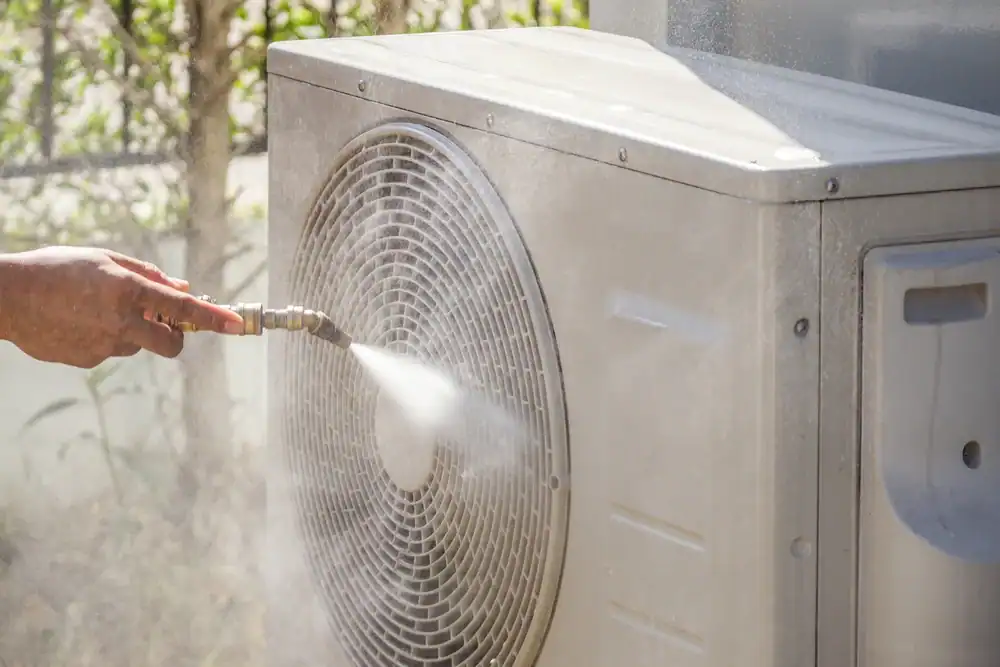
In coastal areas, coil cleaning matters more than it does inland. Salt residue builds up on condenser coils and restricts airflow, which makes your system work harder and use more energy. Left alone, it accelerates corrosion and leads to refrigerant leaks. We clean that off before it becomes a problem.
We also check for early signs of salt air damage—surface rust on the cabinet, corrosion on electrical terminals, deteriorating insulation on refrigerant lines. Catching these issues during a tune-up means a $150 repair instead of a $1,500 failure three months later. Annual maintenance before cooling season starts is the best way to avoid breakdowns when you actually need your AC running.