
Reviews

When your AC goes down in Toms River in July, it’s not just uncomfortable — for a lot of residents here, especially older adults on fixed incomes or families managing a barrier island rental, it’s a real problem with real consequences. A working system means sleep. It means a rental property that’s ready before Memorial Day weekend. It means you’re not calling around in a panic during a heat wave hoping someone picks up.
The homes along Ortley Beach and Normandy Beach that were rebuilt after Sandy are hitting that 10-to-13-year mark right now. The systems installed during that rebuilding wave weren’t designed to last forever, and the salt air coming off the Atlantic has been working on them the whole time. If yours has been running harder than it should, or cycling on and off without actually cooling the house down, that’s not a coincidence — it’s a pattern we see constantly in this part of Ocean County.
Getting this handled means you stop throwing money at a system that’s already past its useful life in this environment. It means your electricity bill reflects a system that’s actually sized and running correctly. And it means when the next heat advisory hits, you’re not the one calling around at 9 PM.
We’ve been serving Monmouth and Ocean County homeowners since 2014. That means over a decade of working in the same coastal environment your system deals with every day — from the barrier island communities off Route 37 to the inland neighborhoods in East Dover and Silverton. We’re not a franchise. We’re not a national brand with a local phone number. We’re a family-owned team that knows Toms River and the surrounding areas because we work in them.
Every technician on our team is licensed under New Jersey’s Master HVACR Contractor requirements and EPA Section 608 certified for refrigerant handling. We pull permits on every installation — which matters in Toms River, where the building department takes code compliance seriously, especially in the post-Sandy rebuild areas. You’re not left to figure that out on your own.
With 686+ verified reviews across Google, Angi, and HomeAdvisor, the track record is there. Real customers, real names, real jobs — including plenty right here in Toms River and Ocean County.

It starts with a call or a booking, and from there we schedule a time that works for you — same day when it’s an emergency, or planned in advance if you’re thinking ahead about a replacement before summer hits. When our tech arrives, the first thing that happens is a real diagnostic. Not a quick glance and a quote for the most expensive fix on the menu — an actual assessment of what’s happening and why.
From there, you get a written estimate before we do anything. That number doesn’t change when the job is done. If you’re replacing a full system, we handle the permit application with Toms River’s building department as part of the process — that’s not an add-on, it’s just how we do it. In a township that’s seen what happens when post-Sandy rebuilds skip the paperwork, that step matters more than most people realize.
For new installations, we do a proper load calculation to make sure the system we’re putting in is actually sized for your home — not just whatever’s available. Coastal homes near Barnegat Bay carry a higher humidity load than inland properties, and an undersized or oversized system will struggle in that environment regardless of the brand. After installation, we walk you through what was done, what to expect from the new equipment, and what maintenance looks like going forward.

Ready to get started?
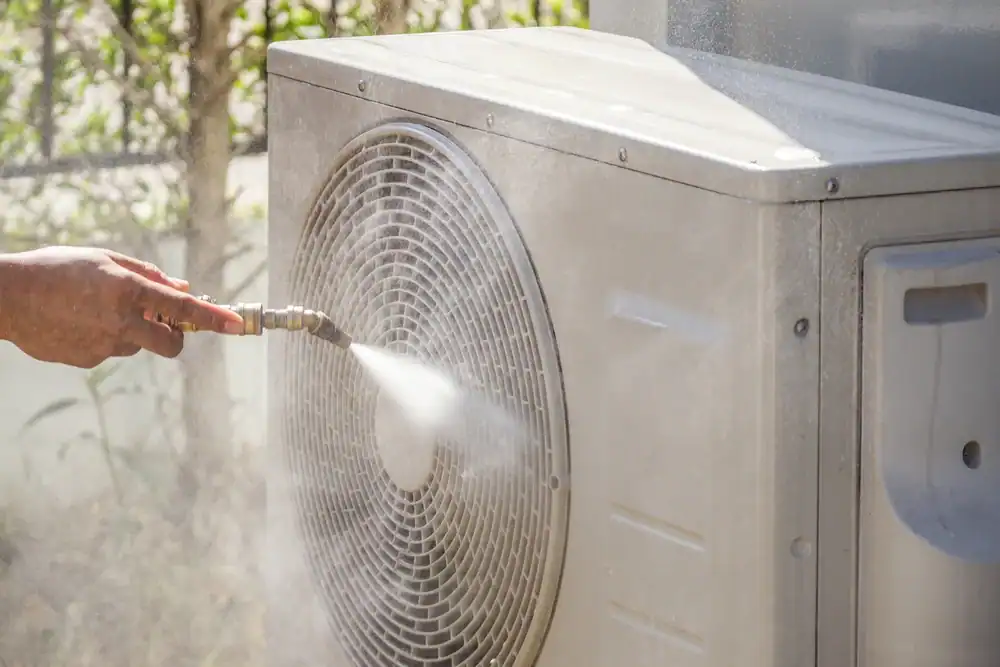
Whether you need a quick repair on a system that stopped cooling overnight or you’re looking at a full central air replacement for a home that hasn’t had an efficient system since before Sandy, we handle both ends of it. Our air conditioning repair service covers refrigerant issues, compressor diagnostics, capacitor and contactor failures, thermostat problems, frozen coils, and the kind of salt-air corrosion that shows up on condenser coils in properties close to the bay or the barrier island communities along Route 37.
On the installation side, we work with central air systems, ductless mini splits, and full cooling system replacements. If your home in Silverton or West Dover is running an older R-22 or R-410A system, we’ll walk you through what the transition to current refrigerant standards actually means for your options — without the sales pressure. You’ll know the cost, the efficiency rating, and the expected lifespan before you make any decision.
For military personnel and first responders — and Ocean County has no shortage of both, given how close we are to Joint Base McGuire-Dix-Lakehurst — there’s a standing 10% discount on every job. We also offer financing at 0% for qualified customers, which makes a full system replacement a lot more manageable when it wasn’t in the budget. No hidden fees. No surprises when the invoice comes.

The honest answer is shorter than most manufacturers will tell you. The national average lifespan for a central air conditioning system is around 15 years under normal conditions — but “normal conditions” doesn’t account for the salt air and humidity that come with living near Barnegat Bay or on the barrier island communities like Ortley Beach and Normandy Beach. In those environments, 10 to 12 years is a more realistic window before you start seeing significant corrosion on the condenser coils, failing electrical connections, and efficiency losses that make repairs less and less worth it.
For homes that were rebuilt after Superstorm Sandy — and there are thousands of them in Toms River Township — the systems installed during that 2013 to 2016 rebuilding wave are right at that threshold now. If your home falls into that category, it’s worth having someone take a real look at the system before it fails mid-July rather than after. A proper evaluation will tell you whether you’ve got a few good years left or whether you’re spending repair money on borrowed time.
The repair-versus-replace decision comes down to two things: the age of the system and the cost of the repair. A useful rule of thumb is to multiply the system’s age by the estimated repair cost — if that number exceeds $5,000, replacement is usually the smarter financial move. Similarly, if the repair quote is more than half the cost of a new system, you’re better off putting that money toward something that will actually last.
For Toms River homeowners specifically, coastal conditions accelerate this math. A 10-year-old system in a home near the bay that needs a $600 compressor repair might still make sense. A 13-year-old system in an Ortley Beach property that’s been sitting in salt air for over a decade and needs $1,500 in work is probably not worth it — you’re likely looking at another failure within a season or two. When we come out for a diagnostic, we’ll give you the honest breakdown of both options so you can make the call with real numbers in front of you, not a guess.
Yes. In New Jersey, replacing or installing an air conditioning system requires a building permit, and that permit has to be submitted by a licensed HVAC contractor. In Toms River specifically, the building department enforces this — and in the post-Sandy rebuild areas along the barrier island and bay-facing neighborhoods, code compliance has been taken seriously for over a decade. Skipping the permit process isn’t just a technicality; it can void your homeowner’s insurance coverage and create real liability issues if something goes wrong or when you eventually sell the home.
We handle the permit application as part of every installation. You don’t have to figure out the paperwork, schedule the inspection, or chase down the building department. We do that as a standard part of the job. After the system is installed, a post-installation inspection is required before the permit closes — we coordinate that too. The whole process is built into what we do, not treated as an add-on.
For most homes in Toms River, a full central air conditioning installation runs somewhere between $5,200 and $12,000 depending on the size of the home, the system you’re replacing, and whether any ductwork needs to be addressed. The wide range reflects real variables — a smaller inland home in East Dover with existing ductwork in good condition is a very different job than a post-Sandy rebuild on the barrier island that needs a full system plus updated refrigerant lines.
One factor that’s adding cost across the board right now is the industry transition to A2L refrigerants like R-454B and R-32, which has added roughly 10% to new system costs in 2025 and 2026. If you’re coming off an older R-22 or R-410A system, that’s part of the conversation we’ll have upfront. New Jersey’s electricity rates run between $0.20 and $0.25 per kilowatt-hour — higher than the national average — which means a high-efficiency replacement pays itself back faster here than it would in most other states. We offer 0% financing for qualified customers, so the full cost doesn’t have to land all at once.
This is one of the most common calls we get in Toms River during summer, and it usually comes down to a handful of causes. Low refrigerant from a slow leak, a dirty or corroded condenser coil, a failing capacitor, a clogged air filter, or a system that was never properly sized for the home in the first place — any of these can result in a unit that runs constantly without actually dropping the temperature.
In coastal Ocean County, condenser coil corrosion from salt air is a bigger contributor than most homeowners realize. The coil is responsible for releasing heat outside, and when it’s coated in salt residue and oxidation, it can’t do that efficiently. The system works harder, the house stays warm, and the electricity bill goes up. This isn’t a problem you can solve by turning the thermostat down — it needs a proper diagnostic to identify the actual cause. If the coil is corroded on a system that’s already 10-plus years old, that’s usually the point where we have the repair-versus-replace conversation honestly.
Yes — we offer a standing 10% discount for military personnel and first responders, and it applies to every job, not just certain services or certain times of year. Given how many veterans and active-duty families live in Ocean County — particularly with Joint Base McGuire-Dix-Lakehurst about 30 miles west of Toms River — this is something that comes up regularly, and we want it to be straightforward. You served or you’re serving now, you get 10% off. No hoops.
The same applies to first responders — police, fire, EMS — who make up a significant part of the Toms River community. If you qualify, just mention it when you call or book. It’s applied to the final invoice without any additional paperwork or process on your end. For a job like a full AC replacement that can run several thousand dollars, 10% is a meaningful number — and it’s one of the ways we try to make quality HVAC service accessible to the people in this community who’ve earned it.