

Reviews

When your air conditioner is working properly, you stop thinking about it. No more waking up at 2 AM because the house won’t cool down. No more running a window unit in a room that deserves better. You just live comfortably — and in Ocean Grove, that matters more than people realize.
Here’s the thing about cooling a home in this community: the environment works against your equipment in ways that most homeowners don’t think about until something breaks. Salt air from the Atlantic doesn’t just drift past your outdoor unit — it settles on the coils, eats at the cabinet, and degrades electrical connections faster than anything you’d deal with 20 miles inland. A system that’s properly installed with the coastal environment in mind lasts longer, runs more efficiently, and doesn’t leave you scrambling for a repair call in the middle of July.
Ocean Grove’s Victorian-era housing stock adds another layer to this. These homes weren’t built with central air in mind — high ceilings, narrow wall cavities, original plaster, older electrical panels. When the installation accounts for all of that upfront, you get a system that actually fits the home instead of fighting it. The difference shows up in your comfort, your energy bill, and how long the equipment lasts before it needs to be replaced.
We’re based in Manasquan — right down Route 71 from Ocean Grove. That’s not a minor detail. It means when you call, someone who actually knows this stretch of coastline picks up. The salt air, the Victorian housing stock, the way summer demand spikes before Memorial Day weekend — none of that is new to us.
AME Plumbing Heating and Cooling has been serving Monmouth County homeowners since 2014 as a family-owned and operated company. Every technician is licensed under New Jersey’s Master HVACR requirements, EPA Section 608-certified, and fully insured. You’re not getting a rotating crew from a regional dispatch center — you’re getting a local team that stands behind the work with our name on it.
With over 686 verified reviews across Google, Angi, HomeAdvisor, and more, the track record speaks for itself. Customers consistently mention honest pricing, after-hours availability, and technicians who show up prepared. That’s the standard we hold ourselves to on every job — whether it’s a repair call on a Tuesday afternoon or an emergency in the middle of the summer season.

It starts with a real assessment, not a sales pitch. When we come out to your Ocean Grove home, the first priority is understanding what you’re actually dealing with — the age of your current system, the condition of your ductwork if you have it, the layout of the home, and any constraints specific to the property. For a Victorian-era home, that means looking at ceiling height, wall cavity access, and whether the electrical panel can support a modern system before any equipment recommendation is made.
From there, you get a written estimate with the full scope of work and cost before anything moves forward. No verbal quotes that change at invoice time. If your project involves placing outdoor equipment on the exterior of a home in Ocean Grove’s historic district, we’re familiar with Neptune Township’s permitting process and can help you understand what’s required — including whether the placement may need review under the town’s historic preservation guidelines. That’s not something every contractor thinks about, but in Ocean Grove, it matters.
Once the work begins, the job is done to code, inspected properly, and cleaned up completely before the technician leaves. If it’s a repair, you’ll know what was wrong, what was fixed, and what to watch for going forward. If it’s a new installation or replacement, you’ll get a walkthrough of the system before we leave so you’re not left guessing how it works.

Ready to get started?
We handle the full range of air conditioning work — new AC installation, central air replacement, air conditioning repair across all makes and models, ductless mini-split installation, and 24/7 emergency repair. For Ocean Grove specifically, the ductless mini-split option comes up more than it does in most other communities. Many of the homes here don’t have existing ductwork, or have rooms where running new ducts would mean tearing into original plaster or compromising a historic interior. A ductless system sidesteps all of that — it cools the space effectively, installs with minimal disruption, and can be positioned on an exterior wall with a smaller footprint than a traditional system.
For homes in the Tent Community or other structures on Camp Meeting Association grounds with limited infrastructure, ductless is often the only practical solution, and we install them regularly. For larger Victorian homes looking at full central air installation or replacement, the process includes a proper Manual J load calculation — not a rough estimate — that accounts for Ocean Grove’s coastal humidity load, ceiling heights, and the dehumidification demand that comes with being steps from the Atlantic.
Financing is available at 0% for qualified customers, which matters when a full installation in a Victorian home with ductwork modifications can run $8,000 to $12,000 or more. Military personnel and first responders also receive 10% off any service. Upfront pricing is standard on every job — you’ll know the full cost before work begins, not after.

It depends on where the outdoor equipment is being placed. Ocean Grove is listed on the National Register of Historic Places, and Neptune Township’s Historic Preservation Commission regulates exterior modifications within the historic district. That includes the placement of outdoor condensing units, the routing of refrigerant lines along exterior walls, and any visible exterior changes related to an HVAC installation. If the placement is visible from the street or affects the exterior character of the home, a Certificate of Appropriateness may be required before work can begin.
The good news is that this process doesn’t have to be complicated if your contractor knows it’s coming. We’re familiar with Neptune Township’s permitting requirements and understand that Ocean Grove jobs sometimes involve an additional review step that wouldn’t apply in other communities. Getting that sorted out before the installation date — rather than discovering it on the day of — is part of how we approach projects in this specific area.
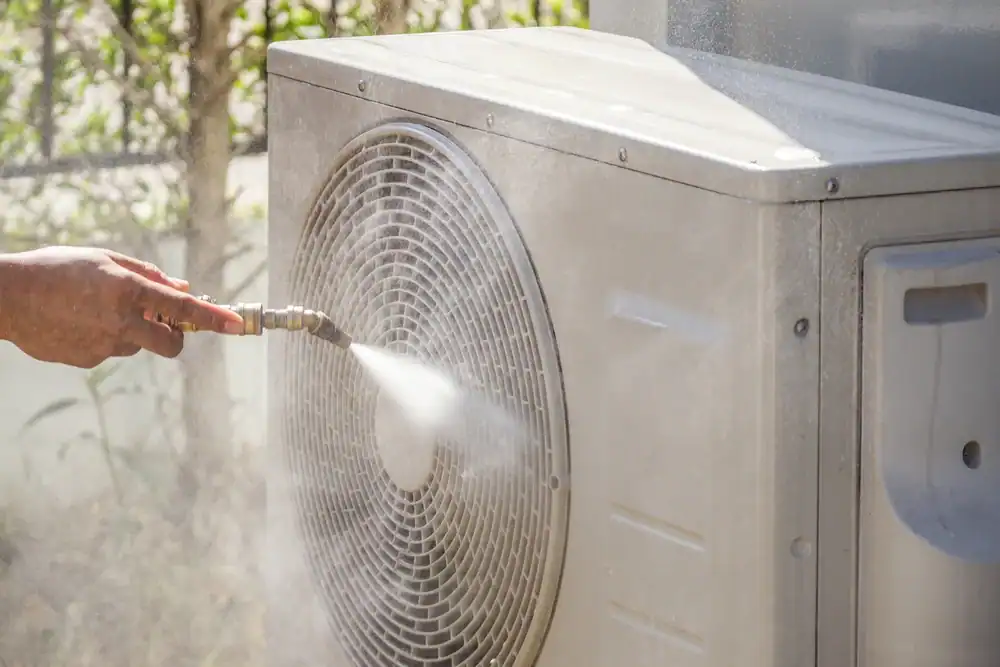
Salt air is genuinely hard on outdoor HVAC equipment. When ocean air carries salt particles inland — which happens continuously in a community like Ocean Grove, sitting directly on the Atlantic — those particles settle on condenser coils, cabinet panels, and electrical connections. Salt attracts moisture and acts as a corrosive agent, accelerating the kind of deterioration that would take years longer to develop on a system installed 20 miles inland.
In practical terms, this means coastal systems tend to show corroded coils, rusted cabinets, and failing electrical components earlier than their rated lifespan would suggest. Regular maintenance matters more here than it does in most places — annual tune-ups that include coil cleaning, connection checks, and cabinet inspection can add years to a system’s useful life. When we install a new system in Ocean Grove, equipment selection and unit positioning both factor in the coastal environment, not just the square footage of the home.
The honest answer is that it depends on the age of the system, the cost of the repair, and what refrigerant it uses. A useful rule of thumb: multiply the system’s age by the cost of the repair. If that number exceeds $5,000, replacement usually makes more financial sense than continuing to invest in an aging unit. Similarly, if a repair costs more than half of what a new system would cost, replacement is typically the smarter move.
If your system is 12 or more years old and needs a significant repair, you may be putting money into equipment that’s approaching the end of its practical life anyway. We can walk you through the repair-versus-replace math honestly, without pushing you toward the more expensive option if the repair genuinely makes sense.
There’s no single answer that fits every Victorian home in Ocean Grove, which is exactly why a proper assessment matters before any recommendation is made. Homes with existing ductwork in reasonable condition are often good candidates for a central system replacement or upgrade, provided the duct layout can actually deliver conditioned air efficiently to every room. High ceilings and original plaster walls change the load calculation, and a system that’s sized for a standard suburban home won’t perform the same way in a 19th-century Victorian with 10-foot ceilings.
For rooms without duct access, or for homes where running new ductwork would require significant damage to original interior finishes, ductless mini-split systems are often the better fit. They can be installed with minimal disruption, cool individual rooms or zones independently, and don’t require tearing into walls that deserve to stay intact. In some Ocean Grove homes, a hybrid approach — central air for the main living areas and a ductless unit for a converted attic or historic addition — ends up being the most practical solution.
In New Jersey, central air conditioning installation generally runs between $5,200 and $12,000, depending on the size of the system, the condition of existing ductwork, and the complexity of the installation. In Ocean Grove specifically, costs tend to run toward the higher end of that range for a few reasons. Victorian homes often require modified duct runs, electrical panel upgrades to support modern equipment, and more labor-intensive installation work given the age and construction of the home. None of that is unusual — it’s just the reality of working in a community with this type of housing stock.
Ductless mini-split installations typically fall between $3,000 and $8,000 depending on the number of zones and the complexity of the placement. We provide written estimates before any work begins, so you’ll know the full cost upfront. For larger projects, 0% financing is available for qualified customers, which makes it possible to move forward with the right system now rather than waiting.
Yes — we offer 24/7 emergency AC repair, and that availability is real, not just a line on a website. Customer reviews document after-hours calls, holiday weekend responses, and same-day service during peak summer heat. For Ocean Grove, where the summer season drives a significant portion of the community’s activity and a large number of homes function as vacation rentals or seasonal residences, a broken AC in July isn’t a minor inconvenience — it’s a problem with real financial consequences for property owners and real discomfort for anyone inside.
The pre-season window — roughly late April through Memorial Day — is when we see the highest volume of tune-up and replacement requests from Ocean Grove homeowners who want to confirm their system is ready before the season starts in earnest. If you’re managing a rental property or planning to be in Ocean Grove for the summer, that’s the window where getting ahead of a potential problem pays off the most. Waiting until the system fails in the middle of a booked weekend costs more in every direction.