Reviews

You’re not calling because you want to spend money on your air conditioner. You’re calling because it’s 85 degrees outside, your house feels like a sauna, and you need someone who can actually fix the problem today.
Here’s what that looks like when you work with a licensed HVAC contractor who knows Neptune’s coastal climate. Your system gets diagnosed correctly the first time, not after three visits and a growing bill. You get a written estimate before any work starts, so there’s no sticker shock when the job’s done. And if your unit fails at 9 PM on a Saturday, you’re not waiting until Monday to get relief.
Most AC problems in Monmouth County homes come down to a handful of issues: refrigerant leaks, failed compressors, clogged drain lines, or electrical failures. The difference between a $200 repair and a $2,000 surprise is catching the problem early and working with someone who’ll tell you the truth about whether repair or replacement makes sense for your situation.
We’ve been serving Neptune and Monmouth County with the kind of service that keeps people calling back. Licensed, insured, and experienced with the specific challenges that come with living near the coast.
Salt air corrodes components faster. Humidity puts extra strain on your system. And when summer hits the Jersey Shore, your AC isn’t optional. We know which equipment holds up in these conditions and how to size systems properly for homes dealing with ocean proximity.
You’ll work with technicians who show up on time, explain what’s wrong in plain language, and give you options instead of a hard sell. That’s how local businesses stay in business.

You call or contact us with your AC issue. We ask a few questions to understand what’s happening and schedule a time that works for you—same day if it’s an emergency.
A licensed technician shows up and runs a full diagnostic. That means checking refrigerant levels, testing electrical components, inspecting the condenser and evaporator coils, and looking at airflow. You’re not getting a guess. You’re getting a real assessment.
Once we know what’s wrong, you get a written estimate before any repair work begins. If it’s a simple fix, we handle it on the spot. If you need a new unit, we’ll walk through your options based on your home’s square footage, insulation, and how you actually use your space. No upselling. No pressure.
For installations, we pull the necessary permits, remove your old equipment, install the new system to manufacturer specs, and test everything to make sure it’s running efficiently. You’ll know how to use your new thermostat and what to expect from your system before we leave.

Ready to get started?
AC maintenance isn’t just changing a filter and calling it a day. A real tune-up catches the small problems before they become expensive emergencies in July.
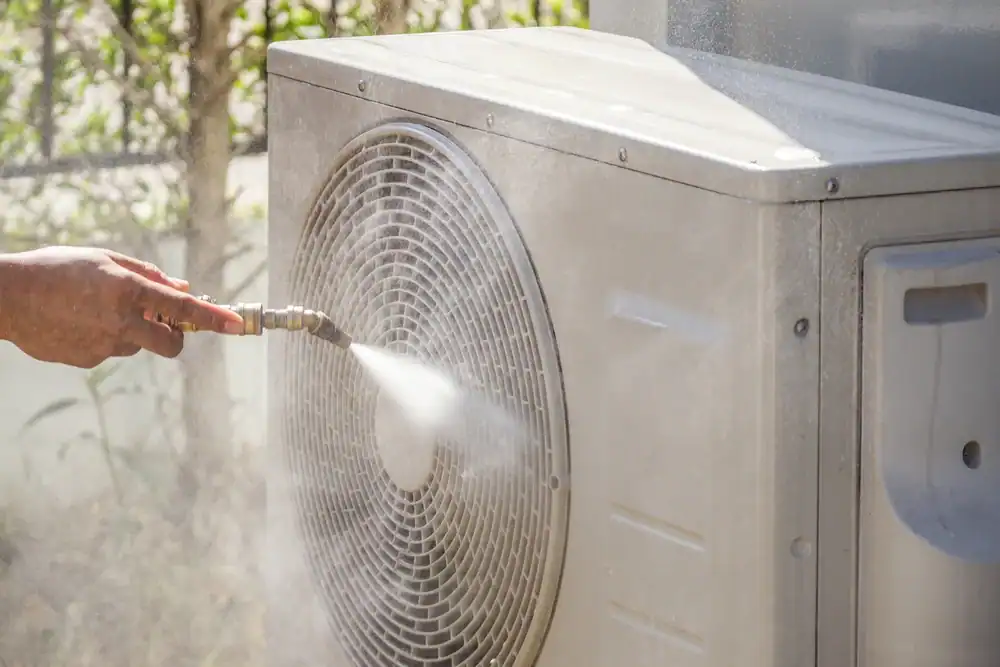
During an AC maintenance visit, we’re cleaning your condenser coils, checking refrigerant levels, testing your thermostat calibration, inspecting electrical connections, clearing your drain line, and making sure your system is pulling the right amperage. These are the things that extend your unit’s lifespan by years and keep your energy bills from creeping up every summer.
For Neptune homeowners, this matters even more. Coastal humidity promotes mold growth in ductwork and drain pans. Salt air accelerates corrosion on outdoor units. An annual tune-up addresses these issues before they turn into comfort problems or costly repairs.
And if you’re looking at a new installation, you’re also getting help navigating federal tax credits. Right now, you can claim up to $2,000 for installing a high-efficiency heat pump or $600 for a qualifying central AC system. That’s real money back, and we’ll make sure your new equipment qualifies.

If your system is under 10 years old and the repair costs less than half the price of a new unit, repair usually makes sense. But if you’re looking at a major component failure—like a compressor or condenser—on a system that’s already 12 to 15 years old, replacement is often the smarter move.
Here’s why. Older systems use R-22 refrigerant, which is being phased out and getting expensive. They’re also far less efficient than modern units, so you’re paying more every month just to stay cool. A new system with a SEER2 rating of 16 or higher can cut your cooling costs by 20 to 30 percent.
We’ll walk you through the math. If a repair buys you another year or two and you’re planning to sell soon, that might be the right call. But if you’re staying in your home and facing repeated repairs, a new installation pays for itself faster than most people think.
It means a licensed technician is available 24/7, not just an answering service that takes your information and calls you back Monday morning. When your AC fails on a weekend or at night, you’re not waiting days for relief.
Emergency service covers situations where your system stops working entirely, refrigerant is leaking, there’s an electrical issue, or your home is becoming unsafe due to heat. We prioritize these calls because we know how quickly indoor temperatures can climb in a coastal New Jersey summer, especially for families with young kids or elderly residents.
You’ll get a real person on the phone who can dispatch a technician, usually within a few hours. And because we’re local to Monmouth County, we’re not driving in from an hour away. That response time matters when you’re dealing with a house that’s hitting 85 degrees inside.
Most central AC installations for an average-sized home in Neptune run between $4,000 and $8,000, depending on the size of the unit, the efficiency rating, and whether any ductwork modifications are needed. If you’re installing a heat pump system, expect the range to be closer to $6,000 to $12,000.
The size of your home matters, but so does insulation, window quality, and sun exposure. A 1,500-square-foot ranch with good insulation needs a smaller unit than a 1,500-square-foot two-story with poor airflow. Sizing it correctly is the difference between a system that runs efficiently for 15 years and one that cycles constantly and breaks down early.
We give written estimates after assessing your home. That includes the equipment, installation labor, permits, and any electrical work needed to bring things up to code. And if you qualify for federal tax credits or state rebates, we’ll factor that into your decision so you know your actual out-of-pocket cost.
Once a year, ideally in spring before cooling season starts. But in Neptune and other coastal towns, twice a year isn’t overkill if you’re running your system hard or if you’ve noticed performance issues.
Salt air is tough on outdoor condenser units. It accelerates corrosion on coils and electrical components, which means your system degrades faster than it would 20 miles inland. Regular maintenance catches that corrosion early, before it causes a failure in the middle of summer.
During a maintenance visit, we’re also checking for mold and moisture buildup, which is common in humid climates. Clogged drain lines and dirty evaporator coils reduce efficiency and can lead to water damage inside your home. Catching these issues during a tune-up costs a fraction of what you’d pay for an emergency repair or water remediation.
Yes, if you call early enough in the day and we have availability. Most AC repairs don’t require ordering specialty parts, so if it’s a common issue like a failed capacitor, contactor, or thermostat, we can fix it on the first visit.
Same-day service depends on our schedule and the nature of the problem. If your compressor failed and we need to order a replacement part, that’s going to take a day or two. But for the majority of service calls—refrigerant top-offs, electrical repairs, blower motor issues—we carry the parts on our trucks and can get you back up and running the same day.
We also prioritize emergency calls for customers who’ve lost cooling entirely. If your system is still running but not cooling well, we’ll get you on the schedule as quickly as possible, usually within 24 hours.
We install and service most major brands, but for coastal New Jersey homes, we typically recommend units with corrosion-resistant coatings and components designed for high-humidity environments. Brands like Carrier, Trane, and Lennox offer models built to handle salt air and moisture better than budget options.
That said, the quality of installation matters more than the brand name. A mid-tier unit installed correctly will outlast a premium unit installed poorly. We focus on proper sizing, secure mounting to handle coastal winds, and ensuring your ductwork is sealed and insulated to prevent efficiency loss.
If you’re replacing an older system, we’ll also talk through energy efficiency ratings. A higher SEER2 rating means lower monthly bills and potential eligibility for federal tax credits. The upfront cost is higher, but the payback period in a climate like Neptune’s is usually under five years.